


Third trimester scans during pregnancy help doctors monitor your baby’s growth, position, placenta, and wellbeing before delivery.
The third trimester often feels very different from the earlier stages of pregnancy.
By this stage, many parents have already completed the dating scan and detailed anomaly scan.
The baby’s nursery may be ready, hospital bags may be packed, and excitement about meeting the baby is growing.
At the same time, this final stretch of pregnancy can bring new worries.
Questions such as “Is my baby growing normally?”,
“Why do I need another ultrasound?”, or “What exactly are doctors checking during these scans?” are extremely common.
Quick Answer
Third-trimester fetal development scans, performed between 28 and 40 weeks of pregnancy, help healthcare providers assess your baby’s growth, position, amniotic fluid levels, placental function, and overall well-being. These scans are particularly important in high-risk pregnancies and can guide decisions about ongoing pregnancy care and delivery planning.
This is where third-trimester fetal development scans become important.
These scans provide valuable information about your baby’s growth, position, well-being, and readiness for birth.
In many pregnancies, especially those considered high risk, they help healthcare providers make important decisions that improve outcomes for both mother and baby.
As a women’s health physiotherapist,
I often meet expectant mothers who feel anxious when additional scans are recommended during late pregnancy.
In reality, these scans are usually performed to provide reassurance and ensure that everything is progressing safely.
Key Takeaways
- Third-trimester scans help monitor your baby’s growth, position, and overall well-being during the final weeks of pregnancy.
- Growth scans, Doppler ultrasound studies, and biophysical profiles are commonly performed during late pregnancy.
- Additional scans are often recommended in high-risk pregnancies, including those complicated by gestational diabetes, hypertension, or fetal growth concerns.
- Reduced fetal movements should always be assessed promptly and never ignored.
- Ultrasound performed by trained healthcare professionals is considered safe when medically indicated.
- Third-trimester scan findings may influence decisions regarding labour, delivery timing, and birth planning.
- Many women requiring additional monitoring go on to have healthy pregnancies and healthy babies.
Why Are Third-Trimester Scans Performed?
Unlike the mid-pregnancy anomaly scan, which focuses primarily on fetal anatomy, third-trimester scans focus on how the baby is developing and functioning during the final weeks before birth.
Healthcare providers commonly use these scans to assess:
- Fetal growth.
- Estimated fetal weight.
- Baby’s position.
- Placental location.
- Amniotic fluid levels.
- Blood flow between the placenta and baby.
- Overall fetal well-being.
Some women may not require additional scans during the third trimester. Others, particularly those with high-risk pregnancies, may undergo several assessments. (Salomon et al. 2019)
Which Pregnancies Commonly Require Third-Trimester Scans?
Additional monitoring is often recommended when certain risk factors are present.
Examples include:
- High blood pressure.
- Gestational diabetes.
- Previous pregnancy complications.
- Twin pregnancy.
- Suspected fetal growth restriction.
- Reduced fetal movements.
- Maternal obesity.
- Previous stillbirth.
- Autoimmune disorders.
Even women with otherwise uncomplicated pregnancies may occasionally require additional scans if concerns arise during routine antenatal visits.
Importantly, needing extra scans does not automatically mean that something is wrong.
In many situations, these scans simply provide reassurance.
Growth Scans: Monitoring How Your Baby Is Growing
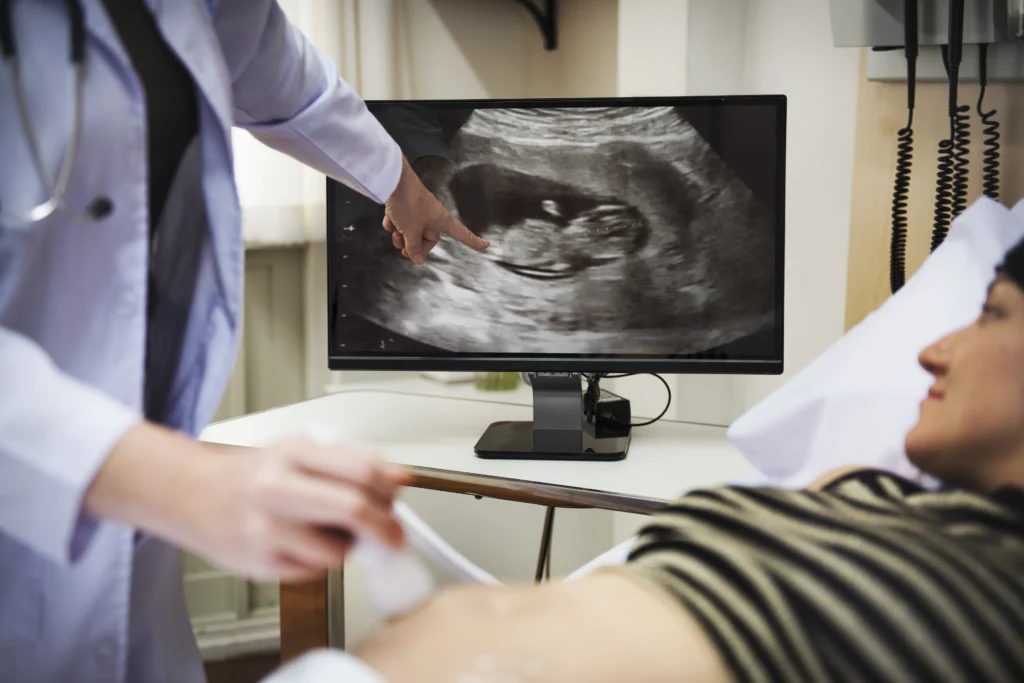
One of the most common third-trimester scans is the growth scan.
Growth scans usually assess several measurements, including:
- Head circumference.
- Abdominal circumference.
- Femur length.
- Biparietal diameter.
These measurements are combined to estimate fetal weight.
Doctors do not rely on a single scan alone.
Instead, they often compare measurements over time to assess whether the baby is following an expected growth pattern.
Serial growth scans are particularly important when fetal growth restriction or excessive fetal growth is suspected. (The British Medical Ultrasound Society)
Assessing Your Baby’s Position Before Birth
As delivery approaches, healthcare providers also evaluate the baby’s position.
Most babies settle into a head-down position during late pregnancy.
However, some babies remain in other positions, including:
Breech Position
The baby’s buttocks or feet are positioned downward.
Transverse Lie
The baby lies sideways across the uterus.
Oblique Lie
The baby is positioned diagonally.
Ultrasound helps confirm fetal presentation, particularly when physical examination findings are uncertain.
Knowing the baby’s position allows healthcare providers to discuss birth options and plan appropriate care.
Understanding Amniotic Fluid Assessment
Amniotic fluid surrounds and protects the developing baby throughout pregnancy.
During third-trimester scans, sonographers carefully evaluate fluid volume.
Both excessively low and excessively high fluid levels can influence pregnancy management.
Low Amniotic Fluid (Oligohydramnios)
Reduced fluid levels may occur because of:
- Placental insufficiency.
- Rupture of membranes.
- Certain maternal conditions.
Excessive Amniotic Fluid (Polyhydramnios)
High fluid levels may sometimes be associated with:
- Gestational diabetes.
- Fetal abnormalities.
- Twin pregnancy.
Many women with mild fluid abnormalities still experience healthy pregnancies.
Nevertheless, regular monitoring may be necessary.
What Are Doppler Ultrasound Studies?
A Doppler ultrasound measures blood flow.
Unlike routine ultrasound, Doppler studies provide information about how blood moves through specific vessels.
Healthcare providers may evaluate:
- Umbilical artery blood flow.
- Middle cerebral artery blood flow.
- Uterine artery blood flow.
These assessments are particularly valuable in pregnancies complicated by fetal growth restriction or placental dysfunction.
Doppler studies help doctors understand whether the baby is receiving adequate oxygen and nutrients.
Research demonstrates that Doppler ultrasound improves surveillance in high-risk pregnancies. (Messawa et al. 2012)
Biophysical Profile: Looking Beyond Growth
Some women undergo a test known as a Biophysical Profile (BPP).
This assessment combines ultrasound findings with fetal heart rate monitoring.
The BPP typically evaluates:
- Fetal movements.
- Fetal breathing movements.
- Fetal muscle tone.
- Amniotic fluid volume.
- Non-stress test findings.
Each component contributes to an overall score that helps healthcare providers assess fetal well-being.
Biophysical profiles are frequently used in high-risk pregnancies or when there are concerns regarding fetal health.
Reduced Fetal Movements and Third-Trimester Scans
One of the most important reasons for additional fetal surveillance is reduced fetal movement.
Many mothers notice changes in their baby’s movement patterns during late pregnancy.
A reduction in movements should never be ignored.
Ultrasound assessment, together with other fetal surveillance techniques, can help determine whether the baby is thriving.
As a physiotherapist, I encourage expectant mothers to become familiar with their baby’s usual movement patterns rather than focusing on a specific number of kicks.
Any noticeable reduction or sudden change should prompt immediate medical review.
A Physiotherapist’s Perspective: Managing Scan Anxiety
Waiting for scan results can be emotionally exhausting.
Many women tell me that the days leading up to an appointment are more stressful than the scan itself.
Some practical strategies that may help include:
- Limiting excessive internet searching.
- Practising diaphragmatic breathing.
- Remaining physically active if medically permitted.
- Attending antenatal physiotherapy sessions.
- Discussing concerns openly with your healthcare provider.
Anxiety during pregnancy is common, especially when additional monitoring is required.
Seeking support is never a sign of weakness.
Are Ultrasound Scans Safe During Late Pregnancy?
This is one of the most common questions expectant parents ask.
Current evidence suggests that medically indicated diagnostic ultrasound performed by trained professionals is safe during pregnancy when used appropriately.
Healthcare providers always aim to use ultrasound only when clinically necessary. (Torloni et al. 2009)
What Happens If the Baby Is Measuring Small in the Third Trimester?
Hearing that your baby is “measuring small” can be worrying.
However, a small measurement on one scan does not automatically mean that there is a problem.
Some babies are naturally small because of genetics. For example, smaller parents often have smaller babies.
Healthcare providers become more concerned when growth slows over time or when other findings suggest that the placenta may not be functioning optimally.
When a baby measures smaller than expected, doctors may recommend:
- Repeat growth scans.
- Doppler ultrasound studies.
- More frequent antenatal visits.
- Fetal heart rate monitoring.
- Biophysical profile assessments.
The goal is to determine whether the baby is simply small or affected by fetal growth restriction (FGR).
In many cases, careful monitoring allows pregnancy to continue safely while ensuring that delivery occurs at the most appropriate time. (Lees et al. 2022)
Can Babies Measure Larger Than Expected?
Yes.
Some babies grow larger than average during the third trimester.
This is commonly referred to as large for gestational age (LGA) or fetal macrosomia.
Several factors can contribute to larger fetal size, including:
- Gestational diabetes.
- Maternal obesity.
- Excessive pregnancy weight gain.
- Previous large baby.
- Genetic factors.
A larger baby does not always mean that complications will occur.
However, identifying excessive growth allows healthcare providers to prepare for labour and discuss birth options if necessary.
Additional scans may be recommended to monitor growth patterns over time.
Placental Health: An Important Part of Third-Trimester Scans
The placenta is often called the baby’s lifeline.
It supplies oxygen and nutrients throughout pregnancy.
As pregnancy progresses, healthcare providers closely monitor placental function because placental insufficiency is one of the leading causes of fetal growth restriction.
Third-trimester ultrasound assessments may evaluate:
- Placental position.
- Placental appearance.
- Blood flow patterns.
- Signs of placental ageing.
Although the placenta naturally matures during pregnancy, reduced placental function may require closer fetal surveillance.
Many parents are surprised to learn that problems affecting the placenta may occur even when the mother feels completely well.
This is one reason why routine antenatal visits remain so important.
How Often Are Third-Trimester Scans Performed?
There is no universal schedule.
The frequency of scans depends on individual pregnancy circumstances.
Women with uncomplicated pregnancies may not require additional scans after the mid-pregnancy anomaly scan.
However, pregnancies considered high risk often involve serial monitoring.
Typical examples include:
| Pregnancy Situation | Possible Monitoring Frequency |
|---|---|
| Suspected fetal growth restriction | Every 2 to 4 weeks |
| Twin pregnancy | Every 2 to 4 weeks |
| Gestational diabetes | Individualised monitoring |
| Hypertension or preeclampsia | Regular fetal surveillance |
| Reduced fetal movements | As clinically indicated |
Your obstetrician or maternity team will determine the most appropriate schedule for your situation.
Comparing your scan frequency with another person’s pregnancy is rarely helpful because every pregnancy is unique.
Can You Prepare for a Third-Trimester Scan?
Most third-trimester scans require very little preparation.
Unlike some early pregnancy scans, a full bladder is often unnecessary.
A few practical suggestions include:
- Wear comfortable clothing.
- Carry previous scan reports if requested.
- Write down questions beforehand.
- Consider bringing your partner or support person.
- Arrive a little early to reduce stress.
As a physiotherapist, I often encourage expectant mothers to practise slow breathing exercises before appointments.
Simple breathing techniques can reduce anxiety and help women feel more relaxed during the examination.
What Third-Trimester Scans Cannot Predict
Ultrasound technology has advanced tremendously, but no scan can predict everything.
Third-trimester scans cannot guarantee:
- A complication-free labour.
- Perfect health after birth.
- Future developmental outcomes.
- A precise birth weight.
- The exact timing of labour.
Ultrasound findings always need to be interpreted alongside clinical assessments, maternal history, and other investigations.
Understanding these limitations can help parents maintain realistic expectations.
The Emotional Side of Repeated Scans
For some women, additional scans provide reassurance.
For others, repeated monitoring may increase anxiety.
Many mothers describe a cycle of temporary relief immediately after a reassuring scan, followed by renewed worry before the next appointment.
This emotional response is understandable.
If you find yourself feeling overwhelmed:
- Speak openly with your healthcare provider.
- Share concerns with family or friends.
- Continue approved physical activity.
- Practise relaxation exercises.
- Seek professional support if anxiety becomes persistent.
As healthcare professionals, we recognise that emotional well-being is just as important as physical health during pregnancy.
Can Third-Trimester Scans Change Delivery Plans?
Absolutely.
Information gathered during late pregnancy scans often influences decisions regarding:
- Timing of delivery.
- Mode of birth.
- Need for induction of labour.
- Requirement for specialist neonatal care.
For example:
- Persistent breech presentation may lead to discussions about external cephalic version or caesarean delivery.
- Severe fetal growth restriction may prompt earlier delivery.
- Significant abnormalities in Doppler blood flow may require intensive monitoring.
These decisions are always individualised and based on the complete clinical picture.
Myths vs Facts About Third-Trimester Fetal Development Scans
Myth: Needing additional scans in the third trimester means something is seriously wrong with the baby.
Fact: Additional scans are often recommended as a precaution, especially in high-risk pregnancies, and frequently provide reassurance that the baby is developing well.
Myth: Ultrasound scans can accurately predict a baby’s exact birth weight.
Fact: Ultrasound estimates fetal weight using measurements such as head circumference and abdominal circumference, but there is always a margin of error.
Myth: A baby measuring small on ultrasound always has fetal growth restriction.
Fact: Some babies are naturally small because of genetics. Healthcare providers use serial growth scans and Doppler studies to distinguish healthy small babies from those with growth problems.
Myth: Reduced fetal movements are normal during late pregnancy because the baby has less space.
Fact: Although movement patterns may change, a noticeable reduction in fetal movements should always be assessed promptly by a healthcare provider.
Myth: Doppler scans are only performed when doctors suspect serious complications.
Fact: Doppler ultrasound is commonly used to monitor blood flow in pregnancies requiring closer surveillance and often helps reassure both parents and healthcare providers.
Myth: Ultrasound scans performed late in pregnancy are harmful to the baby.
Fact: Current evidence indicates that medically indicated diagnostic ultrasound performed by trained professionals is safe during pregnancy when used appropriately.
Questions You May Want to Ask Your Doctor
Consider asking:
- Is my baby’s growth within the expected range?
- Do I need additional scans?
- What is my baby’s current position?
- Are my amniotic fluid levels normal?
- Is placental function normal?
- Will scan findings affect my birth plan?
- What symptoms should prompt urgent medical review?
Preparing questions beforehand often helps parents leave appointments feeling more informed.
Final Thoughts
Third-trimester fetal development scans are an important part of modern maternity care. These assessments help healthcare providers monitor your baby’s growth and well-being while guiding decisions about pregnancy management and birth planning. Although additional scans can sometimes cause anxiety, they often provide reassurance and support safer outcomes for both mother and baby.
Conclusion
Third-trimester fetal development scans play an important role in modern maternity care.
These assessments provide valuable information about your baby’s growth, well-being, position, and readiness for birth.
Although additional scans can sometimes create anxiety, they often provide reassurance and help healthcare providers identify concerns early.
As a women’s health physiotherapist, I encourage expectant mothers to remain informed, attend all scheduled appointments,
stay physically active if medically permitted, and communicate openly with their maternity team.
Every pregnancy is unique, and ongoing monitoring helps ensure that both mother and baby receive the safest and most appropriate care.
Frequently Asked Questions (FAQs)
1. What is the purpose of a third-trimester fetal development scan?
Third-trimester scans help assess your baby’s growth, position, amniotic fluid levels, placental function, and overall well-being during the final weeks of pregnancy.
2. Are third-trimester ultrasound scans necessary for every pregnancy?
Not always. Women with uncomplicated pregnancies may not require additional scans. However, extra monitoring is commonly recommended in high-risk pregnancies or when concerns arise during routine antenatal care.
3. Can third-trimester scans accurately predict my baby’s birth weight?
Ultrasound scans can estimate fetal weight, but there is always a margin of error. These estimates are most useful when compared over time to assess growth trends.
4. What happens if my baby is measuring small during the third trimester?
Your healthcare provider may recommend additional growth scans, Doppler studies, or fetal surveillance to determine whether your baby is naturally small or experiencing fetal growth restriction.
5. Are ultrasound scans safe during late pregnancy?
Current evidence suggests that medically indicated diagnostic ultrasound performed by trained professionals is safe during pregnancy when used appropriately.
6. Should I be worried if I need additional scans in the third trimester?
Not necessarily. Additional scans are often recommended as a precaution and frequently provide reassurance that your baby is developing well.
Stay tuned with us for more health related topics.
Follow us on LinkedIn and Instagram for more.
More Read


Medical Disclaimer!
This article has been reviewed and written under the guidance of our Head Physiotherapist, Dr. Kruti Raj (PT, MUHS,CPT,CMPT). The information shared is intended for educational purposes only and should not be considered a substitute for personalized medical advice, diagnosis, or treatment.
Please consult us or any other qualified healthcare professional before beginning any exercise program, especially if you are experiencing pain, recovering from injury, or managing a medical condition.


