


How to reduce C-section scar tightness is a common concern because scar tissue can sometimes limit comfort, movement, and core flexibility after delivery.
Most mothers expect the pain after a C-section.
What surprises them is the tightness that lingers months later.
Sometimes it feels like pulling when standing straight.
Sometimes the lower belly feels hard or numb.
Some women notice a strange tugging sensation while rolling in bed, laughing, reaching overhead, or getting out of the car quickly.
Others describe it differently.
“My scar doesn’t hurt. It just feels stuck.”
Quick Answer
C-section scar tightness happens when healing tissues, fascia, and nerves around the incision become restricted after surgery. This can cause pulling, numbness, bloating, lower back pain, pelvic discomfort, or weakness during movement. Physiotherapy techniques such as scar massage, breathing exercises, deep core retraining, myofascial release, posture correction, and gentle mobility work may help improve scar flexibility and reduce discomfort naturally. Even old cesarean scars can respond positively to proper rehabilitation and movement-based recovery.
As a physiotherapist, I hear that sentence all the time.
And honestly, many women are never told that C-section scar tightness can affect much more than the scar itself.
It may influence posture, breathing, hip movement, pelvic floor function, lower back comfort, and even confidence during exercise.
The scar may look healed from the outside while deeper tissues underneath are still restricted.
The good news is that the body responds incredibly well to the right kind of rehabilitation.
Not aggressive workouts.
Not endless crunches.
Not “snapping back.”
Real healing usually starts with understanding what your body is trying to protect.
Key Takeaways
- C-section scar tightness may affect posture, breathing, pelvic floor function, and movement.
- Scar adhesions can contribute to pulling sensations, stiffness, numbness, and lower back discomfort.
- Gentle scar massage and physiotherapy may improve tissue mobility and flexibility.
- Deep breathing exercises help reduce abdominal guarding and improve pressure management.
- Many women unknowingly hold their breath during lifting and movement after surgery.
- Rib cage stiffness and hip tightness are common but overlooked postpartum issues.
- Recovery after a cesarean birth should focus on coordination, not aggressive abdominal workouts.
- Even years-old C-section scars can improve with proper rehabilitation techniques.
Why Does a C-Section Scar Feel Tight?
A cesarean birth is major abdominal surgery.
During the procedure, several layers are involved including skin, fascia, connective tissue, fat, nerves, and the uterus.
As the body heals, collagen fibers form around the incision.
That healing process is normal.
But sometimes the scar becomes less mobile than the surrounding tissue.
Instead of gliding smoothly, the layers begin sticking together.
Physiotherapists call these adhesions or fascial restrictions.
This can create:
- pulling sensations
- stiffness
- numbness
- pressure
- burning
- weakness
- strange movement limitations
Some women only notice it while exercising.
Others notice it while doing very ordinary things like turning in bed or carrying the baby on one hip.
A 2024 study published in Advances in Clinical and Experimental Medicine found that manual therapy improved scar mobility and tissue organization after cesarean delivery. (Ptaszkowski et al. 2024)
One Thing Most Women Are Never Told
The scar itself is only part of the story.
What matters more is how the entire pressure system of the body changes afterward.
After a C-section, many women unconsciously:
- hold their breath during movement
- grip the upper abdominals
- avoid twisting
- stiffen the rib cage
- stop using deep core muscles normally
Over time, the body adapts around the scar.
That is why some women develop:
- lower back pain
- hip tightness
- pelvic heaviness
- urinary urgency
- constipation
- pain during intimacy
- abdominal bloating
- weakness during workouts
And weirdly enough, sometimes the scar itself is no longer painful at all.
The body has simply built compensation patterns around it.
The “Shelf” Above the Scar Is Not Always Fat
This is one of the biggest misconceptions online.
Many mothers panic because they notice a small pouch or overhang above the incision months later.
They blame weight gain.
But often, scar adhesions are contributing to that appearance.
When tissues underneath lose mobility, the skin and fascia above the scar may bunch or fold differently.
That is why some women lose weight but still notice the same “shelf.”
Mobility matters just as much as body composition.
Strange Symptoms That Can Actually Be Related to Scar Tightness
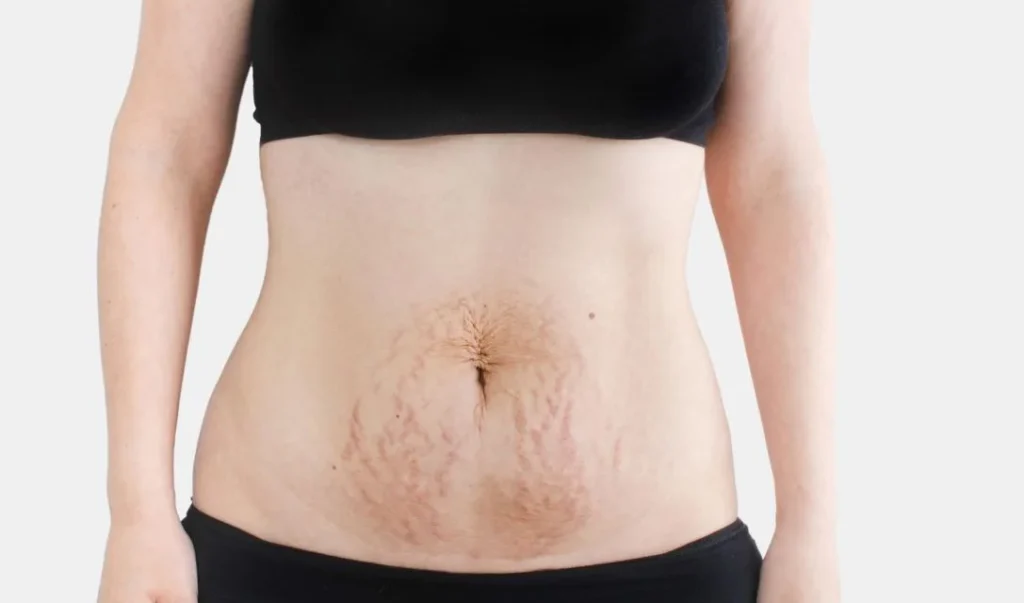
This surprises almost everyone.
A restricted cesarean scar can sometimes contribute to symptoms that seem completely unrelated.
I have seen women complain about:
- difficulty standing fully upright
- tightness while reversing the car
- rib cage stiffness
- shallow breathing
- pulling near the bladder
- one-sided hip tightness
- pain during fast walking
- feeling disconnected from the lower abdomen
- fear of stretching the stomach area
The fascial system of the body is interconnected.
So a scar low on the abdomen can absolutely influence movement patterns elsewhere.
When Should You Start Treating C-Section Scar Tightness?
Most women think they either need to start immediately or it is “too late.”
Neither is true.
In the early weeks after surgery, the focus should be:
- protection
- breathing
- circulation
- gentle mobility
- pain management
More direct scar work usually begins only after medical clearance and full skin healing.
Often around 6 weeks postpartum.
But here is the important part.
Even older scars can improve.
I have worked with women 8 or 10 years after a C-section who still noticed significant changes once scar mobility and deep core coordination were addressed.
The body keeps adapting throughout life.
Why Some C-Section Scars Stay Sensitive for Years
Not all scar tightness is purely mechanical.
Sometimes the nervous system remains protective around the area.
The brain may continue interpreting the scar region as vulnerable even after tissues have healed.
This is why some women dislike:
- waistbands touching the scar
- fitted jeans
- certain fabrics
- light pressure over the abdomen
This is called scar hypersensitivity.
And yes, it is real.
So, how to reduce this C-section scar tightness?
The answer is, gentle desensitization techniques often help.
Scar Desensitization
Most articles only talk about scar massage.
But desensitization can be equally important.
This may include:
- lightly brushing different textures over the skin
- soft tapping around the scar
- exposure to varying fabrics
- gentle temperature contrast
- gradual touch tolerance work
The goal is to help the nervous system stop overreacting to harmless input.
This approach is commonly used in modern physiotherapy and pain rehabilitation.
How To Reduce C-Section Scar Tightness?
Not one magic exercise.
Not one cream.
Not one viral Instagram trick.
Recovery usually improves when several small things work together consistently.
1. Breathing Retraining
This is often the missing piece.
Many women breathe into the upper chest after surgery because the abdomen feels guarded.
But the diaphragm, deep core muscles, and pelvic floor are designed to work together.
A 2024 pelvic floor rehabilitation review showed that coordinated pelvic floor and breathing exercises improve postpartum recovery outcomes significantly. (Peng et al. 2024)
Simple Starting Exercise
Lie comfortably.
Place one hand on the ribs.
Inhale slowly through the nose.
Let the ribs expand sideways instead of forcing the belly outward aggressively.
Exhale gently.
That is it.
No dramatic core tightening needed.
2. Scar Massage
Once medically cleared, gentle scar mobilization may help improve tissue glide and reduce stiffness.
The key word is gentle.
You do not need aggressive pressure.
Actually, going too hard often makes the area more protective.
Techniques Often Used in Physiotherapy
- circular skin movements
- side-to-side glides
- gentle lifting of the skin
- rolling techniques
- sustained soft pressure
Consistency matters more than intensity.
3. Rib Mobility Work
This is extremely under-discussed postpartum.
Women spend hours feeding, carrying, and hunching over babies.
The rib cage becomes stiff.
Then breathing mechanics change.
Then abdominal pressure changes.
Then scar tightness feels worse.
See how connected everything is?
Thoracic mobility exercises can help restore movement through the upper body and reduce tension patterns pulling downward into the abdomen.
4. Walking
Simple walking is incredibly underrated after a C-section.
Not power walking.
Not step-count obsession.
Just gradual, comfortable movement.
Walking helps:
- circulation
- bowel function
- stiffness
- tissue hydration
- nervous system regulation
And emotionally, many women say it helps them feel like themselves again.
5. Deep Core Retraining
This is where many mothers accidentally worsen symptoms.
They jump into intense “mommy tummy workouts” too early.
The deep core does not respond well to force after surgery.
It responds better to coordination.
Early rehabilitation usually focuses on:
- breathing with movement
- pelvic tilts
- heel slides
- gentle load transfer
- pressure management
Not endless crunches.
Why Holding Your Breath Makes Tightness Worse
This is a huge issue.
Many women brace hard during:
- lifting the baby
- standing up
- carrying groceries
- exercising
And they do not realize they are holding their breath at the same time.
This increases abdominal pressure dramatically.
A physiotherapist will often teach coordinated exhalation during effort instead.
Tiny adjustment.
Big difference.
Can Myofascial Release Help?
In many cases, yes.
A 2024 comparative rehabilitation study found myofascial release combined with exercises improved pain and disability better than soft tissue mobilization alone after cesarean delivery. (Jahan et al. 2024)
Myofascial techniques aim to improve movement between tissue layers rather than simply “breaking scar tissue.”
That distinction matters.
Food Matters More Than Most Women Think
Scar healing is not just physical therapy.
The body also needs raw materials for repair.
Nutrients That Support Healing
Protein
Supports collagen remodeling.
Sources:
- eggs
- lentils
- fish
- yogurt
- chicken
Vitamin C
Important for tissue repair.
Sources:
- guava
- citrus fruits
- kiwi
- bell peppers
Zinc
Supports wound healing.
Sources:
- seeds
- nuts
- legumes
Omega-3 Fatty Acids
May help regulate inflammation.
The Emotional Side Nobody Talks About Enough
Some women feel disconnected from their abdomen after a C-section.
Not just physically.
Emotionally too.
They stop touching the area completely.
Avoid mirrors.
Avoid fitted clothes.
Avoid movement.
And honestly, that emotional guarding can become part of the recovery process too.
Healing sometimes begins with simply feeling safe moving again.
Is It Normal to Feel Numb Around the Scar?
Very common.
Small nerves are affected during surgery.
For some women, sensation gradually returns over months.
For others, patches of numbness remain longer.
What matters more is whether the area becomes progressively more comfortable and functional over time.
When Should You See a Physiotherapist?
Please do not wait until things become severe.
A women’s health physiotherapist may help if you notice:
- persistent pulling
- painful exercise
- urinary leakage
- pelvic heaviness
- lower back pain
- pain during intimacy
- abdominal doming
- weakness during movement
- ongoing fear around using the core
Early guidance often prevents long-term compensation patterns.
Warning Signs You Should Not Ignore
Seek medical attention if you notice:
- redness
- heat
- discharge
- fever
- severe swelling
- opening of the incision
- rapidly increasing pain
These symptoms require medical evaluation.
The Biggest Recovery Mistake I See
Women trying to “get their body back” before the body has rebuilt trust in movement.
Recovery after cesarean birth is not about punishing the abdomen into shrinking faster.
It is about restoring:
- mobility
- coordination
- confidence
- strength
- pressure control
- tissue adaptability
Ironically, when the body stops feeling threatened, movement usually improves much faster.
Final Thoughts
C-section scar tightness is real.
And no, you are not overthinking it.
Learning how to reduce C-section scar tightness early can help improve comfort, mobility, and long-term core recovery after delivery.
The pulling, stiffness, numbness, weakness, or strange movement sensations many mothers experience after cesarean birth deserve proper attention.
But recovery is rarely about one perfect exercise.
The women who improve most are usually the ones who:
- move consistently
- breathe better
- stop fighting their body
- rebuild strength gradually
- improve scar mobility patiently
- address posture and pressure habits
- seek proper rehabilitation when needed
Healing after a C-section is not linear.
Some weeks feel easier than others.
But the body is remarkably adaptable when given the right environment to recover.
Frequently Asked Questions
Can C-section scar tightness go away completely?
Many women notice major improvement with physiotherapy, scar mobilization, breathing retraining, and gradual movement exercises. Recovery varies from person to person, but scar mobility often improves significantly over time.
When can I start scar massage after a C-section?
Scar massage is usually started once the incision has fully healed and your healthcare provider has cleared you for scar work, often around 6 weeks postpartum.
Why does my C-section scar still feel tight years later?
Scar tissue and fascial restrictions can remain limited in mobility for years if they are never properly rehabilitated. Old scars can still respond positively to physiotherapy and movement-based treatment.
Can scar tightness cause lower back pain?
Yes. Restricted abdominal tissues can alter posture, breathing mechanics, and core function, which may contribute to lower back discomfort and hip tightness.
Is numbness around a C-section scar normal?
Temporary numbness is very common because small nerves are affected during surgery. Sensation may gradually improve over months, although some areas may remain less sensitive.
Can exercise make C-section scar tightness worse?
High-pressure exercises done too early may worsen symptoms. Gradual rehabilitation and pressure-controlled movement are usually safer and more effective.
Can physiotherapy help years after a cesarean birth?
Yes. Many women experience improvements in mobility, flexibility, pain, and confidence even several years after their C-section.
What is the best exercise for C-section scar tightness?
There is no single best exercise. Most physiotherapists recommend a combination of breathing retraining, walking, scar mobilization, gentle core activation, and posture correction.
Stay tuned with us for more health related topics.
Follow us on LinkedIn and Instagram for more.
More Read


Medical Disclaimer!
This article has been reviewed and written under the guidance of our Head Physiotherapist, Dr. Kruti Raj (PT, MUHS,CPT,CMPT). The information shared is intended for educational purposes only and should not be considered a substitute for personalized medical advice, diagnosis, or treatment.
Please consult us or any other qualified healthcare professional before beginning any exercise program, especially if you are experiencing pain, recovering from injury, or managing a medical condition.


