


Introduction: Why AC causes headaches?
A pattern I see very often in clinic goes like this.
A working professional walks in and says their headache only starts in office.
Weekends are fine. Sleep is okay. No major medical history.
Then one detail stands out.
8 to 10 hours daily in strong air conditioning.
This is not a coincidence.
Air-conditioned environments quietly change how your body behaves.
Muscles tighten, hydration drops, and posture worsens without you noticing.
Over a few hours, this builds into a dull, persistent headache.
It is not dramatic pain. It is that heavy, tight, irritating kind that affects focus.
Quick Answer
AC headaches are usually caused by a combination of cold air exposure, muscle tension, dehydration, and poor posture.
They typically feel like a dull pressure around the head and often come with neck stiffness.
The most effective prevention methods include:
- Avoiding direct AC airflow on your head and neck
- Maintaining a temperature between 23 to 25°C
- Staying well hydrated throughout the day
- Taking regular movement breaks
- Correcting posture while working
Most AC headaches are not serious and can be managed easily with small lifestyle adjustments.
Key Takeaways
- AC headaches are commonly linked to muscle tension, dehydration, and posture issues
- Direct cold airflow on the neck is one of the biggest triggers
- Most AC headaches are neck-related, not brain-related
- Hydration plays a bigger role than most people realize
- Simple changes like posture correction and movement breaks can prevent headaches
- Moderate temperature settings are better than very cold environments
- Physiotherapy exercises help reduce and prevent recurring headaches
What exactly is an AC headache?
This is not a formal diagnosis, but in practice it usually overlaps with:
- Tension-Type Headache
- Cervicogenic Headache
Which means the source is often not the brain itself.
It is the neck, muscles, and environment working together.
Typical features include:
- Dull pressure around forehead or temples
- Tightness in neck and shoulders
- Symptoms increasing through the day
- Relief after stepping out of AC
AC Headache vs Migraine: Know the Difference
People confuse a lot between AC headaches and Migraine.
Here’s a quick way to tell:
| Feature | AC Headache | Migraine |
|---|---|---|
| Pain type | Dull, tight | Throbbing |
| Location | Both sides | Often one side |
| Trigger | Environment | Multiple triggers |
| Nausea | Rare | Common |
| Light sensitivity | Mild | High |
If your headache improves after leaving AC, it is rarely a migraine.
This reduces confusion and builds trust.
What research actually shows about AC and headaches
Air conditioning affects your body in multiple small ways that add up.
Dry air is one of the biggest factors. AC removes humidity, which can lead to mild dehydration and irritation of nasal passages. (Armstrong et al. 2012)
This study shows even mild dehydration can affect cognition and increase headache symptoms.
Another factor is indoor air quality.
Closed environments with continuous airflow circulation are associated with symptoms like headache and fatigue. (Wargocki et al. 2020)
Cold exposure also affects blood vessels and nerve sensitivity, which can contribute to headache onset.
The real reason AC triggers headaches
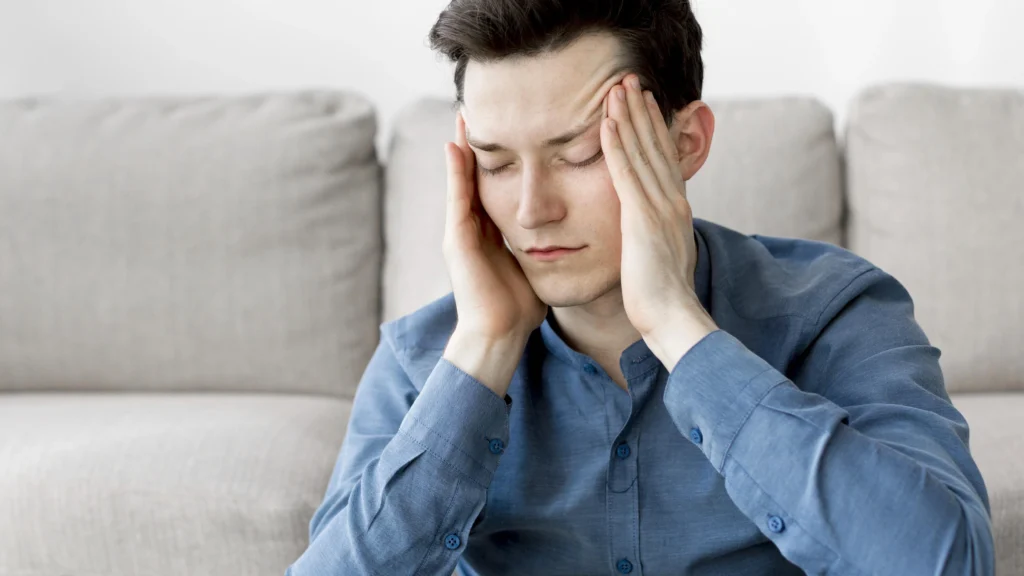
It is not one cause. It is a combination.
1. Muscle tightening due to cold exposure
Cold air causes muscles around the neck and shoulders to contract.
This is your body trying to conserve heat.
Over time, it leads to stiffness and trigger points. (Falla et al. 2018)
This research highlights how neck muscle dysfunction contributes to headache patterns.
2. Reduced circulation
Cold environments can reduce blood flow slightly.
This leads to:
- Heaviness in the head
- Fatigue
- Dull pain
3. Dehydration without noticing
In AC rooms, you do not sweat much, so you assume you are hydrated.
But moisture loss still happens.
Even small fluid imbalance can trigger Dehydration headaches.
4. Poor posture during long sitting
Most AC exposure happens while sitting.
Typical posture looks like:
- Forward head
- Rounded shoulders
- Slouched back
This increases strain on the cervical spine.
Over time, the neck becomes the main source of headache.
5. Direct airflow on neck and head
This is one of the most common triggers I see.
If cold air is hitting your neck continuously:
- muscles stay contracted
- nerves get irritated
- pain builds faster
Signs your headache is due to AC
You can usually identify it with these patterns:
- Starts after a few hours in AC
- Feels like pressure, not throbbing
- Neck feels stiff or heavy
- Improves when you go outdoors
- Worse by evening
Quick Self-Check: Is Your Headache Due to AC?
Not sure if AC is really the cause? Try this simple check.
- Does your headache start 2 to 3 hours after entering AC?
- Does it improve when you step outside?
- Do you feel neck stiffness along with the headache?
- Is the pain dull and pressure-like, not throbbing?
If most answers are yes, your environment is likely the trigger.
This helps readers relate instantly. Big engagement booster.
Who is more likely to experience AC headaches
Some people are more prone:
- Office workers and IT professionals
- People with long sitting hours
- Individuals with poor posture
- Those who sleep under direct AC airflow
- People already prone to tension headaches
A Real-Life Case I See Often
A 32-year-old IT professional came in with daily evening headaches.
No major medical issues.
But:
- 9 hours in AC
- No breaks
- Water intake less than 1 litre
We changed just 3 things:
- moved seat away from vent
- added movement breaks
- improved hydration
Headaches reduced within a week.
This shows how small changes matter.
Lesser-known facts most people miss
Temperature switching matters
Going from extreme heat outside to very cold indoor environments stresses your nervous system.
This sudden change affects blood vessels and can trigger headaches.
Fascia becomes less flexible in cold
Cold reduces tissue elasticity.
This makes movement restricted and increases stiffness, thus could lead to cold-weather headaches.
Airflow direction is more important than temperature
Even moderate temperatures can trigger headaches if airflow is directly hitting your neck.
Indoor air can irritate sinuses
Dry circulating air can irritate sinus lining, which can contribute to headache symptoms.
How to prevent AC headaches (practical physiotherapy advice)
This is where small changes make a big difference.
1. Avoid direct airflow
If possible, change your seating position.
If not:
- use a vent deflector
- cover your neck lightly
2. Keep temperature moderate
Ideal range is:
23 to 25 degrees Celsius
Too cold leads to muscle tightening.
Best AC Settings for Your Body
Comfort is not the same as health.
Use this as a guide:
- Temperature: 23 to 25°C
- Mode: Swing or indirect airflow
- Fan speed: Medium, not high
- Timer: Use at night
Your goal is stable cooling, not extreme cold.
3. Hydrate consistently
Do not wait to feel thirsty.
A simple rule:
1 glass of water every 60 to 90 minutes
4. Correct your posture
Basic setup:
- screen at eye level
- back supported
- shoulders relaxed
- feet flat on ground
This reduces load on the neck.
Simple Desk Setup That Reduces Headaches
You don’t need fancy equipment.
Just check this:
- Screen at eye level
- Chair supports your lower back
- Keyboard close to body
- No AC airflow directly on your head
This reduces strain instantly.
5. Follow the 30 to 5 rule
Every 30 to 40 minutes:
- stand up
- stretch
- move your neck
Prevention is easier than relief.
6. Do simple physiotherapy exercises
These take less than 2 minutes.
Chin tucks
Pull chin inward and hold for 5 seconds
Neck side stretch
Tilt head and hold for 15 to 20 seconds
Shoulder rolls
Roll shoulders backward slowly
These improve circulation and reduce stiffness.
7. Use heat after long AC exposure
Warmth helps reverse muscle tightening.
Options:
- hot shower
- heating pad on neck
Caution: Beware of hot shower headaches.
Quick Relief Tips That Actually Work
When headache starts:
- Drink a glass of water immediately
- Step out of AC for 10 to 15 minutes
- Apply warm compress on neck
- Do gentle neck stretches
These are simple but very effective.
8. Improve your sleep setup
Avoid:
- direct airflow on face or neck
- very low temperatures
Better approach:
- moderate cooling
- indirect airflow
- timer mode
Common Mistakes That Make AC Headaches Worse
These are things I see patients doing all the time:
- Sitting directly under AC vents
- Keeping temperature too low (below 22°C)
- Skipping water because “you don’t feel thirsty”
- Sitting for hours without moving
- Sleeping with AC blowing directly on face
Fixing these alone can reduce headaches significantly.
When to take headaches seriously
Not all headaches are harmless.
Seek medical help if you notice:
- sudden severe headache
- dizziness or blurred vision
- nausea or vomiting
- unusual or different pain
Why Painkillers Are Not the Real Solution
Many people rely on medicines for relief.
But in AC headaches:
- the cause is mechanical and environmental
- not chemical
Frequent use of painkillers can even lead to Medication Overuse Headache.
Fix the cause, not just the pain.
A Simple Daily Routine to Prevent AC Headaches
You don’t need drastic changes.
Just follow this:
Morning:
- Start with hydration
During work:
- Move every 30 to 40 minutes
- Avoid direct airflow
Evening:
- Stretch neck and shoulders
Night:
- Use moderate AC settings
Consistency matters more than intensity.
Temporary Relief vs Long-Term Fix
Painkillers may help short-term.
But they do not fix the cause.
Long-term relief comes from:
- posture correction
- regular movement
- proper AC exposure
- hydration
This is where physiotherapy plays a major role.
Final Thoughts from a Physiotherapist
If there’s one thing I want you to take from this, it’s this.
Most AC headaches are not serious. But they are also not random.
Your body is reacting to your environment.
In many cases, the problem is not the air conditioning itself, but how your body is exposed to it every day.
What I’ve seen in practice is simple.
People look for complex solutions, but relief often comes from small corrections.
- adjusting airflow
- improving posture
- drinking enough water
- moving regularly
These are basic, but they work.
If your headaches keep coming back, don’t ignore the pattern.
Your neck, your posture, and your environment are all connected.
Fixing them early can prevent long-term discomfort.
Frequently Asked Questions
1. Can air conditioning really cause headaches?
Yes, prolonged exposure to cold and dry air can lead to muscle tension and dehydration, which may trigger headaches.
2. Why do I get headaches only in AC rooms?
This usually happens due to a mix of cold exposure, poor posture, and long sitting hours.
3. Is sleeping under AC harmful?
It can cause headaches if cold air directly hits your neck or if the temperature is too low.
4. How can I prevent AC headaches at work?
Avoid direct airflow, maintain posture, stay hydrated, and take short movement breaks.
5. Are AC headaches dangerous?
Most are not serious, but persistent or unusual headaches should be evaluated by a doctor.
6. Does dehydration really cause headaches in AC?
Yes, AC environments can reduce humidity and lead to mild dehydration, which can trigger headaches.
7. Which exercises help the most?
Neck stretches, chin tucks, and shoulder rolls are very effective.
8. Can physiotherapy help prevent AC headaches?
Yes, physiotherapy improves posture, reduces muscle tension, and helps prevent recurring headaches.
Stay tuned with us for more health related topics.
Follow us on LinkedIn and Instagram for more.
More Read


Medical Disclaimer!
This article has been reviewed and written under the guidance of our Head Physiotherapist, Dr. Kruti Raj (PT, MUHS,CPT,CMPT). The information shared is intended for educational purposes only and should not be considered a substitute for personalized medical advice, diagnosis, or treatment.
Please consult us or any other qualified healthcare professional before beginning any exercise program, especially if you are experiencing pain, recovering from injury, or managing a medical condition.


