Leg pain in children is common, particularly during periods of physical activity.
Some children experience recurring aches in the evening or at night, while others develop pain associated with joint inflammation.
Quick Answer: Growing Pains vs Juvenile Arthritis
Growing pains usually cause intermittent aches in both legs during the evening or night. The discomfort typically settles by morning, and children generally move normally during the day.
Juvenile idiopathic arthritis (JIA), on the other hand, causes persistent joint inflammation. Signs may include joint swelling, warmth, morning stiffness, reduced movement and limping.
When should parents seek medical advice?
Consult a healthcare professional if your child has morning stiffness, swollen joints, persistent pain, limping or difficulty moving. A hot, swollen joint with fever or an inability to bear weight needs urgent medical assessment.
Two conditions parents often confuse are growing pains and juvenile idiopathic arthritis (JIA).
Although both can cause discomfort, they have different characteristics and require different approaches.
Growing pains usually cause intermittent lower-limb discomfort without affecting a child’s movement the following day.
JIA is an inflammatory condition that can cause joint swelling, morning stiffness and difficulty performing everyday activities.
Recognizing these differences can help parents understand when reassurance may be appropriate and when a medical assessment is necessary.
Key Takeaways for Parents
- Growing pains: Usually cause intermittent leg aches in the evening or at night, with symptoms settling by morning.
- Juvenile arthritis: May cause joint swelling, warmth, stiffness and restricted movement.
- Morning stiffness matters: Difficulty moving after waking can be an important sign of inflammatory joint disease.
- Watch your child’s movement: Limping, avoiding activities or difficulty using a joint should not be ignored.
- Diagnosis requires assessment: No single blood test can confirm or rule out juvenile idiopathic arthritis.
- Physiotherapy has a role: It can help children with JIA maintain mobility, strength, balance and participation in daily activities.
- Early assessment is important: Do not wait for symptoms to persist for six weeks before seeking medical advice.
What Are Growing Pains in Children?
Growing pains are episodes of recurring discomfort, commonly affecting the legs of otherwise healthy children.
They usually occur in the evening or at night and may occasionally wake a child from sleep.
The discomfort is commonly described as aching or throbbing.
Despite the name, growing pains are not proven to result from bones growing.
Their exact cause remains uncertain.
Research has explored possible associations with physical activity, pain sensitivity and musculoskeletal factors.
Commonly affected areas include:
- Calf muscles.
- Front of the thighs.
- Shins.
- Areas around the knees.
The pain often affects both legs, although the pattern can vary.
A characteristic feature is that symptoms generally settle by morning.
Children with typical growing pains usually walk, run and participate in normal activities during the day.
Growing pains are a diagnosis based on the symptom pattern and a normal clinical examination, after other possible causes have been considered. (O’Keeffe et al., 2022)
What Is Juvenile Idiopathic Arthritis?
Juvenile idiopathic arthritis is a group of inflammatory conditions that affect the joints in children.
It generally begins before the age of 16 and involves persistent joint inflammation.
The term idiopathic means that the exact cause is unknown.
JIA is an immune-mediated condition in which the immune system contributes to inflammation within the joints.
It is not simply ordinary muscle soreness or discomfort after exercise.
Common symptoms include:
- Joint swelling.
- Warmth around affected joints.
- Morning stiffness.
- Reduced joint movement.
- Limping or difficulty walking.
- Reluctance to use an affected arm or leg.
- Fatigue or reduced participation in daily activities.
Some children may not complain of significant pain.
Parents might instead notice that their child takes longer to get moving after waking up or avoids activities they previously enjoyed.
JIA can affect different joints and may also involve areas outside the joints, particularly the eyes. (National Institute of Arthritis and Musculoskeletal and Skin Diseases)
Growing Pains vs Juvenile Arthritis: Key Differences
Understanding the pattern of symptoms is one of the most useful ways to distinguish these conditions.
| Feature | Growing pains | Juvenile idiopathic arthritis |
|---|---|---|
| Typical timing | Evening or night | Often morning or throughout the day |
| Pain location | Commonly lower-limb muscles | Affected joints |
| Both sides | Often affects both legs | May affect one or multiple joints |
| Morning stiffness | Not typical | Common |
| Joint swelling | Not expected | May be present |
| Joint warmth | Not expected | May occur |
| Walking | Usually normal during the day | May involve limping |
| Joint movement | Usually normal | May become restricted |
| Daily activities | Usually unaffected during the day | May be affected |
| Physical examination | Typically normal | May show joint inflammation |
These are typical patterns rather than diagnostic rules.
A child should not be diagnosed with either condition based on one symptom alone.
At What Age Do Growing Pains Usually Occur?
Growing pains commonly affect children between approximately 3 and 12 years of age.
Parents may notice that their child:
- Complains of leg aches before bedtime.
- Experiences discomfort after a physically active day.
- Occasionally wakes up because of pain.
- Feels better after gentle massage.
- Has no stiffness or discomfort when getting up the next morning.
- Continues normal walking, running and playing during the day.
Episodes may come and go over several months or years, with periods when the child experiences no symptoms.
Importantly, growing pains are not necessarily caused by physical activity.
Although they are reported more frequently in active children, the exact relationship is not established. (NHS, 2026)
What Are the Early Signs of Juvenile Arthritis?
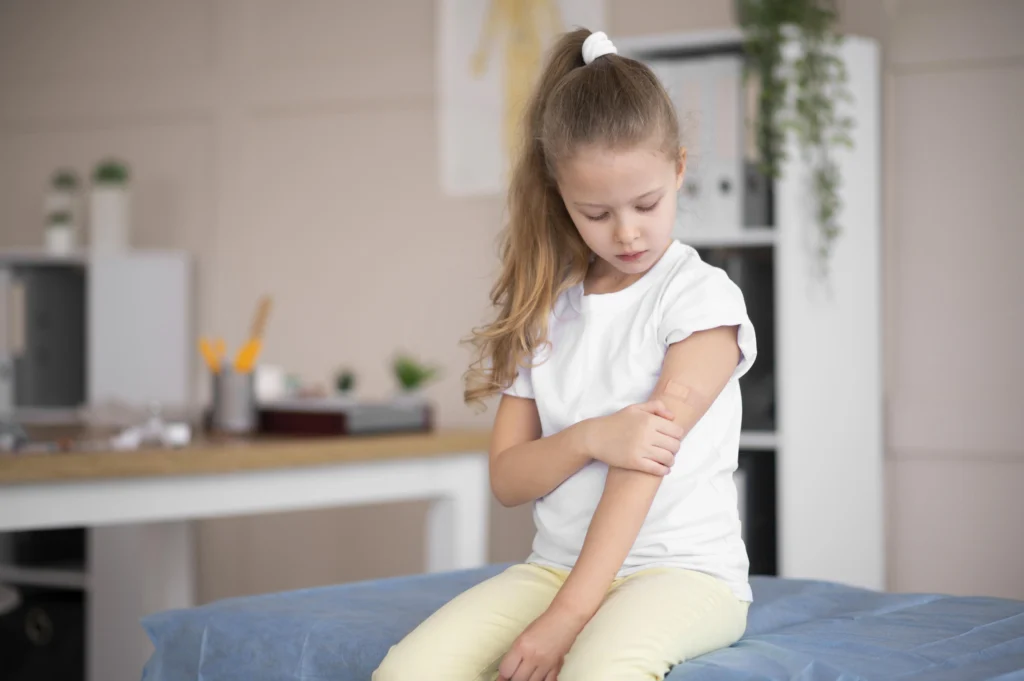
JIA can develop gradually. Parents may initially mistake its symptoms for ordinary aches, sports-related discomfort or temporary stiffness.
The following signs deserve attention.
1. Morning Stiffness
A child may struggle to move normally after waking up or after sitting for an extended period.
For example, a child with knee inflammation may take several minutes to walk comfortably in the morning.
2. Joint Swelling
One knee, ankle, wrist or finger may appear swollen compared with the opposite side.
Unlike ordinary muscle soreness, joint swelling may remain visible even when the child is resting.
3. Limping
A child may limp after getting out of bed or avoid putting full weight on an affected leg.
Younger children may not explain the discomfort clearly and may simply refuse to walk or participate in activities.
4. Reduced Joint Movement
Parents may notice difficulty fully straightening a knee, bending an elbow, opening a hand or performing movements that were previously easy.
5. Reduced Participation in Activities
Children may avoid running, climbing stairs, playing sports or getting up from the floor because of discomfort or stiffness.
6. Other Symptoms
Depending on the type of JIA, children may also experience fever, rash, fatigue or reduced appetite.
Some children develop uveitis, an inflammation inside the eye.
It can initially occur without obvious eye symptoms, making specialist eye screening important after a JIA diagnosis.
Can Growing Pains Occur After Exercise?
Yes.
Some children report growing pains after a physically active day, particularly when they have spent considerable time running, jumping or playing sports.
However, pain after exercise alone does not establish a diagnosis of growing pains.
The more typical pattern involves intermittent aching in the legs during the evening or night, followed by normal movement the next morning.
If pain consistently occurs during exercise, causes limping or interferes with walking, the child should be assessed for other possible causes, including musculoskeletal injuries and joint conditions.
Why Does Juvenile Arthritis Develop?
The exact cause of JIA is not fully understood.
It is considered an immune-mediated condition involving an inappropriate inflammatory response within the joints.
Genetic susceptibility and environmental influences may contribute, but no single cause explains every case.
JIA is not caused by:
- Normal childhood growth.
- Running or jumping.
- Ordinary sports participation.
- Lack of exercise.
- Poor posture or weak muscles.
It is also not one single disease.
Different subtypes affect children differently, which is why assessment by a paediatric rheumatologist is important.
How Is Juvenile Idiopathic Arthritis Diagnosed?
There is no single blood test that confirms JIA.
Diagnosis involves a detailed medical history, physical examination and investigations selected according to the child’s symptoms.
The clinician may assess:
- Which joints are affected.
- How long symptoms have been present.
- Whether morning stiffness or swelling occurs.
- Whether joint movement is restricted.
- Whether fever, rash or other symptoms are present.
- Whether another condition could explain the symptoms.
JIA is conventionally classified by arthritis beginning before age 16, persisting for at least six weeks and having no other identified cause after appropriate evaluation.
Parents should not wait six weeks to seek medical advice.
Persistent joint swelling, morning stiffness or unexplained limping should be assessed promptly.
Tests That May Be Recommended
Depending on the clinical findings, investigations may include:
- ESR and CRP: Blood tests that help assess inflammation.
- Full blood count: Helps evaluate blood cell levels and identify other possible concerns.
- ANA testing: May help assess the risk of uveitis in children with JIA, but does not confirm the diagnosis.
- Rheumatoid factor and anti-CCP: May help identify particular JIA subtypes.
- Imaging: Ultrasound or MRI may help identify joint inflammation. X-rays may be used when another condition needs investigation.
Normal inflammatory markers do not automatically rule out JIA. Similarly, a positive ANA result does not mean a child has arthritis.
The diagnosis depends on the overall clinical findings and exclusion of other conditions. (NIAMS)
When Should Parents Be Concerned About Leg Pain?
Certain symptoms should not be dismissed as ordinary growing pains.
Arrange a medical assessment if your child experiences:
- Pain that regularly occurs in the morning.
- Persistent stiffness after waking or resting.
- Swelling around a knee, ankle, wrist or other joint.
- Warmth or redness around a joint.
- Limping or difficulty bearing weight.
- Pain that interferes with normal walking or play.
- Reduced movement in an arm or leg.
- Persistent fatigue, unexplained fever or weight loss.
- Pain consistently affecting one specific area.
Seek urgent medical assessment if your child has a hot, swollen joint with fever, appears very unwell, experiences severe pain or suddenly cannot bear weight.
These symptoms may indicate a joint infection or another condition requiring prompt treatment.
Persistent night pain, unexplained bruising, pallor or weight loss also needs medical evaluation.
How Can Pediatric Physiotherapy Help?
Physiotherapy has different roles depending on whether the child experiences typical growing pains or has been diagnosed with JIA.
The first priority is identifying the cause of persistent pain.
Physiotherapy should not replace medical assessment when inflammatory arthritis is suspected.
Physiotherapy for Children With Growing Pains
Children with typical growing pains generally do not need a structured rehabilitation program.
If an assessment identifies associated movement limitations or another musculoskeletal problem, a physiotherapist may recommend:
- Gentle calf and thigh stretching when appropriate.
- Comfortable mobility activities.
- Age-appropriate strengthening if a specific weakness is identified.
- Advice about balancing activity and recovery.
- Guidance for parents on monitoring symptoms.
Gentle massage and a warm compress may help relieve occasional discomfort.
Exercise should not be presented as a cure for growing pains, and children should not be pushed through painful activities.
Physiotherapy for Children With Juvenile Idiopathic Arthritis
For children diagnosed with JIA, physiotherapy can form an important part of multidisciplinary management.
Treatment should be coordinated with the pediatric rheumatology team and adjusted according to disease activity, affected joints and functional needs.
1. Maintaining Joint Mobility
Inflammation and stiffness can reduce the available movement at affected joints.
Gentle, controlled range-of-motion exercises may help maintain mobility and reduce the risk of developing movement restrictions.
2. Improving Muscle Strength
Children who reduce activity because of pain or stiffness may develop muscle weakness.
Individualized strengthening can help maintain muscle capacity and support everyday activities such as walking, climbing stairs and playing.
3. Improving Balance and Coordination
Joint discomfort and altered movement patterns can affect balance and coordination.
When appropriate, therapy may include controlled standing activities, balance exercises and functional movement practice.
4. Improving Walking and Functional Mobility
Children with knee, ankle or hip involvement may develop altered walking patterns.
Physiotherapy can address walking mechanics, weight-bearing tolerance, posture and movement confidence.
5. Supporting Participation in Daily Activities
The goal is not simply to improve joint movement.
Children should be supported in returning to school activities, play, sports and age-appropriate independence.
The American College of Rheumatology conditionally recommends physical and occupational therapy for children with JIA.
These therapies can support joint range of motion, strength, endurance and participation alongside medical treatment. (Onel et al., 2022)
Can Children With Juvenile Arthritis Exercise?
Yes.
Appropriate physical activity is generally encouraged for children with JIA, but the type and intensity should be adjusted to their symptoms and disease activity.
A physiotherapist may recommend:
- Swimming or water-based exercise.
- Gentle range-of-motion activities.
- Controlled strengthening.
- Walking within comfortable limits.
- Low-impact activities.
- Gradual return to recreational sports when appropriate.
During an active flare, the affected joint may need modified activity and protection from excessive loading.
High-impact exercise, forceful stretching or activities that significantly increase joint pain should be avoided until the treating team advises that they are appropriate.
The aim is to maintain physical function without aggravating active inflammation.
An individualized exercise program is preferable to a fixed routine for every child. (Australian Living Guidelines)
Myth vs Fact: Growing Pains and Juvenile Arthritis
MYTH: Growing pains happen because a child’s bones are growing.
FACT: The exact cause of growing pains is not established. Despite the name, research has not shown that normal bone growth directly causes them.
MYTH: Every child with leg pain has growing pains.
FACT: Persistent pain, morning stiffness, joint swelling, limping or activity-related symptoms need proper assessment.
MYTH: Juvenile arthritis always causes severe pain.
FACT: Some children have noticeable stiffness, swelling or reduced movement without reporting severe pain.
MYTH: A normal blood test rules out juvenile arthritis.
FACT: JIA is diagnosed through clinical assessment and supporting investigations. Normal inflammatory markers do not always exclude the condition.
MYTH: Children with JIA should avoid exercise.
FACT: Appropriate physical activity is generally encouraged. Exercise should be individualized and modified during periods of increased disease activity.
What Can Parents Do at Home?
Parents can support their child by observing symptoms and keeping a simple record of changes.
A few practical steps include:
- Record when pain occurs: Note whether discomfort happens at night, in the morning or during activity.
- Observe movement: Watch for limping, stiffness or difficulty using a particular joint.
- Check for visible changes: Look for swelling or differences between the affected and unaffected sides.
- Encourage comfortable activity: Allow normal movement when tolerated, without forcing painful exercises.
- Follow medical advice: Attend recommended appointments and follow prescribed treatment.
- Monitor changes: Report new symptoms or worsening movement difficulties to the healthcare team.
If your child has been diagnosed with JIA, follow the individual treatment and exercise plan provided by the rheumatology and physiotherapy teams.
Final Thoughts
Not every episode of childhood leg pain indicates a serious condition. Typical growing pains are usually intermittent and settle by morning, while juvenile idiopathic arthritis can cause persistent joint inflammation, stiffness and changes in movement.
Parents should pay attention to patterns rather than pain alone. Morning stiffness, joint swelling, limping and reduced activity deserve medical assessment.
When JIA is diagnosed, early medical care combined with individualized physiotherapy can help protect joint movement, maintain strength and support a child’s participation in everyday activities.
The most important step is recognizing when a child’s pain is following an unusual pattern and seeking appropriate assessment rather than assuming it is simply part of growing up.
Conclusion
Growing pains and juvenile idiopathic arthritis can both cause discomfort in children, but their typical patterns are different.
Growing pains usually involve recurring lower-limb aches during the evening or night, with the child feeling well and moving normally by morning.
JIA involves persistent joint inflammation and may cause morning stiffness, swelling, warmth, restricted movement and limping.
The important distinction is not simply how much pain a child reports, but whether the symptoms affect joint movement and everyday function.
Pediatric physiotherapy can support mobility, strength and participation, particularly for children with diagnosed JIA.
However, persistent stiffness, joint swelling or unexplained limping should first be medically assessed.
Parents should not dismiss recurring joint symptoms as growing pains.
Early evaluation can help identify inflammatory conditions and ensure that children receive appropriate care.
Frequently Asked Questions
1. How can parents tell the difference between growing pains and juvenile arthritis?
Growing pains usually cause intermittent aches in the legs during the evening or night and settle by morning. Juvenile arthritis may cause joint swelling, warmth, morning stiffness, reduced movement and limping. A healthcare professional should assess symptoms that do not follow the typical growing-pain pattern.
2. At what age do growing pains usually occur?
Growing pains are commonly reported in children between approximately 3 and 12 years of age. They often involve intermittent discomfort in the legs, particularly during the evening or night.
3. Can juvenile arthritis occur without severe pain?
Yes. Some children with juvenile idiopathic arthritis may have joint swelling, morning stiffness or reduced movement without describing severe pain. Changes in walking, play and everyday activities can also provide important clues.
4. Does juvenile arthritis always affect multiple joints?
No. JIA can initially affect one joint or several joints, depending on its subtype. Persistent swelling or stiffness in even one joint deserves medical evaluation.
5. Can blood tests confirm juvenile idiopathic arthritis?
There is no single blood test that confirms JIA. Doctors consider the child’s symptoms, physical examination and relevant investigations. Blood tests can help assess inflammation and exclude other conditions, but normal results do not always rule out JIA.
6. Can physiotherapy help children with juvenile arthritis?
Yes. Individualised physiotherapy can help maintain joint mobility, improve strength and balance, support walking and encourage participation in daily activities. Treatment should be coordinated with the child’s medical team.
7. Should children with juvenile arthritis exercise?
Appropriate physical activity is generally encouraged because it supports strength, mobility and overall health. The type and intensity of exercise should be adjusted according to symptoms, joint involvement and disease activity.
8. When should parents seek medical attention for a child’s leg pain?
Seek medical advice if pain is persistent, occurs during activity, causes morning stiffness, involves joint swelling or leads to limping. A hot, swollen joint accompanied by fever, severe pain or inability to bear weight requires urgent medical assessment.
Stay tuned with us for more health related topics.
Follow us on LinkedIn and Instagram for more.
More Read



Medical Disclaimer
This article is intended for general educational and informational purposes only. It does not replace professional medical advice, diagnosis or treatment.
Growing pains and juvenile idiopathic arthritis can present differently in individual children. Only a qualified healthcare professional can assess symptoms and determine the appropriate diagnosis and treatment.
If your child experiences persistent pain, joint swelling, morning stiffness, limping or changes in movement, seek medical advice. A hot, swollen joint with fever or an inability to bear weight requires urgent medical attention.