


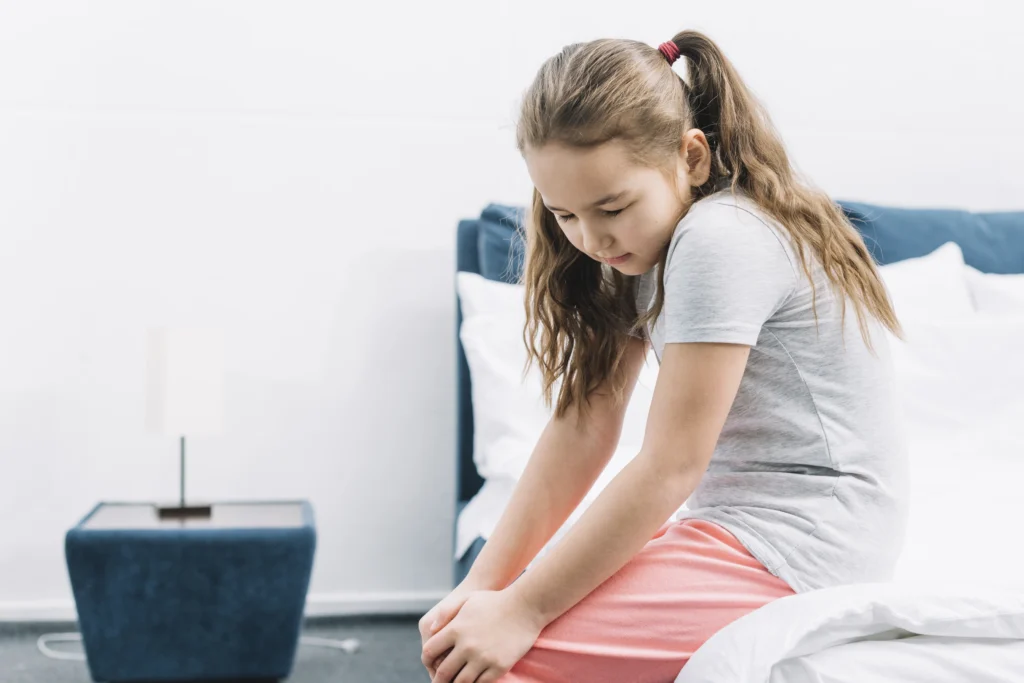
A child who starts limping, complains of knee pain after playing or avoids running may have a problem involving the hip rather than the knee. These symptoms could indicate Perthes disease in children
Quick Answer: What Is Perthes Disease?
Perthes disease, also called Legg-Calvé-Perthes disease, is a childhood hip condition in which the blood supply to the developing femoral head becomes temporarily disrupted. This causes bone tissue damage followed by a gradual healing and remodeling process.
Early signs parents should recognize include:
- Persistent or recurring limping.
- Unexplained knee, thigh or groin pain.
- Stiffness or reduced movement in one hip.
- Avoiding running, jumping or sports.
- Changes in walking or weight-bearing.
Remember: A recurring limp in a child should be medically assessed. Early evaluation helps identify the cause and guide appropriate treatment.
One possible cause is Perthes disease, a childhood condition that affects the developing upper end of the thigh bone.
Its early symptoms can be subtle. Some children experience only a mild limp, while others develop hip stiffness, thigh pain or difficulty participating in sports.
Recognizing these changes and arranging an appropriate medical assessment can help protect hip movement and guide treatment while the bone heals.
Key Takeaways for Parents
A recurring limp without an obvious injury can be an early sign of a hip problem.
Perthes disease may cause referred pain in the thigh or knee, even when the knee itself is healthy.
Reduced hip movement, particularly when moving the leg outwards or turning it inwards, needs assessment.
Age, bone involvement, hip movement and disease stage influence treatment decisions.
Appropriate rehabilitation can help maintain mobility, strength, balance and walking ability.
Early recognition and regular orthopedic follow-up are important for protecting long-term hip function.
What Is Perthes Disease?
Perthes disease, also called Legg-Calvé-Perthes disease, is a condition in which the blood supply to the femoral head becomes temporarily disrupted.
The femoral head is the rounded upper end of the thigh bone (femur). It fits into the socket of the pelvis to form the hip joint.
When its blood supply is interrupted, some bone tissue becomes damaged. The affected area gradually breaks down and is then replaced by new bone as the body repairs it.
This process is known as avascular necrosis. In Perthes disease, it affects the developing femoral head in children.
The condition most commonly develops between the ages of four and ten and is more frequently diagnosed in boys. It usually affects one hip, although both hips can be involved.
The exact cause remains unknown. Perthes disease is not simply caused by sports, physical activity or an ordinary childhood fall. (Ng et al., 2024)
Why Does Perthes Disease Develop?
The exact reason why blood flow to the femoral head becomes disrupted is not fully understood.
Researchers have investigated possible vascular, genetic and environmental influences, but no single cause has been established.
Once the bone is affected, it passes through a cycle of damage, breakdown and repair.
During this process, the femoral head can become softer and more vulnerable to pressure.
If it loses its normal rounded shape while healing, the way it fits into the hip socket may change.
This can affect hip movement and increase the risk of problems later in life.
Early Signs of Perthes Disease Parents Should Recognize
A change in walking pattern is often more noticeable than severe hip pain. Symptoms may develop gradually and sometimes fluctuate.
1. Persistent or Recurrent Limping
A limp without an obvious injury is one of the common early signs.
Parents may notice that their child:
- Walks unevenly after playing.
- Places less weight on one leg.
- Develops a limp towards the end of the day.
- Takes shorter steps on one side.
- Walks differently after running or climbing stairs.
Some children experience little pain initially. A recurring limp should therefore not be dismissed simply because the child does not complain.
2. Knee Pain Without a Clear Knee Injury
Perthes disease can cause referred pain, meaning discomfort originating in the hip is felt elsewhere.
A child may complain of pain around the groin, thigh or knee.
This can make the condition difficult to recognize because the knee may appear to be the problem.
When a child has unexplained or recurring knee pain, examining the hip is also important.
3. Hip Stiffness and Reduced Movement
As the condition develops, the affected hip may become increasingly stiff.
Parents might notice difficulty with:
- Moving the leg outwards, away from the body.
- Turning the thigh inwards.
- Squatting or getting up from the floor.
- Sitting comfortably in certain positions.
- Performing movements that previously felt easy.
Reduced hip abduction and internal rotation are particularly important findings during a clinical examination.
4. Avoiding Running, Jumping and Sports
A child who previously enjoyed active play may gradually become less interested in physical activities.
Running, jumping and prolonged walking can increase discomfort around the affected hip.
Parents may notice that their child stops playing sooner, avoids running games, requests frequent breaks or prefers sitting rather than participating in active play.
5. Changes in Walking and Running Patterns
Some children shift their body weight towards the unaffected side to reduce discomfort.
They may develop shorter steps, an uneven walking rhythm or a noticeable difference in how their legs move.
Weakness around the hip muscles can also contribute to pelvic instability and altered walking mechanics.
These changes are useful clues during a physiotherapy assessment, but they cannot confirm Perthes disease on their own.
Why Is Early Assessment Important?
A recurring limp in a child should be medically assessed, even when pain is mild.
Early assessment helps identify whether the problem originates in the hip, knee, muscles or another structure.
It also helps distinguish Perthes disease from conditions that may require different treatment.
Conditions That Can Look Similar
Several childhood conditions can cause hip pain or limping.
| Condition | Features that may help distinguish it |
|---|---|
| Transient synovitis | Often follows a viral illness and causes temporary hip pain and limping |
| Septic arthritis | May cause severe pain, fever, restricted movement and refusal to bear weight; requires urgent assessment |
| Juvenile idiopathic arthritis | May involve joint swelling, morning stiffness and persistent movement difficulties |
| Slipped capital femoral epiphysis (SCFE) | More common in older children and adolescents; may cause hip, thigh or knee pain and an altered gait |
| Musculoskeletal injury | Often follows an identifiable injury, although not always |
These conditions cannot reliably be distinguished by symptoms alone.
A clinician needs to assess the child’s history, examination findings and, when appropriate, imaging.
Important: Sudden severe hip pain, fever, inability to bear weight or a child who appears unwell requires urgent medical assessment. These symptoms should not be assumed to be Perthes disease.
What Happens Inside the Hip Joint?
Perthes disease progresses through several stages as the femoral head undergoes damage and repair.
Stage 1: Initial Bone Damage
The blood supply becomes disrupted, damaging bone tissue. Early symptoms may include a limp, hip discomfort and reduced movement.
Stage 2: Fragmentation
The body gradually removes damaged bone tissue. The femoral head may become softer and lose some of its normal shape.
Stage 3: Reossification
New bone gradually forms and replaces the damaged tissue. The femoral head begins to rebuild.
Stage 4: Healing and Remodelling
The bone continues to mature and remodel. The final shape of the femoral head is important because it influences how well the ball fits inside the hip socket.
The entire process can take several years, and the duration varies between children.
These stages are useful for understanding the disease, but treatment decisions depend on the child’s individual clinical and imaging findings.
How Is Perthes Disease Diagnosed?
An orthopedic specialist usually begins with a detailed medical history and physical examination.
The assessment may include:
- Observing the child’s walking pattern.
- Checking hip movement, particularly abduction and internal rotation.
- Assessing pain and joint stiffness.
- Comparing movement between both legs.
- Examining muscle strength and functional mobility.
Imaging Tests
X-rays: Pelvic X-rays are commonly used to identify changes in the femoral head and assess the stage and extent of the condition.
MRI: An MRI may be recommended when early X-rays are inconclusive but clinical suspicion remains high.
It can help identify changes before they become clearly visible on standard X-rays.
An initially normal X-ray does not always exclude Perthes disease.
Persistent symptoms may require further assessment and follow-up imaging. (Merck Manual Professional Edition, 2025)
How Is Perthes Disease Treated?
Treatment depends on the child’s age, the amount of femoral head involvement, the stage of the condition and the available hip movement.
The main aim is to relieve symptoms, preserve useful hip movement and protect the shape of the femoral head while it heals.
Activity Modification
High-impact activities such as running, jumping, trampolining and some contact sports may need to be reduced, particularly during the early and fragmentation stages.
Swimming and cycling are often considered suitable lower-impact activities, provided they are comfortable and permitted by the treating team.
Some children may need crutches or other mobility aids. However, weight-bearing restrictions should not be prescribed automatically. They depend on the individual clinical situation.
Orthopaedic Treatment
Some children are managed with observation, activity modification and regular clinical and X-ray monitoring.
Others may require braces, casts or surgery, depending on the severity of the condition and the risk of femoral head deformation.
Surgical procedures may be considered in selected children to improve how the femoral head sits within the hip socket during healing. (Galloway et al., 2024)
How Does Physiotherapy Help Children With Perthes Disease?
Physiotherapy supports movement, function and rehabilitation throughout the condition. However, treatment must be coordinated with the orthopedic team.
There is no single exercise program suitable for every child.
The physiotherapist considers the disease stage, pain, hip movement, weight-bearing instructions and imaging findings before selecting activities.
1. Maintaining Hip Range of Motion
Reduced hip movement can affect walking, sitting, squatting and other everyday activities.
A physiotherapist may recommend carefully selected mobility exercises to maintain hip abduction and internal rotation.
Gentle stretching may be appropriate in some cases, but forceful stretching or movements that increase pain should be avoided.
2. Improving Muscle Strength
Reduced activity can contribute to weakness around the hip and lower limb.
When appropriate, physiotherapy may include progressive exercises for the muscles supporting the hip and pelvis.
The timing and intensity of strengthening are important. Early-stage strengthening recommendations are not completely consistent, so exercises should follow the child’s individual treatment plan.
3. Improving Balance and Walking
Changes in weight-bearing can affect balance, coordination and walking confidence.
Physiotherapy may include:
- Supported weight-shifting activities.
- Appropriate balance exercises.
- Gait education and walking practice.
- Functional movement training.
- Advice on mobility aids when required.
The goal is to improve movement quality without placing unnecessary stress on the healing hip.
4. Encouraging Appropriate Physical Activity
Children still need opportunities to remain active, but activities may need modification.
Swimming and cycling are commonly recommended as lower-impact options when tolerated. High-impact activities may need to be restricted according to the disease stage and orthopedic advice.
5. Supporting a Safe Return to Sports
Returning to sports should not depend only on whether the child reports less pain.
The orthopedic team should guide progression according to bone healing, hip movement and imaging findings.
A physiotherapist can help rebuild strength, balance, movement control and functional capacity as restrictions are gradually lifted.
A 2025 international survey of paediatric orthopaedic surgeons found broad agreement about maintaining hip range of motion and discouraging high-impact activities during important stages of the disease.
However, recommendations about strengthening, weight-bearing and when to resume unrestricted activity varied between regions.
This reinforces the need for individualized rehabilitation rather than a universal exercise routine. (Hailer et al., 2025)
Myth vs Fact: Understanding Perthes Disease
MYTH: Perthes disease is caused by playing too much sport.
FACT: The exact cause is unknown. Physical activity is not established as the cause of the condition.
MYTH: Perthes disease always causes severe hip pain.
FACT: Some children initially experience only a mild or recurring limp, with little noticeable pain.
MYTH: Knee pain means the problem must be in the knee.
FACT: Hip conditions, including Perthes disease, can cause referred pain around the knee.
MYTH: Every child with Perthes disease needs complete bed rest.
FACT: Activity modification is individualized. Some children can continue suitable low-impact activities when approved by their treating team.
MYTH: Physiotherapy can restore the blood supply to the femoral head.
FACT: Physiotherapy does not reverse the underlying bone damage. It supports movement, muscle function and rehabilitation as the hip heals.
What Can Parents Do at Home?
Parents can support their child’s recovery by following the treatment plan and monitoring changes in movement.
Helpful steps include:
- Follow the orthopedic team’s advice about weight-bearing and activity restrictions.
- Encourage only the exercises prescribed by the physiotherapist.
- Avoid forcing movements that cause pain.
- Ask about suitable alternatives to running and jumping.
- Monitor changes in limping, stiffness and activity tolerance.
- Attend recommended follow-up appointments.
Parents should not start intensive stretching or strengthening programs without professional guidance.
Final Thoughts
Perthes disease can begin with small changes that are easy to overlook, such as a recurring limp, unexplained knee pain or reduced interest in active play.
Parents should not ignore persistent changes in walking or hip movement, even when a child does not report significant pain. A timely orthopedic assessment helps determine the cause and guides appropriate management.
With regular monitoring, individualized treatment and physiotherapy when appropriate, children can work towards maintaining mobility, participating in everyday activities and achieving the best possible long-term hip function.
Small changes in the way a child walks can provide important clues. Pay attention, seek assessment and support movement at every stage of recovery.
What Influences Long-Term Recovery?
The long-term outcome varies considerably between children.
Important factors include:
- Age when symptoms begin: Younger children generally have a greater capacity for bone remodeling.
- Extent of bone involvement: More extensive damage may increase the likelihood of residual deformity.
- Femoral head shape: Maintaining a well-rounded femoral head during healing is an important treatment goal.
- Hip movement: Persistent stiffness and restricted movement can affect function.
- Treatment and monitoring: Regular specialist follow-up helps identify changes and guide management.
Some children recover with good hip function, while others may experience residual stiffness, altered joint shape or early hip osteoarthritis later in life.
Long-term follow-up is particularly important when significant deformity remains after healing. (Sabry & Li, 2026)
Perthes disease is a childhood hip condition that can initially present as a subtle limp, unexplained knee pain or reduced interest in physical activities.
Because symptoms may fluctuate, parents can mistake the early signs for ordinary muscle soreness or a minor injury.
Recognizing persistent changes in walking and hip movement can help children receive timely orthopedic assessment.
With appropriate monitoring, individualized treatment and physiotherapy when indicated, children can maintain mobility and work towards the best possible long-term hip function.
Frequently Asked Questions About Perthes Disease
1. At what age does Perthes disease usually occur?
Perthes disease most commonly affects children between four and ten years of age. It can occur outside this age range, but the age at diagnosis can influence treatment and long-term outcomes.
2. What are the first signs of Perthes disease?
Early signs may include recurring limping, unexplained knee or thigh pain, reduced hip movement and avoiding running or jumping. Some children initially have very little pain.
3. Can Perthes disease cause knee pain?
Yes. Pain originating in the hip can be referred to the thigh or knee. A child with unexplained knee pain may therefore need an examination of the hip joint.
4. Does Perthes disease affect one or both hips?
It usually affects one hip, but both hips can be involved in some children. Bilateral involvement may not occur at the same time.
5. How long does Perthes disease take to heal?
The bone healing and remodeling process can take several years. The duration varies according to the child’s age, extent of bone involvement and individual disease progression.
6. Can a child with Perthes disease play sports?
Some activities may need to be reduced or temporarily avoided, particularly high-impact sports. Suitable lower-impact activities may be possible when approved by the treating orthopedic team.
7. Can physiotherapy help children with Perthes disease?
Yes. Individualized physiotherapy can help maintain hip mobility, support muscle strength, improve balance and walking, and guide a gradual return to functional activities when appropriate.
8. Does every child with Perthes disease need surgery?
No. Some children are managed with observation, activity modification and regular follow-up. Surgery is considered only in selected cases, depending on age, disease severity and hip involvement.
9. When should parents worry about a child’s limp?
A persistent or recurring limp should be medically assessed. Sudden severe pain, fever, refusal to bear weight or a child who appears unwell requires urgent medical attention.
More Read


Medical Disclaimer
The information provided in this article is intended for general educational purposes only. It should not be considered a substitute for professional medical advice, diagnosis or treatment.
Perthes disease requires individual assessment and monitoring by a qualified healthcare professional, usually an orthopedic specialist. Treatment and physiotherapy recommendations vary according to the child’s age, symptoms, disease stage and imaging findings.
Always consult a qualified healthcare professional before starting exercises, changing activity levels or modifying a child’s treatment plan. Seek urgent medical attention if a child develops severe hip pain, fever, sudden inability to walk or refusal to bear weight.


