


Cradle Cap or Baby Eczema? Signs Parents Should Look For
Dry, flaky or irritated skin is common in babies, particularly during the first few months.
When parents notice patches on the scalp, forehead or cheeks, two conditions often come to mind: baby eczema and cradle cap.
Quick Answer: Baby Eczema vs Cradle Cap
Baby eczema usually causes dry, inflamed and itchy skin, while cradle cap typically produces greasy, yellowish or white scales on the scalp. Cradle cap is generally not itchy or uncomfortable.
Baby Eczema
- Dry, rough patches
- Frequent itching or rubbing
- Inflamed or discolored skin
- May disturb sleep
Cradle Cap
- Greasy yellow or white scales
- Usually little or no itching
- Commonly affects the scalp
- Usually improves naturally
Remember: Babies can have both conditions at the same time. Persistent, spreading, painful or infected-looking rashes should be assessed by a healthcare professional.
Although both can cause scaling and changes in skin color, they are different conditions.
Baby eczema usually causes dry, inflamed and itchy skin, while cradle cap typically produces greasy, yellowish or white scales that do not bother the baby.
The distinction matters because their care is different. Moisturizing is central to eczema management, whereas cradle cap usually improves with gentle scalp care and time.
Some babies can also have both conditions, making the difference less obvious.
This guide explains how to recognize baby eczema and cradle cap, understand their causes, manage their symptoms safely and identify when a medical assessment is needed.
Key Takeaways for Parents
Here are the important points to remember when comparing baby eczema and cradle cap:
- Eczema causes dryness and itching: Babies may rub affected areas, become unsettled and experience disturbed sleep.
- Cradle cap causes greasy scales: Yellowish or white crusty patches commonly develop on the scalp without significant discomfort.
- Both can occur together: Some babies have cradle cap on the scalp and eczema on the cheeks or body.
- Care is different: Eczema management focuses on moisturizing and controlling inflammation, while cradle cap usually needs gentle scale-softening care.
- Seek medical advice when needed: Spreading rashes, persistent itching, painful skin, pus or fever require professional assessment.
- Physiotherapy has a limited role: It may support comfortable positioning and movement when skin discomfort affects activity, but it does not treat either skin condition.
What Is Baby Eczema?
Baby eczema usually refers to atopic dermatitis, a chronic inflammatory skin condition that can cause dryness, itching and recurring patches of irritated skin.
A healthy skin barrier helps retain moisture and protects the body from irritants. In babies with eczema, this barrier may not work as effectively.
Moisture escapes more easily, leaving the skin dry and vulnerable to inflammation.
Eczema commonly begins during infancy, sometimes within the first six months. A family history of eczema, asthma or allergic rhinitis can increase the likelihood of developing it.
Common features include:
- Dry, rough or scaly patches
- Itching and frequent rubbing
- Inflamed areas on the cheeks, scalp or body
- Small bumps, scratches or cracked skin
- Repeated flare-ups followed by periods of improvement
Eczema is not contagious and is not caused by poor hygiene. It is associated with a combination of genetic susceptibility, skin-barrier differences and immune-system activity.
Its appearance can vary with skin tone. On lighter skin, inflammation may look pink or red. On darker skin, it may appear brown, purple, grey or darker than the surrounding area.
The American Academy of Dermatology explains that infant eczema commonly affects the cheeks, scalp and other areas of the body, with dryness and itching among its characteristic features (American Academy of Dermatology)
What Is Cradle Cap?
Cradle cap is the common name for infantile seborrheic dermatitis affecting the scalp. It is a frequent and generally harmless skin condition in young babies.
It usually appears as greasy, yellowish or white scales that stick to the scalp. The patches may become thick or crusty and can sometimes extend beyond the hairline.
Cradle cap may also affect:
- Eyebrows and forehead
- Behind the ears
- Sides of the nose
- Neck folds
- Armpits
- Nappy area
Unlike typical atopic eczema, uncomplicated cradle cap is usually not itchy or painful. Most babies continue feeding, sleeping and behaving normally.
The exact cause is not fully understood. Skin oil production and the activity of naturally occurring Malassezia yeast are thought to contribute. Cradle cap is not caused by poor hygiene and cannot be passed from one baby to another.
It often improves naturally over several weeks or months. The NHS describes it as a common condition that generally clears without medical treatment (NHS).
Baby Eczema vs Cradle Cap: Key Differences
The appearance of the skin, the type of scaling and whether the baby seems uncomfortable can help distinguish the two conditions.
| Feature | Baby Eczema | Cradle Cap |
|---|---|---|
| Medical name | Usually atopic dermatitis | Infantile seborrheic dermatitis |
| Appearance | Dry, inflamed, rough or scaly patches | Greasy, waxy, yellowish or white scales |
| Itching | Common | Usually absent or mild |
| Skin texture | Dry and sometimes cracked | Oily, thick or crusty |
| Common locations | Cheeks, scalp, neck, trunk and limbs | Scalp, eyebrows, forehead and skin folds |
| Baby’s comfort | May cause irritability and disturbed sleep | Usually does not bother the baby |
| Pattern | Can flare up and settle repeatedly | Often improves gradually during infancy |
| Main care | Regular emollients and prescribed treatment when needed | Gentle scale removal and scalp care |
These are typical patterns, not strict diagnostic rules. Eczema can affect the scalp, and seborrheic dermatitis can appear on the face and body.
A healthcare professional may need to examine the skin to identify the cause.
How to Recognize Baby Eczema
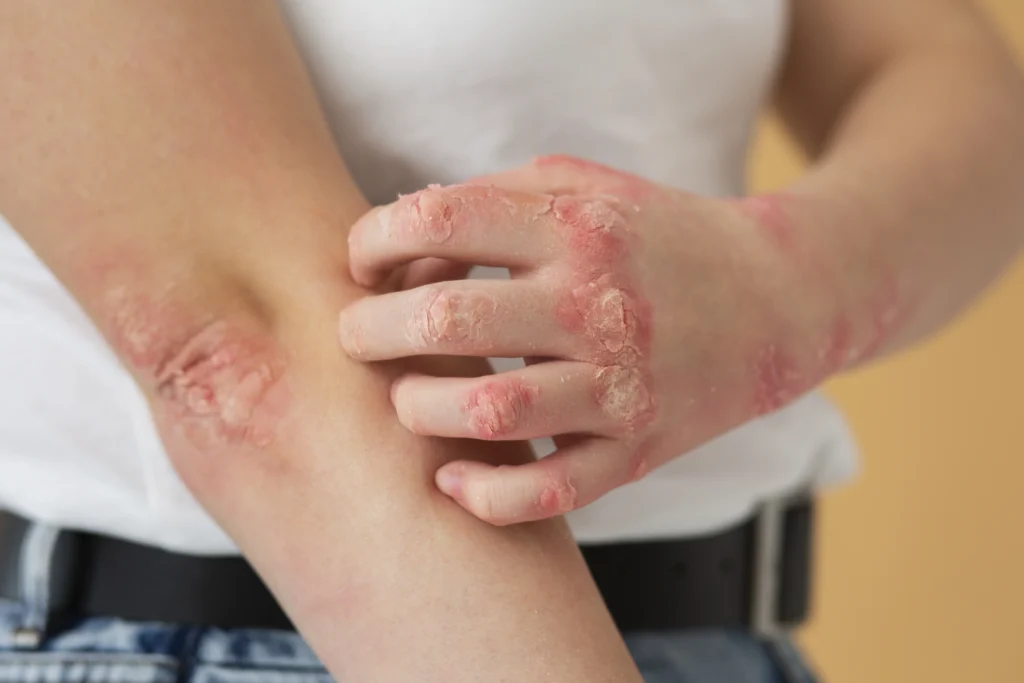
Eczema often produces more than simple flaking. Parents may notice changes in skin texture, color and their baby’s behavior.
1. Dry, Rough or Sensitive Skin
The affected skin may feel rough, tight or unusually dry. Unlike the oily scales associated with cradle cap, eczema patches are generally dry.
Dryness may become more noticeable after bathing, exposure to harsh soaps or contact with irritating skincare products.
2. Itching and Frequent Rubbing
Itching is an important clue that a rash may be eczema.
Babies cannot explain that their skin feels itchy, but parents may notice them rubbing their cheeks against bedding, scratching their head or arms, or becoming unsettled during sleep.
Repeated rubbing can damage the skin and increase the risk of infection.
3. Inflamed or Discolored Patches
Eczema may appear as pink or red patches on lighter skin. On darker skin, inflammation can look brown, purple, grey or darker than the surrounding area.
Look for changes in texture, swelling and persistent irritation rather than relying only on redness.
4. Cracks, Scratches or Oozing
More inflamed eczema may develop small bumps, scratch marks, cracks or areas that release fluid. These changes can make the skin sore and increase the risk of secondary infection.
5. Disturbed Sleep
Itching can become particularly troublesome at night. A baby with active eczema may wake frequently, rub against bedding or become irritable.
Cradle cap, in comparison, generally does not interfere with sleep or feeding.
How to Recognize Cradle Cap
Cradle cap usually has a distinctive appearance. Its visible scales are often more noticeable than any discomfort.
1. Greasy Yellow or White Scales
The most recognizable feature is a layer of thick, oily-looking scales on the scalp. They may stick to the skin and form crust-like patches.
The scales can be white, yellowish or slightly brown.
2. Scaling Around the Eyebrows and Ears
Cradle cap is not always limited to the top of the head. Some babies develop similar scaling around their eyebrows, forehead, behind the ears or in skin folds.
3. Little or No Itching
Most babies with uncomplicated cradle cap do not appear uncomfortable. They generally do not scratch or rub the affected areas repeatedly.
Significant itching, distress or widespread dry patches should prompt consideration of eczema or another skin condition.
4. Hair May Come Away With the Scales
Some hair may loosen when thick scales naturally shed or are gently removed. This is usually temporary, and the hair generally grows back.
Never pull scales off forcefully, as doing so can injure the scalp.
Can a Baby Have Eczema and Cradle Cap at the Same Time?
Yes. A baby can develop both conditions.
For example, an infant may have greasy yellow scales on the scalp consistent with cradle cap while also developing dry, itchy patches on the cheeks or arms that suggest eczema.
The distinction can be difficult when seborrheic dermatitis affects the face or eczema involves the scalp. The two conditions can also look similar during the early weeks of life.
Parents should avoid assuming that every flaky patch has the same cause. If the rash is widespread, persistent, itchy or not responding to gentle care, a pediatrician or dermatologist can assess it.
What Can Cause Baby Eczema and Cradle Cap?
Understanding their contributing factors helps explain why the conditions behave differently.
Factors Associated With Baby Eczema
Eczema develops through a combination of factors:
- Skin-barrier differences: A weaker skin barrier allows moisture to escape and irritants to enter more easily.
- Genetic susceptibility: A family history of eczema or other atopic conditions can increase the likelihood of developing it.
- Immune-system activity: Inflammation contributes to itching, dryness and recurring flare-ups.
- Environmental irritants: Fragranced products, harsh detergents, rough fabrics and excessive heat may aggravate symptoms.
These factors do not mean parents have caused the condition. Eczema can develop even when a baby’s skin is cared for carefully.
Factors Associated With Cradle Cap
Cradle cap is associated with changes in skin oil production and the activity of microorganisms naturally present on the skin.
Possible contributing factors include:
- Increased activity of oil-producing glands during early infancy
- Natural changes in skin oil production
- Interaction between skin oils and Malassezia yeast
It is not a sign that the scalp has not been washed properly.
How Are Baby Eczema and Cradle Cap Treated?
Treatment depends on the condition, its severity and the areas affected. Gentle skincare is important for both, but their management is not identical.
Managing Baby Eczema
The main goals are to protect the skin barrier, reduce inflammation and control itching.
1. Apply fragrance-free moisturizer
Emollients help reduce moisture loss and protect the skin barrier. They are a central part of eczema management.
Use an appropriate, unperfumed moisturizer regularly, including when the skin looks better.
Apply it gently rather than rubbing vigorously. If a product causes irritation, stop using it and ask a healthcare professional about an alternative.
2. Keep bathing gentle
Use lukewarm water and avoid long, hot baths. Choose gentle, fragrance-free cleansing products and avoid harsh soaps or bubble baths.
Pat the skin dry instead of rubbing it with a towel. Apply moisturizer afterwards.
3. Reduce exposure to irritants
Fragranced lotions, harsh detergents, rough fabrics and excessive heat may aggravate eczema in some babies.
Observe whether particular products or conditions appear to trigger flare-ups. Do not introduce restrictive diets or eliminate foods without medical advice.
4. Follow prescribed treatment
A healthcare professional may recommend a topical corticosteroid to control an eczema flare. The appropriate strength and duration depend on the baby’s age, the affected body area and the severity of inflammation.
Do not apply steroid creams, medicated ointments or combination products to an infant without professional guidance. Facial skin and skin folds need particular care.
NICE recommends regular unperfumed emollients as the foundation of childhood eczema management, with topical corticosteroids selected according to severity and body site (NICE)
Managing Cradle Cap
Cradle cap often improves without prescription treatment. The aim is to soften and loosen the scales without damaging the scalp.
1. Soften the scales gently
A suitable baby emollient or a small amount of coconut oil may help loosen scales. Use a product appropriate for infant skin and follow healthcare professional or product guidance.
2. Use a soft baby brush
After softening the scales, gently brush the scalp with a soft baby brush. Avoid scrubbing, scraping or pulling at attached scales.
3. Wash with mild baby shampoo
Use a gentle, fragrance-free baby shampoo to remove loosened scales and excess oil. Rinse thoroughly.
4. Avoid picking the crusts
Pulling or scraping scales can break the skin and increase the risk of bleeding and infection.
Avoid olive oil, peanut oil, fragranced products, adult shampoos and harsh soaps. The NHS recommends gentle scale-softening care and warns against picking crusts (NHS).
If cradle cap becomes widespread, inflamed or persistent, a healthcare professional may recommend additional treatment.
Other Skin Conditions That Can Look Similar
Not every flaky or irritated patch is eczema or cradle cap. Other conditions can produce similar symptoms.
- Contact dermatitis: Irritation or an allergic reaction to a product, detergent, fragrance or material can cause inflamed skin.
- Impetigo: This bacterial skin infection may cause blisters, sores and yellowish or honey-colored crusts. It needs medical assessment.
- Scabies: This causes intense itching and may affect several family members. It requires specific treatment.
- Fungal infection: Some fungal conditions can cause scaly patches, including on the scalp. Hair loss or broken hairs may be a clue.
- Psoriasis: This can cause well-defined patches with thicker scales, although it is less common in young infants.
A persistent rash that does not respond as expected should be reassessed rather than treated repeatedly as cradle cap or eczema.
A clinical review of childhood atopic dermatitis also highlights seborrheic dermatitis, contact dermatitis, fungal infection and other inflammatory conditions as possible diagnostic alternatives (Napolitano et al., 2022).
Baby Eczema vs Cradle Cap: Myth vs Fact
MYTH: Cradle cap develops because parents do not wash their baby’s hair properly.
FACT: Cradle cap is associated with skin oil production and naturally occurring skin microorganisms. It is not caused by poor hygiene.
MYTH: Every flaky patch on a baby’s scalp is cradle cap.
FACT: Eczema, contact dermatitis and other skin conditions can also cause scalp scaling. Persistent or unusual symptoms need assessment.
MYTH: Baby eczema always appears red.
FACT: Eczema can appear brown, purple, grey or darker than the surrounding skin, particularly on darker skin tones.
MYTH: Cradle cap and eczema are the same condition.
FACT: They are different inflammatory skin conditions. Cradle cap is usually greasy and non-itchy, whereas eczema is commonly dry and itchy.
MYTH: Parents should peel off thick cradle cap scales.
FACT: Forceful removal can injure the scalp and cause bleeding or infection. Soften scales and brush gently instead.
MYTH: Physiotherapy can cure baby eczema or cradle cap.
FACT: Physiotherapy does not treat these skin conditions. Its role is limited to separate movement, positioning or developmental concerns.
When Should Parents Seek Medical Advice?
Arrange a medical assessment if:
- The rash spreads beyond the scalp or becomes widespread.
- The skin becomes increasingly red, swollen or painful.
- Cradle cap does not improve after a few weeks of gentle care.
- The baby develops persistent itching or disturbed sleep.
- The affected skin cracks, bleeds or releases fluid.
- The rash repeatedly returns or does not respond to recommended treatment.
- You are unsure whether the condition is eczema, cradle cap or another skin problem.
Warning Signs of Skin Infection
Seek prompt medical attention if the affected skin develops pus, increasing warmth, swelling, tenderness, rapidly worsening redness or yellowish crusting.
A baby with fever, unusual sleepiness, poor feeding or appearing generally unwell needs prompt assessment.
One important complication is eczema herpeticum, a viral infection that can affect babies with eczema. It may cause clusters of painful blisters or similar-looking small sores, sometimes accompanied by fever or rapid deterioration. This requires urgent medical assessment.
Can Physiotherapy Help Babies With Eczema or Cradle Cap?
Physiotherapy does not diagnose or treat eczema or cradle cap. Neither condition is caused by muscle weakness, poor posture or delayed motor development.
However, a pediatric physiotherapist may become involved if a baby has separate movement or developmental concerns.
For example, significant skin discomfort may make a baby reluctant to tolerate tummy time or certain positions. A physiotherapist can assess age-appropriate movement and help parents support comfortable participation.
Depending on the baby’s needs, this may include:
- Encouraging comfortable tummy-time positions
- Supporting age-appropriate head and trunk control
- Promoting reaching, rolling and other early movement skills
- Helping parents adapt handling and positioning to the baby’s comfort
Parents should avoid rough fabrics, excessive heat and friction during positioning activities. If the skin is broken, infected or painful, discuss activity modifications with the treating healthcare professional.
For persistent skin symptoms, a pediatrician or dermatologist remains the appropriate professional for diagnosis and treatment.
Final Thoughts
Not every dry or flaky patch on a baby’s skin means eczema, and not every scalp scale is cradle cap. Understanding the difference can help parents choose appropriate skincare and avoid unnecessary treatments.
Remember that eczema commonly causes dryness and itching, while cradle cap usually produces greasy scales without significant discomfort. Some babies may experience both conditions.
If your baby’s rash is spreading, painful, persistent or showing signs of infection, seek advice from a qualified healthcare professional. Gentle care, an accurate diagnosis and appropriate treatment can help protect your baby’s delicate skin.
Conclusion
Baby eczema and cradle cap can look similar, particularly when both affect the scalp, forehead or cheeks. However, their typical features differ.
Eczema usually causes dry, inflamed and itchy skin, while cradle cap more often produces greasy, yellowish scales without significant discomfort.
The most useful clues are the appearance of the scales, the presence of itching, the baby’s comfort and the areas affected. Some infants may have both conditions, so appearance alone cannot always confirm the diagnosis.
Gentle skincare can help manage mild symptoms, but persistent, spreading or infected-looking rashes need medical assessment. With the correct diagnosis and appropriate care, most babies can be kept comfortable while their skin improves.
Frequently Asked Questions
1. How can I tell if my baby has eczema or cradle cap?
Baby eczema usually causes dry, inflamed and itchy patches, while cradle cap typically produces greasy yellowish or white scales on the scalp. The baby’s comfort and the location of the rash can provide additional clues, but a healthcare professional may need to confirm the diagnosis.
2. Can a baby have eczema and cradle cap at the same time?
Yes. A baby can have cradle cap on the scalp and eczema on the cheeks, arms or other parts of the body. Their symptoms may overlap, so persistent or widespread skin changes should be assessed.
3. Does cradle cap make babies itchy?
Cradle cap is usually not itchy or painful. If your baby frequently scratches, rubs the scalp or seems uncomfortable, eczema or another skin condition may be contributing.
4. Can cradle cap turn into eczema?
Cradle cap does not normally turn into eczema. They are separate conditions, although a baby can develop both. If the skin becomes persistently dry and itchy, seek medical advice.
5. How long does cradle cap last in babies?
Cradle cap often improves gradually over several weeks or months and usually resolves during infancy. Persistent, widespread or inflamed scaling should be reviewed by a healthcare professional.
6. Can I use coconut oil on my baby’s cradle cap?
A small amount of coconut oil may help soften scales for some babies, but it is not essential and may irritate some skin. Use only a suitable infant-safe product, avoid fragranced preparations and ask your healthcare professional if your baby has sensitive or inflamed skin.
7. When should I take my baby to a doctor for a skin rash?
Seek medical advice if the rash spreads, becomes painful, develops pus or blisters, or does not improve with gentle care. Fever, poor feeding, unusual sleepiness or rapidly worsening skin symptoms require prompt assessment.
8. Can physiotherapy help babies with eczema or cradle cap?
Physiotherapy does not treat eczema or cradle cap. A pediatric physiotherapist may help with separate developmental or movement concerns, such as comfortable positioning and age-appropriate motor activities, if skin discomfort affects participation.
Stay tuned with us for more health related topics.
Follow us on LinkedIn and Instagram for more.
More Read


Medical Disclaimer
This article is intended for general educational and informational purposes only. It does not replace professional medical advice, diagnosis or treatment.
Baby eczema and cradle cap can have overlapping symptoms, and other skin conditions may produce similar changes. Always consult a qualified pediatrician or dermatologist if you are unsure about your baby’s skin condition or if symptoms persist or worsen.
Do not start medicated creams, stop prescribed treatment or use home remedies on your baby’s skin without appropriate professional guidance. Seek prompt medical attention if your baby develops fever, painful blisters, pus, rapidly spreading redness or appears generally unwell.


