NEW DELHI: Health took a prominent place at the 18th BRICS Summit in New Delhi, with leaders backing closer cooperation on pandemic preparedness, primary health care, medicines and vaccines, digital health, artificial intelligence and the fight against noncommunicable diseases.
Held under India’s BRICS presidency from September 12 to 13, the summit adopted the New Delhi Declaration 2026 under the theme “Building for Resilience, Innovation, Cooperation and Sustainability.” Health was woven into each of those priorities, with countries outlining new mechanisms intended to strengthen cooperation across public health and medical research.
The World Health Organization (WHO) welcomed the commitments in an update published on September 21, saying the summit’s health agenda could help advance stronger and more resilient health systems.
Health Moves Up the Agenda
The summit’s health commitments go beyond responding to individual disease outbreaks.
Leaders emphasized the need for resilient, inclusive and people-centred health systems capable of providing care while also preparing for future emergencies.
The New Delhi Declaration reaffirmed BRICS’ commitment to universal health coverage and called for stronger multilateral cooperation on health, while recognizing the coordinating role of WHO.
The declaration also linked health security with surveillance, early warning systems, laboratory networks, digital technologies and the development of skilled health workforces.
New Early Warning System
One of the most notable developments was support for the BRICS Integrated Early Warning System.
The initiative is intended to strengthen the ability of BRICS countries to identify and respond to infectious disease threats, including mass infectious disease events.
The declaration also welcomed the creation of a dedicated sub-working group to advance the system.
The aim is to improve information sharing and coordination before outbreaks develop into wider public health emergencies.
Stronger Public Health Networks
BRICS leaders also highlighted the role of National Public Health Institutes (NPHIs) in strengthening health systems.
These institutions play an important role in areas such as disease surveillance, laboratory services, workforce development, research and emergency response.
The summit endorsed an operational framework for cooperation among NPHIs, creating a platform for countries to exchange expertise and strengthen public health capabilities according to their national circumstances.
For countries facing emerging infectious diseases and other health threats, stronger links between national public health institutions could improve coordination and response.
Pandemic Preparedness Remains Central
The summit also addressed preparations for future pandemics.
BRICS leaders supported continued engagement on the Pathogen Access and Benefit-Sharing (PABS) annex to the WHO Pandemic Agreement.
The issue is linked to how countries share access to pathogens and how benefits such as vaccines, diagnostics and treatments can be distributed.
The broader objective is to create a system that allows countries to cooperate during health emergencies while supporting more equitable access to medical countermeasures.
The New Delhi Declaration called for continued constructive engagement on the PABS negotiations.
Local Production Gets Fresh Push
Another major theme was strengthening local and regional production of medical products.
The declaration emphasized the importance of improving access to vaccines, therapeutics and diagnostics while strengthening regulatory cooperation between BRICS countries.
The focus reflects lessons from disruptions to global medical supply chains, when shortages and unequal purchasing power affected access to essential health products.
Greater regional production could help countries build more resilient supply chains and improve access during future health emergencies.
Digital Health and AI
Technology was another major part of the health agenda.
BRICS leaders backed greater cooperation on digital health and artificial intelligence, recognizing their potential to expand access to health services and improve the way health systems operate.
The declaration welcomed the BRICS Compendium on Digital Health Architecture for Continuum of Care, including access to health services in remote areas.
AI and digital tools could have applications ranging from disease surveillance and health records to research and remote healthcare.
At the same time, the effectiveness of these technologies will depend on infrastructure, skilled personnel, responsible implementation and equitable access.
Focus on Noncommunicable Diseases
The health agenda also extends beyond infectious diseases.
BRICS leaders identified obesity and noncommunicable diseases as major public health challenges and endorsed the BRICS Mission for Healthy Lifestyle.
The group also backed a roadmap for joint action on healthy lifestyles covering the period from 2026 to 2029.
The approach focuses on prevention and health promotion rather than relying only on treatment after disease develops.
Mental health was included as another important area, with the declaration supporting greater cooperation on mental well-being and the development of networks for training, research and sharing best practices.
Mental Health Gets Greater Attention
The declaration places mental health within the broader goal of sustainable health development.
BRICS leaders supported the establishment of a BRICS Training Hub Network and a Network of Centres of Excellence focused on mental health.
India’s National Institute of Mental Health and Neuro Sciences, or NIMHANS, is identified as the coordinating centre of excellence for the network.
The proposed network is intended to support collaborative research, policy dialogue and the development of evidence-based approaches to mental health promotion.
Social Factors and Health
The summit also recognized that health outcomes are shaped by conditions outside hospitals and clinics.
BRICS leaders endorsed an operational framework addressing diseases driven by social determinants of health.
This includes cooperation on factors that influence health outcomes across communities and populations, as well as the use of technology and cross-sector collaboration to reduce inequalities.
The approach reflects a broader understanding of health, where prevention and health equity are linked to social and economic conditions.
Science and Research
Scientific cooperation also featured prominently in the health commitments.
BRICS countries highlighted cooperation in areas including tuberculosis research, vaccines, regulatory systems, digital health and medical technologies.
The declaration also supported continued work through the BRICS Vaccine R&D Centre and cooperation in nuclear medicine.
The wider objective is to strengthen research capabilities and improve the ability of countries to develop and access health technologies.
Traditional Medicine Enters the Framework
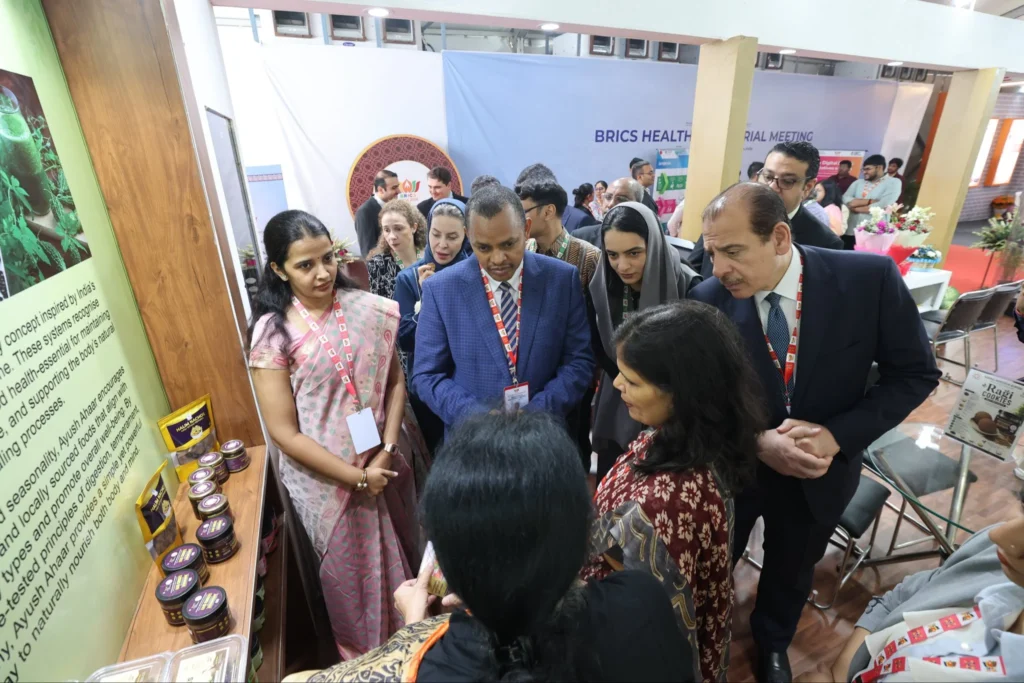
The New Delhi Declaration also recognized the growing role of Traditional, Complementary and Integrative Medicine (TCIM).
BRICS leaders welcomed the proposed creation of a BRICS Expert Working Group on TCIM under the health track.
The framework emphasizes research, knowledge exchange and evidence-informed approaches, along with appropriate standards for quality, safety and efficacy.
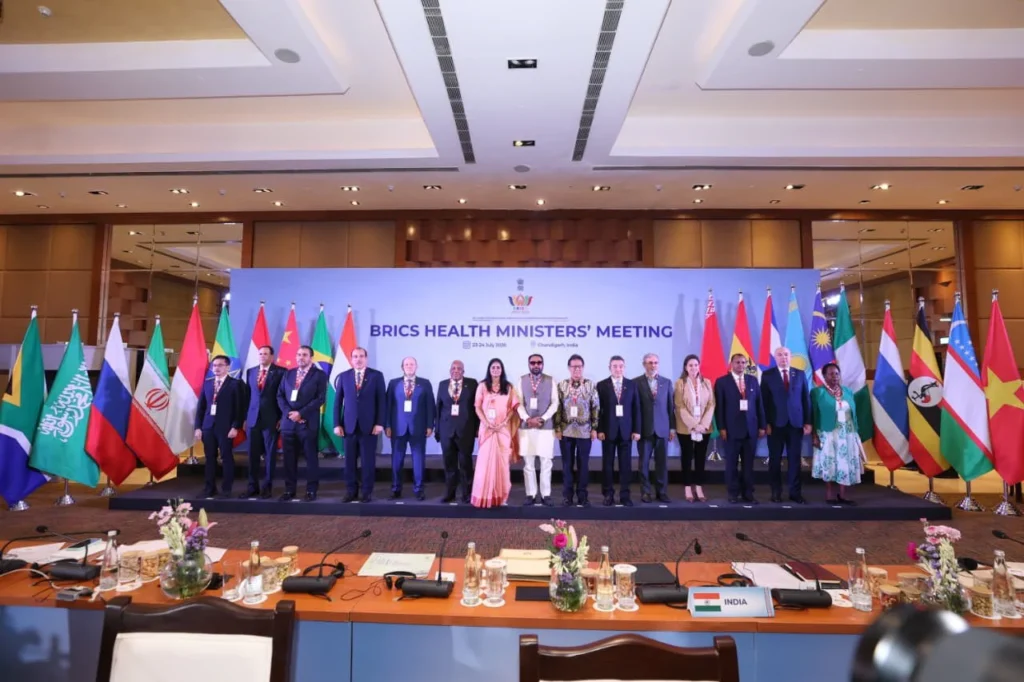
The move builds on commitments made at the 16th BRICS Health Ministers’ Meeting in Chandigarh earlier in 2026.

India’s Role in the Health Agenda
India hosted the 18th BRICS Summit as part of its 2026 presidency.
The health commitments build on the outcomes of the 16th BRICS Health Ministers’ Meeting, held in Chandigarh in July.
That meeting laid groundwork for cooperation across health systems, pandemic preparedness, vaccines, medicines, digital health and other areas that were subsequently reflected in the leaders’ declaration.
The New Delhi summit has now placed those priorities at the leadership level, creating a broader political framework for implementation.
From Commitments to Action
The announcements at the summit establish a wide-ranging health agenda, but implementation will determine how much of it translates into practical outcomes.
The proposed early warning system will require countries to share information and strengthen surveillance capacity. Public health networks will depend on sustained cooperation between national institutions.
Similarly, expanding local production, digital health and medical research will require investment, infrastructure and technical expertise.
The health commitments therefore represent the beginning of a longer implementation process rather than an immediate change in healthcare delivery.
What Comes Next?
The 2026 BRICS Summit has placed health firmly within the group’s wider agenda of resilience, innovation, cooperation and sustainability.
The next phase will focus on putting the agreed mechanisms into operation, including the integrated early warning system, stronger public health institute networks and new cooperation frameworks for healthy lifestyles and social determinants of health.
For WHO and BRICS countries, the broader objective is to strengthen health systems before the next emergency arrives while expanding access to essential healthcare, medicines, vaccines and technologies.
The success of these commitments will ultimately depend on sustained implementation, cooperation and accountability across participating countries.
Stay tuned with us for more health related topics.
Follow us on LinkedIn and Instagram for more.