


If your knees, hips, wrists, shoulders, or other joints have started aching after beginning birth control pills, it is understandable to wonder whether the medication is responsible.
Quick Answer
Birth control pills have not been clearly proven to directly cause joint pain. Hormonal contraception can influence musculoskeletal tissues, but research has not established a simple cause-and-effect relationship between taking the pill and developing joint pain. If pain begins after starting or changing contraception, it is worth considering other possible causes and having the symptoms assessed if they persist.
Hormonal contraception changes the body’s exposure to synthetic hormones, and sex hormones can interact with musculoskeletal tissues.
However, current research has not established that birth control pills directly cause joint pain in most women.
That does not mean your symptoms should be dismissed.
The timing of your symptoms, the type of pain, your activity level, previous injuries, sleep, and other health factors can all help explain what is happening.
From a physiotherapy perspective, the important question is not simply whether you take the pill.
It is what is contributing to the joint pain and how that pain is affecting your movement and function.
Key Takeaways
- Birth control pills have not been proven to directly cause joint pain.
- Hormonal changes can interact with muscles, tendons and ligaments, but individual responses vary.
- Joint pain can have many other causes, including overuse, previous injuries, training changes and poor movement mechanics.
- Physiotherapy can assess strength, mobility, movement control and loading patterns.
- Exercise can help improve strength and physical function when appropriately selected and progressed.
- Do not stop prescribed contraception without discussing the decision with your healthcare professional.
Can Birth Control Pills Cause Joint Pain?
The short answer is: possibly in some individuals, but a direct cause has not been clearly established.
Research on oral hormonal contraceptives and the musculoskeletal system has mainly examined muscles, tendons, ligaments, bone health, and injury risk rather than joint pain itself.
A systematic review found that oral hormonal contraceptives may influence some musculoskeletal characteristics, but the available studies were limited and did not establish a consistent effect on muscle strength or tendon properties. (Römer et al., 2022).
Another large systematic review examined combined hormonal contraception and 30 different musculoskeletal outcomes across studies involving approximately 5 million females.
The researchers found that evidence beyond bone-related outcomes remains limited and that the available research does not establish hormonal contraception as a protective treatment for musculoskeletal conditions or injuries. (White et al., 2023).
Therefore, if joint pain appears after starting the pill, the timing is worth discussing with a healthcare professional, but the timing alone does not prove that the medication caused the pain.
Why Could Hormones Affect Your Joints?
Hormones do more than regulate reproduction.
Sex hormones interact with several tissues involved in movement, including bone, muscle, tendons, and ligaments.
A recent systematic review and meta-analysis found evidence that sex hormones can influence the cellular and mechanical properties of some ligaments, although the effects vary depending on the hormone, tissue, and physiological situation. (Gilmer et al., 2025).
This provides a biological reason for researchers to study hormonal contraception and musculoskeletal health.
However, it does not mean that changing hormone exposure automatically causes joint pain.
The relationship is much more complicated.
Joint symptoms can also be influenced by mechanical loading, muscle strength, previous injuries, sleep, activity levels, inflammatory conditions, and other health factors.
What Does Birth Control-Related Joint Pain Feel Like?
There is no specific type of joint pain that can reliably be labelled as “birth control-related.”
You might notice aching, stiffness, discomfort during movement, or pain after activity.
The location can also vary.
For example, you may notice knee discomfort after exercise, wrist pain during repetitive work, hip pain while walking, or shoulder discomfort during reaching.
These symptoms have many possible causes.
A physiotherapist would therefore look at the location of the pain, how it started, which movements aggravate it, what reduces it, and whether there are changes in strength, mobility, joint loading, or movement control.
That information is often more clinically useful than assuming the medication is the cause.
Did the Joint Pain Start After You Started the Pill?
Timing can provide useful information.
If joint symptoms began shortly after starting a new contraceptive or changing to a different formulation, make a note of when the symptoms started and how they have changed.
You can also record whether the pain is worse at particular times of the day, after exercise, around certain activities, or after taking the medication.
This does not prove a connection, but it gives your doctor or pharmacist useful information when reviewing possible medication effects.
From a physiotherapy perspective, it is also useful to record changes in exercise, work demands, walking, lifting, sleep, and other physical activities around the same time.
Do not stop a prescribed contraceptive without discussing it with an appropriate healthcare professional, particularly if you are relying on it for pregnancy prevention or symptom management.
Could Something Else Be Causing the Joint Pain?
Absolutely.
This is one of the most important considerations when investigating new joint symptoms.
Starting a birth-control pill can happen around the same time as changes in work, exercise, sleep, stress, diet, or other medications.
For example, someone may start a new exercise program while also starting contraception.
If knee pain develops a few weeks later, the increase in training load may be more relevant than the medication.
Similarly, prolonged computer use may contribute to wrist or shoulder symptoms, while a sudden increase in running, walking, or gym training can affect the knees, ankles, or hips.
A physiotherapist can help identify these physical contributors by examining movement, strength, joint mobility, exercise technique, and activity levels.
Can Birth Control Pills Affect Muscle Recovery?
Research has investigated whether oral hormonal contraceptives influence muscle strength and recovery.
The evidence is not straightforward.
The available systematic review found no significant overall influence of oral hormonal contraceptives on muscle strength, although some studies reported differences in muscle growth and recovery responses.
The researchers also highlighted the limited quality and quantity of available evidence. (Römer et al., 2022).
Because this citation has already been used earlier in the article, it is better not to repeat it here.
Instead, the practical point is that developing joint pain while taking the pill does not automatically mean that your muscles or joints have become weaker because of contraception.
Training volume, recovery, sleep, nutrition, technique, and previous injuries may also be important.
Can the Pill Affect Joint Stability?
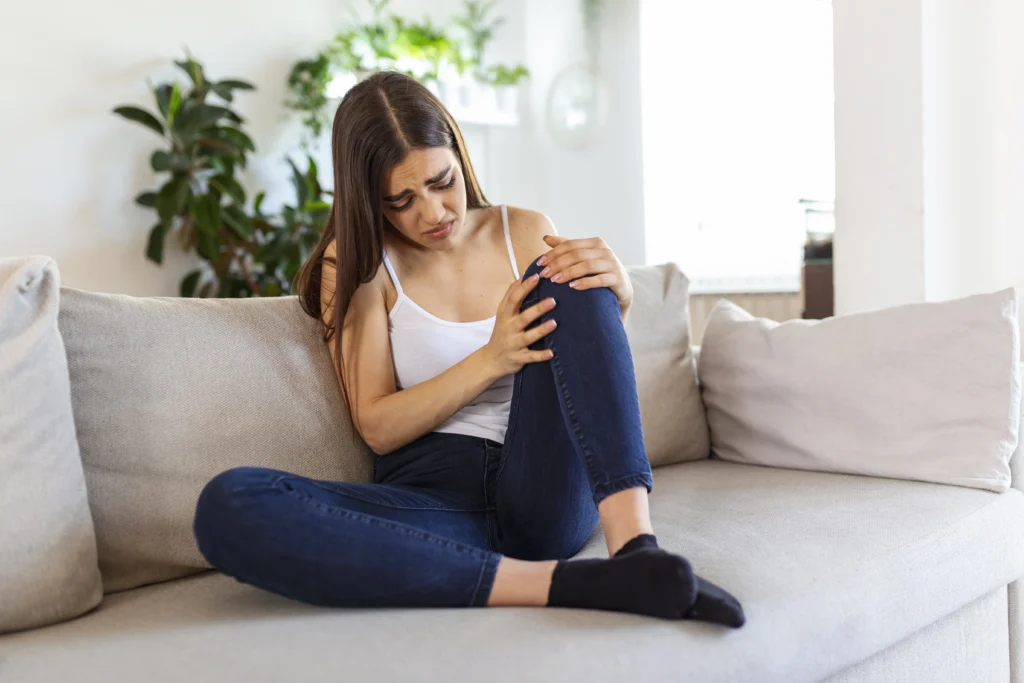
This question has received particular attention among athletes.
Researchers have studied whether hormonal contraception changes ligament properties or joint laxity and whether this could influence injury risk.
However, findings have been inconsistent.
An earlier systematic review found contradictory evidence regarding hormonal contraceptives, soft-tissue laxity, muscle strength, and injury risk, with much of the available evidence rated low or very low quality. (Konopka et al., 2019).
More recent research continues to show that the relationship is complicated rather than straightforward.
A 2024 scoping review examining menstrual cycle factors, contraceptive use, and musculoskeletal injuries in female athletes found considerable variation between studies and highlighted the need for better research before firm conclusions can be made (MacMillan et al., 2024).
Therefore, taking a birth-control pill should not automatically be interpreted as making a joint unstable.
What Can Physiotherapy Do for Joint Pain?
Physiotherapy can be useful when joint pain is affecting walking, exercise, work, household activities, or other daily tasks.
A physiotherapist can assess the painful joint as well as the surrounding areas.
The assessment may include:
- joint range of motion
- muscle strength and endurance
- movement control
- balance and coordination
- walking or running mechanics
- exercise technique
- joint loading
- previous injuries
- work or recreational activity demands
For example, someone with knee pain may need an assessment of hip strength, knee control, ankle mobility, and walking or exercise mechanics rather than treatment focused only on the knee.
Similarly, wrist pain may involve the forearm, shoulder, neck, or repetitive loading patterns.
The goal is to understand what is contributing to the symptoms and then improve the body’s ability to tolerate normal movement and activity.
What Exercises May Help?
There is no universal “birth control joint pain exercise.”
The appropriate exercise depends on which joint hurts, what is causing the symptoms, your current strength, and your activity goals.
However, rehabilitation often focuses on restoring comfortable movement, improving strength around the affected area, and gradually increasing the amount of activity the body can tolerate.
Gentle Joint Mobility
If a joint feels stiff, gentle movement through a comfortable range may help maintain mobility.
Depending on the affected area, this could include controlled shoulder movements, wrist mobility, ankle circles, or gentle knee bends.
The movement should remain within a comfortable range.
Avoid repeatedly forcing a painful joint into its end range simply because you believe more stretching is always better.
Progressive Strengthening
Strengthening the muscles surrounding a painful joint can improve the body’s ability to tolerate everyday loads.
For knee symptoms, a program may include progressive quadriceps and hip strengthening.
For shoulder symptoms, exercises may target the rotator cuff and muscles controlling the shoulder blade.
For wrist symptoms, strengthening may focus on the forearm and hand.
The exact exercises, resistance, repetitions, and progression should depend on the individual’s assessment.
Exercise therapy has demonstrated benefits for pain and function in several common musculoskeletal conditions, although the appropriate program depends on the diagnosis and individual presentation. (Varongot-Reille et al., 2024).
Load Management
Sometimes the most useful intervention is not another exercise.
If joint pain appeared after suddenly increasing running, gym training, lifting, walking, or another repetitive activity, temporarily reducing the load may be necessary.
The goal is not complete inactivity.
Instead, activity can be modified while strength and tolerance are gradually rebuilt.
A physiotherapist can help determine which activities need modification and how to progressively return to normal loading.
Should You Stop Exercising If Your Joints Hurt?
Not automatically.
Some mild discomfort can occur when a joint is being gradually reintroduced to activity, but pain that progressively worsens, significantly changes your movement, or remains substantially elevated after exercise suggests that the current load may need to be modified.
A physiotherapist can help determine whether you need to change repetitions, resistance, range of movement, exercise selection, or training frequency.
Stopping all movement for a prolonged period can also lead to reduced strength and confidence.
The aim is usually to find an appropriate level of activity rather than avoiding movement altogether.
Should You Stop Taking the Birth Control Pill?
Do not make that decision based solely on joint pain.
If symptoms started after beginning or changing contraception, speak with the doctor, pharmacist, or sexual-health professional who manages your contraception.
They can review the specific contraceptive formulation, your symptoms, other medications, and your individual health history.
If a medication is suspected to be contributing to symptoms, the healthcare professional can discuss whether monitoring, changing the formulation, or considering another contraceptive method is appropriate.
The important point is that changing contraception should be an informed medical decision rather than an assumption that the pill is definitely responsible for the joint symptoms.
When Should Joint Pain Be Medically Assessed?
New joint pain that is persistent, severe, worsening, or interfering with normal activities deserves assessment.
You should also seek medical attention if the joint becomes significantly swollen, hot, or red, or if you develop fever or feel systemically unwell.
Pain following a significant injury should also be evaluated, particularly if you cannot put weight through the affected limb or cannot move the joint normally.
Joint pain involving several joints, significant morning stiffness, unexplained fatigue, or other systemic symptoms may require medical investigation rather than physiotherapy alone.
A physiotherapist can help identify whether the presentation appears primarily mechanical and musculoskeletal, but symptoms suggesting systemic disease or another medical condition should be referred appropriately.
Myth vs Fact
Myth: Birth control pills directly cause joint pain in everyone who takes them.
Fact: Current research does not establish a simple direct relationship between oral contraceptive use and joint pain. Hormones may influence musculoskeletal tissues, but individual symptoms can have many possible causes.
Myth: If joint pain starts after taking the pill, you should immediately stop exercising or stop the medication.
Fact: Persistent or unexplained pain should be assessed rather than automatically attributed to contraception. Medication changes should be discussed with the prescribing healthcare professional.
Lesser-Known Fact: Hormones and Joint Pain Are Not an On-Off Switch
Sex hormones interact with musculoskeletal tissues, but their effects are not as simple as “more hormones means less pain” or “hormonal contraception causes joint pain.”
Research suggests that hormones can influence ligament and other musculoskeletal tissues, but the clinical effects vary between tissues, hormone exposures, individuals, and health conditions. (Gilmer et al., 2025).
This is one reason research about hormonal contraception and musculoskeletal health can appear contradictory.
The current evidence supports a more cautious approach: investigate the individual’s symptoms rather than assuming that the contraceptive pill is either the cause or the solution.
A Simple Joint Pain Check
If you develop joint pain after starting or changing birth control, ask yourself:
Did the pain begin after starting or changing the medication?
Has my exercise or activity level changed?
Is the pain related to a particular movement or activity?
Is the joint swollen, hot, or visibly different?
Am I experiencing symptoms in one joint or several?
Has the pain continued despite reducing aggravating activities?
Keeping track of these details can make your conversation with your doctor, pharmacist, or physiotherapist much more useful.
Final Thoughts
Joint pain that appears after starting birth control deserves attention, but it should not automatically be assumed to be caused by the pill. Hormonal contraception can interact with musculoskeletal tissues, while many other factors can contribute to joint symptoms. A physiotherapy assessment can help identify movement, strength and loading factors that may be contributing to pain. If symptoms are persistent, severe or associated with other concerning symptoms, speak with an appropriate healthcare professional for further evaluation.
Conclusion
Birth control pills may coincide with joint pain in some women, but current evidence does not establish a simple direct relationship between oral contraceptive use and joint pain.
Because hormones can interact with musculoskeletal tissues, researchers continue to study how hormonal contraception may influence muscles, tendons, ligaments, bone, and injury risk.
However, many other factors can contribute to joint symptoms, including changes in activity, repetitive loading, previous injuries, muscle weakness, and inflammatory conditions.
If your joint pain began after starting or changing contraception, do not ignore the timing, but do not assume causation either.
A healthcare professional can review your contraceptive method and overall health, while a physiotherapist can assess movement, strength, joint loading, exercise technique, and other physical contributors.
The goal is not simply to decide whether the pill is responsible.
It is to understand what is actually driving your symptoms and address that cause with appropriate medical and rehabilitation support.
Frequently Asked Questions
Can birth control pills cause joint pain?
Research has not established a clear direct cause-and-effect relationship between birth control pills and joint pain. Hormonal contraception may influence musculoskeletal tissues, but joint symptoms can also have many other causes.
Why do my joints hurt after starting birth control?
The timing may be worth discussing with your healthcare professional, but it does not necessarily mean the pill is the cause. Activity changes, previous injuries, inflammation, sleep, training load and other health factors may contribute.
Can birth control affect joint stability?
Hormones can influence ligament and other soft-tissue properties, but current evidence does not support assuming that oral contraceptive use automatically causes clinically important joint instability.
Can physiotherapy help with joint pain?
Yes. A physiotherapist can assess joint movement, strength, flexibility, balance, movement patterns and activity load, then develop an individualized rehabilitation plan.
Should I stop exercising if my joints hurt?
Not necessarily. Depending on the cause and severity of symptoms, modifying the intensity, volume or type of exercise may be more appropriate than stopping all activity.
Should I stop taking my birth control pill because of joint pain?
Do not make medication changes without discussing them with the healthcare professional who prescribed or manages your contraception. They can help determine whether another explanation or contraceptive option should be considered.
Stay tuned with us for more health related topics.
Follow us on LinkedIn and Instagram for more.
Medical Disclaimer
This article is intended for general educational purposes and does not replace personalized medical advice, diagnosis or treatment. Joint pain can have many different causes, and the information provided here cannot determine the cause of an individual’s symptoms. Do not start, stop or change prescribed medication without discussing it with your doctor or other qualified healthcare professional. Seek appropriate medical care if pain is severe, persistent, worsening or accompanied by other concerning symptoms.


