


Childhood constipation is common, but it is not always a problem that can be resolved by adding more fruit, vegetables or water to a child’s diet.
Quick Answer
Childhood constipation may need medical attention when hard or painful stools, stool withholding, abdominal discomfort or underwear soiling continue despite appropriate dietary and lifestyle changes.
Some children develop faecal impaction, where hard stool accumulates in the bowel. They may need clinician-guided laxatives, a regular toilet routine and ongoing follow-up rather than fibre and water alone.
Signs parents should not ignore:
- Repeated painful or hard bowel movements
- Stool withholding or fear of using the toilet
- Repeated stool leakage or underwear staining
- Persistent abdominal pain or bloating
- Constipation affecting appetite, school or daily activities
Important: Pediatric physiotherapy, particularly pelvic floor physiotherapy, may support selected children as part of a broader treatment plan. It does not replace medical assessment or prescribed treatment.
When bowel movements become painful, children may start avoiding the toilet. Over time, this can lead to harder stools, further discomfort and a cycle that becomes difficult to break.
For some children, constipation also affects appetite, sleep, school attendance, physical activity and emotional well-being. Repeated stool leakage or abdominal pain may be signs that the bowel needs more than basic dietary support.
Recognizing when symptoms need professional attention helps parents seek treatment before the problem becomes more complicated.
This article explains the warning signs, common causes, treatment options and the role of pediatric physiotherapy in managing childhood constipation.
Key Takeaways About Childhood Constipation
Hard stools, painful bowel movements, straining and difficulty emptying the bowel are also important signs.
Children may avoid the toilet after experiencing pain, allowing stool to become harder and more difficult to pass.
Soft stool can leak around accumulated hard stool. This is called overflow soiling.
Established constipation may require clinician-guided medication, toilet routines and follow-up.
Pelvic floor relaxation, breathing and coordination training may be useful as an adjunct to medical care.
Vomiting with abdominal swelling, poor growth, symptoms from birth or neurological changes should not be ignored.
What Is Childhood Constipation?
Constipation is not defined only by how frequently a child passes stool. Stool consistency, pain, straining and difficulty emptying the bowel are equally important.
A child may be constipated if they:
- Pass hard, dry or pellet-like stools.
- Have fewer bowel movements than usual.
- Strain, cry or complain of pain while passing stool.
- Pass unusually large stools that may block the toilet.
- Regularly avoid going to the toilet despite feeling the urge.
- Experience stool leakage or soiling in their underwear.
Some children pass stools relatively often but still have constipation because they do not empty their bowel comfortably. Parents should therefore pay attention to the child’s overall bowel pattern rather than frequency alone.
Functional Constipation and Faecal Impaction
Most childhood constipation is functional. This means that symptoms develop without an identifiable structural or medical disorder explaining them.
Stool withholding, painful bowel movements and changes in routine are common contributors.
If stool remains in the rectum or lower bowel for a prolonged period, it can accumulate and become difficult to pass. This is called faecal impaction.
Softer stool may sometimes leak around the retained hard stool, causing staining or accidents in a child’s underwear.
Why Does Constipation Develop in Children?
One of the most common triggers is a painful bowel movement. After experiencing pain, a child may begin holding back stool because they are afraid it will hurt again.
When stool stays in the large intestine for longer, more water is absorbed from it. It becomes harder and larger, making the next bowel movement more uncomfortable.
This can create a repeating cycle of pain, withholding and constipation.
Other factors can contribute:
- Toilet training: Pressure, fear or an unpleasant toilet-training experience may lead to withholding.
- School routines: Children may avoid school toilets because of privacy concerns, cleanliness or limited toilet breaks.
- Changes in routine: Travel, starting school, illness or changes in daily habits can affect bowel patterns.
- Medicines: Some medicines and supplements, including certain iron preparations and pain medicines, may contribute to constipation.
- Medical conditions: Less commonly, conditions affecting the thyroid, digestive system, nerves or bowel structure may be involved.
A child’s symptoms should be assessed in context rather than automatically attributed to a lack of fiber.
Signs Your Child May Need More Than Dietary Changes
Occasional constipation may improve with appropriate food, fluids and routine changes. Persistent symptoms, however, deserve closer attention.
Repeated Painful or Hard Bowel Movements
A child who regularly passes hard, dry stools, strains excessively or cries during bowel movements may have developed an ongoing constipation pattern.
Some children pass very large stools after several days without going to the toilet. Others pass small amounts frequently but continue to feel uncomfortable.
Repeated pain can make children anxious about using the toilet. If this pattern continues, consult a healthcare professional rather than relying only on home remedies.
Stool Withholding and Unusual Postures
Children do not always say that they need to hold back a bowel movement. Parents may notice behaviors such as:
- Standing on tiptoes or stiffening the legs.
- Crossing the legs or squeezing the buttocks together.
- Rocking, arching the back or becoming unusually tense.
- Hiding behind furniture or avoiding the bathroom.
- Becoming restless when they feel the urge to pass stool.
These movements can look like attempts to push stool out. In many cases, they are actually withholding behaviors intended to prevent a bowel movement.
Abdominal Pain, Bloating and Reduced Appetite
Constipation may cause abdominal discomfort, bloating and a feeling of fullness.
Some children eat less because they feel uncomfortable, while others complain of stomach pain that comes and goes.
If abdominal pain repeatedly improves after a large bowel movement, constipation may be contributing. However, persistent or severe pain should not automatically be assumed to be caused by constipation.
Stool Leakage or Accidents
Repeated staining or accidental stool leakage is an important symptom. When hard stool builds up in the rectum, softer stool can pass around it without the child having full control.
This is known as overflow soiling. It may be mistaken for diarrhea or deliberate behavior, but the child may not even realize that leakage has occurred.
Avoid scolding or embarrassing the child. Repeated accidents can affect confidence and social participation, and they deserve appropriate assessment.
Bladder Symptoms Alongside Constipation
The bowel and bladder share space in the pelvis and have closely related nerve and muscle functions.
A full rectum may contribute to urinary urgency, frequent urination or wetting accidents in some children.
If a child experiences both bowel and bladder symptoms, mention them during the medical assessment. These problems may need to be considered together.
When Are Dietary Changes Not Enough?
A balanced diet, adequate fluids and regular activity support bowel health. However, these measures may not clear retained stool or resolve established functional constipation on their own.
Arrange a medical assessment if your child:
- Continues to have hard or painful stools despite reasonable dietary changes.
- Regularly avoids the toilet or appears afraid of passing stool.
- Experiences repeated abdominal pain or bloating.
- Has large, difficult-to-pass bowel movements.
- Develops repeated stool leakage or soiling.
- Has constipation that affects school, sleep, appetite or play.
- Needs frequent home interventions to pass stool.
Warning Signs That Need Medical Attention
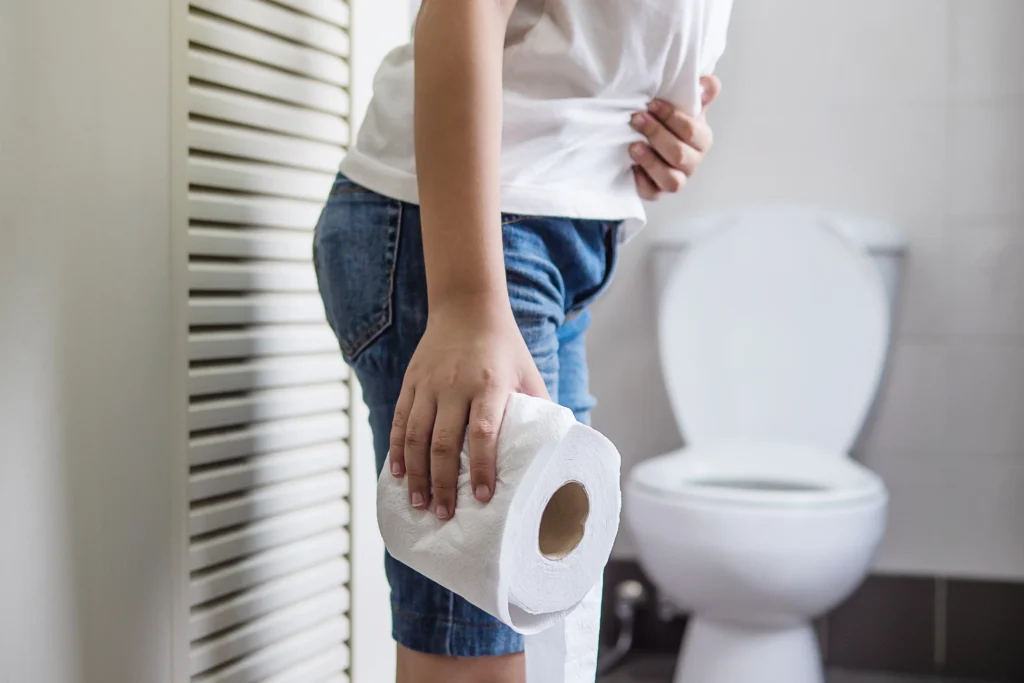
Most childhood constipation is functional, but certain symptoms may suggest an underlying condition that needs investigation.
Seek prompt medical assessment if constipation:
- Begins at birth or during the first few weeks of life.
- Is associated with delayed passage of the first stool (meconium), particularly beyond 48 hours after birth in a full-term baby.
- Occurs with poor weight gain, faltering growth or unexplained weight loss.
- Is accompanied by repeated vomiting or significant abdominal swelling.
- Involves persistent blood in the stool that is not clearly explained by a small fissure.
- Is associated with ribbon-like stools, leg weakness, delayed walking or unusual spinal or anal findings.
These features may require assessment for conditions such as Hirschsprung disease, coeliac disease, thyroid disorders or neurological and spinal problems. They do not confirm any particular diagnosis, but they should not be ignored. (NHS England, 2023)
Seek emergency medical care if your child has severe or worsening abdominal pain with marked swelling, repeated vomiting, green vomit, unusual drowsiness or appears seriously unwell.
Do not try to manage these symptoms with laxatives or home remedies without urgent medical advice.
How Is Childhood Constipation Diagnosed?
Diagnosis usually begins with a detailed history and physical examination. Most children with typical functional constipation do not need extensive investigations.
Medical History and Bowel Diary
The clinician may ask about stool frequency, consistency, pain, straining, withholding, accidents, appetite, fluid intake and the timing of symptoms.
They may also ask about toilet training, school routines, medicines, growth and the child’s medical history.
A bowel diary can help. For several days, record bowel movements, stool appearance, pain, accidents and withholding behavior. This gives the clinician a clearer picture of what happens at home and school.
Physical Examination and Further Tests
The doctor may examine the abdomen, assess growth and look for signs that suggest an underlying condition.
Depending on the history, examination may include the lower spine, anal area, leg strength and reflexes.
Blood tests, imaging or specialist investigations may be considered when symptoms are unusual, warning signs are present or constipation does not respond to appropriate treatment.
Routine abdominal X-rays are not generally needed to diagnose straightforward functional constipation.
Treatment Options When Diet Alone Does Not Work
Treatment depends on the child’s age, symptoms and whether stool has accumulated in the bowel.
The goals are to clear retained stool when necessary, restore comfortable bowel movements and prevent the withholding cycle from returning.
Clinician-Guided Laxatives
A healthcare professional may recommend laxatives to soften stool and support regular bowel movements. If faecal impaction is present, the child may first need a disimpaction plan, followed by maintenance treatment.
The 2026 ESPGHAN/NASPGHAN guideline gives polyethylene glycol (PEG) a strong recommendation for treating functional constipation in children.
Other medicines may be considered according to the child’s age, response and clinical needs.
Treatment can take several months, and improvement does not always mean the bowel has fully recovered its normal pattern. Do not start, increase or stop laxatives without guidance from the child’s clinician. (Gordon et al., 2026)
A Regular, Comfortable Toilet Routine
A predictable routine helps children respond to the natural urge to pass stool.
Encourage your child to sit on the toilet after meals, when bowel activity often increases.
A small footstool can support the feet, with the knees slightly higher than the hips. A gentle forward lean and relaxed breathing may make the position more comfortable.
Keep toilet visits brief and relaxed. Praise the child for trying rather than rewarding only successful bowel movements. Avoid forcing, threatening or punishing a child for accidents.
Nutrition, Fluids and Physical Activity
Offer age-appropriate fiber from fruits, vegetables, whole grains and pulses. Encourage regular fluid intake and daily movement through walking, cycling and active play.
Suddenly adding large amounts of fiber may increase bloating, particularly when stool is already impacted. Dietary changes support treatment but should not delay medical care when symptoms persist.
Childhood Constipation: Myths vs Facts
Myth: More fibre will always cure constipation.
Fact: Fibre supports bowel health, but established constipation or faecal impaction may require medical treatment.
Myth: A child who passes stool every day cannot be constipated.
Fact: Hard stools, painful bowel movements and incomplete emptying can indicate constipation even when stools are passed frequently.
Myth: Underwear staining is always deliberate.
Fact: Stool leakage may occur when softer stool passes around retained hard stool. Children may have little awareness or control over it.
Myth: Laxatives should be stopped as soon as stools become regular.
Fact: Treatment may need to continue for a period after symptoms improve. Changes should be guided by the child’s clinician.
Myth: Physiotherapy can replace constipation medication.
Fact: Pelvic floor physiotherapy may support selected children, but it is an adjunct to appropriate medical management.
Myth: Children who soil their underwear are being naughty.
Fact: Overflow soiling can happen involuntarily. Children need reassurance, not punishment or embarrassment.
Can Pediatric Physiotherapy Help With Childhood Constipation?
Pediatric physiotherapy can support selected children with functional constipation, particularly when difficulty coordinating the abdominal and pelvic floor muscles contributes to problems with bowel emptying.
The 2026 ESPGHAN/NASPGHAN guideline suggests pelvic floor physiotherapy as an adjunct treatment option.
This is a conditional recommendation based on low-certainty evidence, so it should be considered alongside standard medical care rather than as a replacement for it. (Gordon et al., 2026)
Pelvic Floor Relaxation and Coordination
The pelvic floor muscles need to relax and coordinate with the diaphragm and abdominal muscles during a bowel movement. Some children may have difficulty relaxing these muscles or coordinating the pushing effort.
A suitably trained pediatric pelvic health physiotherapist may work on:
- Relaxed breathing and coordination with the abdominal muscles.
- Pelvic floor relaxation rather than unnecessary tightening.
- Comfortable toileting posture and positioning.
- Recognizing the urge to pass stool and responding to it.
- Age-appropriate exercises that support bowel-emptying coordination.
Treatment should be adapted to the child’s age, understanding, comfort and clinical needs. It should never be painful, frightening or forced.
Movement, Posture and Functional Support
Children with additional motor, postural or developmental difficulties may need help finding a comfortable toilet position and following a manageable daily movement routine.
A physiotherapist can assess these functional needs and work with the family and medical team.
However, general exercise, abdominal massage or posture correction should not be presented as a cure for faecal impaction or persistent constipation.
The evidence for pelvic floor physiotherapy is still developing. The current guideline supports it as an additional option, not a stand-alone treatment for every child.
How Parents Can Prevent Constipation From Returning
Once symptoms improve, maintaining a consistent routine is important. Stopping treatment too early or returning to withholding habits can lead to another episode.
Parents can help by:
- Following the prescribed treatment and review schedule.
- Offering regular toilet opportunities after meals.
- Making sure the child’s feet are supported while sitting.
- Encouraging fluids, balanced meals and active play.
- Allowing toilet breaks at school when needed.
- Keeping a bowel diary if symptoms continue.
- Responding calmly to accidents and avoiding blame.
If constipation returns repeatedly, discuss the treatment plan with the child’s healthcare professional rather than repeatedly changing the diet or trying different remedies.
Final Thoughts
Childhood constipation can affect much more than bowel movements. Persistent pain, withholding and stool leakage can interfere with a child’s confidence, comfort and everyday routine.
Parents should not feel that they have failed if dietary changes do not solve the problem. Some children need a structured medical plan, consistent toilet habits and additional support for pelvic floor coordination.
A gentle reminder for parents
Listen to your child’s concerns, avoid blame and seek professional guidance when symptoms persist. Early, supportive care can make bowel management more comfortable and help children return to their usual activities with confidence.
Conclusion
Childhood constipation is not always a simple dietary issue. Persistent painful stools, withholding, abdominal discomfort, stool leakage and bladder symptoms may indicate that a child needs a more structured assessment and treatment plan.
Medical management may include clinician-guided laxatives, a regular toilet routine, appropriate nutrition and follow-up.
For selected children, pediatric pelvic floor physiotherapy can provide additional support with relaxation, breathing, muscle coordination and toileting posture.
The key is to recognize persistent symptoms early, avoid blaming the child and seek professional guidance when basic measures are not enough.
With consistent, child-centered care, many children can develop more comfortable bowel habits and return to everyday activities with greater confidence.
Frequently Asked Questions About Childhood Constipation
1. How do I know if my child is constipated?
Common signs include hard or dry stools, painful bowel movements, straining, stool withholding, abdominal discomfort and unusually large stools. Stool leakage can also occur when hard stool builds up in the bowel.
2. Can a child be constipated even if they pass stool every day?
Yes. Daily bowel movements do not rule out constipation. A child may still have hard stools, pain, excessive straining or difficulty emptying the bowel.
3. Why does my child have stool stains in their underwear?
Staining may be caused by overflow soiling. Softer stool can leak around hard stool retained in the rectum. It is often involuntary and should not be treated as deliberate misbehaviour.
4. When should I take my child to a doctor for constipation?
Seek medical advice when constipation persists, bowel movements are painful, stool withholding or leakage occurs repeatedly, or symptoms affect appetite and daily activities. Vomiting with abdominal swelling, poor growth or symptoms beginning in early infancy need prompt assessment.
5. Can constipation in children be treated without laxatives?
Mild constipation may improve with suitable dietary changes and toilet routines. However, established constipation or faecal impaction often requires clinician-guided medication as well as lifestyle measures.
6. Can physiotherapy help children with constipation?
Paediatric pelvic floor physiotherapy may help selected children with relaxation, breathing, muscle coordination and toileting posture. It is an additional treatment option and does not replace medical management.
7. What is the best toilet position for a constipated child?
A comfortable position includes supported feet on a small footstool, knees slightly higher than the hips and a gentle forward lean. The child should be encouraged to relax rather than strain.
8. How long does childhood constipation take to improve?
It varies according to the severity and duration of symptoms and the child’s response to treatment. Some children need several months of management and follow-up. Medication should not be stopped without advice from the treating clinician.
Stay tuned with us for more health related topics.
Follow us on LinkedIn and Instagram for more.
More Read


Medical Disclaimer
The information in this article is intended for general educational purposes only. It should not be considered a substitute for professional medical advice, diagnosis or treatment.
Every child’s bowel habits and health needs are different. Consult a qualified pediatrician or healthcare professional if constipation persists, causes pain or is associated with other concerning symptoms. Medication and physiotherapy should be used under appropriate professional guidance.
Seek urgent medical attention if your child experiences severe abdominal pain with swelling, repeated vomiting, green vomit or appears seriously unwell.


