


Nicotine headaches are common in smokers and quitters, and nicotine headache relief at home can help ease symptoms naturally.
These headaches are a clinically underestimated yet increasingly common condition seen in both smokers and individuals attempting to quit nicotine.
As a physiotherapist, I frequently observe patients presenting with persistent, unexplained headaches, only to discover nicotine exposure or withdrawal as the root cause.
Nicotine is a potent neurostimulant that affects vascular tone, neurotransmitter release, and pain perception.
When this delicate balance is disrupted, the result can be recurrent headaches, often misdiagnosed as tension headaches or migraines.
Recent evidence suggests that nicotine can increase headache frequency and alter pain processing pathways, making it a significant contributor to chronic head pain disorders (Healthline).
Quick Answer
Nicotine headaches occur due to blood vessel constriction, increased pain sensitivity, and neurochemical changes. They can happen during smoking, vaping, or nicotine withdrawal. Treatment includes hydration, physiotherapy exercises, posture correction, and gradual nicotine reduction.
Key Takeaways
- Nicotine causes headaches by narrowing blood vessels and altering brain chemistry
- Both nicotine use and withdrawal can trigger headaches
- Physiotherapy plays a key role in managing posture-related headache triggers
- Hydration, sleep, and gradual quitting help reduce headache intensity
- Neck exercises and breathing techniques provide long-term relief
How Nicotine Triggers Headaches
1. Blood Vessel Constriction
Nicotine causes narrowing of blood vessels supplying the brain, reducing oxygen-rich blood flow.
This leads to ischemic-like discomfort, triggering headache pain.
- Reduced cerebral blood flow = headache onset
- Sudden vascular changes = throbbing pain
Research confirms nicotine-induced vasoconstriction as a key mechanism behind headaches (Healthline).
2. Neurochemical Imbalance
Nicotine stimulates the release of:
- Dopamine (pleasure)
- Epinephrine (alertness)
While this creates a temporary “high,” it also leads to neurochemical fluctuations, increasing sensitivity to pain signals.
Over time, the brain becomes hyper-responsive, meaning even minor triggers can cause headaches.
3. Increased Pain Sensitivity
Chronic nicotine exposure alters central pain processing pathways, making individuals more sensitive to pain stimuli.
This explains why:
- Smokers report more frequent headaches
- Painkillers become less effective with nicotine use (Healthline)
4. Dehydration and Chemical Exposure (Especially in Vaping)
Vaping introduces substances like propylene glycol, which can:
- Cause dehydration
- Trigger headaches
Additionally, nicotine concentration variability in vapes increases headache risk (Healthline).
Types of Nicotine-Related Headaches
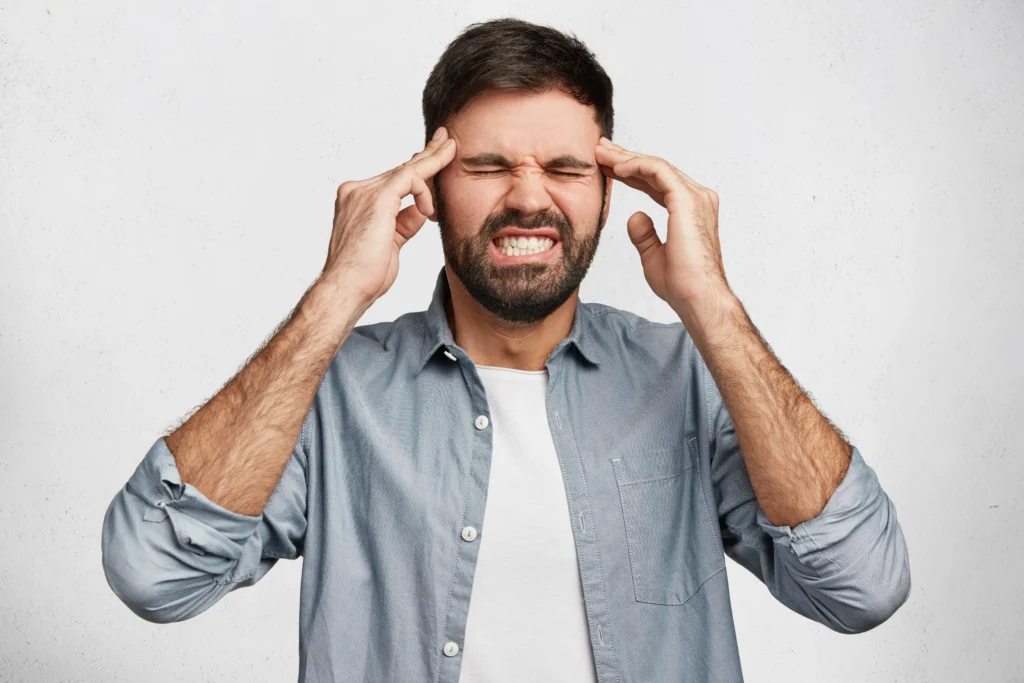
Cluster Headaches
- Severe, one-sided pain
- Strong association with smoking habits
- Smoking may trigger attacks or worsen severity
Tension-Type Headaches
- Most common in physiotherapy clinics
- Often linked with poor posture + nicotine use
Migraine-Like Headaches
- Pulsating pain
- Triggered by vascular changes
- Relationship with nicotine still evolving but significant
A 2025 systematic review found a notable association between smoking and primary headache disorders, particularly cluster headaches (SpringerLink).
Nicotine Withdrawal Headaches: Why They Happen
Interestingly, headaches don’t just occur with nicotine use, they are very common during quitting.
When nicotine levels drop:
- Brain chemistry shifts suddenly
- Blood vessels readjust
- Pain pathways become unstable
This leads to withdrawal headaches.
A clinical case study documented migraine-like headaches triggered by nicotine withdrawal, highlighting the neurological impact of sudden cessation (PubMed).
Lesser-Known Facts About Nicotine Headaches
- Nicotine can reduce the effectiveness of painkillers, prolonging headaches
- Even “nicotine-free” vapes may contain trace nicotine
- Withdrawal headaches can last days to weeks depending on dependence level
- Nicotine affects sleep cycles, indirectly worsening headaches
- Headaches may be worse in the morning due to overnight withdrawal
Why Your Neck Matters
From a physiotherapy lens, nicotine headaches are rarely just chemical, they are multifactorial.
Nicotine users often develop:
- Forward head posture
- Cervical spine stiffness
- Reduced oxygenation of muscles
This leads to cervicogenic headache patterns, where neck dysfunction contributes to head pain.
Physiotherapy Management for Nicotine Headaches
1. Cervical Spine Mobilization
- Improves blood flow
- Reduces muscle tension
2. Postural Correction Training
- Corrects forward head posture
- Reduces strain on suboccipital muscles
3. Breathing Exercises
- Enhances oxygen delivery
- Reduces sympathetic overactivity
4. Myofascial Release
Myofascial Release Targets:
- Upper trapezius
- Suboccipital muscles
- Sternocleidomastoid
Evidence-Based Home Exercises
Chin Tucks
- Hold 5 seconds
- 10 repetitions
- Improves cervical alignment
Upper Trapezius Stretch
- Hold 20 seconds each side
- Reduces muscle tightness
Deep Breathing (Diaphragmatic)
- 5 minutes daily
- Helps regulate nervous system
Tips for Nicotine Headache Relief At Home
1. Hydration Optimization
Nicotine, especially through smoking or vaping, promotes mild dehydration and vascular instability, which directly worsens headache intensity.
- Aim: 2.5-3 L water/day
- Add electrolytes if withdrawal headaches are strong
- Avoid excess caffeine (worsens dehydration cycle)
Research shows dehydration is a common and reversible trigger for headaches, improving both severity and duration when corrected. (Healthline)
2. Cervical Spine Decompression & Posture Reset
As a physiotherapist, this is one of the most overlooked contributors.
Nicotine users often develop:
- Forward head posture
- Tight suboccipital muscles
- Reduced cervical blood flow
Do daily:
- Chin tucks (10 reps × 3 sets)
- Neck retraction holds (5-10 sec)
- Upper trapezius stretching
Cervical muscle tension significantly amplifies headache pathways through trigeminal-cervical convergence.
3. Magnesium Support for Neurovascular Stability
Magnesium plays a key role in:
- Reducing neuronal excitability
- Improving vascular tone
- Decreasing headache frequency
Food sources:
- Pumpkin seeds
- Spinach
- Almonds
Supplement (if needed): 200-400 mg/day (doctor-guided)
Clinical research supports magnesium as a safe and effective option for migraine and tension-type headache prevention. (NCBI)
4. Controlled Nicotine Reduction (Avoid Sudden Withdrawal Shock)
Abrupt quitting often triggers rebound headaches due to neurotransmitter imbalance.
Better approach:
- Gradual tapering (step-down nicotine levels)
- Nicotine patch/gum under supervision
- Stable dosing instead of spikes
Withdrawal headaches are linked to changes in brain neurotransmitters and pain processing sensitivity. (Cleveland Clinic)
5. Breathing Retraining
Nicotine increases sympathetic overdrive (stress mode). This worsens headache sensitivity.
Practice:
- 4-6 breathing pattern (inhale 4 sec, exhale 6 sec)
- 5-10 minutes, twice daily
This reduces:
- Vascular tension
- Muscle guarding
- Stress-triggered headaches
6. Screen & Visual Load Reduction
Nicotine users (especially vapers) often unknowingly increase:
- Eye strain
- Cervical flexion posture
- Mental fatigue
Apply:
- 20-20-20 rule
- Reduce bright screen exposure during withdrawal phase
- Maintain eye-level screen positioning
7. Sleep Cycle Stabilization
Nicotine disrupts:
- REM sleep
- Sleep onset
- Overnight vascular stability
Clinical advice:
- Fixed sleep timing
- No nicotine 2-3 hours before bedtime
- Dark, cool room environment
Poor sleep significantly increases headache recurrence.
8. Cold Therapy for Acute Relief
Cold application reduces:
- Cranial nerve sensitivity
- Vascular dilation
- Pain transmission intensity
Use:
- Cold pack on forehead or occipital region for 10-15 minutes
- Repeat 2-3 times/day if needed
9. Jaw & TMJ Relaxation
Nicotine users tend to:
- Clench jaw unconsciously
- Develop temporalis muscle tension
Do:
- Gentle jaw opening exercises
- Tongue resting posture training
- Massage temporalis muscles
This reduces referred headache pain.
10. Anti-Inflammatory Nutritional Support
Chronic nicotine exposure increases systemic inflammation.
Add:
- Omega-3 (flaxseed, fish oil)
- Turmeric
- Berries
- Green leafy vegetables
These support neurovascular healing and reduce headache recurrence.
11. Trigger Tracking
Keep a simple journal:
- Nicotine intake time
- Headache onset
- Severity (1-10 scale)
- Sleep + hydration status
This helps identify:
- Withdrawal peaks
- Overuse patterns
- Postural triggers
12. Physiotherapy Manual Techniques (If chronic)
For persistent cases:
- Suboccipital release
- Cervical mobilization
- Myofascial trigger point therapy
These improve:
- Blood flow
- Nerve sensitivity
- Cervicogenic contribution to headaches
Medical & Lifestyle Management
Hydration
Nicotine increases dehydration, hydration reduces headache intensity.
Gradual Nicotine Reduction
Avoid sudden withdrawal spikes.
Sleep Optimization
Nicotine disrupts REM sleep, poor sleep worsens headaches.
Calculate your ideal sleep here: “Sleep Calculator“
Nutrition Support
Include:
- Magnesium
- Vitamin B2
- Omega-3 fatty acids
When to Seek Medical Help
Seek urgent care if headache:
- Is sudden and severe
- Accompanied by neurological symptoms
- Occurs after head injury
A Physiotherapist’s Clinical Insight
In my clinical practice, nicotine headaches are often misdiagnosed as stress headaches.
The key differentiator is pattern, if headaches:
- Occur after smoking
- Worsen during quitting
- Don’t respond well to medication
Nicotine is likely the hidden trigger.
Physio Prescription
- Daily posture correction routine
- Neck mobility exercises (10-15 mins/day)
- Hydration target: 2.5-3 liters/day
- Gradual nicotine tapering
- Breathing exercises twice daily
Red Flags
- Sudden “worst headache of life”
- Vision disturbances
- Weakness or numbness
- Persistent vomiting
Myth vs Reality
Myth: Smoking relieves headaches
Reality: It may temporarily mask pain but worsens long-term headache patterns
Final Word
Nicotine headaches are your body’s warning signal, not just discomfort.
Addressing both neurological and musculoskeletal factors is the key to long-term relief.
Nicotine headaches improve when the root cause is addressed with hydration, posture care, and gradual nicotine control.
Simple, consistent steps for nicotine headache relief at home can significantly reduce symptoms and support recovery.
Frequently Asked Questions
1. Can nicotine cause daily headaches?
Yes, frequent nicotine use can lead to recurrent headaches due to vascular and neurological changes.
2. How long do nicotine withdrawal headaches last?
They usually last a few days to a few weeks depending on nicotine dependence.
3. Does vaping cause headaches?
Yes, due to nicotine, dehydration, and chemical exposure.
4. Why do headaches worsen when quitting smoking?
The brain is adjusting to the absence of nicotine, causing temporary imbalance.
5. Can physiotherapy help nicotine headaches?
Yes, especially when neck tension and posture contribute to symptoms.
6. Are nicotine headaches dangerous?
Usually not, but persistent or severe headaches need medical evaluation.
7. What is the fastest way to relieve nicotine headache?
Hydration, rest, cold compress, and gentle neck exercises.
8. Do painkillers work for nicotine headaches?
Sometimes less effectively due to nicotine interference.
Stay tuned with us for more health related topics.
Follow us on LinkedIn and Instagram for more.
More Read


Medical Disclaimer!
This article has been reviewed and written under the guidance of our Head Physiotherapist, Dr. Kruti Raj (PT, MUHS,CPT,CMPT). The information shared is intended for educational purposes only and should not be considered a substitute for personalized medical advice, diagnosis, or treatment.
Please consult us or any other qualified healthcare professional before beginning any exercise program, especially if you are experiencing pain, recovering from injury, or managing a medical condition.


