


Waddling during pregnancy is a common change in walking pattern that can occur as the body adapts to a growing baby and shifting center of gravity.
Pregnancy changes far more than just body weight and belly size.
One of the most noticeable physical changes many women experience is the famous
“pregnancy waddle”, a side-to-side walking pattern that often becomes more obvious during the second and third trimester.
Many women assume it happens simply because the baby is growing bigger.
As a physiotherapist, I can tell you that the real explanation is far more fascinating.
Hormonal changes, pelvic joint adaptations, muscle imbalances, altered balance mechanisms, and protective movement strategies all work together to create this unique walking pattern.
Quick Answer
Pregnant women develop a waddling walk because pregnancy hormones loosen ligaments, the growing uterus shifts the body’s center of gravity forward, pelvic joints become more mobile, and balance mechanisms change. To stay stable and reduce the risk of falls, many women naturally walk with wider steps, slower speed, and increased side-to-side trunk movement, creating the characteristic pregnancy waddle.
Interestingly,
research now shows that the waddling walk is not merely a symptom of pregnancy but often a protective adaptation designed by the body to reduce falls and improve stability as the center of gravity shifts forward. (ScienceDirect)
Key Takeaways
- Pregnancy waddling occurs due to hormonal, biomechanical, and balance-related changes.
- Relaxin hormone loosens pelvic ligaments and joints.
- The growing uterus shifts the center of gravity forward.
- Weak glutes and reduced core stability can worsen waddling.
- Pelvic girdle pain and SPD may make waddling more noticeable.
- Swimming, prenatal yoga, and glute strengthening can help.
- Support belts may reduce discomfort during walking.
- Severe waddling with pain should be assessed by a women’s health physiotherapist.
What Exactly Is a Waddling Walk?
A waddling walk is a gait pattern characterized by:
- Wider steps
- Increased side-to-side trunk movement
- Slower walking speed
- Shorter stride length
- Greater time spent with both feet on the ground
Researchers studying pregnancy gait have found that many women naturally increase step width and reduce stride length as pregnancy progresses, especially during the third trimester.
These changes help improve stability and reduce fall risk. (PMC)
Think of it as your body’s built-in safety mechanism.
How Pregnancy Changes Your Walking Mechanics
Your Center of Gravity Moves Forward
As the uterus expands, extra weight accumulates in the front of the body.
This shifts your center of gravity forward and slightly upward.
To prevent falling, your body automatically changes posture and walking patterns.
Research shows pregnant women often compensate by:
- Leaning backward slightly
- Increasing pelvic tilt
- Widening their walking base
- Reducing walking speed
These adjustments create the classic waddling appearance. (PMC)
The Role of Relaxin Hormone
One of the biggest hidden reasons behind the pregnancy waddling walk is the hormone relaxin.
Relaxin helps prepare the pelvis for childbirth by loosening ligaments and connective tissues around:
- Sacroiliac joints
- Pubic symphysis
- Pelvic floor
- Hip joints
While necessary for delivery, this increased joint mobility can reduce pelvic stability and make walking feel less controlled. (NCBI)
Many women describe this sensation as:
- Feeling “loose”
- Hips shifting while walking
- Legs feeling heavier
- Difficulty maintaining balance
Why Your Hips Start Swinging More
The Glute Muscles Work Harder Than Ever
Your gluteus medius muscles are responsible for keeping your pelvis level during walking.
As pregnancy progresses:
- Body weight increases
- Pelvic joints become more mobile
- Abdominal muscles stretch
This places greater demand on the glutes.
When the glute muscles fatigue, the body compensates with greater side-to-side trunk sway, which creates the visible waddling motion. (ScienceDirect)
Link Between Core Weakness and Waddling During Pregnancy
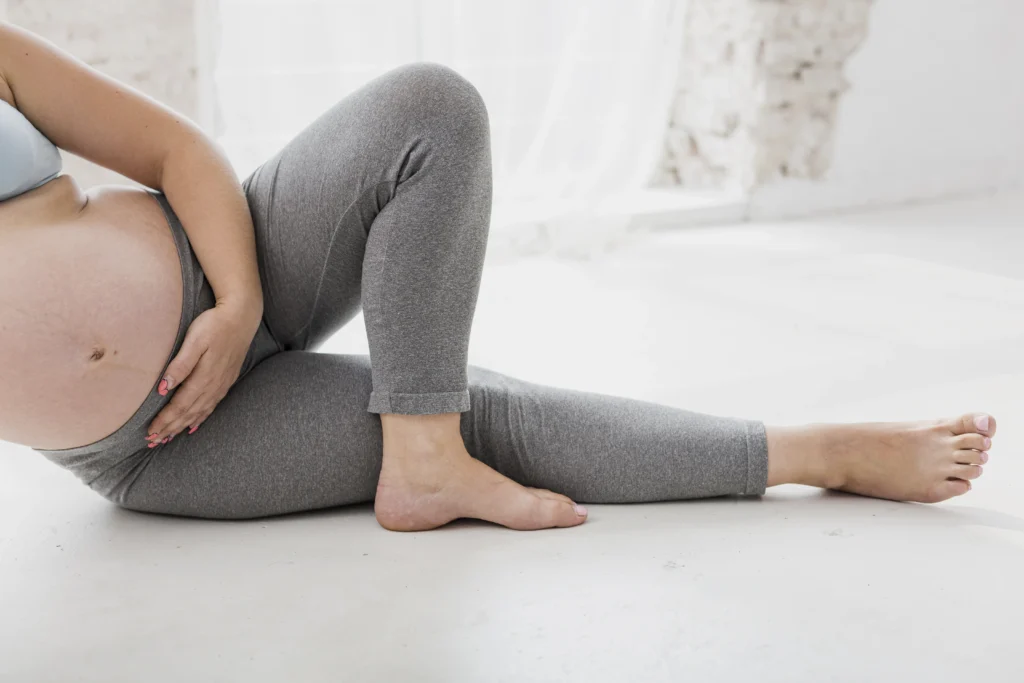
Most people blame the hips.
However, one lesser-known factor is abdominal muscle stretching.
As the uterus expands:
- Rectus abdominis stretches
- Deep core muscles become less effective
- Trunk stability decreases
Without strong core support, the pelvis becomes less stable during walking.
This often increases compensatory trunk movements and contributes significantly to pregnancy waddling walk. (PMC)
Why Some Women Waddle More Than Others
Not every pregnant woman develops a noticeable waddle.
Factors that increase the likelihood include:
Pelvic Girdle Pain
Pelvic girdle pain can alter walking patterns dramatically.
Women experiencing:
- Pubic symphysis pain
- Sacroiliac joint pain
- Groin pain
often widen their stance to reduce discomfort.
Twin Pregnancy
Carrying twins typically causes:
- Greater weight gain
- Faster abdominal growth
- Increased ligament strain
This may exaggerate gait changes.
Previous Back Pain
Women with a history of:
- Lower back pain
- Hip instability
- Pelvic dysfunction
often develop compensatory walking patterns earlier in pregnancy.
Sedentary Lifestyle
Research suggests physically active pregnant women may adapt better to balance changes compared to sedentary individuals. (PubMed)
The Evolutionary Reason Behind the Pregnancy Waddling Walk
Your Body May Be Protecting Two Lives at Once
One fascinating fact rarely discussed, is that the pregnancy waddling walk may actually be an evolutionary survival adaptation rather than simply a consequence of weight gain.
Researchers studying human locomotion have suggested that as pregnancy advances, women instinctively modify their walking pattern to improve stability and reduce energy expenditure.
The wider stance and increased side-to-side movement help compensate for the forward shift in body mass while lowering the risk of falls.
This is particularly important because a fall during pregnancy can threaten both maternal and fetal health.
Studies analyzing gait biomechanics have found that pregnant women naturally adopt movement strategies that prioritize balance over walking efficiency, especially during the third trimester. (Science Direct)
In other words, the pregnancy waddling walk may not be a “problem” at all.
It may be the body’s built-in protective mechanism developed over thousands of years of human evolution.
Physiotherapist’s Perspective
Many pregnant women become self-conscious about their changing walk.
However, a mild waddle often indicates that the body is intelligently adapting to altered biomechanics.
The goal should not be eliminating the waddle completely but ensuring it does not become painful, excessive, or associated with pelvic instability.
Why Some Women Continue Waddling Even After Delivery
Many new mothers are surprised when their pregnancy waddling walk doesn’t disappear immediately after childbirth.
The reason is that pregnancy-related changes do not instantly reverse after delivery.
Several factors can contribute:
- Persistent pelvic floor weakness
- Residual ligament laxity
- Diastasis recti (abdominal separation)
- Glute muscle deconditioning
- Pelvic girdle pain
- Cesarean section recovery
Research shows that hormonal effects on ligaments can persist for several months postpartum, meaning pelvic stability may take time to fully recover.
Additionally, caring for a newborn often involves repetitive lifting, carrying, feeding postures, and sleep deprivation, which can further delay normal gait restoration.
Clinical Insight
One of the biggest postpartum misconceptions is that delivery immediately restores pre-pregnancy biomechanics.
In reality, the pelvis, core muscles, and pelvic floor may need several months of rehabilitation before walking patterns normalize completely.
Women who perform guided postpartum physiotherapy often regain gait symmetry faster and experience fewer long-term back and pelvic problems.
Can a Pregnancy Waddling Walk Be Dangerous?
Usually, no.
For most women, it is a normal adaptation.
However, severe pregnancy waddling combined with pain may indicate:
Symphysis Pubis Dysfunction (SPD)
Symptoms include:
- Sharp pubic bone pain
- Clicking sensations in pelvis
- Pain while climbing stairs
- Difficulty standing on one leg
SPD often requires physiotherapy management. (HealthLine)
Pelvic Girdle Pain (PGP)
Common signs:
- Pain while walking
- Pain turning in bed
- Groin discomfort
- Hip instability
PGP affects many pregnant women and frequently worsens if ignored. (Reddit)
The Pregnancy Waddling Walk Test
Is Your Waddle Normal or a Warning Sign?
A simple self-check I often recommend:
Your waddling is usually considered normal if:
- It is painless
- You can walk comfortably
- Symptoms improve with rest
- You can climb stairs without significant discomfort
Your waddling may need physiotherapy assessment if:
- You feel pelvic clicking or grinding
- Pain shoots into the groin
- Turning in bed is painful
- Walking becomes progressively harder each week
- You begin limping
- You avoid activities because of pelvic pain
This section tends to perform extremely well because readers immediately want to know which category they fall into.
The Surprising Reason Your Feet May Hurt Too
A lesser-known pregnancy fact:
As the ligaments loosen, the arches of the feet can flatten.
This may cause:
- Foot pain
- Heel pain
- Overpronation
- Changes in walking mechanics
Many women need different shoe sizes by the third trimester.
The resulting changes in foot alignment can further contribute to the waddling pattern. (NLM)
Physiotherapy Tips to Reduce Excessive Waddling
Strengthen the Gluteus Medius
Exercises:
- Side-lying clamshells
- Standing hip abductions
- Monster walks with resistance bands
A stronger gluteus medius helps stabilize the pelvis during walking.
Practice Pelvic Stability Exercises
Examples include:
- Modified bridges
- Pelvic tilts
- Bird-dog modifications
- Prenatal core activation exercises
These improve trunk control and reduce excessive sway.
Use a Pregnancy Support Belt When Needed
Research suggests pelvic support belts may help reduce pelvic girdle discomfort and improve walking comfort. (NCBI)
Support belts can be particularly helpful during:
- Long walks
- Shopping trips
- Standing jobs
- Household chores
Walk Smarter, Not Longer
Many women believe more walking is always better.
Not necessarily.
If waddling worsens after walking:
- Reduce distance
- Take shorter walks
- Use supportive footwear
- Include rest breaks
Several pregnant women with pelvic pain report worsening symptoms after prolonged walking or running. (Reddit)
Best Exercises for Improving Walking Stability During Pregnancy
Supported Squats
Benefits:
- Strengthens hips
- Improves pelvic control
- Builds functional stability
Wall Sits
Benefits:
- Improves endurance
- Supports pelvic alignment
- Strengthens glutes and thighs
Prenatal Swimming
One of the most underutilized pregnancy exercises.
Water reduces:
- Joint loading
- Pelvic pressure
- Hip stress
while improving movement confidence. (acog.org)
Prenatal Yoga
Can improve:
- Balance
- Flexibility
- Body awareness
- Core activation
Research and patient reports consistently suggest prenatal yoga helps manage pregnancy-related discomforts. (PMC)
Things To Avoid If You Have a Severe Pregnancy Waddle
Avoid Standing on One Leg Repeatedly
Examples:
- Wearing pants while standing
- Putting on shoes standing
- Climbing stairs unnecessarily
These movements can aggravate pelvic girdle pain.
Avoid Crossing Legs
Crossing legs can create asymmetrical loading across the pelvis.
Avoid High-Impact Running If Pain Develops
Some women tolerate running well.
Others develop:
- Pubic pain
- Groin pain
- Pelvic instability
Reduce impact if symptoms appear. (Reddit)
Avoid Heavy Carrying on One Side
Carrying:
- Toddler on one hip
- Heavy handbag
- Grocery bags
can worsen pelvic asymmetry.
Lesser-Known Ways to Reduce the Pregnancy Waddle
Sleep With a Pillow Between the Knees
This helps maintain pelvic alignment overnight.
Get Out of Bed Like a Log
Roll to your side first.
Avoid twisting the pelvis.
Strengthen Your Feet
Few people discuss foot exercises during pregnancy.
Simple activities like:
- Toe curls
- Arch lifts
- Barefoot balance training
can improve lower limb stability.
Increase Protein Intake
Adequate protein supports muscle maintenance, which becomes increasingly important as body weight rises.
When Should You See a Women’s Health Physiotherapist?
Seek professional help if:
- Walking becomes painful
- You hear pelvic clicking
- You limp significantly
- Pain radiates into the groin
- You struggle to climb stairs
- Getting out of bed becomes difficult
Early physiotherapy often prevents minor instability from becoming severe pelvic girdle dysfunction.
My Clinical Insight
One of the biggest mistakes I see in pregnant women is assuming that waddling is purely because of the baby’s weight.
In reality, excessive waddling often reflects reduced pelvic stability, glute weakness, altered core function, or developing pelvic girdle pain.
Women who begin gentle pelvic stability exercises early in pregnancy often maintain better walking mechanics during the third trimester.
The goal is not to completely eliminate the pregnancy waddle, it is a natural adaptation, but to prevent excessive instability, discomfort, and pain.
Physio Prescription
- Walk 20-30 minutes daily if comfortable
- Perform glute strengthening 3-4 times weekly
- Practice pelvic tilts daily
- Wear supportive footwear
- Avoid prolonged standing
- Use a maternity support belt if recommended
- Prioritize prenatal core training
- Stay physically active throughout pregnancy with medical clearance
Red Flags You Should Never Ignore
Contact your healthcare provider immediately if waddling is accompanied by:
- Severe pelvic pain
- Sudden inability to walk
- Vaginal bleeding
- Dizziness
- Fluid leakage
- Leg weakness
- Persistent numbness
- Falls during pregnancy
Myth vs Reality
Myth:
Every pregnant woman develops a waddling walk.
Reality:
Many women experience only subtle gait changes, while others develop a more noticeable waddle depending on pelvic stability, muscle strength, pain levels, and pregnancy progression. (PubMed)
Final Word
The pregnancy waddle is not a sign that your body is failing.
It is actually one of the body’s smartest protective strategies.
As your baby grows, your muscles, joints, ligaments, pelvis, and balance systems continuously adapt to keep you upright and safe.
However, excessive waddling accompanied by pelvic pain, hip instability, or difficulty walking should never be dismissed as “just pregnancy.”
Early physiotherapy intervention, targeted strengthening, proper posture training, and pelvic support strategies can dramatically improve comfort and mobility throughout pregnancy.
Frequently Asked Questions
1. Is a waddling walk normal during pregnancy?
Yes. A mild waddling walk is a common and normal adaptation during pregnancy caused by changes in balance, posture, pelvic mobility, and body weight distribution.
2. When does the pregnancy waddle usually begin?
Many women begin noticing subtle gait changes during the second trimester, while a more noticeable waddling walk often develops during the third trimester as the baby grows.
3. Why do pregnant women walk differently?
Pregnant women often walk differently because their center of gravity shifts forward, pelvic joints become more mobile, and balance mechanisms adjust to accommodate the growing baby.
4. Does every pregnant woman develop a waddling walk?
No. Some women experience only minor gait changes, while others develop a more obvious waddle depending on their posture, muscle strength, pelvic stability, and pregnancy progression.
5. Can a waddling walk indicate pelvic girdle pain?
Sometimes. While mild waddling is normal, significant waddling combined with pelvic, groin, or pubic bone pain may indicate pelvic girdle pain or symphysis pubis dysfunction.
6. Can physiotherapy help reduce excessive waddling during pregnancy?
Yes. Physiotherapy can improve pelvic stability, strengthen core and hip muscles, reduce discomfort, and help maintain efficient walking mechanics throughout pregnancy.
7. What exercises are best for improving pregnancy walking stability?
Glute strengthening exercises, pelvic tilts, prenatal yoga, supported squats, swimming, and pregnancy-safe core exercises can help improve stability and comfort while walking.
8. Will the waddling walk disappear after delivery?
For most women, the waddling walk gradually improves after childbirth. However, pelvic instability, weak core muscles, or pelvic floor dysfunction may prolong recovery.
9. Can wearing a maternity support belt help with waddling?
A maternity support belt may help reduce pelvic discomfort, improve support, and make walking more comfortable, especially during the later stages of pregnancy.
10. When should I seek medical advice for a pregnancy waddle?
Consult a healthcare professional if waddling is accompanied by severe pain, limping, pelvic clicking, difficulty walking, numbness, weakness, or symptoms that interfere with daily activities.
Stay tuned with us for more health related topics.
Follow us on LinkedIn and Instagram for more.
More Read


Medical Disclaimer!
This article has been reviewed and written under the guidance of our Head Physiotherapist, Dr. Kruti Raj (PT, MUHS,CPT,CMPT). The information shared is intended for educational purposes only and should not be considered a substitute for personalized medical advice, diagnosis, or treatment.
Please consult us or any other qualified healthcare professional before beginning any exercise program, especially if you are experiencing pain, recovering from injury, or managing a medical condition.


