


Foot pain during pregnancy can make walking, standing, and daily movement uncomfortable as the body adapts to weight and posture changes.
A lot of women prepare themselves for back pain during pregnancy.
Very few expect their feet to suddenly become one of the biggest daily struggles.
It usually starts quietly.
Maybe your slippers feel tighter in the evening.
Maybe standing in the kitchen for twenty minutes suddenly feels exhausting.
Some women notice a sharp pull under the heel the moment they step out of bed.
Others describe a strange burning sensation in the arch or toes by the end of the day.
What surprises many pregnant women is how quickly small foot discomfort can affect the rest of the body.
Once the feet stop absorbing pressure properly, the knees, hips, and lower back often begin compensating too.
Quick Answer
Foot pain during pregnancy is commonly caused by weight gain, swelling, ligament loosening, and changes in walking posture. Supportive footwear, physiotherapy exercises, calf stretching, swelling management, arch support, and avoiding prolonged standing can significantly reduce pain naturally. Persistent swelling, severe calf pain, or one-sided swelling should always be medically evaluated.
As a physiotherapist, I often notice that women wait too long before addressing foot pain because they assume it is “normal.”
Some degree of discomfort is common, yes.
But constant pain should never be ignored.
The good news is that most pregnancy-related foot pain responds very well to small mechanical changes, proper support, movement correction, and swelling management.
And no, treatment does not always mean medication.
Key Takeaways
- Pregnancy hormones can flatten the arches and permanently change foot size in some women.
- Heel pain, swelling, arch strain, burning feet, and cramps are among the most common pregnancy foot complaints.
- Supportive footwear often improves symptoms more than many women expect.
- Walking barefoot on hard floors may worsen heel and arch pain.
- Physiotherapy can safely reduce pain through exercises, posture correction, gait training, and swelling management.
- Calf tightness is an overlooked reason many pregnant women continue having foot pain.
- Compression socks and early swelling management may reduce evening discomfort significantly.
- Sudden swelling, redness, or severe calf pain should never be ignored during pregnancy.
Why Pregnancy Changes the Feet So Much
Your Body Weight Is Not the Only Reason
Most people assume foot pain happens only because of pregnancy weight gain.
That is only part of the story.
Pregnancy hormones, especially relaxin, loosen ligaments throughout the body to prepare for childbirth.
Unfortunately, those hormones do not stop at the pelvis.
They also affect the feet.
This means the arches gradually become less stable under pressure.
(Neil A Segal and his team mates et. al 2014) found that pregnancy can permanently reduce arch height and increase foot length in some women.
This explains why many mothers never fully return to their old shoe size after delivery.
The Way You Walk Starts Changing Earlier Than You Think
One thing I frequently notice in clinic is that pregnant women begin adjusting their walking pattern long before the third trimester.
The body naturally shifts posture forward as the abdomen grows.
To maintain balance, many women widen their stance slightly and spend more time with both feet on the ground while walking.
Physio-Pedia’s biomechanics review on pregnancy explains that stride length, balance strategy, and lower limb loading patterns change significantly during pregnancy.
This increased load transfer often affects:
- heels
- arches
- forefoot
- ankles
- calf muscles
That is why foot pain is rarely “just in the feet.”
The Most Common Types of Pregnancy Foot Pain
Heel Pain
Heel pain is one of the biggest complaints during pregnancy.
Many women describe:
- stabbing pain in the morning
- soreness after standing
- pain while climbing stairs
- aching after grocery shopping
In many cases, the plantar fascia becomes overloaded because the arch starts flattening under body weight.
What makes this frustrating is that symptoms are often worst after rest.
Women sometimes assume walking more will loosen things up, but excessive walking without support usually irritates the tissue further.
Arch Pain
Arch pain often feels like deep fatigue inside the foot.
Some women say:
“It feels like my feet are collapsing by evening.”
That description is actually very accurate biomechanically.
As ligament support decreases, the foot muscles work harder to stabilize the arch.
Over time, this creates strain and soreness through the middle of the foot.
Women with pre-existing flat feet usually notice symptoms earlier.
Swollen Feet and Tightness
Swelling during pregnancy is common, especially in hot weather or after prolonged standing.
But swelling changes more than appearance.
Fluid accumulation creates pressure inside the foot tissues, which can:
- irritate nerves
- reduce flexibility
- increase heaviness
- make shoes feel painful
If your feet feel completely different by evening compared to morning, you are not imagining it.
Burning Feet
This symptom gets ignored far too often.
Burning sensations may happen because of:
- swelling-related nerve compression
- altered circulation
- prolonged standing
- pressure around the forefoot
Some women only feel burning at night.
Others feel it after walking barefoot on hard flooring for long periods.
Foot Cramps During Pregnancy
Foot cramps and toe spasms often appear during the second and third trimester.
Contributing factors may include:
- muscle fatigue
- calf tightness
- hydration changes
- reduced circulation
- mineral imbalance
The interesting part is that tight calf muscles are frequently overlooked.
A stiff calf increases pull through the bottom of the foot, especially during walking.
Lesser-Known Pregnancy Foot Changes
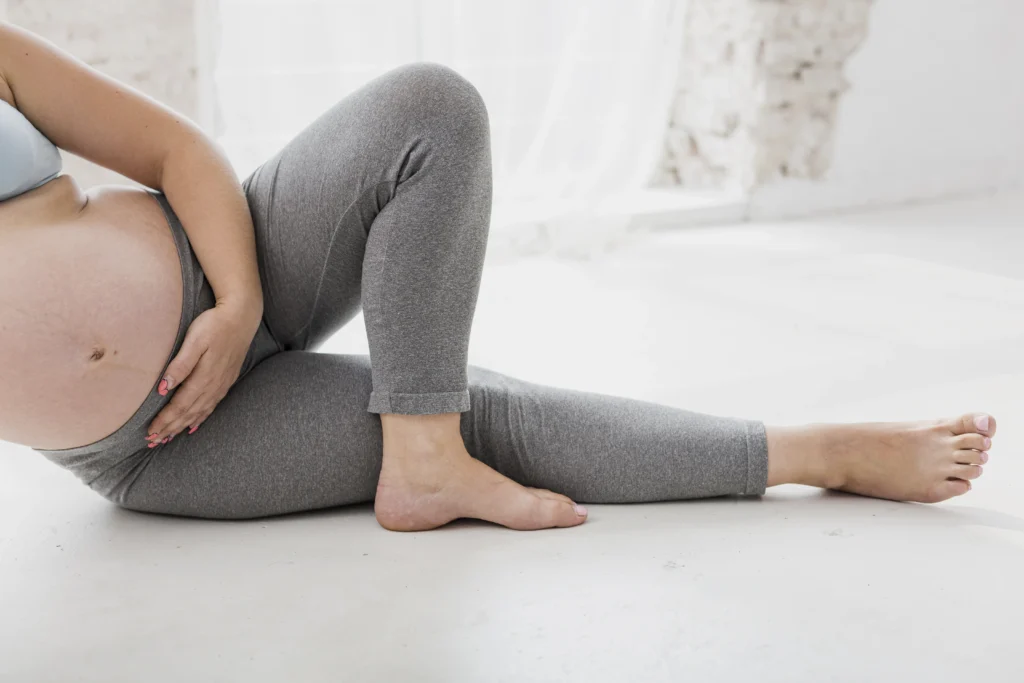
Your Feet May Become Wider Permanently
This is something many women notice postpartum but rarely expect beforehand.
Recent biomechanics literature suggests that ligament laxity and arch collapse may create long-term changes in foot structure.
A 2024 review published in the International Journal of Environmental Research and Public Health discussed persistent postpartum foot structure adaptations in some women.
Barefoot Walking Can Sometimes Make Pain Worse
Many pregnant women remove footwear at home because their feet feel swollen or tired.
Ironically, walking barefoot on hard tile floors often increases heel and arch strain.
I frequently notice this in women who spend long periods cooking or doing household work.
Supportive indoor footwear can make a surprisingly large difference.
Old Slippers Become a Problem Late in Pregnancy
This sounds small, but it matters.
Soft worn-out slippers stop supporting the arch properly.
The foot then compensates by gripping harder during walking.
That extra muscle tension contributes to pregnancy fatigue and cramps.
Foot Pain During Pregnancy Treatment That Actually Helps
Supportive Footwear Makes a Bigger Difference Than Most Women Realize
Good footwear is not about fashion during pregnancy. It becomes a treatment tool.
Look for:
- cushioned soles
- arch support
- wide toe area
- shock absorption
- stable heel support
Avoid:
- completely flat sandals
- loose slippers
- hard soles
- high heels
One 2025 study found that medial arch support significantly improved pain and comfort in pregnant women with foot symptoms.
That finding matches what many physiotherapists observe clinically every day.
Physiotherapy Can Reduce Pain Without Medication
A lot of pregnant women are hesitant about treatment because they worry about safety.
Physiotherapy is often one of the safest approaches because it focuses on movement mechanics rather than aggressive intervention.
Treatment may include:
- gait correction
- calf stretching
- foot strengthening
- swelling management
- posture retraining
- balance exercises
- manual therapy
- footwear advice
Small corrections often create noticeable relief within weeks.
Physiotherapy Exercises That Help Pregnancy Foot Pain
Calf Stretch Before Getting Out of Bed
This simple habit helps many women with morning heel pain.
Before standing:
- Sit on the bed.
- Stretch the calf gently using a towel.
- Hold for 20 to 30 seconds.
Even one minute helps reduce tension under the foot.
Towel Scrunches
This strengthens the small muscles supporting the arch.
How to do it:
- Place a towel on the floor.
- Use your toes to pull the towel inward.
- Repeat slowly for one minute.
The movement looks simple but works surprisingly well for foot fatigue.
Ankle Pumps for Swelling
Long sitting periods often worsen swelling.
Ankle pumps improve circulation:
- Move the feet up and down repeatedly.
- Continue for one to two minutes.
- Repeat several times daily.
This is especially useful during travel or desk work.
Heel Raises
Heel raises improve calf strength and ankle support.
Stand near support if needed:
- Slowly rise onto the toes.
- Pause briefly.
- Lower gradually.
Slow movement works better than fast repetitions.
Foot Rolling
Rolling the foot over a chilled water bottle can reduce tension under the arch.
Do not apply excessive pressure.
Gentle movement is usually enough.
Swelling Relief Tips That Actually Work
Elevate the Feet Earlier, Not Just at Night
Most women wait until swelling becomes severe before elevating their legs.
That is usually too late.
Short elevation breaks throughout the day often work better than one long session at night.
Compression Socks Help More Than People Expect
Many pregnant women resist compression socks initially because they assume they will feel uncomfortable.
Properly fitted compression wear often reduces:
- heaviness
- ankle tightness
- fatigue
- evening swelling
Especially for women who stand for long hours.
Hot Weather Changes Everything
Symptoms often worsen dramatically during summer.
Women who are comfortable indoors sometimes develop severe swelling after outdoor walking or shopping.
Planning outdoor activity earlier in the day can help considerably.
Daily Habits That Quietly Make Foot Pain Worse
Standing in One Position Too Long
Static standing creates more foot stress than gentle movement.
Teachers, healthcare workers, and women doing prolonged kitchen work often notice this first.
Carrying Heavy Bags
Extra load shifts pressure forward through the feet and lower back.
Even grocery bags matter more during pregnancy than many realize.
Ignoring Calf Tightness
This is a major one.
Tight calves change foot mechanics constantly during walking.
Many women focus only on the painful area while missing the muscle tension above it.
When Foot Pain During Pregnancy Needs Medical Attention
Most pregnancy foot pain is mechanical and manageable.
But certain symptoms should never be ignored.
Seek medical advice immediately if you notice:
- sudden severe swelling
- swelling only on one side
- redness or warmth
- calf pain with tenderness
- numbness
- breathing difficulty
- inability to walk comfortably
Some conditions require urgent evaluation.
A Physiotherapist’s Honest Advice
One thing I have learned over the years is this:
Women often tolerate foot pain far longer than they should.
They keep pushing through discomfort because they are focused on the baby, work, home responsibilities, or simply getting through the day.
But painful feet change the entire movement pattern of the body.
Eventually:
- the knees compensate
- the hips tighten
- the lower back works harder
- balance becomes less stable
That chain reaction matters.
The women who usually feel better faster are not necessarily the ones doing intense exercise.
They are the women making small consistent adjustments early.
Better footwear.
Short movement breaks.
Calf stretching.
Less barefoot walking on hard floors.
Managing swelling before it becomes severe.
Simple things. But they add up quickly.
Final Thoughts
Foot pain during pregnancy is extremely common, but that does not mean you should simply “put up with it.”
The feet go through enormous mechanical and hormonal stress during pregnancy.
Sometimes the changes are temporary.
Sometimes they linger longer than expected.
Either way, pain is worth paying attention to.
Supportive footwear, physiotherapy-guided exercises, posture correction, swelling management, and smart daily habits can make walking feel dramatically easier.
And honestly, when your feet feel better, everything else usually feels a little more manageable too.
Frequently Asked Questions
Can pregnancy permanently change your feet?
Yes. Some women experience permanent arch flattening and slightly increased foot length after pregnancy due to ligament changes and prolonged pressure on the feet.
Why is foot pain worse at night during pregnancy?
Swelling usually increases throughout the day, especially after standing or walking for long periods. This creates pressure inside the feet and may worsen pain by evening.
Are compression socks good for pregnancy foot pain?
Yes. Properly fitted compression socks may help reduce swelling, heaviness, and tiredness in the feet and ankles during pregnancy.
What type of shoes should I wear during pregnancy?
Choose shoes with arch support, cushioning, a wide toe box, and stable soles. Avoid worn-out slippers and completely flat footwear.
Can physiotherapy help foot pain during pregnancy?
Yes. Physiotherapy can improve walking mechanics, reduce strain on the feet, improve circulation, and strengthen muscles safely during pregnancy.
Is it normal for feet to burn during pregnancy?
Burning sensations can occur because of swelling, nerve pressure, prolonged standing, or altered circulation. Persistent burning should still be assessed professionally.
Does walking help or worsen pregnancy foot pain?
Gentle walking is usually beneficial, but excessive walking without proper support may worsen heel pain and swelling.
When should I worry about swollen feet during pregnancy?
Seek medical attention if swelling appears suddenly, affects only one leg, becomes painful, or is associated with redness or breathing difficulty.
Stay tuned with us for more health related topics.
Follow us on LinkedIn and Instagram for more.
More Read


Medical Disclaimer!
This article has been reviewed and written under the guidance of our Head Physiotherapist, Dr. Kruti Raj (PT, MUHS,CPT,CMPT). The information shared is intended for educational purposes only and should not be considered a substitute for personalized medical advice, diagnosis, or treatment.
Please consult us or any other qualified healthcare professional before beginning any exercise program, especially if you are experiencing pain, recovering from injury, or managing a medical condition.


