Pubic symphysis dysfunction exercises can help improve pelvic stability, reduce pain, and support safer movement during pregnancy.
There is a certain kind of pregnancy pain that catches women completely off guard.
Not the expected backache.
Not the usual heaviness that comes later in pregnancy.
This one feels sharper.
Stranger.
Sometimes it feels like the pelvis is pulling apart while walking.
Sometimes turning in bed suddenly becomes the hardest movement of the day.
I have even had patients tell me they planned their entire morning around avoiding stairs because lifting one leg became so uncomfortable.
That is often how Pubic Symphysis Dysfunction begins.
Quick Answer
Pubic Symphysis Dysfunction exercises focus on improving pelvic stability, reducing strain on the pubic joint, and helping pregnant women move with less pain. The most effective exercises usually include gentle core activation, glute strengthening, breathing coordination, supported squats, and controlled pelvic stability work. Most women benefit more from smart movement modification and physiotherapy-guided exercises rather than complete bed rest.
Small daily changes like keeping knees together while turning in bed, avoiding uneven weight-bearing, taking shorter walks, and improving posture can also make a noticeable difference in symptoms.
As a physiotherapist, I have noticed something interesting over the years.
Most women do not panic because of the pain itself at first.
They panic because the pain feels unpredictable.
One day they manage a grocery trip just fine.
The next day, stepping out of the car hurts so much they wonder if something is seriously wrong.
The reassuring part is this: Pubic Symphysis Dysfunction, also called Symphysis Pubis Dysfunction or pregnancy-related pelvic girdle pain, is common and treatable.
The frustrating part is that many women are still told to simply “rest more” or “wait until delivery.”
That advice is outdated.
Modern physiotherapy focuses less on strict rest and more on helping the pelvis tolerate movement better through stabilization, load management, breathing mechanics, and muscle coordination.
And honestly, that shift matters.
Because most women do not want to spend months afraid of rolling over in bed.
Key Takeaways
- Pubic Symphysis Dysfunction is common during pregnancy and often worsens with uneven pelvic movements.
- Modern physiotherapy focuses on pelvic stability and controlled movement instead of strict bed rest.
- Gentle glute strengthening and deep core activation can improve pelvic support significantly.
- Long walks and standing on one leg often aggravate symptoms more than light exercises.
- Keeping knees together while rolling in bed may reduce pelvic strain.
- Support belts may help temporarily, but they work best alongside exercise and posture correction.
- Fear of movement can increase pain sensitivity and affect recovery.
- Early physiotherapy intervention usually leads to better symptom management.
- Some women continue pelvic pain after pregnancy and may benefit from postpartum rehabilitation.
- Small movement changes repeated daily often help more than aggressive exercise programs.
What Is Pubic Symphysis Dysfunction?
The pubic symphysis is the joint at the front of the pelvis where the left and right pelvic bones meet.
Normally, this joint moves very slightly.
During pregnancy, hormones like relaxin soften the surrounding ligaments so the pelvis can adapt for childbirth.
In some women, those joints become more sensitive, less stable, or overloaded.
That is when pain starts showing up around the front of the pelvis, groin, hips, inner thighs, or lower back.
The condition is commonly called:
- Pubic Symphysis Dysfunction (PSD)
- Symphysis Pubis Dysfunction (SPD)
- Pelvic Girdle Pain (PGP)
Interestingly, researchers now use the term “pelvic girdle pain” more often because the discomfort usually involves more than just the pubic bone.
(Vleeming et al. 2008) explained that pregnancy-related pelvic pain is often linked to altered force transfer through the pelvis rather than a single isolated joint problem.
What Does SPD Pain Actually Feel Like?
Women describe it differently.
Some say:
- “It feels like a knife in the groin.”
- “My pelvis clicks when I walk.”
- “I feel unstable carrying my toddler.”
- “Turning in bed feels impossible.”
- “I waddle without meaning to.”
One patient once described it perfectly:
“It feels like my legs forgot how to work together.”
That description honestly captures SPD better than many textbook definitions.
Pain commonly appears:
- when getting out of bed
- climbing stairs
- standing on one leg
- entering a car
- walking quickly
- carrying uneven weight
- pushing heavy shopping carts
And yes, some women notice the pain is worse at night after an active day.
Why Some Women Develop Worse Symptoms Than Others
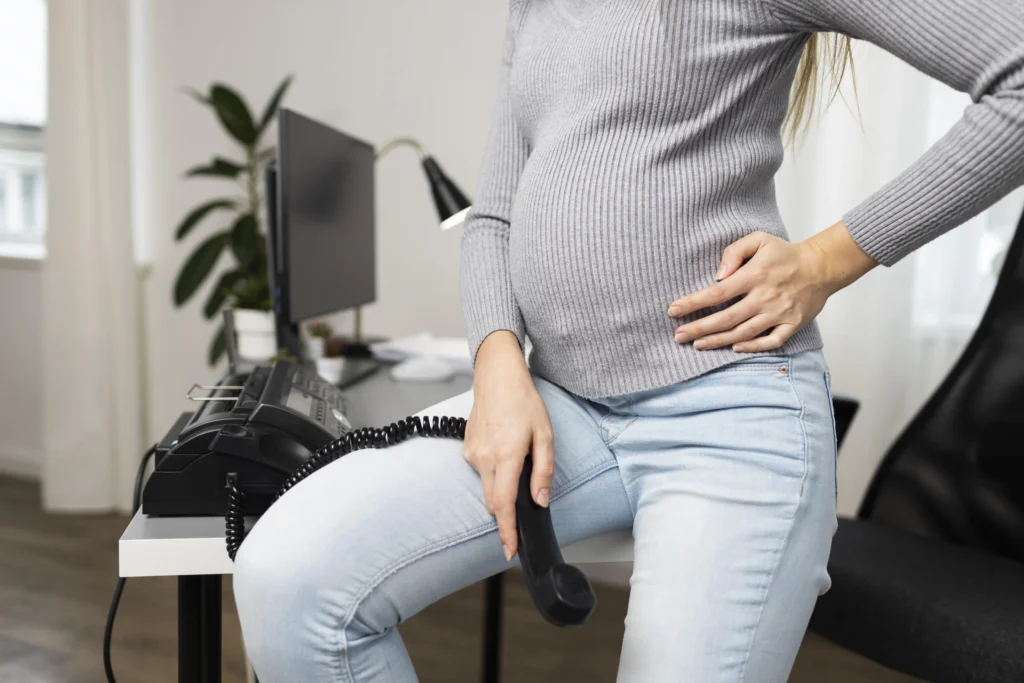
This part is often oversimplified online.
It is not just “pregnancy hormones.”
Several factors seem to contribute:
- previous lower back pain
- poor glute strength
- hypermobility
- prior pelvic trauma
- physically demanding jobs
- weak load tolerance
- poor movement control
- reduced sleep
- fear of movement after pain begins
Recent physiotherapy research also discusses something called “motor control changes.”
Basically, once pain starts, the body sometimes changes the way muscles coordinate around the pelvis.
That protective guarding can actually make movement feel even more awkward.
(Andry Vleeming 2018) discussed how altered biomechanics and instability contribute significantly to pregnancy-related pelvic girdle pain.
One Thing Many Pregnancy Articles Ignore
The emotional side.
SPD is exhausting.
Not because the pain is always severe, but because it interrupts tiny everyday movements repeatedly throughout the day.
Women often feel frustrated because:
- walking changes
- sleep gets disrupted
- exercise becomes difficult
- independence feels reduced
- movement starts creating anxiety
I have seen women become genuinely nervous about simple activities like carrying laundry baskets or getting into cars.
That emotional tension matters because pain is not only physical.
The nervous system also becomes more sensitive when the body stays stressed and guarded for weeks.
Should You Rest Completely?
Usually, no.
This surprises many women.
Years ago, strict rest was commonly recommended.
Current physiotherapy approaches are much more balanced.
Complete inactivity often weakens the muscles that help support the pelvis.
What usually works better is:
- controlled movement
- pacing activities
- avoiding aggravating positions
- improving muscle coordination
- reducing asymmetrical loading
In other words, movement itself is not always the problem.
Poorly tolerated movement usually is.
A 2024 review on pelvic girdle pain rehabilitation highlighted the importance of individualized movement strategies instead of excessive restriction.
The Pubic Symphysis Dysfunction Exercises That Help Most
This is where many online articles become repetitive.
Women do not necessarily need dozens of random stretches.
In clinic, the most helpful exercises are usually the ones that:
- improve pelvic stability
- reduce excessive shifting
- restore confidence with movement
- activate deep support muscles
- strengthen glutes without aggravating symptoms
And importantly, exercises should not feel aggressive.
If an exercise causes sharp pelvic pain afterward, it is probably too much for the current stage.
Breathing and Deep Core Activation
This sounds simple, but it is one of the most overlooked pieces of pelvic rehab.
Many women with SPD unintentionally brace their stomach constantly because they are trying to “protect” the pelvis.
Others stop engaging their deep core entirely because movement feels uncomfortable.
Neither extreme works well.
A better approach is coordinated breathing.
How To Do It
- Sit comfortably
- Relax shoulders
- Inhale slowly through the nose
- Let the rib cage expand sideways
- Exhale gently
- During the exhale, lightly engage the lower abdominal wall
Not a hard squeeze.
More like gently tightening a zipper.
This helps reconnect:
- diaphragm
- deep abdominal muscles
- pelvic floor
- spinal stabilizers
Side-Lying Glute Strengthening
Weak glutes are a massive hidden issue in SPD.
The glute muscles help stabilize the pelvis while walking.
If they are underperforming, the pelvis often compensates poorly.
One of the safest ways to start strengthening them is side-lying work.
Clamshell Exercise
- Lie on your side
- Bend knees slightly
- Keep feet together
- Slowly lift the top knee
- Do not roll backward
- Lower slowly
The movement should feel controlled, not dramatic.
A mistake I commonly see is women trying to lift too high.
That usually shifts the pelvis instead of strengthening the hip properly.
Modified Glute Bridge
This exercise can help some women tremendously and irritate others.
That variability is important.
If bridges feel good, they often improve:
- glute activation
- posterior chain strength
- pelvic support
How To Perform
- Lie on your back with knees bent
- Keep knees aligned
- Tighten glutes gently
- Lift hips slightly
- Lower slowly
Small lifts are completely fine.
Bigger is not better here.
If lying flat becomes uncomfortable later in pregnancy, the exercise can be modified with pillows or avoided.
Gentle Adductor Support Exercise
The inner thigh muscles attach near the pubic bone.
Sometimes controlled activation helps improve pelvic support.
Pillow Squeeze
- Sit comfortably
- Place a soft pillow between knees
- Gently squeeze
- Hold for 3 seconds
- Relax fully
Gentle is the key word.
Aggressive squeezing often irritates symptoms.
Supported Squats
This surprises people, but many women tolerate small supported squats better than expected.
The trick is control.
How To Perform
- Hold onto a countertop or sturdy support
- Keep feet hip-width apart
- Lower slightly
- Avoid deep squats
- Return slowly
I usually tell patients:
“If your pelvis feels unstable during the movement, shorten the range.”
That adjustment alone changes everything.
Seated Marching
Walking mechanics often become awkward with SPD.
Seated marching helps retrain controlled hip movement with less pelvic strain.
How To Perform
- Sit upright
- Engage lower core gently
- Slowly lift one foot
- Alternate sides
- Move slowly
No rushing.
This is about coordination, not cardio.
What Exercises Usually Make Pubic Symphysis Dysfunction Worse?
There is no universal forbidden exercise list, but some movements aggravate symptoms more often.
These include:
- deep lunges
- high-impact cardio
- jumping workouts
- running on uneven ground
- wide yoga poses
- heavy unilateral exercises
- sudden twisting movements
One detail many women miss is this:
even everyday asymmetrical movements can irritate SPD more than workouts do.
Things like:
- standing on one leg while dressing
- carrying a baby on one hip
- climbing stairs repeatedly
- pushing heavy doors sideways
sometimes trigger more pain than actual exercise sessions.
The Walking Mistake I See Constantly
Long “pain pushing” walks.
A lot of women are told:
“Keep walking through pregnancy.”
The problem is that Pubic Symphysis Dysfunction does not always respond well to prolonged repetitive loading.
Shorter walks with breaks are often tolerated much better than one long walk.
And honestly, pacing is underrated.
Women often wait until the pain becomes severe before stopping activities.
That usually backfires.
Why Rolling In Bed Hurts So Much
This question comes up constantly.
Turning in bed combines:
- pelvic rotation
- single-leg pressure
- abdominal tension
- hip movement
all at once.
One simple adjustment helps many women immediately:
keep knees together while rolling.
Some women also find placing a pillow between the knees reduces pulling across the pelvis.
Tiny movement changes matter more than people realize.
Can Swimming Help Pubic Symphysis Dysfunction?
Often yes. Swimming is one of the best Pubic symphysis dysfunction exercises.
Water reduces pelvic loading while allowing movement.
Many women feel temporary relief in the pool because gravity stress decreases.
However, breaststroke sometimes worsens symptoms because the wide leg movement increases stress across the pelvis.
Gentle water walking or freestyle is often better tolerated.
Pelvic Belts: Helpful or Overhyped?
Honestly, both.
Pelvic support belts can help reduce discomfort, especially during walking or prolonged standing.
But they are not magic fixes.
The women who improve most are usually the ones combining:
- movement modification
- strengthening
- pacing
- posture changes
- pelvic support when needed
rather than relying only on a belt.
The Royal College of Obstetricians and Gynaecologists supports physiotherapy-based management including exercise, pacing, posture advice, and support garments.
The Posture Advice For Pubic Symphysis Dysfunction
Forget trying to stand “perfectly.”
What matters more is reducing uneven stress.
Helpful changes include:
- avoiding standing with weight shifted onto one hip
- using supportive shoes
- taking smaller steps
- sitting while dressing
- avoiding twisting while carrying loads
Simple adjustments done repeatedly throughout the day often reduce irritation more than a single exercise session.
A Lesser-Known Reality About Pubic Symphysis Dysfunction
Some women continue symptoms after pregnancy.
Not everybody. But enough that it deserves discussion.
Research from the University of Gothenburg found that pregnancy-related pelvic girdle pain can persist long term in certain women, especially when movement confidence and load tolerance are not fully restored.
This is one reason postpartum rehabilitation matters.
Many women assume the pain will disappear automatically after delivery.
Sometimes it does.
Sometimes the body still needs guided recovery afterward.
When You Should See a Physiotherapist
Please do not wait until you can barely walk.
Early management tends to work better.
Seek help if:
- pain changes your walking pattern
- stairs become difficult
- sleep is regularly disturbed
- you feel unstable
- daily tasks feel harder
- movement fear is increasing
A good physiotherapist should not just hand you generic exercises.
They should assess:
- movement patterns
- load tolerance
- posture
- muscle coordination
- walking mechanics
- pain triggers
Because not all SPD behaves the same way.
Final Thoughts From a Physiotherapist
Gentle Pubic Symphysis Dysfunction strengthening and pelvic support exercises may help reduce pubic symphysis dysfunction pain and improve daily comfort during pregnancy.
One thing I wish more pregnant women understood is this:
Pain does not automatically mean damage.
Many women with SPD become frightened because the pelvis feels unstable or “wrong.”
But the body during pregnancy is adapting to enormous physical changes in a very short time.
The goal is not to force the pelvis to stay rigid.
The goal is helping the body manage movement better.
And recovery is rarely about one miracle stretch or exercise.
Usually it is:
- small movement adjustments
- consistent strengthening
- better pacing
- reduced fear around movement
- smarter loading patterns
- gradual confidence rebuilding
Some days will feel easier than others.
That is normal.
And honestly, the women who improve best are often not the ones doing the hardest workouts.
They are the ones learning how to move more comfortably without constantly fighting their body.
Frequently Asked Questions
Can walking make Pubic Symphysis Dysfunction worse?
Yes, prolonged walking or walking on uneven surfaces can aggravate pelvic pain in some pregnant women. Shorter walks with rest breaks are usually better tolerated.
What is the best exercise for SPD during pregnancy?
Gentle pelvic stability exercises, glute strengthening, deep breathing with core activation, and supported movements are often the safest and most effective options.
Should I completely rest if I have SPD?
Usually no. Complete inactivity may weaken pelvic support muscles further. Most physiotherapists now recommend controlled movement and activity modification instead.
Why does turning in bed hurt with SPD?
Turning combines pelvic rotation, hip movement, and uneven loading, which can increase stress around the pubic symphysis joint.
Can Pubic Symphysis Dysfunction continue after pregnancy?
Yes, some women continue experiencing pelvic pain postpartum, especially if pelvic stability and muscle coordination are not fully restored.
Does wearing a pelvic belt actually help?
Pelvic support belts may reduce discomfort temporarily, especially while walking or standing, but they work best alongside physiotherapy exercises.
Are squats safe with SPD?
Small supported squats may be safe for some women if done carefully and without pain. Deep squats usually aggravate symptoms.
When should I see a physiotherapist for SPD?
You should seek help if pain affects walking, sleep, stairs, daily activities, or creates fear around movement.
Stay tuned with us for more health related topics.
Follow us on LinkedIn and Instagram for more.
More Read



Medical Disclaimer!
This article has been reviewed and written under the guidance of our Head Physiotherapist, Dr. Kruti Raj (PT, MUHS,CPT,CMPT). The information shared is intended for educational purposes only and should not be considered a substitute for personalized medical advice, diagnosis, or treatment.
Please consult us or any other qualified healthcare professional before beginning any exercise program, especially if you are experiencing pain, recovering from injury, or managing a medical condition.