Do your periods feel heavier than they should? Understanding the cause of menorrhagia is the first step toward choosing the best treatment.
If you find yourself changing sanitary pads or tampons every hour, passing large blood clots, or avoiding work, school, or social activities because of excessive bleeding,
it may be more than just a “heavy period.“
Quick Answer
Heavy menstrual bleeding (menorrhagia) refers to menstrual bleeding that is unusually heavy or lasts longer than seven days and affects a woman’s quality of life. It may be caused by conditions such as fibroids, adenomyosis, hormonal imbalance, or bleeding disorders. Effective treatment depends on identifying the underlying cause and may include medication, hormonal therapy, physiotherapy, or surgery.
Heavy menstrual bleeding, medically known as menorrhagia, is one of the most common menstrual problems affecting women of reproductive age.
While menstrual flow naturally varies from one woman to another, bleeding that is unusually heavy or lasts longer than seven days should not be ignored.
Heavy menstrual bleeding can affect physical health, emotional well-being, work productivity, and overall quality of life.
It may also lead to iron-deficiency anemia, causing fatigue, weakness, dizziness, and reduced exercise tolerance.
The good news is that heavy menstrual bleeding is treatable. Identifying the underlying cause is the first step toward choosing the most effective treatment and preventing long-term complications. (Munro et al., 2018)
Key Takeaways
- Heavy menstrual bleeding is excessive menstrual blood loss that affects a woman’s quality of life.
- Bleeding lasting longer than seven days or requiring frequent sanitary product changes should not be ignored.
- Common causes include fibroids, adenomyosis, hormonal imbalance, PCOS, thyroid disorders, and bleeding disorders.
- Persistent heavy bleeding can lead to iron-deficiency anemia and chronic fatigue.
- Diagnosis focuses on identifying the underlying cause through history, examination, blood tests, and imaging.
- Treatment may include medication, hormonal therapy, surgery, and management of the underlying condition.
- Early medical evaluation helps prevent complications and improves long-term health outcomes.
What Is Heavy Menstrual Bleeding (Menorrhagia)?
Heavy menstrual bleeding refers to excessive menstrual blood loss that interferes with a woman’s physical, emotional, social, or material quality of life.
It is not defined only by the amount of blood lost but also by how significantly it affects daily activities.
Women with heavy menstrual bleeding may need to change sanitary products very frequently, use multiple forms of protection at the same time, wake during the night because of bleeding, or avoid normal activities due to fear of leakage.
Heavy menstrual bleeding is a symptom rather than a disease.
It often indicates an underlying condition such as:
adenomyosis, uterine fibroids, endometriosis, hormonal imbalance, polycystic ovary syndrome (PCOS), bleeding disorders, thyroid disease, or, less commonly, uterine cancer.
Although many women assume heavy periods are normal because other family members experience them,
excessive menstrual bleeding should always be evaluated by a healthcare professional. (Cleveland Clinic)
How Much Bleeding Is Considered Normal?
A normal menstrual period usually lasts between 2 and 7 days, with most women losing approximately 30-40 mL of blood during an entire menstrual cycle.
Heavy menstrual bleeding is generally suspected when:
- Bleeding lasts longer than 7 days.
- Sanitary pads or tampons become soaked every 1-2 hours.
- Large blood clots are passed regularly.
- Double protection is required to prevent leakage.
- Night-time changes are frequently necessary.
- Daily activities, work, school, or sleep are disrupted because of menstrual bleeding.
Since it is difficult to measure menstrual blood loss accurately at home, doctors often rely on the impact of bleeding on everyday life when making a diagnosis.
What Causes Heavy Menstrual Bleeding?
Heavy menstrual bleeding can occur for many different reasons.
Some causes are related to the uterus itself, while others involve hormonal, medical, or bleeding disorders.
Common causes include:
- Adenomyosis
- Uterine fibroids
- Endometrial polyps
- Endometriosis
- Polycystic ovary syndrome (PCOS)
- Ovulation disorders
- Hormonal imbalance
- Thyroid disorders
- Bleeding disorders such as von Willebrand disease
- Certain medications, including anticoagulants
- Pregnancy-related complications
- Rarely, cancers of the uterus or cervix
In many women, more than one factor contributes to heavy menstrual bleeding.
Risk Factors
Several factors can increase the likelihood of developing heavy menstrual bleeding.
These include:
- Age during adolescence or perimenopause
- Hormonal imbalance
- Obesity
- Family history of heavy menstrual bleeding
- Uterine fibroids
- Adenomyosis
- Endometriosis
- PCOS
- Bleeding disorders
- Thyroid disease
- Use of blood-thinning medications
Having one or more risk factors does not necessarily mean you will experience heavy menstrual bleeding, but it may increase your risk.
How Does Heavy Menstrual Bleeding Occur?
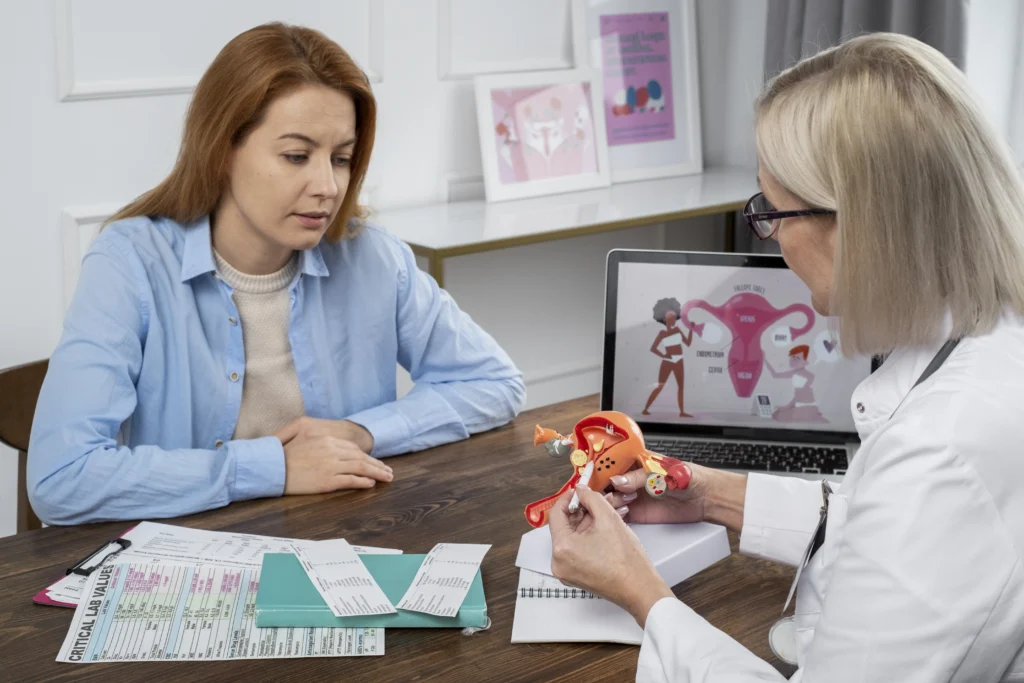
During a normal menstrual cycle, hormones regulate the growth and shedding of the uterine lining.
When this process is disrupted, the lining may become thicker than usual or the uterus may not contract effectively to control bleeding.
As a result, menstrual blood loss becomes heavier and periods may last longer.
Conditions such as fibroids and adenomyosis increase the surface area of the uterus, while hormonal disorders may cause irregular thickening of the endometrium.
Bleeding disorders can also reduce the body’s ability to form blood clots, making menstrual bleeding more prolonged.
Understanding the underlying cause is essential because successful treatment focuses not only on reducing bleeding but also on addressing the condition responsible for it.
Symptoms of Heavy Menstrual Bleeding
Heavy menstrual bleeding affects every woman differently.
Some women experience excessive blood loss during every menstrual cycle, while others notice a gradual increase in bleeding over time.
The most common symptom is bleeding that is heavier than usual and interferes with everyday life.
You may have heavy menstrual bleeding if you:
- Soak through one or more sanitary pads or tampons every 1-2 hours.
- Need to use two sanitary products at the same time to prevent leakage.
- Wake up at night to change sanitary products.
- Pass blood clots larger than a ₹5 coin (or about 2.5 cm in diameter).
- Bleed continuously for more than seven days.
- Need to avoid work, school, travel, or social activities because of your period.
Heavy menstrual bleeding often causes excessive blood loss over several months, which may result in iron-deficiency anemia.
Symptoms of anemia include:
- Persistent fatigue.
- Weakness.
- Dizziness.
- Shortness of breath during routine activities.
- Pale skin.
- Difficulty concentrating.
Some women also experience severe menstrual cramps, pelvic pressure, lower back pain, or symptoms related to the underlying condition causing the heavy bleeding.
How Is Heavy Menstrual Bleeding Diagnosed?
Your healthcare provider will begin by asking about your menstrual cycle, the amount of bleeding, associated symptoms, pregnancy history, medications, and any family history of bleeding disorders.
Keeping a menstrual diary or using a period tracking app before your appointment can help provide valuable information about your bleeding pattern.
A physical and pelvic examination may be performed to identify signs of uterine enlargement, fibroids, or other abnormalities.
Depending on your symptoms, your doctor may recommend:
- Blood tests to check for anemia and iron deficiency.
- Pregnancy testing when appropriate.
- Thyroid function tests.
- Blood clotting studies if a bleeding disorder is suspected.
- Transvaginal ultrasound to evaluate the uterus and ovaries.
- Hysteroscopy to examine the inside of the uterus in selected cases.
- Endometrial biopsy when indicated, particularly in women with risk factors for endometrial disease.
Accurate diagnosis is important because successful treatment depends on identifying the underlying cause of the bleeding rather than simply reducing blood loss. (Matteson et al., 2013)
Possible Complications
If left untreated, heavy menstrual bleeding can lead to several health problems.
Iron-deficiency anemia is one of the most common complications and may cause chronic fatigue, reduced physical endurance, headaches, dizziness, and poor concentration.
Persistent heavy bleeding may also affect emotional well-being, contributing to anxiety, stress, and reduced confidence in social or professional settings.
Women with underlying conditions such as adenomyosis or fibroids may experience worsening pelvic pain or increasing pressure symptoms if treatment is delayed.
Myth vs Fact
| Myth | Fact |
|---|---|
| Heavy periods are normal for every woman. | Periods that interfere with daily life or last longer than seven days should be medically evaluated. |
| Heavy bleeding is only caused by hormones. | Heavy menstrual bleeding can result from fibroids, adenomyosis, PCOS, bleeding disorders, thyroid disease, and other medical conditions. |
| Passing blood clots during periods is always normal. | Large or frequent blood clots may indicate excessive menstrual blood loss and should be assessed by a healthcare professional. |
| Surgery is always needed. | Many women successfully manage heavy menstrual bleeding with medications, hormonal therapy, lifestyle changes, and treatment of the underlying cause. |
How Heavy Menstrual Bleeding Affects Daily Life
Heavy menstrual bleeding can have a significant impact on quality of life.
Many women plan their daily activities around their menstrual cycle because of concerns about leakage, frequent bathroom visits, or limited access to sanitary products.
Physical activities, exercise, travel, work, and social events may become difficult during menstruation.
Chronic fatigue caused by iron deficiency can further reduce productivity, affect mood, and make routine activities feel exhausting.
The emotional impact is often underestimated, with many women reporting embarrassment, frustration, and reduced self-confidence due to unpredictable bleeding.
Heavy Menstrual Bleeding and Pregnancy
Heavy menstrual bleeding itself does not always affect fertility, but the underlying condition causing the bleeding may influence a woman’s ability to conceive.
Conditions such as uterine fibroids, adenomyosis, endometriosis, or hormonal disorders can interfere with ovulation, implantation, or normal pregnancy.
Women planning pregnancy should seek medical evaluation if heavy menstrual bleeding is persistent or accompanied by irregular cycles, pelvic pain, or difficulty conceiving.
Physiotherapy Perspective
Although physiotherapy does not directly reduce menstrual blood loss, it plays an important role in managing symptoms that commonly accompany heavy menstrual bleeding.
Women experiencing prolonged heavy periods often develop fatigue, pelvic pain, lower back pain, reduced physical activity, and pelvic floor muscle dysfunction.
A women’s health physiotherapist can provide individualized:
exercise programs, posture correction, breathing techniques, pelvic floor muscle assessment, pain management strategies, and guidance on gradually returning to physical activity as energy levels improve.
Women with iron-deficiency anemia may also benefit from supervised activity progression to safely rebuild strength and endurance while receiving appropriate medical treatment.
Physiotherapy is most effective when combined with treatment directed at the underlying cause of heavy menstrual bleeding.
Treatment for Heavy Menstrual Bleeding
The treatment for heavy menstrual bleeding depends on its underlying cause, your age, the severity of bleeding, your overall health, and whether you plan to have children in the future.
For many women, treatment successfully reduces menstrual blood loss and improves quality of life.
Managing the underlying condition, such as fibroids, adenomyosis, hormonal imbalance, or a bleeding disorder, is equally important.
Your gynecologist will recommend an individualized treatment plan after identifying the cause of the bleeding.
Medications
Several medications can help reduce menstrual blood loss and relieve associated symptoms.
Common treatment options include:
- Nonsteroidal anti-inflammatory drugs (NSAIDs) to reduce menstrual pain and slightly decrease bleeding.
- Tranexamic acid to reduce heavy menstrual bleeding during periods.
- Iron supplements to treat or prevent iron-deficiency anemia.
- Other medications depending on the underlying medical condition.
These medicines should only be taken under medical supervision, as the most appropriate option varies from person to person.
Hormonal Therapy
Hormonal treatment is commonly recommended when heavy menstrual bleeding is caused by hormonal imbalance or certain uterine conditions.
Your doctor may recommend:
- Combined oral contraceptive pills.
- Progestin-only tablets.
- Levonorgestrel-releasing intrauterine device (LNG-IUD).
- Injectable hormonal medications.
- Gonadotropin-releasing hormone (GnRH) agonists in selected cases.
Hormonal therapy can help regulate menstrual cycles, reduce menstrual blood loss, and improve associated symptoms such as painful periods. (Eralil et al., 2016)
Surgical Treatment
Surgery may be considered if medications and hormonal treatments do not adequately control heavy menstrual bleeding or when structural abnormalities of the uterus are present.
The type of procedure depends on the underlying cause, symptom severity, age, and future fertility plans.
Possible surgical options include:
- Hysteroscopic removal of endometrial polyps.
- Myomectomy for selected uterine fibroids.
- Endometrial ablation for women who have completed childbearing and meet specific eligibility criteria.
- Hysterectomy, which permanently removes the uterus and is considered the definitive treatment when other options are unsuitable or unsuccessful.
Your gynecologist will discuss the benefits, risks, and expected outcomes of each procedure before making a treatment decision.
Lifestyle and Self-Care
Although lifestyle changes cannot cure heavy menstrual bleeding, they can help improve overall health and reduce the impact of symptoms.
Eating an iron-rich diet containing leafy green vegetables, beans, lentils, lean meat, fish, nuts, and fortified cereals can help replenish iron stores, particularly if heavy bleeding has caused anemia.
Foods rich in vitamin C, such as oranges, guava, strawberries, and bell peppers, can improve iron absorption when consumed with iron-rich meals.
Regular physical activity may improve overall health, reduce fatigue over time, and support emotional well-being.
Adequate sleep, stress management, and maintaining a healthy body weight may also contribute to better menstrual health.
Women experiencing severe fatigue should gradually increase their activity level after discussing an exercise plan with their healthcare provider.
Can Heavy Menstrual Bleeding Be Prevented?
Heavy menstrual bleeding cannot always be prevented because many underlying causes, such as fibroids, adenomyosis, or inherited bleeding disorders, are beyond your control.
However, early evaluation of unusually heavy or prolonged periods allows healthcare providers to diagnose and treat underlying conditions before complications develop.
Attending regular gynecological check-ups and seeking medical advice when menstrual patterns change can help prevent long-term problems such as severe anemia.
When Should You See a Doctor?
You should consult a healthcare professional if:
- Your periods last longer than seven days.
- You soak through one or more sanitary pads or tampons every one to two hours.
- You regularly pass large blood clots.
- Heavy bleeding interferes with work, school, or daily activities.
- You develop fatigue, dizziness, shortness of breath, or other symptoms of anemia.
- You experience severe pelvic pain along with heavy bleeding.
- Heavy menstrual bleeding begins suddenly or becomes progressively worse.
- You bleed after menopause or between menstrual periods.
Prompt medical evaluation can help identify the cause and ensure timely treatment.
Final Thoughts
Heavy menstrual bleeding is more than just a menstrual inconvenience, it can significantly affect your physical health, emotional well-being, and everyday life. Persistent or unusually heavy periods should never be considered something you simply have to live with.
With an accurate diagnosis, appropriate medical treatment, healthy lifestyle habits, and supportive care such as pelvic health physiotherapy, most women can successfully manage their symptoms and enjoy a better quality of life. If your periods are affecting your daily routine, don’t hesitate to seek professional medical advice.
Conclusion
Heavy menstrual bleeding is one of the most common gynecological concerns, but it should never be dismissed as “just a heavy period.”
Although many women silently live with excessive menstrual bleeding for years, effective treatments are available for most underlying causes.
Early diagnosis not only helps reduce menstrual blood loss but also prevents complications such as iron-deficiency anemia, chronic fatigue, and reduced quality of life.
If your menstrual bleeding is affecting your daily routine, work, or overall well-being, speak with a healthcare professional.
With the right combination of medical treatment, healthy lifestyle changes, and supportive physiotherapy, most women can successfully manage their symptoms and regain confidence in their everyday lives. (National Institute for Health and Care Excellence (NICE) et al. 2021)
Frequently Asked Questions
How do I know if my period is too heavy?
If you soak through a pad or tampon every one to two hours, pass large blood clots, or bleed for more than seven days, you should consult a healthcare professional.
Can heavy menstrual bleeding cause anemia?
Yes. Ongoing excessive menstrual blood loss is one of the leading causes of iron-deficiency anemia in women of reproductive age.
Can heavy menstrual bleeding affect fertility?
Heavy menstrual bleeding itself does not always reduce fertility, but the condition causing the bleeding may affect your ability to conceive.
When should I see a doctor?
You should seek medical advice if heavy bleeding affects your daily activities, causes symptoms of anemia, or becomes progressively worse.
Can physiotherapy reduce heavy menstrual bleeding?
Physiotherapy does not directly reduce menstrual blood loss, but it can help manage pelvic pain, improve mobility, reduce fatigue, and support overall recovery alongside medical treatment.
Stay tuned with us for more health related topics.
Follow us on LinkedIn and Instagram for more.
More Read






Medical Disclaimer!
This article has been reviewed and written under the guidance of our Head Physiotherapist, Dr. Kruti Raj (PT, MUHS,CPT,CMPT). The information shared is intended for educational purposes only and should not be considered a substitute for personalized medical advice, diagnosis, or treatment.
Please consult us or any other qualified healthcare professional before beginning any exercise program, especially if you are experiencing pain, recovering from injury, or managing a medical condition.