Breast pain during or after weightlifting can be confusing.
You may feel soreness in the breast, under the breast, near the armpit, or across the chest and wonder whether the pain is coming from the breast tissue or the muscles underneath it.
Quick Answer
Breast pain when lifting weights can be caused by a pectoral muscle strain, delayed-onset muscle soreness, rib or chest wall irritation, poor exercise technique, hormonal breast tenderness, or inadequate breast support. Pain that changes with arm movement, pressing, or exercise may suggest a muscular cause. However, persistent, unexplained, one-sided, or focal breast pain should be assessed by a healthcare professional.
In many cases, breast pain when lifting weights is related to the chest wall, pectoral muscles, ribs, posture, or exercise technique.
However, hormonal breast tenderness, inadequate support, skin irritation, and other breast conditions may also cause discomfort.
The location, timing, and type of pain can provide useful clues.
Still, breast pain should not be self-diagnosed only by where it is felt.
Key Takeaways
- Breast pain during weightlifting may come from the chest muscles or chest wall.
- Pectoral muscle strain and delayed-onset muscle soreness are common exercise-related causes.
- Poor technique, excessive weight, and sudden training increases may contribute to pain.
- Hormonal breast tenderness and inadequate breast support can also cause discomfort.
- Warm-ups, gradual progression, proper technique, and recovery can reduce exercise-related pain.
- Persistent pain, a new lump, nipple discharge, skin changes, or swelling requires medical assessment.
Can Weightlifting Cause Breast Pain?
Yes.
Weightlifting can cause pain that feels as though it is coming from the breast, even when the source is the chest wall.
The breasts contain fatty, glandular, connective, and fibrous tissues, but they do not contain skeletal muscle.
The pectoral muscles lie underneath the breasts and are involved in many common strength-training exercises.
Movements such as bench press, chest fly, push-ups, dumbbell press, cable crossover, and overhead press can load the muscles and tissues around the chest.
Musculoskeletal chest wall pain can sometimes be felt directly within the breast, underneath it, across the chest, or toward the armpit.
Heavy lifting and changes in exercise intensity are recognized triggers of this type of discomfort (Cambridge University Hospitals)
Why Breast Pain Happens When Lifting Weights
1. Pectoral Muscle Strain
The pectoralis major is a large chest muscle that helps move the arm across the body and supports pushing movements.
It is active during:
- Bench press
- Dumbbell press
- Push-ups
- Chest fly
- Cable crossover
- Medicine-ball throws
- Some overhead lifting movements
A pectoral muscle strain may occur when the muscle is overloaded, stretched suddenly, or exposed to a heavier load than it can manage.
Pain may feel like:
- Pulling or tightness across the chest
- Soreness under the breast
- Pain while pushing or pressing
- Discomfort when bringing the arm across the body
- Tenderness when touching the chest muscle
- Pain when stretching the arm backward
A sudden sharp pain during a heavy lift, especially when accompanied by bruising, swelling, weakness, or a popping sensation, requires medical assessment.
2. Delayed-Onset Muscle Soreness
Breast-area discomfort may also occur because of delayed-onset muscle soreness, commonly called DOMS.
DOMS often develops after:
- Starting a new exercise programme
- Increasing weights suddenly
- Performing more repetitions or sets
- Returning to the gym after a break
- Training the chest more frequently
- Using a deeper range of motion
The soreness usually develops gradually after exercise rather than appearing as one sudden sharp pain.
It may be felt on both sides of the chest and generally improves over several days.
However, severe pain, significant weakness, swelling, bruising, or symptoms that continue to worsen should not be assumed to be normal DOMS.
3. Chest Wall or Rib Irritation
The chest wall includes the ribs, muscles between the ribs, cartilage, joints, fascia, and other soft tissues.
Heavy lifting or repetitive upper-body exercise can irritate these structures. Athletes may develop pain around the ribs, breastbone, or chest muscles because of overuse, sudden force, or repetitive strain (Gregory et al., 2002).
Chest wall pain may:
- Increase when twisting
- Worsen during deep breathing
- Become noticeable when pushing or pulling
- Be reproduced by pressing a particular area
- Spread toward the breast, underarm, or upper arm
Costochondritis, which involves irritation around the rib-to-breastbone joints, may also cause pain that feels similar to breast pain.
4. Poor Exercise Technique
Incorrect lifting technique can place excessive stress on the chest, shoulders, ribs, and upper back.
Examples include:
- Lowering the bar too far during bench press
- Flaring the elbows excessively
- Using a weight that is too heavy
- Moving too quickly
- Losing control during the lowering phase
- Arching the back excessively
- Shrugging the shoulders during pressing
- Continuing repetitions after technique breaks down
The chest and shoulder muscles work together.
If the shoulder blades are not controlled well, the pectoral muscles may be placed under additional stress.
A physiotherapist or qualified strength-training professional can help identify technique-related contributors.
How to Tell If Breast Pain Is Muscular
Pain may be more likely to involve the chest wall or muscles when:
- It began after a new or intense workout.
- It changes when you move your arm or shoulder.
- It increases during pushing, pulling, or pressing.
- You can reproduce it by pressing the chest wall.
- It is located near the ribs, breastbone, chest muscle, or underarm.
- It improves with rest and activity modification.
- There are no new breast lumps, nipple changes, skin changes, or unusual discharge.
However, these features do not provide a definite diagnosis.
Breast tissue, nerves, ribs, and muscles are close together, so pain may be difficult to localise accurately.
Other Causes of Breast Pain During Weightlifting
Hormonal Breast Tenderness
Breast pain may become more noticeable before menstruation because of hormonal changes.
The breasts may feel:
- Full
- Heavy
- Swollen
- Tender
- More sensitive to pressure
- Uncomfortable during movement
Weightlifting may make this tenderness more noticeable, particularly when the breasts are compressed against a bench or move during exercise.
Hormonal pain often affects both breasts and follows a recurring menstrual pattern.
It may improve after the period begins.
Inadequate Breast Support
Weightlifting generally creates less breast movement than running, but breast movement can still occur during:
- Kettlebell swings
- Burpees
- Jump squats
- High-intensity circuits
- Medicine-ball exercises
- Dynamic warm-ups
Breast support may also be important when lying on a bench or moving between standing and floor-based exercises.
Research has shown that breast support can reduce breast movement and exercise-related discomfort.
A study of women with larger breasts found that a bra providing greater elevation and compression reduced discomfort during physical activity compared with other bra designs (McGhee & Steele, 2010).
Choose a sports bra that provides support without:
- Restricting breathing
- Digging into the ribs
- Causing painful compression
- Rubbing the skin
- Creating pressure over a tender area
Breast Size and Exercise-Related Discomfort
Breast size can influence exercise comfort.
Larger breasts may place greater demand on supporting tissues and may contribute to discomfort during movement.
Research involving elite female athletes found that breast size was associated with the likelihood of exercise-induced breast pain, although the prediction model was not strong enough to be used as a clinical diagnostic tool (Brisbine et al., 2021).
This does not mean that women with larger breasts should avoid strength training.
Resistance exercise can support muscle strength, bone health, posture, and daily function.
The focus should be on appropriate support, progressive loading, and comfortable movement.
Breast Skin Irritation or Chafing
Sweat, friction, tight clothing, and repetitive movement can irritate the skin beneath or between the breasts.
Possible symptoms include:
- Burning
- Stinging
- Redness
- Tenderness
- Itching
- Surface-level soreness
This type of pain is usually located in the skin folds rather than deep inside the chest.
Moisture-wicking clothing, a well-fitting sports bra, and reducing friction may help.
Is It Safe to Continue Lifting?
It depends on the type and severity of the pain.
Mild Muscle Soreness
If the discomfort is mild, symmetrical, and clearly linked to a recent workout, you may be able to continue with:
- Lower weights
- Fewer repetitions
- Different exercises
- Gentle mobility
- Lower-body training
- Walking or light activity
Avoid repeatedly loading a painful movement.
Sharp or Increasing Pain
Stop the exercise and seek assessment if you experience:
- Sudden sharp pain
- A popping sensation
- Bruising or swelling
- Marked weakness
- Pain that changes your breathing
- Pain that becomes worse with every repetition
- Pain that does not improve with rest
Do not attempt to “push through” sharp pain during pressing exercises.
How Physiotherapy Can Help
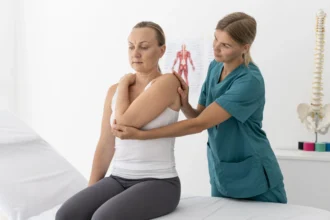
A physiotherapist can assess whether the symptoms are more consistent with muscle strain, rib irritation, shoulder dysfunction, or another movement-related problem.
Assessment May Include
- Pain location and behaviour
- Shoulder and arm movement
- Chest muscle flexibility
- Pectoral and upper-back strength
- Rib and thoracic spine mobility
- Scapular control
- Breathing pattern
- Training history
- Lifting technique
- Recovery habits
Possible Treatment Strategies
Depending on the findings, treatment may include:
- Temporary modification of painful exercises
- Gentle chest and shoulder mobility
- Thoracic spine movement exercises
- Scapular control exercises
- Progressive strengthening
- Breathing and rib mobility work
- Gradual return to pressing movements
- Advice about sports bra fit and exercise positioning
The aim is not simply to reduce pain temporarily.
It is to identify the reason the area became overloaded and help you return to exercise safely.
Exercises and Modifications That May Help
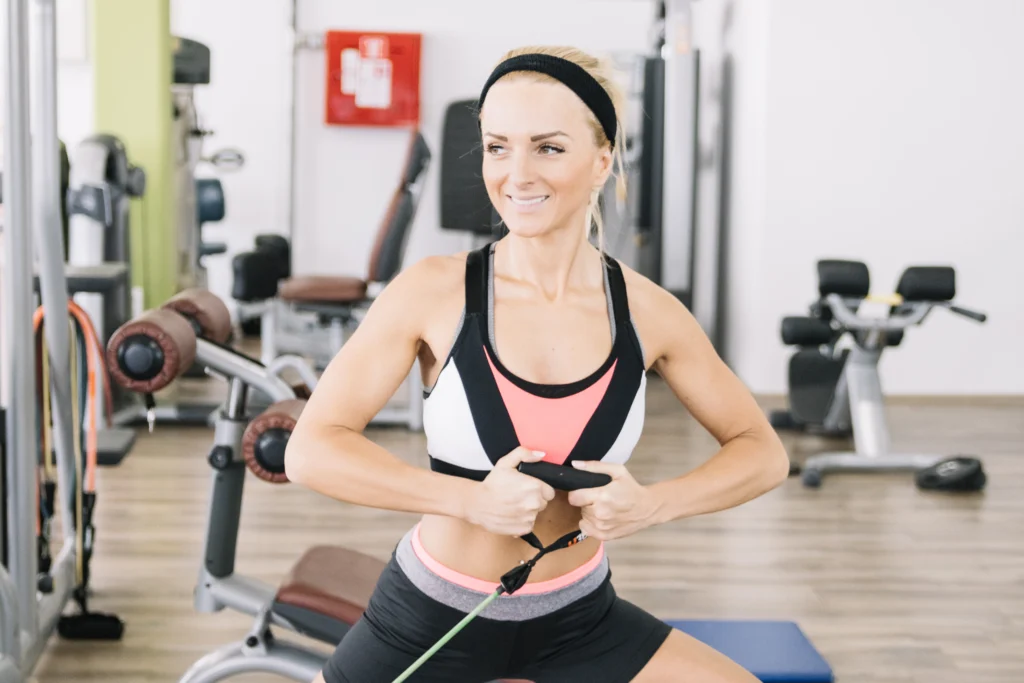
These movements may be useful when they are comfortable and appropriate for your symptoms.
Gentle Shoulder Rolls
Move the shoulders slowly backward and forward without forcing the range.
This may help reduce upper-body stiffness before or after training.
Thoracic Extension
Sit against a chair with your hands resting across your chest.
Gently extend the upper back over the chair without forcing the neck.
Stop if the movement increases chest or breast pain.
Scapular Retraction
Gently draw the shoulder blades backward and slightly downward without lifting the shoulders toward the ears.
Hold for a few seconds, then relax.
Temporary Exercise Modifications
You may need to temporarily change:
- Barbell bench press to a lighter dumbbell press
- Wide-grip pressing to a neutral-grip position
- Deep chest fly to a smaller range of motion
- Heavy sets to lighter controlled repetitions
- Painful chest training to lower-body or walking sessions
These modifications should be individualised, particularly if the pain is persistent.
How to Prevent Breast Pain When Lifting Weights
Warm Up Before Strength Training
Spend five to ten minutes preparing the body with:
- Gentle walking
- Shoulder circles
- Arm swings
- Thoracic rotations
- Light resistance-band work
- Easy practice repetitions
Begin with a lighter warm-up set before using your working weight.
Progress Gradually
Avoid increasing weight, sets, repetitions, and training frequency at the same time.
A gradual increase allows muscles, joints, connective tissues, and supporting breast tissues to adapt.
Use Proper Support
Choose a supportive sports bra for workouts involving movement or breast tenderness.
Check that:
- The band sits comfortably around the ribs.
- The straps do not dig into the shoulders.
- The breasts are adequately supported.
- Breathing is unrestricted.
- There is no painful rubbing.
- The bra remains comfortable during both standing and floor-based exercises.
Earlier research also found that external breast support reduced breast movement and perceived discomfort during exercise (Mason et al., 1999).
Avoid Training Through Sharp Pain
Muscle fatigue and mild exertion are not the same as sharp pain.
If pain increases with each repetition, stop the movement and reassess the load, technique, range, or exercise choice.
Allow Adequate Recovery
Recovery includes:
- Rest between demanding sessions
- Adequate sleep
- Sufficient nutrition
- Hydration
- Gradual progression
- Avoiding repeated heavy chest training on consecutive days
When Should Breast Pain Be Medically Assessed?
Consult a healthcare professional if you experience:
- A new breast lump
- Persistent pain in one specific area
- Pain that is not related to movement
- Redness, warmth, or swelling
- Nipple discharge
- New nipple inversion
- Skin dimpling or other skin changes
- Fever with breast pain
- Pain that persists despite rest
- Symptoms that are worsening
Breast pain is common and is rarely caused by breast cancer, but focal or persistent noncyclic pain may require clinical assessment.
The American College of Radiology notes that imaging decisions depend on factors such as the age of the patient and whether the pain is focal or nonfocal (Expert Panel on Breast Imaging, 2017).
Seek urgent medical care for chest pain associated with:
- Breathlessness
- Fainting
- Sweating
- Nausea
- Chest pressure
- Pain spreading to the arm, jaw, back, or shoulder
These symptoms should not be assumed to be a muscle strain.
Myth vs Fact: Breast Pain When Lifting Weights
Myth: Every type of breast pain during weightlifting is caused by a muscle problem.
Fact: Muscle strain is one possible cause, but hormonal tenderness, breast support issues, rib irritation, skin friction, and other breast conditions can also cause pain.
Myth: Women with larger breasts should avoid strength training.
Fact: Women with larger breasts can benefit from strength training. A supportive sports bra, gradual progression, and suitable exercise modifications can improve comfort.
Myth: You should always push through breast or chest pain during exercise.
Fact: Mild muscle fatigue is different from sharp, worsening, or unusual pain. Stop painful movements and seek assessment when symptoms persist or are accompanied by other warning signs.
Lesser-Known Fact
Pain that can be reproduced by pressing the chest wall may suggest a musculoskeletal source, but it does not completely rule out other causes.
The breast, ribs, muscles, nerves, and connective tissues are located close together.
The nervous system may interpret pain from one structure as coming from another nearby area.
This is why the complete symptom pattern matters more than location alone.
Final Thoughts
Breast pain when lifting weights is not always a breast problem and may be related to the pectoral muscles, ribs, chest wall, posture, or exercise technique. However, hormonal breast tenderness and other breast conditions can also cause discomfort. Listen to your body, progress gradually, use suitable support, and avoid exercising through sharp or worsening pain. If symptoms persist or occur with a lump, nipple change, skin change, swelling, or unusual discharge, seek medical advice.
Conclusion
Breast pain when lifting weights can be caused by pectoral muscle soreness, muscle strain, rib or chest wall irritation, poor technique, hormonal breast tenderness, inadequate support, or skin friction.
Pain that changes with arm movement, pressing, twisting, or exercise technique may suggest a musculoskeletal cause.
However, persistent, unexplained, one-sided, or focal breast pain should not automatically be labelled as a muscle problem.
A gradual training programme, proper warm-up, supportive sports bra, controlled technique, and adequate recovery can help reduce exercise-related discomfort.
If pain is sharp, worsening, associated with bruising or weakness, or accompanied by a breast lump, nipple change, skin change, fever, or unusual discharge, seek medical assessment before returning to heavy lifting.
Frequently Asked Questions
1. Can lifting weights cause breast pain?
Yes. Weightlifting can cause pectoral muscle soreness, muscle strain, rib irritation, or chest wall pain that may feel as though it is coming from the breast.
2. How do I know if breast pain is muscular?
Pain may be muscular when it starts after exercise, changes with arm or shoulder movement, increases during pushing or pulling, or can be reproduced by pressing the chest wall. These signs do not confirm the diagnosis.
3. Should I stop lifting weights if my breast hurts?
Stop any movement that causes sharp or increasing pain. If the discomfort is mild and clearly related to muscle soreness, lighter exercise or temporary activity modification may be appropriate.
4. Can a sports bra help with breast pain during weightlifting?
Yes. A comfortable, supportive sports bra may reduce breast movement and discomfort, especially during dynamic workouts or when breast tenderness is present.
5. Can physiotherapy help with breast pain caused by lifting?
Physiotherapy may help when pain is related to pectoral muscle strain, shoulder dysfunction, rib irritation, posture, or exercise technique. Treatment may include movement assessment, exercise modification, mobility, strengthening, and gradual return to training.
6. When should I see a doctor for breast pain?
Seek medical assessment for persistent or unexplained pain, a new breast lump, nipple discharge, skin changes, redness, swelling, fever, or pain that does not improve with rest. Urgent care is needed for chest pain with breathlessness, sweating, fainting, nausea, or pain spreading to the arm or jaw.
Stay tuned with us for more health related topics.
Follow us on LinkedIn and Instagram for more.
More Read





Medical Disclaimer
This article is intended for general educational purposes only and does not replace professional medical advice, diagnosis, or treatment. Breast or chest pain can have different causes. If your pain is persistent, severe, unexplained, one-sided, or associated with a breast lump, nipple discharge, skin changes, swelling, fever, breathlessness, fainting, or chest pressure, consult a qualified healthcare professional promptly. Do not begin or continue exercises that cause sharp or worsening pain without appropriate assessment.