


Hip osteoarthritis (OA) can develop gradually, with early symptoms that are easy to mistake for ageing, muscle tightness, or everyday aches.
Recognizing changes such as groin pain, stiffness, and difficulty with routine movements can help people seek assessment and begin appropriate management earlier.
Quick Answer: Early Signs of Hip Osteoarthritis
Early hip osteoarthritis may cause groin pain, stiffness after rest, reduced hip movement, discomfort on stairs, and difficulty putting on socks or shoes. Some people also develop a limp or gradually reduce their usual activities.
What can help? Early assessment and an individualised physiotherapy plan can help improve strength, mobility, walking ability, and symptom management. These symptoms can have other causes, so persistent or worsening pain should be assessed by a healthcare professional.
Physiotherapy can help people with hip OA maintain movement, build strength, improve walking ability, and manage pain.
However, not every hip ache is arthritis, so symptoms need to be considered alongside a clinical assessment.
Key Takeaways
- Groin pain is a common symptom of hip osteoarthritis.
- Stiffness after rest and reduced hip movement may develop gradually.
- Difficulty with stairs, walking, or putting on socks may indicate a functional change worth assessing.
- Hip pain does not automatically mean arthritis; other conditions can cause similar symptoms.
- Physiotherapy can support strength, mobility, balance, and daily function.
- Sudden severe pain, inability to bear weight after an injury, or a hot, swollen hip with fever requires urgent medical attention.
What Is Hip Osteoarthritis?
Hip osteoarthritis is a joint condition in which the tissues within and around the hip gradually change.
The smooth cartilage covering the ends of the bones becomes damaged, while the underlying bone and other joint structures may also change.
These changes can contribute to pain, stiffness, and reduced function.
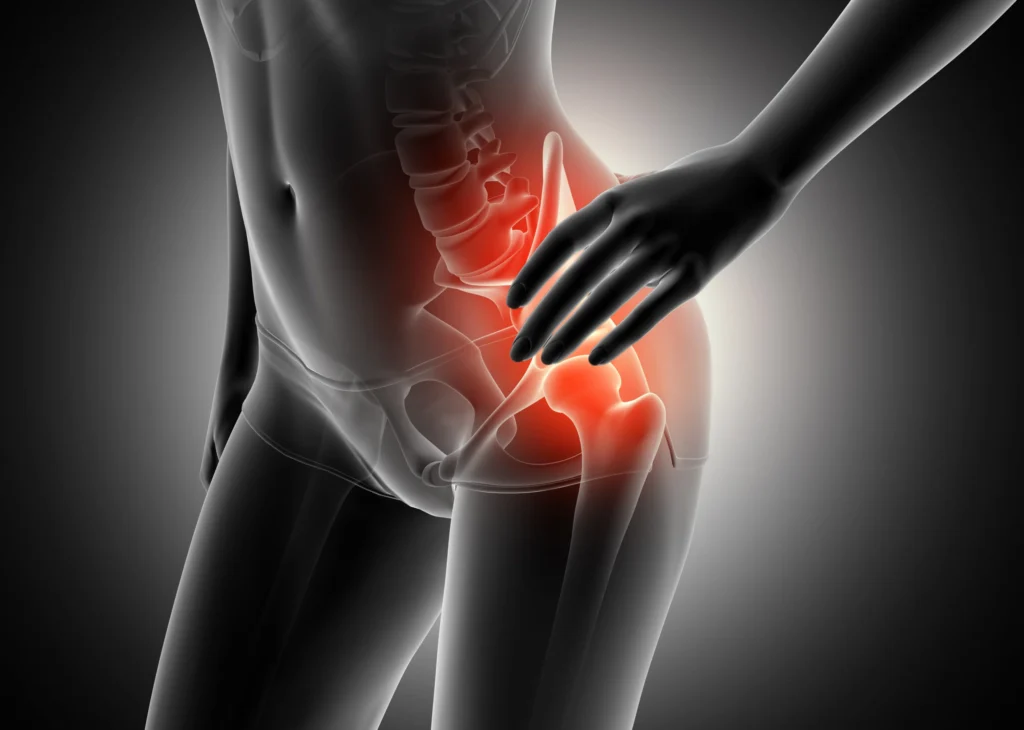
The hip is a ball-and-socket joint.
The rounded head of the thigh bone, or femur, fits into the socket of the pelvis.
This structure allows the hip to support body weight while moving during walking, climbing stairs, sitting, and standing.
Hip OA does not affect everyone in the same way.
Some people have changes on an X-ray but few symptoms, while others experience considerable pain and difficulty with daily activities.
Symptoms alone cannot confirm the diagnosis.
Eight Early Symptoms to Notice
1. Pain Around the Groin or Hip
Pain in the groin is a common symptom of hip OA.
It may feel like a deep ache inside the joint rather than a sharp pain on the skin’s surface.
Some people also experience discomfort in the front of the thigh, buttock, or, occasionally, around the knee.
Pain may initially appear during weight-bearing activities such as walking, standing for long periods, or getting up from a low chair.
It may settle with rest in the early stages, although the pattern varies between individuals.
Persistent groin pain should not automatically be attributed to arthritis.
Tendon problems, muscle injuries, referred pain from the lower back, and other hip conditions can produce similar symptoms.
2. Stiffness After Rest
The hip may feel stiff after waking up or sitting for a prolonged period.
The first few steps can feel uncomfortable, with movement becoming easier once the joint has warmed up.
Osteoarthritis-related morning stiffness is often relatively brief, but duration alone cannot confirm or rule out the condition.
Stiffness that is prolonged, worsening, or accompanied by marked swelling or illness deserves medical assessment.
A gentle change of position and a few comfortable movements may help ease mild stiffness.
Forcing the hip into a painful stretch is unnecessary.
3. Reduced Hip Movement
A gradual reduction in hip movement can be an early clue.
You may notice difficulty rotating your thigh inward, moving your leg out to the side, or bringing your knee towards your chest.
These changes can affect tasks such as crossing your legs, getting into a car, or turning while walking.
A physiotherapist can assess hip range of motion and compare both sides, while also checking strength and other possible causes of restricted movement.
Clinical research suggests that reduced hip movement, particularly restricted internal rotation or adduction, can help clinicians identify people more likely to have hip OA when considered alongside other findings. (Metcalfe et al., 2019)
4. Discomfort on Stairs or Slopes
Climbing stairs, walking uphill, or rising from a squat can increase the demand on the hip joint and surrounding muscles.
If the hip is becoming painful or stiff, these activities may start to feel more difficult.
You might notice that you use the handrail more often, take stairs one step at a time, or avoid hills that previously felt comfortable.
These changes do not prove that you have OA, but persistent difficulty with weight-bearing activities is worth investigating.
Rather than avoiding all activity, adjust the pace, use a handrail when needed, and choose a level of exercise that does not cause a substantial or lasting increase in symptoms.
5. Difficulty Putting on Socks or Shoes
Putting on socks and shoes requires the hip to bend and rotate.
If these movements become restricted or painful, getting dressed may take longer than usual.
You may find it easier to sit on a higher chair, bring your foot closer using your hands, or use a long-handled shoehorn.
These adaptations can reduce strain while you work on mobility and strength.
If this difficulty is new or progressively worsening, especially alongside groin pain or stiffness, discuss it with a healthcare professional.
6. Limping or Changes in Walking
Pain can cause a person to spend less time standing on the affected leg.
This may lead to a limp, shorter steps, slower walking, or a tendency to lean the trunk to one side.
These changes can reduce confidence and increase effort during everyday activities.
Over time, avoiding movement because of pain may also contribute to reduced strength and endurance.
Physiotherapy can assess walking pattern, balance, hip strength, and the need for temporary support such as a walking stick.
A new or rapidly worsening limp, particularly when weight-bearing becomes difficult, needs prompt assessment.
7. Pain After Sitting for a Long Time
Some people notice discomfort when they stand after sitting through a long meeting, travelling, or watching television.
The first few steps may feel stiff or painful before movement becomes easier.
Changing position regularly may help.
Try brief standing breaks and comfortable movement rather than remaining in one position for hours.
Pain after sitting is not specific to hip OA.
Lower-back conditions and other hip problems can also cause symptoms in this situation, so the location, duration, and associated symptoms matter.
8. Gradually Doing Less
An early sign may be a change in behaviour rather than pain alone.
You might stop taking your usual walk, avoid gardening, reduce outings, or rely more on others for routine tasks because movement feels uncomfortable.
Reducing activity can create a cycle: pain leads to less movement, lower activity reduces strength and stamina, and everyday tasks can then feel harder.
The aim is not to push through severe pain.
It is to identify a manageable level of activity and gradually rebuild tolerance with appropriate guidance.
What Increases the Risk of Hip OA?
Hip OA usually develops through a combination of factors rather than one single cause.
Risk can be influenced by:
- Age: The likelihood of osteoarthritis generally increases as people get older.
- Previous hip injury: Some injuries can increase the risk of later joint changes.
- Hip shape and structure: Certain structural variations, including hip dysplasia and cam morphology, have been associated with a higher risk of developing hip OA.
- Family history: A family history of osteoarthritis may contribute to risk.
- Body weight and joint loading: Excess body weight can increase the mechanical demands placed on weight-bearing joints, although weight alone does not explain why someone develops hip OA.
- Physical demands: Repetitive heavy loading and some occupational or sporting exposures may be relevant for certain individuals.
Risk factors do not determine a person’s future.
People without obvious risk factors can develop hip OA, and people with several risk factors may not develop significant symptoms. (Casartelli et al., 2021)
How Is Hip Osteoarthritis Diagnosed?
A healthcare professional will usually consider the symptom pattern, medical history, and physical examination.
Assessment may include:
- Where the pain is located and when it occurs.
- Whether stiffness is present after rest.
- Hip movement, including internal rotation and bending.
- Muscle strength, balance, and walking pattern.
- The effect of symptoms on work, exercise, sleep, and daily activities.
Imaging is not always necessary to make a clinical diagnosis.
An X-ray may be considered when symptoms are atypical, the diagnosis is uncertain, symptoms persist despite appropriate management, or another condition needs to be investigated.
It is important to remember that X-ray changes do not always match the level of pain or disability.
Treatment decisions should consider the person’s symptoms and functional needs, not imaging findings alone.
A healthcare professional will usually consider the symptom pattern, medical history, and physical examination.
Assessment may include hip movement, muscle strength, walking pattern, and the effect of symptoms on daily activities.
Imaging may be considered when the diagnosis is uncertain or another condition needs to be investigated.
Clinical practice guidance for hip osteoarthritis emphasizes assessing pain and mobility limitations to guide an individualized management plan. (Koc et al., 2025)
How Physiotherapy Can Help
Physiotherapy aims to improve function and help people manage symptoms safely.
The plan should reflect the individual’s pain levels, mobility, strength, other health conditions, and daily goals.
Progressive Strengthening
Exercises can target the muscles around the hip and lower limb, including the gluteal muscles, quadriceps, and other muscles that support standing and walking.
Depending on the assessment, a program may include sit-to-stand practice, supported step-ups, bridges, or resistance exercises.
The starting level should be manageable, with difficulty increased gradually as strength and tolerance improve.
Exercise therapy has been found to provide benefits for pain and physical function in people with hip OA, although the average effects reported in research are generally modest.
A tailored program can help people find activities they can sustain. (Teirlinck et al., 2023)
Mobility Exercises
Gentle hip mobility exercises may help maintain comfortable movement.
Depending on the person’s restrictions, a physiotherapist may recommend controlled hip flexion, gentle rotation, or other movements performed within a comfortable range.
Stretching should not be forced, and sharp or increasing pain is a reason to modify or stop an exercise.
The goal is to improve usable movement, not to force the joint into a particular range.
Walking and Aerobic Activity
Walking, cycling, and water-based exercise may help maintain cardiovascular fitness and general activity.
The most suitable option depends on symptom response, balance, access, and personal preference.
If walking is painful, start with shorter bouts on a level surface and increase duration gradually.
A stationary bicycle or pool-based exercise may be more comfortable for some people.
Gait and Daily-Activity Training
Physiotherapy can address limping, balance, stair use, and difficulty with daily tasks.
A walking aid may be helpful for some people when recommended and fitted appropriately.
A physiotherapist can also suggest practical changes, such as using a higher chair, taking regular movement breaks, or dividing demanding tasks into shorter periods.
Education and Self-Management
Understanding the condition can reduce unnecessary fear of movement.
A physiotherapist can help distinguish acceptable temporary exercise discomfort from symptoms that suggest the program needs adjustment.
Clinical guidance supports exercise and individualized non-surgical management as important parts of osteoarthritis care.
The best plan is one that is safe, achievable, and adjusted as symptoms and function change. (Kolasinski et al., 2020)
Hip Osteoarthritis: Myth vs Fact
MYTH: Hip pain always means osteoarthritis.
FACT: Tendon problems, muscle injuries, back conditions, and other hip disorders can cause similar symptoms. Clinical assessment helps identify the likely cause.
MYTH: Exercise wears out an arthritic hip faster.
FACT: Appropriately selected and progressively adjusted exercise is an important part of managing hip osteoarthritis. The programme should match the person’s symptoms and ability.
MYTH: Resting completely is the best treatment.
FACT: Prolonged inactivity can contribute to reduced strength and fitness. When appropriate, maintaining comfortable movement and gradually building activity can support daily function.
MYTH: An abnormal X-ray always means severe symptoms.
FACT: Imaging findings do not always correspond to pain or disability. Treatment decisions should consider symptoms, examination findings, and functional limitations.
What Can You Do at Home?
A few consistent habits may help you stay active while arranging an assessment if symptoms persist.
- Keep moving comfortably: Break up long periods of sitting with brief, gentle movement.
- Adjust activity temporarily: Reduce the duration or intensity of activities that repeatedly aggravate symptoms rather than stopping all movement.
- Use supportive strategies: A handrail on stairs, a suitable chair height, or a walking aid recommended by a professional may make daily tasks easier.
- Build activity gradually: Increase walking time or exercise difficulty in small steps, guided by how your hip responds.
- Track your symptoms: Note when pain occurs, how long stiffness lasts, and which activities have become difficult. This can help during a clinical assessment.
If an activity causes a clear increase in pain that persists afterwards, reduce the load or duration and seek guidance if the problem continues.
Do not assume that all pain is harmless or that you must push through it to strengthen the hip.
When Should You Seek Medical Advice?
Arrange an assessment if hip or groin pain persists, repeatedly returns, limits your walking, or makes everyday tasks increasingly difficult.
Earlier assessment can help identify the cause and establish a suitable management plan.
Seek urgent medical care if you experience:
- Sudden, severe hip pain without an obvious explanation.
- Severe pain following a fall or injury, especially if you cannot stand or put weight on the leg.
- A hot or swollen hip with fever or feeling generally unwell.
- Rapidly worsening symptoms or a sudden major change in your ability to walk.
These symptoms can indicate conditions other than osteoarthritis that require prompt investigation.
Why Early Assessment Matters
Early assessment does not mean that every person with hip pain needs an X-ray, intensive treatment, or surgery.
It helps determine whether symptoms are consistent with hip OA or another condition, identify functional problems, and guide appropriate activity and rehabilitation.
Hip pain can have several causes, and a careful history combined with examination is important when deciding which investigations or treatments may be appropriate. (Wright et al., 2021)
A physiotherapist can help assess movement, strength, walking, and daily function, while a doctor can investigate symptoms that need medical evaluation.
When symptoms are severe, unusual, or rapidly changing, do not delay assessment in favor of home exercises alone.
Final Thoughts
Early hip osteoarthritis may show up as groin pain, stiffness, reduced movement, or difficulty with everyday activities. These symptoms deserve attention, but they do not confirm arthritis on their own.
A timely assessment and a personalized physiotherapy plan can help you manage symptoms, maintain strength, and stay active safely. If pain is persistent or worsening, seek professional guidance rather than relying on self-diagnosis.
Conclusion
Hip osteoarthritis can develop gradually, with early symptoms such as groin pain, stiffness after rest, reduced hip mobility, difficulty climbing stairs, and changes in walking.
Although these symptoms may indicate hip OA, they can also occur with other hip conditions, making an appropriate clinical assessment important.
Physiotherapy plays an important role in managing hip osteoarthritis through progressive strengthening, mobility exercises, gait training, and practical strategies for daily activities.
With an individualized plan, many people can maintain their physical function, manage symptoms, and continue participating in activities they enjoy.
Do not ignore persistent or worsening hip pain, particularly when it begins to affect walking or routine tasks.
Seeking professional advice early can help identify the cause and guide appropriate treatment, allowing you to stay active safely and confidently.
Frequently Asked Questions
1. What is the first sign of hip osteoarthritis?
An early sign may be a deep ache around the groin or hip during walking and other weight-bearing activities. Stiffness after rest and reduced hip movement may also occur. Symptoms vary, and an assessment is needed to determine the cause.
2. Can hip osteoarthritis cause knee pain?
Yes. Pain originating in the hip can sometimes be felt in the thigh or knee. However, knee pain has many possible causes, so it should not automatically be attributed to hip osteoarthritis.
3. Can physiotherapy help hip osteoarthritis?
Yes. Individualised physiotherapy can include strengthening, mobility exercises, walking advice, and strategies for daily activities. These approaches can help improve pain and physical function, although results differ between individuals.
4. Should I stop walking if my hip hurts?
Not necessarily. Depending on the cause and severity of symptoms, shorter walks or lower-impact activities may be more comfortable. Reduce activity if pain increases substantially or remains worse afterwards, and seek professional advice if symptoms persist.
5. When should I seek medical attention for hip pain?
Arrange an assessment for persistent or worsening pain that affects walking or daily activities. Seek urgent medical care for sudden severe pain, inability to bear weight after an injury, or a hot, swollen hip accompanied by fever or feeling unwell.
Medical Disclaimer
This article is for general educational purposes only and does not replace professional medical advice, diagnosis, or treatment. Hip pain can have several causes, and symptoms alone cannot confirm osteoarthritis. Consult a qualified healthcare professional for an individual assessment and personalised treatment advice. Seek urgent medical care for sudden severe hip pain, inability to bear weight after an injury, or a hot, swollen hip accompanied by fever or feeling unwell.


