WASHINGTON, D.C. (PAHO HEADQUARTERS): PAHO is reviewing sustained measles transmission in the United States as rising infections and declining vaccination coverage threaten a major public health achievement.
The United States could lose its measles elimination status after recording thousands of infections across the country. An international expert commission is reviewing evidence of prolonged measles transmission to determine whether the country still meets the elimination criteria.
The United States achieved measles elimination in 2000. However, the sharp rise in cases during 2025 and 2026 has raised concerns about the return of sustained domestic transmission.
Why the United States Could Lose Its Measles Elimination Status
Measles was declared eliminated in the United States in 2000 after successful vaccination programs and years of disease control. The achievement meant that the country had interrupted continuous domestic transmission of the virus.
However, elimination does not mean that a country will never report another measles case. Infections can still enter through international travel. The important requirement is that imported infections must not develop into sustained domestic transmission.
The United States is now facing a different situation. Measles outbreaks have continued across multiple communities, and the same virus strain may have circulated without interruption for more than 12 months.
This has raised questions about whether the country still meets the international criteria for measles elimination.
A November 12 report by Techdirt highlighted the upcoming international review and the possibility that the United States could lose its long-held status. Although the original headline refers to the United Nations, the assessment is being conducted through the Pan American Health Organization (PAHO). (Techdirt et al., 2026)
What Triggered the International Review?
The main concern is the duration and continuity of measles transmission.
Under PAHO’s regional framework, endemic measles transmission is considered re-established when epidemiological and laboratory evidence confirms that the same measles virus genotype and lineage have continued spreading without interruption for at least 12 months within a defined geographical area.
This is different from simply counting infections over a year. Health authorities must establish that the cases belong to a continuous transmission chain involving the same virus strain.
The review considers several types of evidence, including:
- Epidemiological investigations and links between confirmed cases.
- Laboratory results and viral genetic information.
- The duration of transmission within affected communities.
- Vaccination coverage and immunization program performance.
- The quality of disease surveillance and outbreak response.
The commission uses this evidence to determine whether endemic transmission has returned. (PAHO, 2026)
Who Will Decide the United States’ Measles Elimination Status?
The review is being conducted by PAHO’s Regional Monitoring and Re-Verification Commission (RVC).
PAHO is the World Health Organization’s regional office for the Americas. Its headquarters is in Washington, D.C.
The RVC is an independent technical body established in 2019. It includes international experts in epidemiology, public health, virology and immunization.
The commission reviews reports and scientific evidence submitted by countries across the Americas. Its sixth annual meeting is taking place from November 10 to 13, 2026.
However, the commission does not make the final formal decision independently. It submits its assessment and recommendations to the PAHO Director, who determines the country’s official classification and communicates the decision to the relevant authorities. (PAHO, 2026)
Reuters reported on November 11 that the decision was expected to become public early the following week. As of November 13, the formal outcome had not been announced. (Reuters, 2026)
Has the Entire Americas Region Already Lost Its Measles Elimination Status?
There is an important distinction between regional and national elimination status.
In November 2025, the Americas lost their regional verification as a region free from endemic measles transmission. This followed Canada’s loss of elimination status after the same measles virus strain continued circulating for more than 12 months.
However, PAHO confirmed that other countries in the region continued to retain their individual measles elimination status at that time.
The current review examines whether the United States should also lose its national elimination classification. (PAHO, 2025)
US Measles Cases Have Reached Their Highest Level Since 1991
The growing number of infections is a major concern for public health authorities.
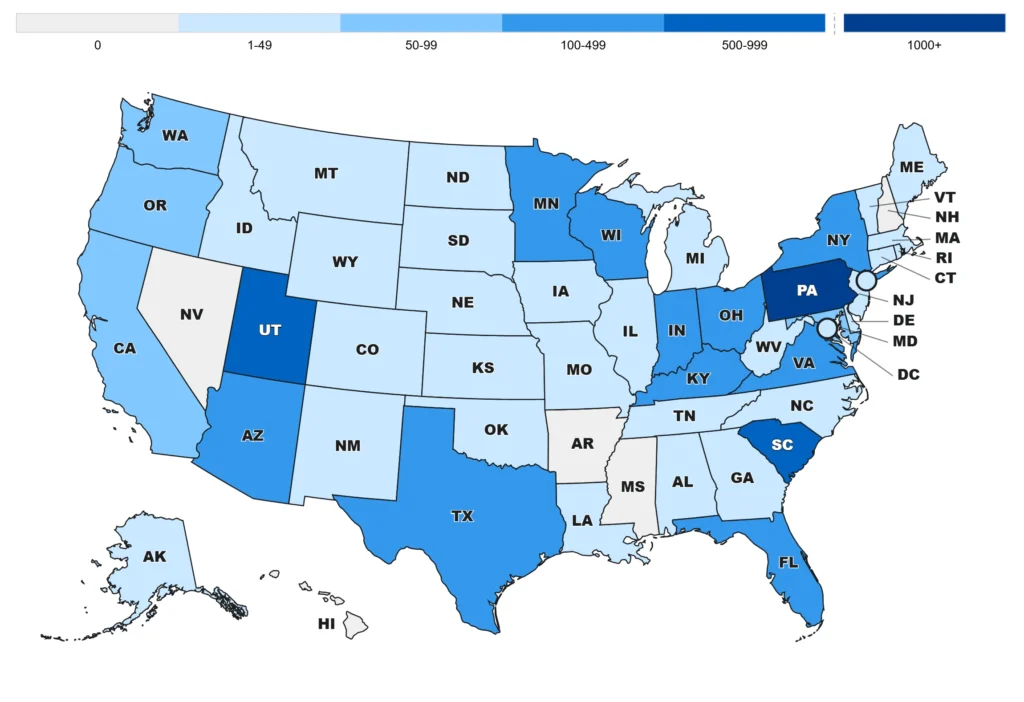
According to the CDC, the United States recorded 5,182 confirmed measles cases as of November 5, 2026. The infections were reported across 47 jurisdictions.
The country had recorded 2,289 confirmed cases during the whole of 2025. The 2026 total has therefore more than doubled the previous year’s figure.
The CDC also reported 43 new measles outbreaks in 2026. Around 96% of confirmed cases were associated with outbreaks, including outbreaks that began in 2025 and continued into 2026.
The figures show how difficult it has become to contain measles transmission across the country.
Recent Measles Activity in the United States
| Indicator | Reported figure |
|---|---|
| Confirmed cases in 2026 | 5,182 |
| Confirmed cases in 2025 | 2,289 |
| Confirmed cases in 2024 | 285 |
| Confirmed cases in 2019 | 1,274 |
| New outbreaks in 2026 | 43 |
| Cases associated with outbreaks in 2026 | 96% |
CDC figures for 2026 are based on confirmed cases reported through November 5, 2026. Counts are preliminary and may change.
The 2026 total represents the highest annual number of measles cases recorded in the United States since 1991. (CDC, 2026)
Measles-Associated Deaths Have Also Increased
The rising number of infections has been accompanied by more reported deaths.
On November 12, the CDC confirmed six measles-related deaths in the United States during 2026. This was double the reported total for 2025.
However, state-level reports have produced different figures. Pennsylvania had reported six measles-associated deaths by November 4. Wisconsin also reported an infant’s death, while New York reported its first known measles-associated death in more than 30 years.
The figures should not be added together or treated as directly equivalent. Reuters reported that the CDC had changed its method for tracking measles deaths. The agency was using National Center for Health Statistics mortality data instead of relying on state health department figures.
The difference highlights the importance of clearly identifying the reporting source when comparing measles-related deaths. (Reuters, 2026)
Declining MMR Vaccination Coverage Raises Concerns
The measles, mumps and rubella (MMR) vaccine is the primary tool for preventing measles infections.
However, vaccination coverage among US kindergarten students has declined over recent years.
CDC data show that MMR vaccination coverage fell from 95.2% during the 2019-2020 school year to 92.4% during the 2025-2026 school year.
Approximately 280,000 kindergarten students attended school during the 2025-2026 academic year without documentation of completing the recommended MMR vaccine series.
This figure does not mean that every child was confirmed to be unvaccinated. It indicates that the required vaccination documentation was missing.
Why Is 95% Vaccination Coverage Important?
Measles spreads very easily. High vaccination coverage helps prevent the virus from spreading within communities.
The CDC identifies vaccination coverage above 95% as an important level for maintaining community protection against measles.
However, national averages can hide significant differences between communities. Areas with lower vaccination rates may remain vulnerable even when the overall national coverage is relatively high.
This creates an opportunity for imported infections to spread quickly among people who do not have immunity.
How Effective Is the MMR Vaccine?
The MMR vaccine provides strong protection against measles.
According to the CDC:
- One dose of MMR vaccine is approximately 93% effective against measles.
- Two doses are approximately 97% effective against measles.
The recommended two-dose schedule provides stronger protection and reduces the risk of infection and further transmission.
People who are unsure about their vaccination history should consult a healthcare professional to determine whether they need vaccination. Recommendations depend on age, medical history and individual circumstances.

What Happens If the United States Loses Its Measles Elimination Status?
Losing measles elimination status would represent a major public health setback. However, it would not mean that measles is suddenly widespread across every part of the country.
It would mean that the country no longer meets the criteria for preventing the re-establishment of endemic measles transmission.
The classification would highlight weaknesses in vaccination coverage, disease surveillance and outbreak control.
It could also affect international confidence in the country’s ability to maintain measles elimination.
There are no formal financial penalties associated with losing the designation. However, the public health consequences could be significant, particularly for children and people who are not protected against the virus.
The United States would need to strengthen its vaccination programmes, improve disease monitoring and interrupt ongoing transmission.
Canada Provides a Recent Example
Canada provides a clear example of how prolonged measles transmission can affect a country’s elimination status.
The country’s multi-jurisdictional measles outbreak began in October 2024. It resulted in more than 6,400 cases across 10 provinces and territories.
Because the same outbreak strain continued spreading for more than 12 months, Canada lost its measles elimination status in late 2025.
However, the Public Health Agency of Canada announced on October 19, 2026, that the large outbreak was over. More than two months had passed since the last case linked to the outbreak.
Ending the outbreak does not automatically restore elimination status. Canada must demonstrate that endemic transmission has remained interrupted for at least 12 consecutive months and submit the required evidence for re-verification.
The example shows that containing an outbreak and regaining elimination status are two separate public health milestones. (Public Health Agency of Canada, 2026)
Can the United States Regain Its Measles Elimination Status?
Yes. Losing elimination status does not mean that a country cannot achieve it again.
The United States would need to interrupt endemic transmission for at least 12 consecutive months and provide sufficient evidence to demonstrate that the virus is no longer spreading continuously within the country.
The process would require improvements in several areas:
- Vaccination coverage: Increase MMR vaccination rates, especially in communities with low coverage.
- Disease surveillance: Identify and investigate suspected measles infections quickly.
- Laboratory monitoring: Use genetic testing to track virus strains and identify transmission chains.
- Outbreak response: Isolate cases, trace contacts and implement targeted vaccination measures.
- Public health education: Improve awareness of measles symptoms, vaccine benefits and the importance of completing recommended vaccinations.
Brazil provides an example of successful recovery. After losing measles elimination status in 2019, the country interrupted endemic transmission by mid-2022 and regained its measles-free status in 2024.
This demonstrates that elimination can be achieved again through sustained vaccination efforts, effective surveillance and coordinated public health action.
What Happens Next?
The PAHO expert commission is reviewing the epidemiological, laboratory and vaccination evidence submitted by the United States.
Its recommendations will help determine whether the country still meets the requirements for measles elimination.
The PAHO Director will make the formal determination after reviewing the commission’s findings. The outcome will clarify whether the United States retains its national elimination status.
Regardless of the decision, the growing number of infections highlights the importance of maintaining high vaccination coverage and responding quickly to outbreaks.
The United States achieved measles elimination through decades of vaccination efforts and effective disease control. Protecting that achievement will require renewed public health action, stronger immunization programs and better protection for vulnerable communities.