NEW YORK: The United States and Mexico could lose their national measles elimination status following a sharp rise in infections and sustained transmission.
An international health commission is examining whether the same measles virus strain has continued spreading within both countries for at least 12 months.
The review comes as the United States reports more than 5,100 cases in 2026, while Mexico has recorded over 20,500 cases and 50 related deaths. The findings could mark a significant setback for measles control in North America and highlight growing gaps in vaccination coverage.
Why Measles Elimination Is Under Threat in North America
The United States and Mexico are facing the possibility of losing an important public health achievement after decades of successful vaccination programs.
The United States achieved measles elimination in 2000, while Mexico reached the milestone in 2016. Both countries had successfully interrupted continuous local transmission of the virus.
However, measles elimination does not mean that a country has completely eradicated the disease. Imported infections can still occur when travelers bring the virus from countries experiencing outbreaks.
A country retains its elimination status as long as these imported cases do not establish sustained local transmission.
According to an Associated Press report published on November 13, 2026, international health experts are reviewing evidence to determine whether measles transmission has become continuous in the United States and Mexico. (Associated Press, 2026)
What Does Losing Measles Elimination Status Mean?
Measles elimination means that a country has interrupted continuous endemic transmission of the virus. It does not guarantee that no future infections will occur.
The Pan American Health Organization (PAHO) considers endemic transmission to have been re-established when epidemiological and laboratory evidence confirms that the same measles virus genotype and lineage have continued spreading without interruption for at least 12 months within a defined geographical area.
This distinction is important because a high number of reported cases alone does not automatically result in the loss of elimination status.
The assessment considers several aspects of disease control, including:
- Genetic evidence: Whether the same measles virus genotype and lineage have continued circulating.
- Vaccination coverage: Whether immunisation programmes are reaching enough people to prevent sustained transmission.
- Disease surveillance: Whether health authorities can identify, investigate and report suspected infections.
- Laboratory testing: Whether testing and genetic analysis can identify related infections.
- Outbreak response: Whether public health authorities have taken effective steps to interrupt transmission.
The Regional Verification Commission for the Elimination of Measles, Rubella and Congenital Rubella Syndrome (RVC) will review the available evidence and submit its recommendations to PAHO Director Dr Jarbas Barbosa. He will make the final determination regarding each country’s classification.
PAHO has clarified that the assessment considers multiple sources of evidence rather than relying on a single test or factor.
United States Records Its Worst Measles Year in Decades
The United States is experiencing its most serious measles outbreak in decades, raising concerns about declining childhood vaccination coverage.
According to the US Centers for Disease Control and Prevention (CDC), the country recorded 5,182 confirmed measles cases as of November 5, 2026.
Of these, 5,164 cases were reported across 47 jurisdictions, while 18 were identified among international visitors to the country.
The CDC also reported 43 outbreaks during 2026. Around 96% of confirmed infections were associated with outbreaks.
The figures represent a major increase compared with previous years. The United States reported 2,289 confirmed cases during the whole of 2025 and 285 cases in 2024. (CDC, 2026).
Major Outbreaks and Rising Deaths
Large measles outbreaks affected Texas, Arizona, Utah and South Carolina during 2025. In 2026, an extensive outbreak in Pennsylvania became a major contributor to the rising number of infections.
The United States has also reported an increase in measles-associated deaths.
The Associated Press reported eight measles-associated deaths in the country during 2026, the highest annual number in more than three decades. (Associated Press, 2026)
However, the reported death figures differ across health authorities. A Reuters report published on November 12 stated that the CDC had confirmed six deaths through its updated reporting system.
The difference reflects changes in how the agency tracks measles-related deaths, including its use of National Center for Health Statistics mortality data instead of relying solely on state health department figures.
Regardless of the reporting differences, the increase in severe cases and deaths highlights the risks associated with declining vaccination coverage. (Reuters, 2026)
Falling Vaccination Coverage Raises Concerns
Declining childhood vaccination coverage is one of the major concerns behind the current measles resurgence.
When the United States achieved measles elimination in 2000, childhood vaccination coverage was above 97%. Health experts generally consider approximately 95% coverage with two vaccine doses necessary to prevent sustained measles transmission.
However, CDC data show that measles, mumps and rubella (MMR) vaccination coverage among US kindergarten students declined from 95.2% during the 2019-2020 school year to 92.4% during 2025-2026. (CDC, 2026)
The decline left approximately 280,000 kindergarten students at risk during the 2025-2026 school year.
Health experts have also identified misinformation about vaccines as a contributing concern. Disproven claims linking the MMR vaccine to autism have affected public confidence in childhood immunization.
Lower vaccination coverage allows the virus to spread more easily, particularly in communities where large numbers of people remain unvaccinated. (CDC)
Concerns Grow Over US Vaccination Policy
The measles outbreak has also raised questions about the federal government’s vaccination policies and its response to declining childhood immunization rates.
CDC Director Erica Schwartz said that losing measles elimination status would not change the agency’s approach to controlling outbreaks.
She emphasized that vaccination, rather than an official elimination designation, protects people from infection. The CDC will continue working with state and local health departments to identify affected communities and control transmission.
However, several public health experts have criticized what they describe as a limited federal response. They have called for stronger vaccination campaigns and clearer guidance for healthcare professionals.
The Associated Press also reported concerns surrounding actions taken by US Health Secretary Robert F. Kennedy Jr.
These include changes to the childhood vaccination schedule, restructuring of a key vaccine advisory board and support for an executive order encouraging wider spacing between MMR vaccine doses.
Medical experts have criticised these developments because changes to established vaccination schedules could result in fewer children completing their recommended vaccinations.
The debate highlights the importance of maintaining public confidence in routine immunization programs while responding to infectious disease outbreaks. (Associated Press, 2026)
Mexico Reports More Than 20,500 Measles Cases
Mexico is also experiencing a major measles outbreak, with infections continuing to raise concerns about childhood vaccination and cross-border transmission.
According to the Associated Press report published on November 13, 2026, Mexico had recorded more than 20,500 confirmed measles cases and 50 related deaths.
Most of the reported deaths involved children younger than five years, making the outbreak particularly concerning for families and healthcare providers.
Mexico achieved measles elimination status in 2016. However, measles vaccination became available in the country several years after the vaccine was first licensed in the United States in 1963.
The recent outbreak has highlighted how gaps in immunization coverage can allow previously controlled infections to spread again.
How Cross-Border Transmission Contributed to the Outbreak
Researchers believe that an outbreak in Chihuahua, a northern Mexican border state, may have been linked to cross-border transmission from the United States.
According to the Associated Press, an unvaccinated child from Chihuahua travelled to Gaines County, Texas, where a measles outbreak was already occurring. The child reportedly returned to Mexico after becoming infected.
Researchers believe this may have contributed to the spread of measles in the Mexican state.
The incident demonstrates how easily measles can cross international borders through travel. When infected people enter communities with low vaccination coverage, they can trigger new outbreaks.
It also highlights why disease surveillance and vaccination programs require coordination between neighboring countries. (Associated Press, 2026)
Other Countries Have Also Lost Measles Elimination Status
The United States and Mexico are not the only countries experiencing setbacks in measles control.
In November 2025, PAHO announced that the Americas had lost their regional verification as an area free from endemic measles transmission.
The decision followed the re-establishment of continuous measles transmission in Canada, where the same virus strain had circulated for at least 12 months.
However, regional and national elimination statuses are different. The loss of regional status did not mean that every country in the Americas had lost its individual elimination classification. The United States and Mexico retained their national status pending the current review. (PAHO, 2025)
The World Health Organization (WHO) also confirmed in January 2026 that six countries had lost their measles elimination status following sustained transmission.
These countries were:
- Armenia
- Austria
- Azerbaijan
- Spain
- United Kingdom
- Uzbekistan
The developments show that measles outbreaks are not limited to countries with historically weak healthcare systems. Even countries with established vaccination programs can experience renewed transmission when immunity gaps develop. (WHO European Region findings, 2026)
Why Measles Remains a Serious Health Concern
Measles is one of the most contagious viral diseases. It spreads through the air when an infected person coughs, sneezes or breathes.
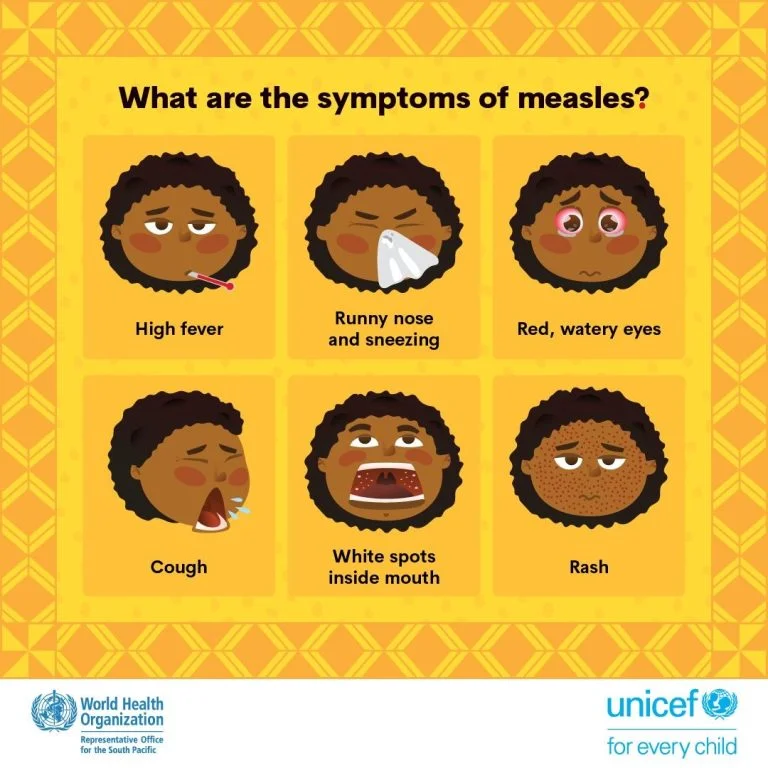
The infection usually begins with a high fever, followed by symptoms such as cough, runny nose and red, watery eyes. A characteristic red rash generally starts on the face and neck before spreading across the body.
Although many people recover, measles can cause serious complications, particularly in young children and people with weakened immune systems. (WHO)
Possible complications include:
- Pneumonia: A serious lung infection that can cause breathing difficulties.
- Encephalitis: Inflammation of the brain that can lead to brain damage.
- Blindness: Severe measles complications can damage vision.
- Severe diarrhoea: This can cause dehydration and require medical treatment.
- Death: Serious complications can become life-threatening.
The risks are particularly high among children younger than five years, making childhood immunization an important part of measles prevention. (Associated Press, 2026)
Vaccination Remains the Best Protection Against Measles
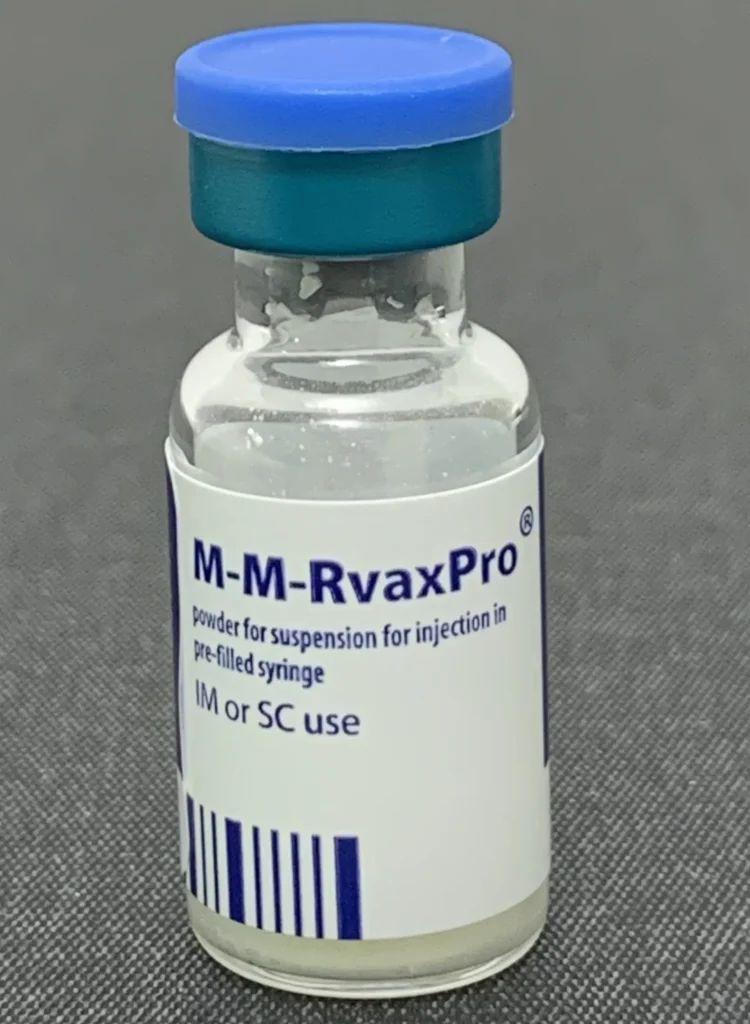
The MMR vaccine remains the most effective way to prevent measles and reduce the risk of serious complications.
According to the CDC, one dose of the MMR vaccine is approximately 93% effective against measles. Two doses provide approximately 97% protection.
The WHO recommends maintaining at least 95% coverage with two doses in every community to prevent sustained transmission.
However, national vaccination averages can hide local immunity gaps. Communities with lower coverage can remain vulnerable even when the country’s overall vaccination rate appears relatively high. (WHO)
Public health authorities should focus on strengthening routine immunization, identifying unvaccinated individuals and improving access to vaccination services.
People who are unsure about their vaccination history should consult a healthcare professional to determine whether they need vaccination or additional protection, particularly before international travel. (CDC, 2026)
What Happens Next?
The PAHO review could determine whether the United States and Mexico lose their national measles elimination status.
The commission is expected to submit its findings to PAHO Director Dr Jarbas Barbosa, with an announcement scheduled for the week following the November 13 report.
Losing elimination status would mark a significant public health setback for both countries. It would indicate that sustained local transmission of measles has returned after years of successful disease control.
However, the designation itself does not determine whether people are protected from infection. Vaccination remains the most important measure of protection.
The current outbreaks demonstrate that progress against infectious diseases requires continuous effort. Maintaining high vaccination coverage, improving disease surveillance and responding quickly to new infections will be essential to preventing further transmission.
For the United States and Mexico, the immediate challenge is not simply retaining an official health designation. It is restoring the level of community protection that once made measles elimination possible.