


Introduction
Increased incidence of Ischemic stroke at young age is increasing. This problem has affected both developing and developed countries. Increased case rates are associated with a high morbidity and mortality. It also comes with long term psychological, physical and social consequences.
There lies a wide variety of risk factors and etiologies causing strokes In the young. Therefore, Lets have a look at these underlying risk factors and how we can help promote prevention of the same.
More than 11 million cases occur worldwide each year. Out of these more than half occur in low- and middle-income countries. The risk of occurrence of ischemic stroke increases with age. However, an estimated 10% to 20% cases occur in young people aged 18 to 50 years. This thus has profound effect on quality of life of patients.
Risk factors –
Hypertension
Diabetes
Dyslipidemia
Smoking
Alcohol
Obesity
Air pollution
- Hypertension – Approximately 35% of young ischaemic stroke patients also have hypertension. Hypertension is the most important individual risk factor for ischaemic stroke.
- Diabetes mellitus- Diabetes is found in up to 10% of young stroke patients. Also, The incidence of type 2 diabetes in young adults is increasing. The top three countries with the highest prevalence include India, China and the USA.
- Dyslipidaemia- About 50% to 60% of young stroke patients have dyslipidaemia. Men are more affected than women. The prevalence of lipid disorders in young adults increases. If a large artery disease or small vessel disease occurs, dyslipidaemia is usually present. Studies suggest that apolipoprotein B and A1 are usually associated with a higher risk of stroke.
- Smoking- The proportion of smokers among young stroke patients is increasing. 50% of patients with young onset stroke are smokers.
- Obesity and physical inactivity- Obesity and physical inactivity are modifiable vascular risk factors. A Body Mass Index (BMI) of 30 or higher, refers to obese. This is seen in more than 10% of young individuals with stroke. Abdominal obesity is the most prevalent risk factor. Reduced physical inactivity in turn poses a risk for obesity. Obesity comes with an increased risk of cardiovascular disease and diabetes mellitus 2. Lower physical activity is seen in girls than boys among teens.
- Heavy alcohol consumption – Alcohol consumption was associated with an increased risk of ischaemic stroke. It is more prevalent in men as compared to women.
- Air pollution- Air pollution is a global risk factor for stroke. Moreover, Rapid economic development leads to major changes to air quality. Air pollution is rising due to increased energy demands, urbanisation and industrialisation.
Preventing strokes in young
Two strategies of prevention are-
Primary prevention
Secondary prevention
The prognosis of young patients is usually favorable. However, the mortality rate is higher. Prevention is the primary treatment strategy aimed at reducing the morbidity and mortality of any disease. It is thus necessary to address adequate treatment, control of risk factors, and lifestyle changes. Primary prevention can prevent up to 50% of strokes.
It is important that we identify risk factors such as arterial hypertension, disorders of lipid metabolism, and diabetes mellitus. It is also important that we incorporate lifestyle changes, including quitting smoking, limiting alcohol consumption, reducing elevated body weight, increasing regular aerobic physical activity, and adopting a healthy diet.
Hypertension plays a role in more than 50% of episodes of stroke worldwide. High blood pressure can lead to haemorrhage. Therefore Treatment should be individualized and target blood pressure is <140/90 mmHg.
Lifestyle changes should be the first strategy. Cigarette smoking and alcohol sonsumption should be stopped. Smoking is related to other vascular risk factors, such as hypertension, diabetes mellitus. Stopping smoking mitigates the risk of and death from vascular causes. A diet rich in fruit and vegetables and with a reduced salt content can reduce Stroke risk.
Secondary prevention – 3%–4% of all patients who experience a stroke may experience a second stroke.
Secondary prevention aims at reducing the risk of another stroke. Thus identification of the etiologic mechanism of the initial stroke is important. Also presence of any additional risk factors should be identified. Adequate long-term secondary prevention was associated with a reduced risk of death and recurrent stroke.
What to do after a stroke?
If someone around you, is having a stroke, rush them to essential medical services at the earliest. The key to identify a stroke is – “BE FAST”
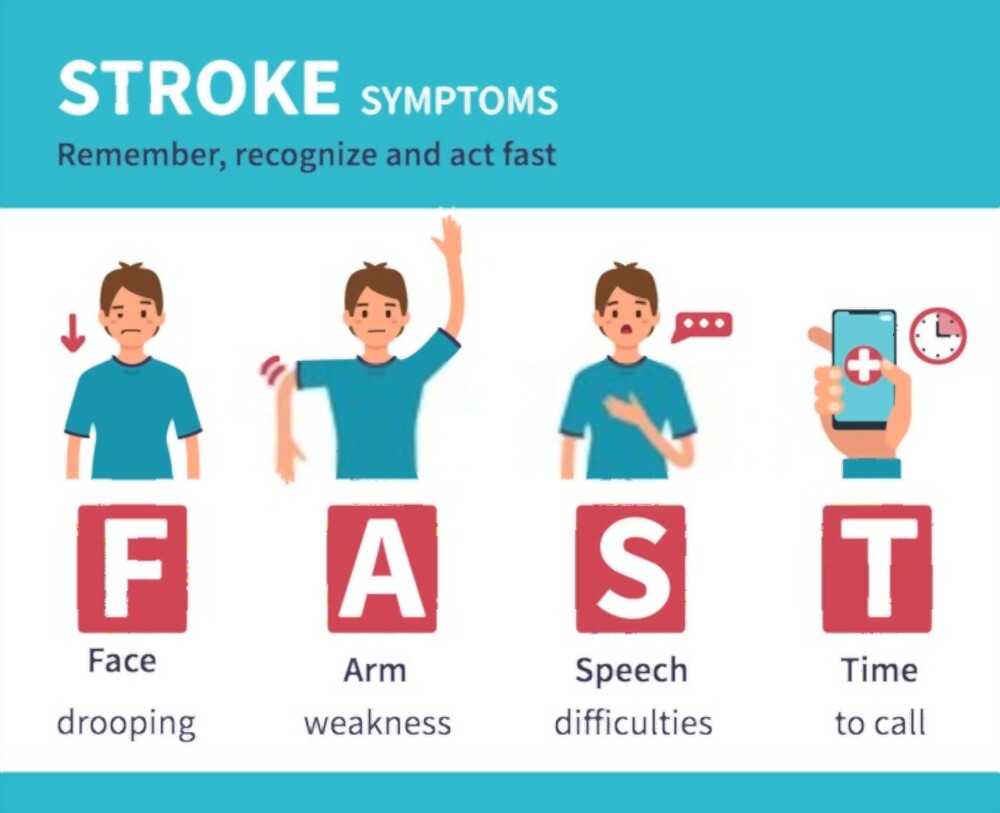
F- FACE- Face may deviate to one side if a person is having a stroke.
A- ARM- Weakness in arm may occur. Usually one side of the body may go into paralysis or paresis. Thus patient may show difficulty in movement of one side of the body.
S- SPEECH- Difficulty to communicate may occur. The speech of the affected person occurs unclear.
T- TIME- Its time to call emergency services! The earlier the patient is taken under medical care, the better will be the prognosis.
Conclusion
Inspite of the fact that we are equipped with a lot of medical facilities, diagnostics and treatment, we are still facing the crisis of increased morbidity and mortality. It is important that we ensure all the steps essential to promote healthy living and reduce incidences of this devastating condition.
Also read- https://vcurehealthcare.com/cancer-causing-foods-and-how-to-avoid-them/


