


Back pain is one of the most common health complaints worldwide, affecting people of all ages, lifestyles and occupations and in many cases simple home physiotherapy for back pain is one of the most effective ways to reduce pain, improve function and prevent recurrence.
Long-term research confirms that carefully prescribed exercises and movement routines carried out consistently at home can significantly reduce pain and disability, often as effectively as supervised therapy sessions.
This guide compiles the latest scientific evidence, updated treatments, lesser-known facts, and practical home strategies you can use safely to combat back pain and build lasting spinal health.
Also Read : Best Knee Strengthening Exercises for Beginners to Reduce Knee Pain
Why Back Pain Happens : A Quick Science Snapshot

Most cases of low back pain (~90%) are classified as non-specific, meaning there’s no single identifiable structural cause like a fracture or severe disc herniation.
In these cases, symptoms arise from a combination of muscle imbalance, poor posture, weak core muscles, and movement dysfunction.
Multiple global analyses also show that most popular treatments for back pain provide only modest relief and that exercise is one of the few approaches consistently associated with improvement in pain and disability for chronic cases.
Also Read: 15 Common Causes of Neck Pain You Should Know
Home Physiotherapy for Back Pain : What the Evidence Says

Exercise Therapy Works
Evidence from systematic reviews shows that guided home-based exercise programs reduce pain and disability in people with chronic non-specific low back pain when performed regularly over weeks to months.
Adherence Matters
A 2024 study found that higher adherence to home exercise recommendations was strongly linked to better functional outcomes and greater pain reduction, highlighting that consistency matters at least as much as technique.
Digital Rehabilitation Is Promising
Reviews of app-based and virtual rehabilitation programs indicate that remote physiotherapy guidance via video or mobile tools can be as effective as in-person treatment for motivated individuals, especially when regular feedback and structured protocols are included.
Foundational Home Exercises
Flexibility & Mobility
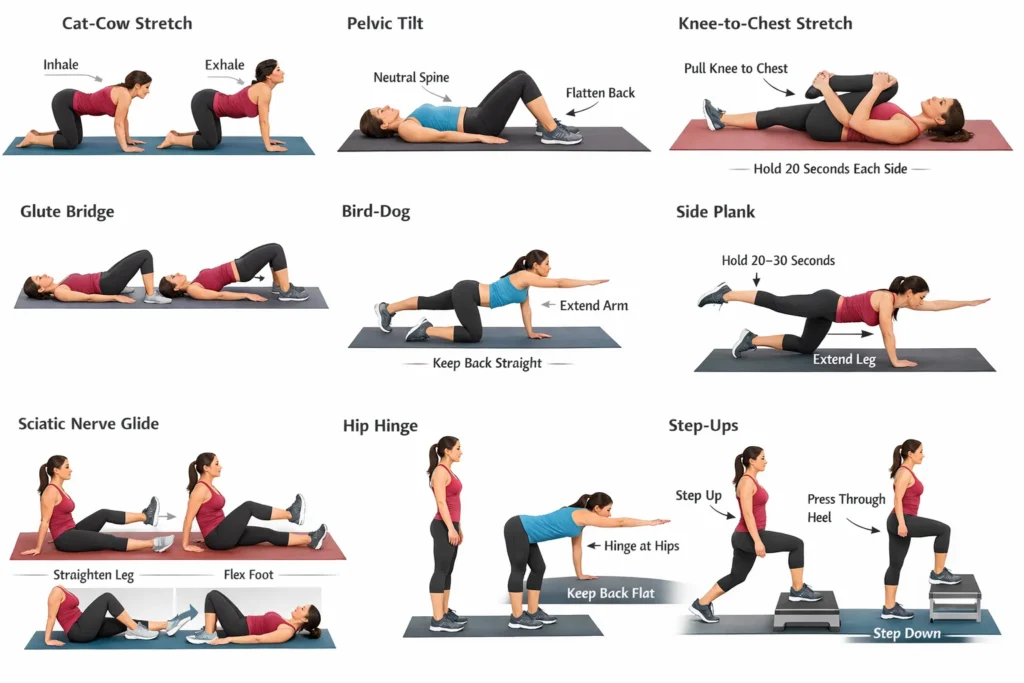
Cat-Cow Stretch
Improves spinal mobility and reduces stiffness.
Start on hands and knees and alternate arching and rounding your spine, breathing slowly. (physiyo.in)
Pelvic Tilt
Engages deep abdominal muscles and influences back alignment.
Lie on your back with knees bent, gently flatten your lower back to the floor, hold, and release.
Hip Flexor Stretch
Addresses tight hip muscles that contribute to low back pain.
Stabilization & Strength
Bridge Exercise
Strengthens the glutes and lower back support muscles, essential for spinal health.
Bird-Dog
Teaches spinal control and improves coordination.
Side Planks
Strengthens obliques and deep stabilizers that protect the lower spine.
Nerve-Focused Movements
Nerve Gliding (Flossing)
Helps move and calm nerves that run through tight muscles, particularly helpful when pain is aggravated by prolonged sitting or nerve entrapment.
Complete Weekly Regimen of Home Physiotherapy for Back Pain
This program is designed for mild to moderate non-specific low back pain. Severe pain, nerve symptoms, trauma, or medical red flags require professional evaluation.
General Principles
- Warm up before strengthening
- Move daily (even on rest days)
- Stop sharp or worsening pain
- Progress slowly every 2–3 weeks
- Daily Morning Mobility Routine (10 Minutes)
Purpose: Reduce stiffness, stimulate circulation, and improve spinal mobility.
Structured Weekly Plan
Monday Core Stabilization Day
- Glute Bridges – 3 sets of 12
- Bird-Dog – 3 sets of 10 per side
- Side Plank – 3 sets of 20–30 seconds
- Dead Bug – 3 sets of 10
Why it works:
Deep core muscles (transversus abdominis, multifidus) play a critical role in spinal stability. Studies show stabilization exercises reduce recurrence of back pain when practiced regularly.
Tuesday Active Recovery + Walking
- 20–30 minutes brisk walking
- Gentle hamstring stretch
- Foam rolling (glutes and mid-back)
- Moderate walking improves circulation, reduces inflammation, and prevents stiffness without overloading tissues.
Wednesday Strength + Endurance Focus
- Bridge Marching – 3 sets of 10
- Wall Squats – 3 sets of 12
- Resistance Band Rows – 3 sets of 15
- Modified Plank – 3 sets of 30 seconds
- Back pain often stems from weak posterior chain muscles. Strengthening glutes and mid-back reduces lumbar strain.
Thursday Mobility & Nerve Health
- Sciatic Nerve Glides – 10 reps per side
- Child’s Pose – Hold 30 seconds x 3
- Piriformis Stretch – 30 seconds per side
- Thoracic Extension over Foam Roller
- Nerve mobilization techniques are increasingly supported in managing radicular symptoms and improving nerve mobility.
Friday Functional Movement Day
- Hip Hinge Practice (Bodyweight) – 3 sets of 12
- Step-Ups – 3 sets of 10 per leg
- Farmer Carry (Light Dumbbells) – 3 rounds
- Side-Lying Leg Raises – 3 sets of 15
- Functional loading builds resilience in daily activities such as lifting and bending.
Saturday Low-Impact Conditioning
- Swimming or cycling (20–30 minutes)
- Gentle stretching routine
- Low-impact aerobic exercise improves blood flow and reduces pain sensitivity.
Sunday Recovery & Reset
- Breathing exercises (5 minutes diaphragmatic breathing)
- Light stretching
- Pain tracking & progress review
- Breathing techniques reduce muscle guarding and nervous system hyper-sensitivity.
Are Lumbar Support Belts Useful?
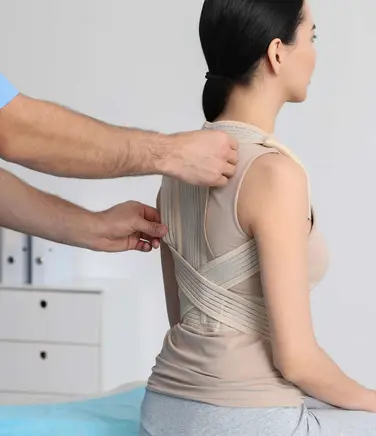
As a physiotherapist, I recommend back supports only for short-term use during acute pain, heavy lifting, or long travel.
A soft, adjustable lumbar belt can provide temporary relief and improve posture awareness, but it should never replace core strengthening.
Research shows that prolonged use may weaken spinal muscles. The goal is to use support briefly while focusing on exercises that help your back become strong and self-supporting.
Dietary Changes That Support Faster Back Pain Recovery

Exercise repairs mechanical dysfunction. Nutrition supports tissue healing and inflammation control.
Chronic low back pain is often associated with low-grade systemic inflammation. Emerging research suggests anti-inflammatory dietary patterns may reduce pain severity.
1. Increase Anti-Inflammatory Foods
Evidence supports Mediterranean-style diets for reducing inflammatory markers.
Focus on:
- Fatty fish (salmon, sardines) rich in omega-3 fatty acids
- Extra virgin olive oil
- Leafy greens
- Berries
- Nuts (walnuts, almonds)
- Turmeric (curcumin has studied anti-inflammatory properties)
- Omega-3 fatty acids have been shown to reduce inflammatory cytokines that contribute to chronic pain.
2. Optimize Protein Intake
Muscle repair requires adequate protein.
Aim for:
1.0–1.2 grams of protein per kg body weight daily (unless medically restricted).
Sources:
- Lentils
- Eggs
- Greek yogurt
- Lean poultry
- Tofu
Research shows insufficient protein slows musculoskeletal recovery.
3. Maintain Vitamin D Levels
Low vitamin D levels have been associated with increased musculoskeletal pain in several studies.
Safe sunlight exposure and foods such as fortified dairy, eggs, and fatty fish help maintain levels. Blood testing can guide supplementation if needed.
4. Magnesium for Muscle Relaxation
Magnesium plays a role in muscle contraction and relaxation.
Sources:
- Pumpkin seeds
- Spinach
- Dark chocolate (70%+)
- Almonds
While not a cure, adequate magnesium supports muscle function.
5. Hydration Matters
Intervertebral discs rely partly on hydration for shock absorption.
Chronic dehydration may contribute to stiffness and fatigue.
Aim for consistent water intake throughout the day.
How Long Until You See Results?
Most people notice:
Reduced stiffness within 1–2 weeks
Strength improvements in 3–4 weeks
Significant functional gains in 6–8 weeks
Research confirms that adherence beyond 6 weeks dramatically improves long-term outcomes.
Emerging Technologies & New Research
While traditional exercise remains foundational, several innovative approaches are now appearing in 2026 research:
1. Neuromodulation Devices: Smarter Pain Control Without Drugs
What’s new: Modern neuromodulation technologies, including closed-loop spinal cord stimulation (SCS) systems, adapt stimulation in real time based on your body’s movements and position.
This means patients receive consistent pain relief during everyday activities, not just at rest.
These devices avoid uncomfortable sensations (like tingling) associated with older stimulators and improve function for chronic back pain sufferers.
Key Evidence:
Abbott’s expanded FDA-approved SCS systems show strong results in chronic back pain.
Closed-loop systems automatically adjust stimulation based on body signals.
Across trials, over 70 % of patients experienced significant pain relief compared with conservative management alone.
Why this matters: For people whose pain doesn’t respond well to exercise alone, neuromodulation helps block pain signaling while they engage in physiotherapy accelerating functional recovery.
2. Regenerative Cell Therapies: Targeting the Root of Pain
What’s emerging: Instead of just masking pain, regenerative medicine aims to repair the damaged tissues causing pain particularly intervertebral discs and degenerative spinal structures.
Highlighted Approaches:
Mesenchymal Cell Therapy
A cell-based therapy (rexlemestrocel-L) is undergoing Phase 3 trials for chronic discogenic low back pain.
Early results suggest sustained pain reduction for two years from a single injection.
Some patients on opioids in trials were able to stop opioids completely after treatment.
Disc Cell Injections
Phase 3 human trials show up to 63 % pain reduction and structural improvement on MRI after one injection.
This approach is minimally invasive, offering an alternative to fusion or disc replacement surgery.
Why this matters: These therapies could one day offer true biological repair of degenerated spinal tissues rather than just temporary symptom relief.
3. Digital & Virtual Rehab Systems
What’s new: The integration of mobile VR, AI analysis, and biofeedback into home physiotherapy platforms is advancing rapidly.
One system recently developed (TOSHFA) uses a smartphone and webcam to give real-time pose feedback and gamified rehab tasks.
While usable models are still early stage, they improve engagement and adherence a major challenge in home exercise programs.
Related AI tools are also being developed that automatically assess the quality of rehabilitation movements using pose estimation and machine learning, making remote exercise programs more accurate and individualized.
Why this matters: Better adherence and feedback leads to faster strength gains, improved movement quality, and reduced pain recurrence.
4. Electromagnetic Transduction Therapy (EMTT)
What it is: EMTT is a non-invasive magnetic stimulation therapy that induces tiny electrical currents in tissues, which can reduce inflammation and enhance circulation.
Clinical studies show significant pain reduction and functional improvement in musculoskeletal conditions, including spinal degeneration.
Why this matters: EMTT complements exercise by supporting tissue healing at a cellular level, potentially speeding recovery when paired with physiotherapy and traditional rehab.
5. Mind-Body Therapies With Long-Term Benefits
A large clinical trial (RESTORE) recently reported that Cognitive Functional Therapy (CFT) a tailored mind-body approach combining movement re-education and cognitive strategies led to lasting pain reduction and function improvement over 3 years.
Why this matters: Pain is not just structural chronic back pain involves the nervous system and how the brain interprets movement and threat. CFT helps retrain the nervous system, reducing fear-avoidance and improving long-term outcomes.
6. Personalized & Precision Pain Management
Across clinical research, AI-driven pain assessment, genetic profiling for drug responses, and tailored rehabilitation plans are emerging trends that improve outcomes by avoiding a one-size-fits-all approach.
These combine data from imaging, movement tracking, and clinical history to guide individualized therapies.
Why this matters: Precision pain management means better targeted treatments with fewer side effects and faster functional gains.
Other Notable Innovations
Next-generation pain drugs like selective sodium channel blockers (e.g., suzetigine) promise strong analgesic effects without addiction risk useful for acute flare-ups that can inhibit rehabilitation progress.
Cannabis-derived medications have shown promise in large studies for chronic back pain relief and improved function, with fewer dependency issues than opioids.
Lesser-Known Facts & Research Insights

- Not All Back Pain Interventions Are Equally Effective
A comprehensive global review found that only about 10% of non-surgical and non-interventional treatments for back pain provide reliable pain relief beyond placebo, and most common remedies (like paracetamol, acupuncture, massage) show minimal effect.
This doesn’t mean they’re useless just that focused exercise therapy remains the most robust evidence-based intervention for chronic pain.
- Pain Isn’t Just Structural
Recent perspectives in physical therapy emphasize neuroscience-based approaches educating patients about pain mechanisms and gradually increasing movement as key components of long-term recovery.
Patients often feel better not solely because tissues heal but because their brains start interpreting movement as safe rather than threatening.
- Bed rest beyond 48 hours can delay recovery. Movement is medicine.
- Fear of movement can worsen long-term outcomes more than structural findings.
- Imaging abnormalities (like disc bulges) are common even in people without pain.
- Progressive loading strengthens spinal tissues complete avoidance weakens them.
- Modern rehabilitation emphasizes graded exposure to movement rather than protection.
When to Seek Professional Help
Home physiotherapy for back pain is powerful, but it has limits. See a clinician if:
Pain worsens or doesn’t improve after 4–6 weeks
You experience Numbness in groin area and Severe leg weakness
Experience numbness, weakness, or bladder/bowel changes
You have a history of trauma or systemic disease
Your therapist can tailor exercises, address movement patterns, and integrate hands-on care if needed.
My Clinical Insight
In my clinical experience, most back pain improves when patients stop fearing movement and start rebuilding strength. Pain is often a signal of sensitivity, not damage.
The spine is designed to move, adapt, and recover.
Small, consistent exercises done daily are more powerful than aggressive workouts done occasionally.
One Myth I Always Correct
Myth: Rest will heal back pain.
Truth: Strategic movement heals faster than prolonged rest.
Frequently Asked Questions (FAQs)
1. Can physiotherapy exercises help relieve back pain at home?
Yes. Many physiotherapy exercises can be safely performed at home to improve flexibility, strengthen back muscles, and reduce pain. Regular movement and stretching help support the spine and improve posture.
2. What are the most effective home physiotherapy exercises for back pain?
Commonly recommended exercises include pelvic tilts, knee to chest stretches, cat-cow stretches, bird dog exercises, and gentle spinal mobility movements.
3. How often should physiotherapy exercises be done for back pain?
Most gentle exercises can be performed daily or at least 4 to 5 times per week. Consistency is important for improving strength and reducing stiffness.
4. Is it safe to do physiotherapy for back pain without supervision?
Simple and gentle exercises are usually safe when done correctly. However, people with severe pain, injuries, or underlying medical conditions should consult a healthcare professional before starting.
5. How long does it take for physiotherapy to improve back pain?
Many people begin noticing improvements within a few weeks of consistent exercise and posture correction, although recovery time may vary depending on the cause of pain.
6. Can poor posture cause back pain?
Yes. Poor posture during sitting, standing, or sleeping can place extra stress on the spine and surrounding muscles, leading to discomfort and stiffness.
7. When should someone see a doctor for back pain?
If back pain lasts longer than a few weeks, becomes severe, or is associated with numbness, weakness, or difficulty walking, medical evaluation is recommended.
My Final Advice to You
Your spine is strong. It adapts to what you train it for.
Protecting it excessively weakens it. Training it progressively strengthens it.
Commit to movement. Stay consistent. Reassess calmly.
Recovery is a process not an overnight fix.Stay tuned with us for more health related topics.
Stay tuned with us for more health related topics.
Follow us on LinkedIn and Instagram for more.


