


Can birth control affect bone health?
The answer depends on the type of contraception, because different hormonal methods can have different effects on the hormones involved in maintaining bone tissue.
Starting birth control can raise questions about more than periods and pregnancy prevention.
Some women also wonder whether hormonal contraception could affect their bones, especially if they have been using it for several years.
Quick Answer
Birth control does not affect everyone’s bones in the same way. Most combined oral contraceptives have not been shown to routinely weaken bones in adult women, while the contraceptive injection depot medroxyprogesterone acetate (DMPA) is more clearly associated with temporary reductions in bone mineral density. Bone health also depends on physical activity, resistance training, muscle strength, balance, nutrition and individual risk factors.
The answer depends on the type of contraception.
Most combined oral contraceptives have not been shown to routinely weaken bones in adult women, while depot medroxyprogesterone acetate (DMPA), a contraceptive injection, has a clearer association with temporary reductions in bone mineral density.
Bone health is also about more than a scan result.
From a physiotherapy perspective, muscle strength, weight-bearing activity, balance, movement and fall prevention all matter when protecting the musculoskeletal system.
Key Takeaways
- Not all hormonal contraceptives affect bone health in the same way.
- DMPA injections are more clearly associated with temporary reductions in bone mineral density.
- Bone mineral density is only one part of overall fracture risk.
- Resistance training, weight-bearing activity and balance exercises can support musculoskeletal health.
- Physiotherapy can assess strength, balance, movement, exercise technique and fall risk.
- People with osteoporosis or previous fractures may need an individualized exercise program.
Can Birth Control Affect Bone Health?
Yes, but not every contraceptive affects bone health in the same way.
Hormonal contraception can influence the hormonal environment involved in bone remodeling.
However, the effect varies according to the contraceptive method, age, duration of use and other individual factors.
Research has generally found little evidence that combined oral contraceptives cause a clinically important reduction in bone mineral density in the general adult population.
DMPA is different and has been consistently associated with reductions in BMD during use.
It is also important to remember that lower BMD does not automatically mean osteoporosis or that a fracture will occur (Nappi et al., 2012).
Why Do Hormones Matter for Bones?
Bone is living tissue. It is constantly being broken down and rebuilt through a process called bone remodeling.
Estrogen is one of the hormones involved in maintaining this balance.
When estrogen activity is substantially reduced for prolonged periods, bone resorption can increase relative to bone formation.
This is one reason certain hormonal contraceptives can have an effect on bone metabolism.
However, hormonal contraception does not produce the same hormonal changes across every method.
A combined pill, hormonal intrauterine device, implant and contraceptive injection should not automatically be considered equivalent when discussing bone health.
Does the Birth Control Pill Weaken Bones?
For most adult women, current evidence does not show that combined oral contraceptives routinely cause weak bones.
The picture becomes more complicated in adolescents and very young women because this is an important period for building peak bone mass.
Some research has reported differences in BMD among younger contraceptive users, while findings in adult premenopausal women are generally less concerning.
A 2025 systematic review and meta-analysis found that combined hormonal contraception can alter markers of bone turnover, with the magnitude and direction of changes varying according to age and the specific estrogen-progestin combination.
Importantly, changes in bone turnover markers should not automatically be interpreted as osteoporosis or increased fracture risk (Tassi et al., 2025).
So, saying that “birth control pills weaken your bones” is too broad.
What About the Birth Control Injection?
The contraceptive injection DMPA deserves separate attention.
DMPA can suppress ovarian estrogen production more strongly than many other contraceptive methods.
This can increase bone turnover and is associated with a reduction in BMD during use.
The effect appears to be related to duration of exposure and can be more relevant in younger women and people who already have other risk factors for poor bone health.
A recent rapid review found consistent evidence of BMD loss with DMPA use and also found evidence of recovery after discontinuation, although the amount and speed of recovery can vary between individuals and skeletal sites. (Erhardt-Ohren et al., 2025).
This does not mean that everyone using DMPA will develop osteoporosis.
It means that bone health may need to be considered alongside the other benefits and risks of the contraceptive method.
Is Birth Control-Related Bone Loss Permanent?
Not necessarily.
Studies of DMPA have found that BMD can recover after discontinuation, although recovery is not necessarily identical in every person or at every skeletal site.
This is an important distinction because bone health is dynamic.
A reduction measured during one period of life does not necessarily represent a permanent loss.
The decision to continue or change contraception should therefore consider the individual’s overall health, contraceptive needs and risk factors rather than focusing on one measurement alone.
Does Birth Control Increase Fracture Risk?
Bone mineral density and fracture risk are related, but they are not exactly the same thing.
A person can have a measurable change in BMD without necessarily experiencing a fracture.
Fracture risk also depends on age, bone quality, previous fractures, muscle strength, balance, falls and other health factors.
Research examining combined hormonal contraception and fractures has been limited and inconsistent.
A large systematic review found low-certainty evidence of a possible association between combined hormonal contraception and future fracture risk, while also highlighting substantial limitations and risk of bias across the available studies. (White et al., 2023).
This is why it would be inappropriate to assume that a person taking hormonal contraception automatically has fragile bones.
Who Should Pay More Attention to Bone Health?
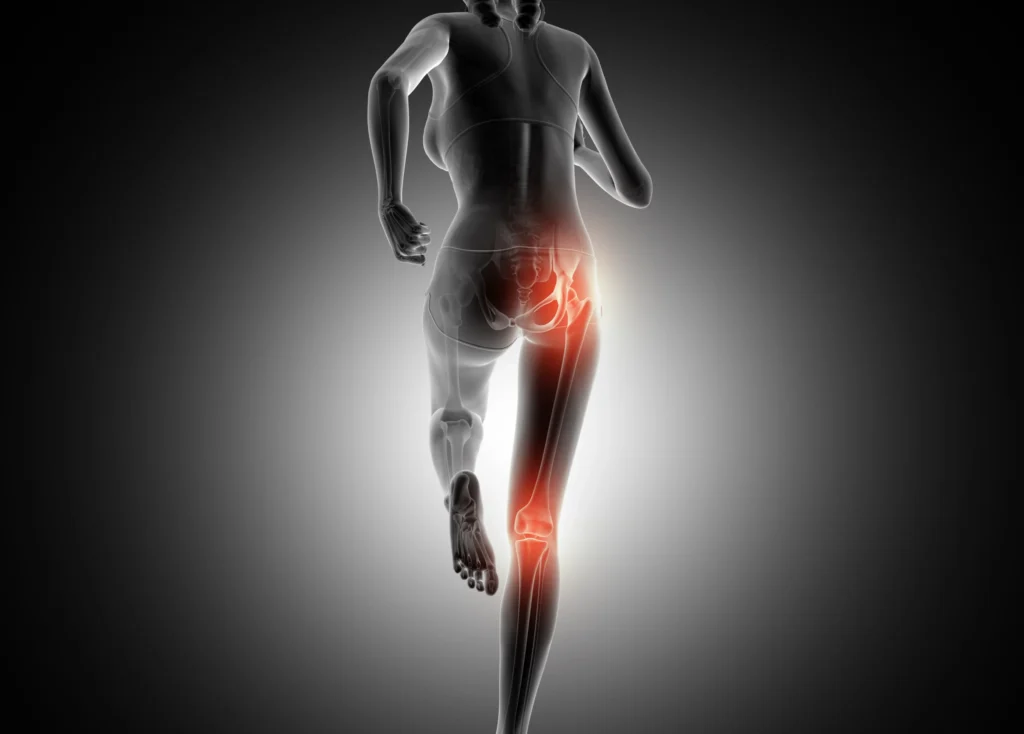
Bone health deserves more attention when hormonal contraception is combined with other risk factors.
These may include:
- Previous low-trauma or fragility fractures
- Very low body weight or significant weight loss
- Very low physical activity
- Inadequate nutritional intake
- Long periods of absent menstrual cycles unrelated to contraception
- Certain medications or medical conditions that affect bone metabolism
- A personal or family history of osteoporosis
Having one of these factors does not prove that your bones are weak.
It simply means that contraception should be considered as one part of a much larger bone-health picture.
Can Exercise Help Bone Health?
Yes.
Exercise is one of the most important modifiable factors for maintaining musculoskeletal health.
Bones respond to mechanical loading.
Resistance exercise and appropriately selected weight-bearing or impact activities can provide mechanical stimuli that support bone adaptation.
Exercise can also improve the muscles that help stabilize the body, as well as balance and functional movement.
These effects matter because preventing falls is an important part of preventing fractures.
A systematic review and meta-analysis found that exercise was associated with a reduction in major osteoporotic fractures, although the researchers noted that differences between exercise programs made it difficult to establish one universal training protocol (Hoffmann et al., 2023).
What Exercises Are Useful for Bone Health?
The right exercise depends on your current strength, age, bone health and injury history.
For someone without significant bone loss or fracture history, a physiotherapist may use exercises such as:
Sit-to-Stand
Repeatedly standing from a chair trains the thighs, hips and trunk while loading the lower limbs.
Squats
Squats can develop lower-body strength and can be progressed gradually according to ability.
Step-Ups
Step-ups combine weight-bearing, leg strength and balance.
Resistance Training
Resistance bands, weights or machines can progressively challenge muscles and the bones they load.
Walking
Regular walking provides weight-bearing activity and can be a useful starting point for someone who has been relatively inactive.
For people with osteoporosis, vertebral fractures or a high fracture risk, exercise selection should be individualized.
A general internet workout is not necessarily appropriate for every bone-health condition.
What Is the Physiotherapy Role?
This is where physiotherapy can become particularly useful.
A physiotherapist does not treat the hormonal effect of contraception itself.
Instead, they assess the physical factors that influence your ability to move, exercise and protect your musculoskeletal system.
An assessment may include:
- Muscle strength
- Functional strength
- Balance
- Walking pattern
- Joint mobility
- Posture and movement control
- Exercise technique
- Previous injuries
- Physical activity levels
- Fall risk
- Ability to tolerate resistance or impact exercise
The goal is to understand what your body can currently handle and then build capacity progressively.
Clinical practice guidance for physical therapists managing people with suspected or confirmed osteoporosis supports individualized exercise and physical-activity strategies as part of musculoskeletal and fracture-risk management (Hartley et al., 2022).
Can Physiotherapy Help With Low Bone Density?
Yes, but the approach depends on the severity of bone loss and whether a fracture has already occurred.
Someone with normal bone health may be able to perform progressively heavier resistance and weight-bearing exercises.
Someone with osteoporosis may still benefit from strengthening and balance exercises, but the physiotherapist may modify loading, exercise technique and certain spinal movements according to fracture risk.
For example, a person with a history of vertebral fracture may require more careful exercise selection than someone without a fracture history.
The aim is not to avoid movement because of low bone density.
The aim is to find the safest and most effective way to keep the person physically active.
Can Exercise Prevent Falls?
This is another important part of bone health that is sometimes overlooked.
Strong bones matter, but so does what happens around them.
Poor balance, reduced leg strength, slower reactions and difficulty controlling movement can increase the likelihood of falling.
If a person falls, their fracture risk can depend partly on the force and circumstances of that fall.
Exercise programs that combine resistance and balance training can improve physical function and reduce fall-related risk in people with osteoporosis or osteopenia (Bae et al., 2023).
This is one of the clearest areas where physiotherapy can contribute to long-term bone-health management.
Should You Stop Birth Control Because It Can Affect Bone Health?
Not automatically.
Different contraceptive methods have different effects, and contraception decisions involve much more than bone health.
If you use DMPA and are concerned about your bone health, discuss your individual risk factors and contraceptive options with your healthcare professional.
Do not stop or change prescribed contraception simply because you are worried about bone density.
At the same time, persistent concerns should not be dismissed.
Your healthcare professional can consider your contraceptive method alongside your age, medical history, fracture history and other bone-health factors.
What Else Can You Do for Bone Health?
Bone health is influenced by several lifestyle and health factors.
Regular physical activity, resistance training, appropriate weight-bearing exercise, adequate nutrition and reducing fall risk can all contribute to better long-term musculoskeletal health.
If you have been inactive, you do not need to start with intense exercise.
A gradual increase in activity is often more practical.
A physiotherapist can help determine where to start and how to progress the workload without unnecessarily increasing injury risk.
Myth vs Fact
Myth: All birth control pills weaken your bones.
Fact: Bone effects vary by contraceptive method, age and individual risk factors. Combined oral contraceptives do not appear to routinely weaken bones in adult women.
Myth: Lower bone mineral density automatically means osteoporosis.
Fact: Bone mineral density is important, but fracture risk also depends on factors such as previous fractures, muscle strength, balance and falls.
Myth: If you have concerns about your bones, you should avoid exercise.
Fact: Appropriate resistance, weight-bearing and balance exercises can be an important part of maintaining musculoskeletal health.
Lesser-Known Fact: Bone Density Is Not the Whole Story
A bone-density scan gives important information, but it does not tell the entire story about how a person moves or functions.
Muscle strength, balance, coordination and fall risk also influence what happens to the skeleton in everyday life.
For example, improving lower-limb strength will not directly reverse a hormonal change in bone metabolism.
However, better strength and balance can improve physical function and help reduce fall-related risk.
That is why physiotherapy approaches bone health from a broader movement perspective rather than focusing only on a BMD number.
A Simple Bone-Health Check
If you are worried that birth control may be affecting your bones, ask yourself:
Are you using a contraceptive injection such as DMPA?
Do you have a history of a fracture from a relatively minor injury?
Has your physical activity reduced significantly?
Are you doing any regular resistance or weight-bearing exercise?
Have you experienced significant weight loss or prolonged nutritional problems?
Do you have difficulty with strength, balance or everyday movement?
These questions cannot diagnose low bone density.
However, they can help you recognize when it may be useful to discuss your concerns with a healthcare professional or physiotherapist.
When Should You Seek Professional Advice?
Consider speaking with a healthcare professional if you have:
- A fracture after a minor fall or injury
- Repeated stress injuries
- Significant concerns about long-term DMPA use
- Multiple risk factors for low bone density
- Persistent unexplained bone or back pain
- Significant loss of strength or physical function
Seek prompt medical assessment for sudden severe pain, a suspected fracture or an inability to bear weight after an injury.
Physiotherapy can then form part of the rehabilitation process when appropriate.
Final Thoughts
Birth control does not have one universal effect on bone health. While DMPA injections are more clearly associated with temporary reductions in bone mineral density, the overall picture depends on the contraceptive method and individual risk factors. Staying physically active, building strength, improving balance and maintaining safe movement can all support long-term musculoskeletal health. If you have concerns about bone health or exercise, a healthcare professional and physiotherapist can help you choose an approach that fits your individual needs.
Conclusion
Birth control can affect bone health, but the effect depends heavily on the contraceptive method and the individual.
Combined oral contraceptives do not appear to routinely weaken bones in adult women, while DMPA has a clearer association with temporary reductions in bone mineral density.
However, bone health is much bigger than contraception or a bone-density number.
Strength, balance, weight-bearing activity, exercise capacity and fall prevention all matter.
This is where physiotherapy can play an important role by assessing movement and physical function and creating an exercise program that matches the individual’s needs and bone-health status.
If you are concerned about your bones after starting or using hormonal contraception, looking at the complete picture is more useful than assuming that the contraceptive alone is responsible.
Frequently Asked Questions
1. Can birth control affect bone health?
Some contraceptive methods can affect bone mineral density, but the effect varies. DMPA injections have the clearest association with temporary BMD reduction.
2. Do birth control pills weaken bones?
Combined oral contraceptives have not been shown to routinely weaken bones in adult women. Effects can vary according to age, formulation and individual health factors.
3. Does the birth control injection affect bone density?
DMPA is associated with reductions in bone mineral density during use. Research also suggests that bone density can recover after discontinuation, although recovery varies between individuals.
4. Can exercise improve bone health?
Appropriate resistance, weight-bearing and balance exercises can support musculoskeletal health and physical function.
5. Can physiotherapy help with bone health?
Yes. Physiotherapy can help assess strength, balance, movement, exercise tolerance and fall risk, and can develop an individualized exercise program when appropriate.
6. Should I stop birth control because I am worried about my bones?
Do not stop prescribed contraception without discussing it with your healthcare professional. Your contraceptive method, medical history and individual bone-health risk should be considered together.
Stay tuned with us for more health related topics.
Follow us on LinkedIn and Instagram for more.
More Read


Medical Disclaimer
This article is intended for general educational purposes only and does not replace personalized medical advice, diagnosis or treatment. Do not start, stop or change your birth control based solely on information in this article. If you have concerns about bone density, fractures, long-term contraceptive use or your exercise program, speak with a qualified healthcare professional. A physiotherapist can provide individualized guidance on movement, strengthening, balance and exercise progression when appropriate.


