
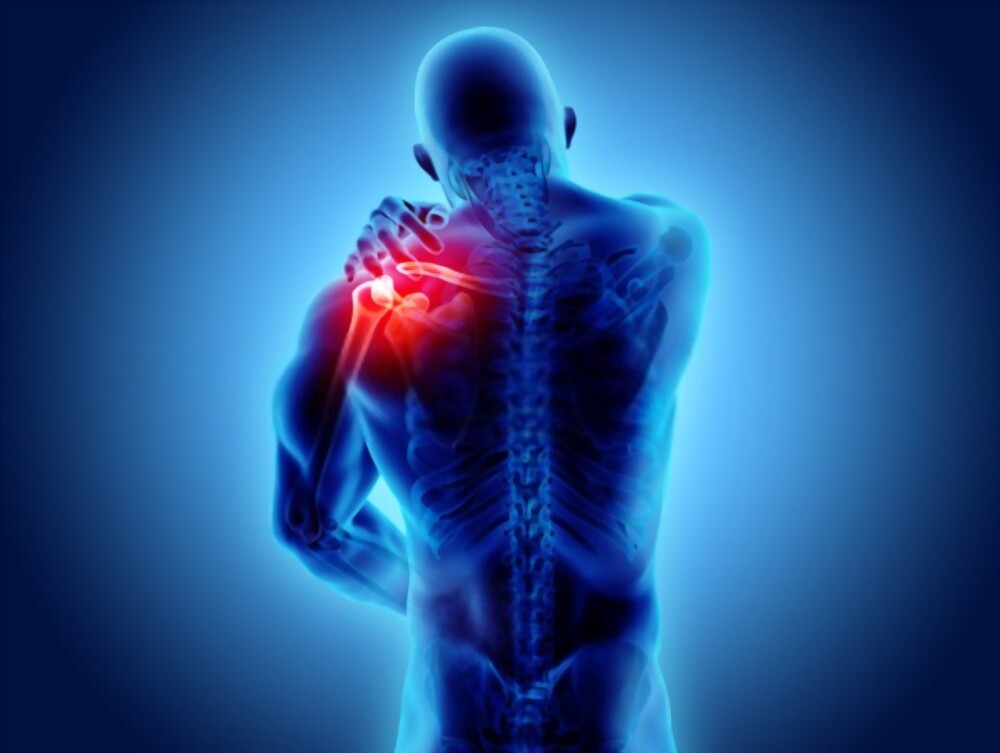


What is frozen shoulder?
Frozen shoulder is also called as adhesive capsulitis or peri-arthritic shoulder. It is a painful condition caused by the capsule of the shoulder joint.
Causes and Types
2types – Primary and secondary
It can be primary which is due to underlying medical conditions such as diabetes or thyroid disease or Parkinson’s disease. It could also be secondary, which is post immobilisation or following trauma. Recent evidence suggests a rise in serum cytokine levels.
Whom does it affect?
People between 40-65 years of age, more common in females.
Symptoms
Pain , dull- aching in nature, restricted mobility which occurs insidiously, difficulty to perform daily activities such as reaching the back pocket of jeans, combing hair or wearing clothes, weakness in muscles, difficulty to sleep on affected side, capsular pattern of range restriction. The pain is localised in the shoulder joint. It may surround deltoid muscle.
Pathology, what causes it?
It is a condition of tissue inflammation leading to progressive fibrosis, involving contractures of the capsule of the shoulder joint. The contracture occurs as a result of thickening of the capsule which in turn occurs due to immobility or lack of movement. This causes it to become tight and thick bands called adhesions develop causing stiffness in the joint.
Increased cytokine levels occur at cellular level. Due to inflammation, there is production of fibroblasts and collagen. There is increase in B lymphocytes, mast cells and macrophages.
Course / Stages
Freezing
Frozen
Thawing
- Freezing stage- Causes increased pain and restricted motion which develops progressively, lasting from 6 weeks to 9 months. It is the acute-adhesive stage. It involves inflammation as synovium thickening is present.
- Frozen- Increased stiffness with reduction of pain symptoms, leading to difficulty in activities. It is also know as fibrotic stage.
- Thawing- Complete return to normal range occurs at this stage, which can take from 6 months-2 years.
Risk factors
- Diabetes
- Hypothyroid
- Hyperthyroid
- Parkinsons
- Cardiac disease
- Post surgery/ trauma/ immobilisation
Treatment
Pharmacological
Hydrodilation
Rehabilitation
Surgical
1.Pharmacological –
Analgesic and anti-inflammatory drugs –
Ibuprofen, naproxen, diclofenac, etc
Intra-articular injections of corticosteroids also have proven to be helpful.
2.Hydrodilation-
Sterile fluid is injected into the joint which helps to expand capsule. This process is done under guidance of imaging by a radiologist.
3.Rehabilitation
This is the most crucial stage in regaining the lost mobility and coming back to pain-free stage. Physiotherapy rehabilitation has the most proven evidence to cure the symptoms and aid in relief. Electro therapeutic modalities such as ultrasound, TENS, in combination with exercises, joint mobilisation and strengthening proves best to return to function. Frozen shoulder is a challenging condition thus restoration of symptoms might take months. The patient has to stay consistent with the rehabilitation to achieve the best results. A customised combination of strategies helps in gaining therapeutic success
4. Surgical
Surgical interventions- Arthroscopy, done when above treatments fail.
A few exercise interventions-
Passive exercises
Active- assisted exercises
Mobilisation
Strength training
Stabilisation exercises
- Passive exercises- The physiotherapist performs the movement in cases of severe pain where severe restriction is present.
- Active- assisted exercises- These are done when partial range is present. Examples- wand exercises, wall exercises, table exercises.
- Mobilisation- Gentle graded oscillations help to relieve the stiffness in the capsule. It helps in increasing the movement at the joint.
- Strength training – It helps to recover muscle weakness which occurs over disuse.
- Stabilisation exercises- They help maintain and increase joint stability.
- Other- These include postural exercises, flexibity training, proprioception exercises, return to work exercises, etc. An individual program helps best.
Read more – https://vcurehealthcare.com/everything-you-need-to-know-about-migraine-headaches/


