


Knee osteoarthritis treatment is most effective when started early.
Most people believe knee osteoarthritis develops only in old age.
As a physiotherapist, I often meet people in their 30s and 40s who already show early joint degeneration but dismiss it as “just stiffness” or “getting older.”
The truth is that knee osteoarthritis (OA) develops gradually over several years.
The earlier it is identified, the greater the opportunity to slow cartilage degeneration, preserve mobility, reduce pain, and delay or even avoid knee replacement surgery in many cases.
Quick Answer
Knee osteoarthritis is a degenerative joint condition that causes pain, stiffness, swelling, and reduced mobility. Early physiotherapy, regular strengthening exercises, weight management, and staying physically active are the most effective non-surgical treatments. Most people can significantly improve pain and function without surgery by following a structured rehabilitation program.
Modern research has completely changed how healthcare professionals approach knee OA.
Contrary to older beliefs, complete rest is no longer recommended.
Instead, carefully prescribed exercise, weight management, strength training, education, and lifestyle modifications form the foundation of successful long-term management.
These evidence-based strategies are now recommended by leading international organizations including;
the Osteoarthritis Research Society International (OARSI), the American College of Rheumatology (ACR), and the National Institute for Health and Care Excellence (NICE).
Key Takeaways
- Knee osteoarthritis affects the entire joint, not just the cartilage.
- Early diagnosis and physiotherapy can delay disease progression.
- Exercise is the most evidence-based treatment for reducing pain and improving function.
- Strong quadriceps and hip muscles reduce stress on the knee joint.
- Weight loss significantly decreases knee loading and pain.
- Walking, cycling, and swimming are excellent low-impact exercises.
- Complete bed rest is not recommended for knee osteoarthritis.
- Injections may provide temporary relief but should not replace rehabilitation.
- Knee replacement is reserved for severe cases that fail conservative treatment.
- Consistency with exercise and healthy lifestyle habits is the key to long-term success.
What Is Knee Osteoarthritis?
Knee osteoarthritis is a chronic degenerative joint condition in which the protective cartilage covering the ends of the thigh bone (femur), shin bone (tibia), and kneecap (patella) gradually wears down.
However, newer research shows that OA is not simply a “wear-and-tear disease.”
Scientists now recognize knee osteoarthritis as a disease affecting the entire joint, including:
- Articular cartilage
- Subchondral bone
- Menisci
- Synovium
- Joint capsule
- Ligaments
- Muscles surrounding the knee
Low-grade inflammation within the joint also contributes to pain and disease progression.
A Lesser-Known Fact Most People Don’t Know
Cartilage itself has no nerve supply.
This means the damaged cartilage does not directly cause pain.
Instead, pain often originates from nearby structures such as:
- Inflamed synovium
- Bone marrow lesions
- Ligaments
- Joint capsule
- Surrounding muscles
- Small nerves around the joint
This explains why some people have severe arthritis on X-rays with very little pain, while others experience significant pain despite only mild imaging changes.
Understanding this difference helps physiotherapists focus treatment on improving joint function rather than relying solely on imaging findings.
How Common Is Knee Osteoarthritis?
Knee osteoarthritis is one of the leading causes of disability worldwide.
According to the Global Burden of Disease Study:
- Over 500 million people worldwide are living with osteoarthritis.
- The knee is the most commonly affected joint.
- Cases have increased dramatically over the past three decades.
- Rising obesity, sedentary lifestyles, sports injuries, and increasing life expectancy are major contributors.
OA is no longer considered a disease affecting only elderly adults.
Earlier onset is becoming increasingly common among middle-aged adults due to modern lifestyle factors. (PMC)
Early Signs of Knee Osteoarthritis That Many People Ignore
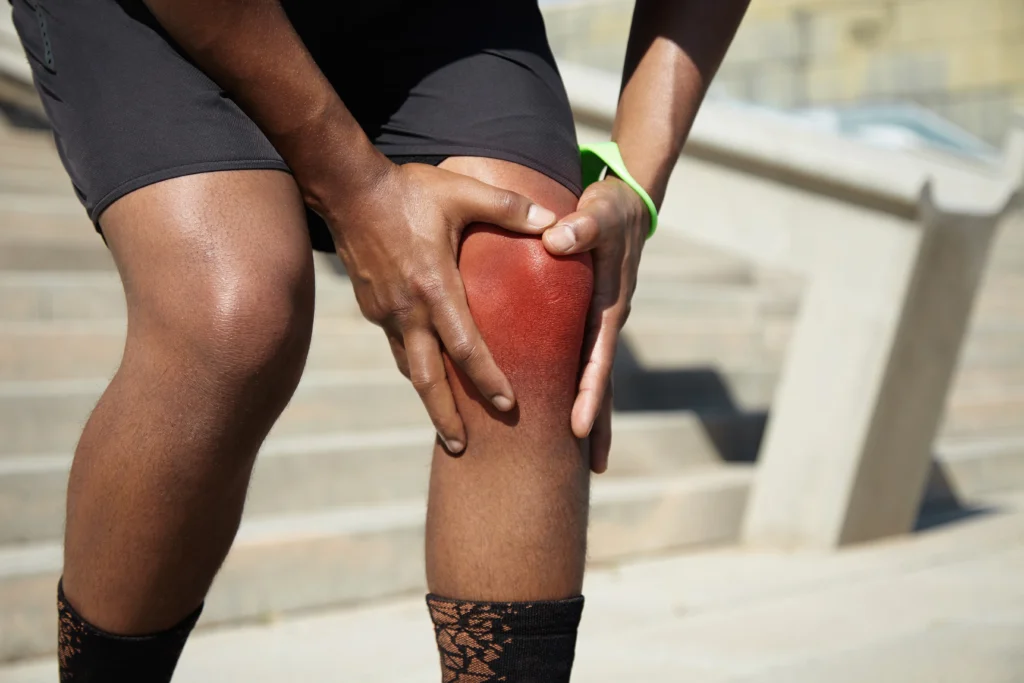
One of the biggest mistakes I see in clinical practice is waiting until pain becomes unbearable before seeking treatment.
The earliest symptoms are often subtle.
Morning Stiffness Lasting Less Than 30 Minutes
Many patients notice that their knee feels stiff immediately after waking up but gradually loosens with movement.
Unlike inflammatory arthritis, stiffness in knee OA usually improves within half an hour.
Early physiotherapy during this stage can significantly improve long-term joint function.
Pain While Climbing Stairs
Pain during stair climbing is one of the earliest mechanical symptoms.
This occurs because climbing stairs increases compressive forces across the knee joint several times greater than normal walking.
The patellofemoral joint is particularly stressed during stair negotiation.
Pain After Sitting for Long Periods
Have you ever stood up after watching a movie or driving for an hour and felt your knee “locked” or stiff?
This phenomenon, sometimes called the “theater sign,” is a classic early symptom of knee osteoarthritis.
Joint fluid becomes less evenly distributed during prolonged immobility, making the first few steps uncomfortable until movement restores lubrication.
Mild Swelling Around the Knee
Inflammation inside the joint may cause occasional swelling.
Patients often describe their knee as feeling:
- Puffy
- Tight
- Heavy
- Warm
Swelling may fluctuate depending on activity levels and usually worsens after prolonged standing or excessive walking.
Clicking or Crunching Sounds (Crepitus)
Many people worry that clicking means severe damage.
Actually, occasional clicking alone is not dangerous.
However, persistent crepitus accompanied by pain and stiffness may indicate cartilage degeneration.
Physiotherapists evaluate whether these sounds occur alongside weakness, altered movement patterns, or joint instability before deciding on treatment.
Reduced Walking Distance
Instead of severe pain, some patients simply notice they cannot walk as far as before.
Common complaints include:
- Needing more frequent breaks
- Avoiding shopping malls
- Avoiding vacations
- Difficulty walking uphill
Reduced endurance is often linked more closely to muscle weakness than cartilage loss itself.
Difficulty Squatting
Squatting requires deep knee flexion and increases pressure across the knee joint.
Many patients first notice OA when they struggle to:
- Sit cross-legged
- Use Indian toilets
- Garden
- Pick objects from the floor
Reduced flexibility, muscle weakness, and joint stiffness all contribute.
Pain During Weather Changes
Although still debated scientifically, many patients report increased symptoms before cold or rainy weather.
Researchers believe changes in barometric pressure may alter joint pressure, affecting pain-sensitive tissues around the knee.
Current evidence remains mixed, but the phenomenon is widely reported in clinical practice. (Annals of Medicine)
Knee Feels Unstable
Patients often say:
“It feels like my knee may give way.”
This sensation is frequently caused by weakened quadriceps muscles rather than severe ligament injury.
Quadriceps weakness can begin surprisingly early in osteoarthritis, sometimes even before significant pain develops. (PubMed)
Pain That Improves After Gentle Movement
One hallmark of early knee osteoarthritis is pain that eases after a few minutes of walking or gentle activity.
This occurs because movement helps distribute synovial fluid, which nourishes cartilage and reduces friction within the joint.
However, excessive activity without adequate muscle conditioning may later increase discomfort.
Who Is Most at Risk?
Although age remains a significant risk factor, knee osteoarthritis develops through a combination of biological, mechanical, and lifestyle influences.
Age Above 45 Years
Cartilage naturally becomes less resilient with age, reducing its ability to absorb repetitive forces.
However, aging alone does not inevitably cause osteoarthritis.
Many older adults maintain healthy joints through regular physical activity and strength training.
Excess Body Weight
Body weight has a far greater impact on the knees than many people realize.
Research shows that every additional kilogram of body weight can increase the load transmitted through the knee joint by approximately three to six kilograms during walking.
Over thousands of steps each day, this substantially increases stress on cartilage and surrounding tissues.
Excess body fat also contributes to chronic low-grade inflammation, which may accelerate osteoarthritis progression. (Frontires in Immunology)
Previous Knee Injury
One of the strongest predictors of future osteoarthritis is a previous knee injury, even if it occurred many years earlier.
Injuries that increase the risk include:
- Anterior cruciate ligament (ACL) tears
- Meniscus injuries
- Fractures involving the knee joint
- Recurrent patellar dislocations
- Major ligament sprains
Post-traumatic osteoarthritis often develops 10 to 20 years after the initial injury, making early rehabilitation essential.
Weak Thigh Muscles
A lesser-known but clinically important factor is quadriceps weakness.
Strong quadriceps act as natural shock absorbers, reducing the amount of force transmitted directly to the knee joint during walking, climbing stairs, and standing up.
Weakness can increase joint loading and contribute to pain, reduced function, and disease progression.
Research suggests muscle strengthening may improve symptoms even when imaging changes remain unchanged. (BMJ Open)
Genetics
Family history plays a meaningful role in knee osteoarthritis risk.
Certain inherited genes influence cartilage structure, bone shape, and inflammatory pathways, making some individuals more susceptible than others.
However, genetics are not destiny.
Maintaining a healthy body weight, staying physically active, preventing knee injuries, and engaging in targeted strengthening exercises can significantly reduce the impact of inherited risk factors.
Why Early Physiotherapy Can Change the Course of Knee Osteoarthritis
One of the biggest misconceptions about knee osteoarthritis is that “nothing can be done until the knee becomes bad enough for surgery.”
As a physiotherapist, this is one of the myths I work hardest to correct.
Current international guidelines consistently recommend exercise therapy, patient education, weight management, and self-management as the first-line treatment for nearly every person with knee osteoarthritis. (Cureus)
Surgery is considered only when symptoms remain severe despite comprehensive conservative care.
In fact, many people can successfully delay or even avoid knee replacement for years by following a structured rehabilitation program tailored to their symptoms, strength, and lifestyle.
How Is Knee Osteoarthritis Diagnosed?
A diagnosis is usually based on a combination of your medical history, physical examination, and, when necessary, imaging studies.
Importantly, your symptoms matter more than your X-ray.
Many people have advanced osteoarthritis on imaging but experience only mild symptoms, while others with minimal X-ray changes report significant pain.
This is why treatment decisions should never rely solely on imaging findings.
Medical History
Your healthcare provider or physiotherapist will ask about:
- When the pain started
- Morning stiffness duration
- Pain during walking or climbing stairs
- Previous injuries
- Occupation
- Sports participation
- Weight changes
- Activity limitations
- Sleep disturbance
These questions help identify mechanical pain patterns typical of osteoarthritis.
Physical Examination
During assessment, a physiotherapist evaluates much more than just the knee.
A comprehensive examination typically includes:
Walking Pattern (Gait Analysis)
Your walking pattern often reveals compensations long before they become noticeable to you.
A physiotherapist may observe:
- Limping
- Reduced knee extension
- Shortened step length
- Reduced walking speed
- Hip compensation
- Foot overpronation
Correcting these movement patterns can reduce unnecessary joint loading.
Range of Motion
The knee is assessed for:
- Flexion
- Extension
- Painful movement
- Joint stiffness
Loss of full extension is particularly important because it increases walking energy expenditure and places additional stress on surrounding joints.
Muscle Strength Testing
Muscle weakness is one of the strongest predictors of disability in knee OA.
Special attention is given to:
- Quadriceps
- Hamstrings
- Gluteus medius
- Gluteus maximus
- Calf muscles
- Core muscles
Surprisingly, hip weakness often contributes significantly to knee pain by altering lower-limb mechanics. (NCBI)
Functional Tests
Rather than relying only on imaging, physiotherapists assess how your knee performs during everyday tasks.
Common functional tests include:
- Sit-to-stand test
- Stair climbing
- Single-leg balance
- Squat assessment
- Timed Up and Go (TUG) test
- Six-minute walk test
These measures provide valuable information about real-world function and help track progress over time.
Do You Always Need an X-Ray or MRI?
Not necessarily.
For many adults over 45 with typical symptoms, clinical examination alone is sufficient to diagnose knee osteoarthritis.
X-rays
Weight-bearing X-rays can reveal:
- Joint space narrowing
- Bone spurs (osteophytes)
- Subchondral sclerosis
- Bone cysts
However, X-rays do not show cartilage directly and may not reflect the severity of symptoms.
MRI
MRI is generally not recommended for routine diagnosis of uncomplicated knee OA.
It is reserved for cases where another condition is suspected, such as:
- Meniscal tears
- Ligament injuries
- Osteonecrosis
- Stress fractures
- Tumors
- Persistent unexplained pain
Routine MRI often identifies age-related changes that may not be responsible for the patient’s symptoms, potentially leading to unnecessary concern.
The Best Treatments for Knee Osteoarthritis
There is no single cure for osteoarthritis.
Instead, the most effective approach combines multiple evidence-based strategies that address pain, mobility, strength, and lifestyle factors.
1. Exercise Therapy: The Most Powerful Treatment
If I could recommend only one intervention to nearly every patient with knee osteoarthritis, it would be exercise therapy.
Research consistently shows that well-designed exercise programs:
- Reduce pain
- Improve function
- Increase walking ability
- Enhance balance
- Strengthen muscles
- Improve confidence in movement
- Delay disability
Importantly, exercise does not wear out the joint.
Appropriate loading helps nourish cartilage by stimulating the movement of synovial fluid, which supplies nutrients to cartilage cells.
2. Physiotherapy
Physiotherapy goes far beyond prescribing a few exercises.
An individualized rehabilitation program may include:
Manual Therapy
Selected patients may benefit from:
- Patellar mobilization
- Tibiofemoral joint mobilization
- Soft tissue techniques
- Stretching of tight muscles
Manual therapy is most effective when combined with an active exercise program rather than used in isolation.
Movement Retraining
Small changes in movement patterns can substantially reduce stress on the knee.
A physiotherapist may teach you how to:
- Climb stairs more efficiently
- Stand up safely
- Improve squat technique
- Walk with better alignment
- Modify daily activities to reduce joint loading
Progressive Strength Training
This is the cornerstone of physiotherapy.
Progressive strengthening focuses on gradually increasing muscle capacity without overloading the joint.
3. Weight Management
Weight loss is one of the few interventions proven to both reduce symptoms and slow disease progression in overweight individuals.
A commonly cited finding is that losing 5% to 10% of body weight can produce meaningful improvements in pain and physical function.
Combining dietary changes with exercise yields the greatest benefits.
4. Education
Patients who understand their condition generally experience better long-term outcomes.
Education helps people:
- Stay active safely
- Avoid unnecessary fear
- Improve adherence to exercise
- Manage flare-ups
- Set realistic expectations
Understanding that “hurt does not always equal harm” can reduce fear of movement and improve participation in rehabilitation.
5. Pain Relief Medications
Medication may be appropriate for symptom control but should complement, not replace, exercise and rehabilitation.
Depending on individual circumstances, a physician may recommend:
- Topical NSAIDs
- Oral NSAIDs (when appropriate)
- Acetaminophen in selected cases
- Duloxetine for chronic pain in specific patients
Long-term medication use should always be discussed with a healthcare provider because of potential side effects.
6. Knee Braces and Assistive Devices
For selected individuals, supportive devices can reduce pain during daily activities.
These may include:
- Unloading knee braces
- Patellar braces
- Walking sticks (used on the opposite side)
- Shock-absorbing footwear
- Insoles for specific biomechanical issues
These devices are most effective when combined with strengthening and movement retraining rather than used as standalone treatments.
Exercises That Actually Help Knee Osteoarthritis
One of the most common questions I hear is, “Should I stop exercising because my knee hurts?”
In most cases, the answer is no.
The key is choosing the right exercises performed with proper technique and appropriate progression.
1. Quadriceps Strengthening
The quadriceps muscle plays a crucial role in stabilizing the knee and absorbing forces during walking, stair climbing, and standing up.
Examples include:
- Straight leg raises
- Seated knee extensions
- Mini squats within a comfortable range
- Wall sits (if tolerated)
Start with low resistance and gradually increase the challenge as symptoms allow.
2. Glute Strengthening
Strong hip muscles reduce inward knee collapse and improve lower-limb alignment.
Effective exercises include:
- Clamshells
- Side-lying leg raises
- Glute bridges
- Standing hip abduction
- Monster walks with resistance bands
Research shows hip strengthening can reduce knee pain and improve functional performance. (BMC MSK Disorders)
3. Hamstring Strengthening
Balanced strength between the quadriceps and hamstrings improves joint stability.
Exercises include:
- Hamstring curls
- Bridges
- Resistance band curls
4. Calf Strengthening
The calf muscles contribute to shock absorption and propulsion during walking.
Recommended exercises:
- Heel raises
- Single-leg heel raises (as tolerated)
5. Balance Training
Balance often declines with knee osteoarthritis, increasing the risk of falls.
Simple balance exercises include:
- Single-leg standing
- Tandem stance
- Heel-to-toe walking
- Standing on a foam surface (under supervision if needed)
6. Low-Impact Aerobic Exercise
Cardiovascular fitness is just as important as muscle strength.
Excellent options include:
- Walking on level ground
- Stationary cycling
- Swimming
- Water aerobics
- Elliptical trainer
Aim for at least 150 minutes of moderate-intensity physical activity per week, adjusted to your comfort and abilities.
Exercises to Avoid During Painful Flare-Ups
During periods of increased pain or swelling, temporarily reduce activities that place excessive stress on the joint.
Examples include:
- Deep squats beyond comfort
- Repeated jumping
- Sprinting
- High-impact aerobics
- Running on hard surfaces (if it worsens symptoms)
- Heavy leg presses at extreme knee flexion
- Sudden twisting or pivoting movements
A temporary reduction in these activities does not mean complete rest.
Gentle range-of-motion exercises and light walking are usually preferable to prolonged inactivity.
Daily Habits That Can Slow Knee Osteoarthritis Progression
Small lifestyle changes, practiced consistently, can make a meaningful difference over time.
Do:
- Maintain a healthy body weight.
- Stay physically active most days of the week.
- Strengthen your thigh and hip muscles regularly.
- Wear supportive, well-cushioned footwear.
- Break up long periods of sitting.
- Warm up before exercise.
- Listen to your body’s response and pace activities.
Avoid:
- Remaining sedentary for long periods.
- Ignoring persistent swelling or instability.
- Continuing high-impact activities that consistently worsen symptoms.
- Smoking, which may impair tissue healing.
- Rapid weight gain.
- Self-prescribing supplements or injections without medical advice.
By combining targeted exercise, education, and healthy lifestyle habits, many individuals with knee osteoarthritis can significantly:
reduce pain, improve function, and maintain an active, independent life for years.
Advanced Treatments for Knee Osteoarthritis: What Really Works?
As knee osteoarthritis progresses, many people begin exploring injections, regenerative therapies, or even surgery.
While these treatments can have a role, it’s important to understand that no injection or procedure can replace the long-term benefits of exercise, muscle strengthening, and lifestyle modification.
Most international guidelines recommend trying comprehensive conservative management before considering invasive options.
Corticosteroid Injections
Corticosteroid injections are commonly used to reduce inflammation and provide short-term pain relief, especially during painful flare-ups with noticeable swelling.
They may help:
- Reduce pain for several weeks.
- Improve mobility temporarily.
- Allow patients to participate more comfortably in physiotherapy.
However, repeated or frequent injections are generally not recommended, as they may have adverse effects on cartilage health over time.
These injections should be reserved for carefully selected patients and should not be viewed as a long-term solution. (PMC)
Hyaluronic Acid (Viscosupplementation)
Hyaluronic acid injections aim to improve joint lubrication by supplementing the natural fluid inside the knee.
Research findings are mixed:
- Some patients report moderate pain relief.
- Others experience little or no benefit.
Because of inconsistent evidence, several clinical guidelines do not routinely recommend hyaluronic acid injections for everyone with knee osteoarthritis. (Arthroplasty Today)
If considered, the decision should be individualized after discussing potential benefits, costs, and expectations with an orthopedic specialist.
Platelet-Rich Plasma (PRP)
PRP therapy involves concentrating platelets from the patient’s own blood and injecting them into the knee with the goal of supporting tissue healing and reducing inflammation.
Current evidence suggests that PRP may provide symptom relief in selected patients with mild to moderate knee osteoarthritis, particularly younger individuals. (MDPI)
However:
- PRP preparations vary widely between clinics.
- There is no universally accepted protocol.
- Long-term benefits remain uncertain.
Patients should be cautious of exaggerated claims that PRP can “regrow cartilage” or “cure arthritis,” as these claims are not supported by high-quality evidence.
Stem Cell Therapy
Stem cell therapy has gained significant attention in recent years, but it is important to separate scientific evidence from marketing. (IJMCM)
At present:
- Research is ongoing.
- There is insufficient high-quality evidence to recommend stem cell injections as standard treatment for knee osteoarthritis.
- Many commercial clinics advertise benefits that have not yet been confirmed in large clinical trials.
If you are considering stem cell therapy, discuss it with a qualified orthopedic specialist and ensure the treatment is offered within an evidence-based framework.
Knee Replacement Surgery
For individuals with severe osteoarthritis who continue to experience significant pain and disability despite appropriate conservative management, knee replacement surgery may be considered.
A total knee replacement can:
- Relieve chronic pain.
- Improve walking ability.
- Enhance quality of life.
- Restore function for many daily activities.
However, surgery is not the first step.
Success after surgery also depends heavily on pre-operative conditioning and post-operative physiotherapy. (NCBI)
Stronger muscles before surgery are associated with better recovery afterward.
Emerging Treatments: Promising but Still Under Investigation
Researchers are actively studying new approaches to manage knee osteoarthritis, including:
- Gene-based therapies.
- Biological molecules targeting inflammation.
- Cartilage tissue engineering.
- Injectable hydrogels.
- 3D-printed cartilage scaffolds.
- Novel disease-modifying osteoarthritis drugs (DMOADs).
While these innovations are exciting, none have yet become standard treatment for routine clinical practice.
Lesser-Known Facts About Knee Osteoarthritis
Pain Does Not Always Match X-Ray Findings
One of the most surprising findings in osteoarthritis research is that pain severity often does not correlate with the degree of cartilage loss seen on X-rays.
Some people with advanced radiographic changes remain active with minimal discomfort, while others experience significant pain despite only mild structural changes.
This highlights the importance of treating the person, not just the imaging.
Stronger Muscles Can Reduce Joint Load
Although stronger muscles generate greater force, they also improve joint stability and movement efficiency.
Well-conditioned quadriceps and hip muscles help distribute forces more evenly across the knee, reducing stress on damaged areas.
Sitting for Long Hours Can Worsen Symptoms
Many people assume that resting the knee protects it.
In reality, prolonged sitting can increase stiffness, reduce circulation to surrounding tissues, and weaken muscles over time.
Try to stand up, stretch, or walk for a few minutes every 30 to 60 minutes if your work involves prolonged sitting.
Sleep Quality Influences Pain
Poor sleep has been linked to increased pain sensitivity in people with osteoarthritis.
Addressing sleep hygiene, maintaining a consistent sleep schedule, and managing stress may improve both pain perception and overall well-being.
Vitamin D Is Not a Cure
Vitamin D is essential for bone health, but taking supplements without a deficiency has not consistently been shown to reduce knee osteoarthritis pain or slow disease progression.
Only supplement vitamin D if recommended by your healthcare provider based on clinical assessment or blood tests.
Things to Do Every Day
Small, consistent habits often have a greater long-term impact than occasional intense efforts.
Make These Habits Part of Your Routine
- Perform strengthening exercises at least three times per week.
- Stay physically active with walking, cycling, or swimming.
- Maintain a healthy body weight.
- Wear supportive footwear with good cushioning.
- Warm up before exercise.
- Stretch gently after activity.
- Use proper lifting techniques.
- Pace activities throughout the day rather than doing everything at once.
- Stay hydrated.
- Follow your physiotherapy home exercise program consistently.
Things to Avoid
Avoid habits that may unnecessarily increase joint stress or delay recovery.
- Ignoring persistent knee pain.
- Remaining inactive for long periods.
- Repeatedly climbing stairs unnecessarily during painful flare-ups.
- Carrying excessive body weight.
- Smoking.
- Performing high-impact activities that consistently worsen symptoms.
- Wearing unsupportive footwear for prolonged periods.
- Self-medicating with painkillers for extended periods without medical advice.
- Expecting injections alone to solve the problem without rehabilitation.
Can Knee Osteoarthritis Be Prevented?
While aging cannot be stopped, many risk factors for knee osteoarthritis are modifiable.
You can reduce your risk by:
- Maintaining a healthy weight.
- Building strong thigh and hip muscles.
- Staying physically active throughout life.
- Preventing sports injuries through proper training.
- Rehabilitating knee injuries completely rather than returning to activity too soon.
- Managing diabetes and other metabolic conditions.
- Avoiding smoking.
- Choosing low-impact activities if you have recurrent knee pain.
Prevention begins long before symptoms appear.
Common Myths vs Reality
| Myth | Reality |
|---|---|
| Arthritis means you should stop exercising. | Appropriate exercise is one of the most effective treatments for knee osteoarthritis. |
| Pain always means more joint damage. | Pain is influenced by many factors, including inflammation, muscle weakness, and the nervous system. |
| Knee replacement is inevitable. | Many people manage symptoms successfully for years with conservative treatment. |
| Running always causes arthritis. | Recreational running has not been shown to increase osteoarthritis risk in healthy individuals without significant joint injury. |
| Cracking sounds mean your knee is wearing out. | Clicking without pain is usually harmless and common. |
Red Flags: When You Should Seek Immediate Medical Attention
Although knee osteoarthritis usually develops gradually, certain symptoms require prompt evaluation.
Consult a healthcare professional urgently if you experience:
- Sudden inability to bear weight.
- Severe swelling after trauma.
- High fever with a swollen knee.
- Redness and intense warmth around the joint.
- A locked knee that cannot fully bend or straighten.
- Rapidly worsening pain without an obvious reason.
- Unexplained weight loss with persistent joint pain.
- Night pain that consistently wakes you from sleep.
These symptoms may indicate conditions other than osteoarthritis, such as infection, fracture, inflammatory arthritis, or other serious disorders.
A Physiotherapist’s Clinical Advice
One of the most rewarding aspects of treating knee osteoarthritis is seeing patients regain confidence in movement.
Many people arrive believing their knees are “worn out” and that activity will only make things worse.
In reality, the right kind of movement is often the best medicine.
Rather than chasing quick fixes, focus on building stronger muscles, improving balance, maintaining a healthy body weight, and staying active in ways your knees can tolerate.
Progress may be gradual, but consistency almost always outperforms intensity.
Remember that flare-ups are a normal part of living with osteoarthritis.
A temporary increase in pain does not necessarily mean permanent damage.
Learn to adjust your activity, continue gentle movement, and return to your strengthening program as symptoms settle.
Final Thoughts
Knee osteoarthritis is a lifelong condition, but it does not have to define your life.
With early recognition, evidence-based physiotherapy, regular exercise, weight management, and informed lifestyle choices, many people continue to work, travel, exercise, and enjoy their daily activities with minimal limitations.
The goal is not simply to reduce pain for today but to preserve your knee function for years to come.
Every step you take toward improving strength, mobility, and overall health is an investment in your future independence.
Frequently Asked Questions
What are the early signs of knee osteoarthritis?
Common early symptoms include morning stiffness, pain while climbing stairs, knee clicking, swelling, reduced walking distance, and stiffness after sitting for long periods.
Can knee osteoarthritis be reversed?
No. However, physiotherapy, strengthening exercises, weight loss, and lifestyle modifications can slow progression and significantly improve function.
Is walking good for knee arthritis?
Yes. Walking is a low-impact exercise that improves joint nutrition, muscle strength, and mobility when performed within a comfortable pain range.
Which exercises help knee osteoarthritis?
Quadriceps strengthening, hip strengthening, hamstring exercises, calf raises, balance training, cycling, swimming, and walking are among the most beneficial exercises.
Should I stop climbing stairs?
Not completely. Use proper technique and avoid excessive stair climbing during painful flare-ups while continuing strengthening exercises.
Can weight loss reduce knee pain?
Yes. Even a 5–10% reduction in body weight can significantly improve pain and physical function.
Will I eventually need knee replacement surgery?
Not necessarily. Many individuals successfully manage symptoms for years with conservative treatment and physiotherapy.
Do supplements cure knee osteoarthritis?
No supplement has been proven to cure osteoarthritis. Some may provide symptom relief for certain individuals, but evidence remains mixed.
Can weather affect knee arthritis?
Some individuals notice increased symptoms during cold or rainy weather, although scientific evidence is still inconclusive.
When should I see a physiotherapist?
If knee pain persists for several weeks, limits your daily activities, or affects walking, seeking physiotherapy early can help improve long-term outcomes.
Stay tuned with us for more health related topics.
Follow us on LinkedIn and Instagram for more.
More Read


Medical Disclaimer!
This article has been reviewed and written under the guidance of our Head Physiotherapist, Dr. Kruti Raj (PT, MUHS,CPT,CMPT). The information shared is intended for educational purposes only and should not be considered a substitute for personalized medical advice, diagnosis, or treatment.
Please consult us or any other qualified healthcare professional before beginning any exercise program, especially if you are experiencing pain, recovering from injury, or managing a medical condition.


