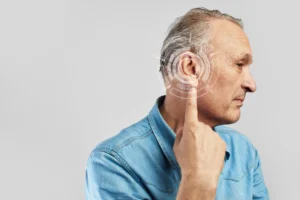
Understanding What Headache With Eye Pain Actually Means!
If you have ever felt a headache that seems to sit behind your eye or spreads from your eye into your head, you are definitely not alone.
In my clinical practice, this is one of the most common complaints people walk in with, especially those working long hours on screens.
What makes this combination important is that it is not coming from just one system. It often involves a mix of neurological, muscular, postural, and lifestyle factors.
Understanding the pattern is far more useful than just chasing the pain.
Read: Headache at Back of Head Causes and How To Treatment
Quick Answer
Headache with eye pain is commonly caused by migraines, eye strain, neck-related issues, or sinus pressure.
In many cases, it is linked to prolonged screen use, poor posture, or muscle tension in the neck, rather than a serious eye condition.
Simple changes like posture correction, taking screen breaks, hydration, and physiotherapy exercises can significantly reduce symptoms.
However, if the pain is sudden, severe, or associated with vision changes, it should be evaluated by a medical professional.
Read: Spasm In Neck: What Causes It & How to Fix It Fast
Key Takeaways
- Most headaches with eye pain are caused by eye strain, migraines, or neck-related issues.
- Poor posture and long screen hours are major hidden contributors.
- Pain behind the eye is often referred pain from neck muscles, not the eye itself.
- Physiotherapy plays a key role in treating posture, muscle tightness, and movement dysfunction.
- Simple habits like screen breaks, hydration, and posture correction can prevent recurrence.
- Red flag symptoms like vision changes or severe sudden pain should not be ignored.
Read: One Sided Headache: When Should You Worry?
Why do headache and eye pain occur together?
The connection is not random. It comes down to shared nerve pathways and muscle referral patterns.
The trigeminal nerve plays a major role here. It supplies sensation to the face, eyes, and parts of the head.
When this nerve becomes irritated, the brain sometimes struggles to identify the exact source of pain.
That is why you feel it in both the head and behind the eye.
At the same time, tight muscles in the neck and upper back can refer pain forward into the eye region. This is something many people underestimate. Falla et al. (2018)

Read: How to Manage Migraine Naturally and Effectively
Common causes you should know
Migraine
Migraines are one of the most frequent reasons for eye-related headache pain.
Typical signs include:
- One-sided pain
- Throbbing sensation
- Pain behind the eye
- Light sensitivity
- Nausea
The eye itself is not the problem here. It is a neurological process involving hypersensitivity of pain pathways. Goadsby et al. (2017)
Read: How to Fix Neck Fatigue After Migraine Naturally
Tension-type headache
This is what I see most often in working professionals.
People usually describe it like this:
“It feels tight around my head, and there is pressure behind my eyes.”
It is strongly linked to:
- Long sitting hours
- Screen exposure
- Mental stress
- Poor posture
From a physiotherapy perspective, this is highly treatable.
Read about : What is Cervical Facet Joint Pain, how it causes cervicogenic headaches and how to correct it naturally
Cervicogenic headache
This is often missed or misdiagnosed.
The pain actually starts in the neck but travels to:
- The forehead
- The temple
- Behind the eye
If your headache increases when you move your neck or sit in a poor posture, this is a strong indicator. Jull et al. (2019)
Digital eye strain
With current lifestyles, this is becoming extremely common.
Symptoms include:
- Dull headache
- Eye fatigue
- Burning sensation
- Difficulty focusing
It usually builds up gradually during the day. Rosenfield (2016)
Read: A Complete Guide To Sinuses Related Neck Pain
Sinus-related headache
This type feels different from others.
You may notice:
- Pressure around the eyes
- Pain when bending forward
- Nasal congestion
It is more of a heavy, pressure-like discomfort than sharp pain.
Cluster headache
This is less common but very intense.
Features include:
- Severe pain behind one eye
- Red or watery eye
- Episodes that come in cycles
If you suspect this, do not delay medical consultation. May et al. (2018)
Read: What is Sternocleidomastoid Syndrome, Trigger Points and Its Treatment
Lesser known causes that people rarely consider
Trigger points in neck muscles
Small tight knots in muscles, especially in the suboccipital region, can refer pain directly into the eye.
This is something we treat frequently using:
- Manual therapy
- Dry needling
- Muscle release techniques
Read about: What Is Cervical Myofascial Pain Syndrome And How To Relieve Trigger Points
Jaw involvement
If you clench your teeth or have jaw stiffness, it can contribute to headaches that spread toward the eye.
Many people do not connect jaw tension with eye pain, but the link is real.
Read about: Neck And Jaw Pain Together? Here’s The Full Clinical Picture
Dehydration
Even mild dehydration can:
- Reduce blood flow efficiency
- Trigger headaches
- Increase fatigue around the eyes
Read: Neck Pain from Poor Breathing Pattern? Correct Now!
Breathing pattern issues
Shallow breathing increases tension in neck muscles, which indirectly contributes to headache patterns.
Correcting breathing often reduces symptoms more than expected.
Read in detail: Neck Pain from Phone Use? Here’s How to Treat Text Neck Syndrome
Daily habits that quietly make it worse
Many people keep treating the headache but continue the same habits that trigger it.
Common ones include:
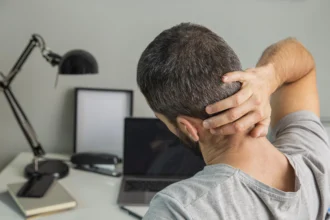
- Sitting with a forward head posture for hours
- Using mobile phones in a bent-neck position
- Skipping meals or staying dehydrated
- Working in poor lighting conditions
- Ignoring early signs of eye fatigue
These may look harmless, but over time they create a perfect setup for recurring headaches.
Read about: How to Relieve Morning Neck Stiffness Naturally
How to identify what is causing your pain
Instead of guessing, observe patterns:
- Worse after screen use -> likely eye strain
- Triggered by neck movement -> cervicogenic
- Pulsating with light sensitivity -> migraine
- Pressure with sinus symptoms -> sinus-related
This kind of awareness is the first step toward recovery.
Read: Atlantoaxial Osteoarthritis: Simple Fixes for Pain at Base of Skull When Turning Head
A simple self-check you can try right now
Try this quick check at home:
- Sit upright and gently tuck your chin in
- Hold this posture for 30 seconds
- Notice if your headache reduces slightly
If yes, your pain is likely linked to posture and neck muscles.
Now try this:
- Close your eyes for 2 minutes
- Avoid all screens
- Relax your breathing
If this reduces discomfort, eye strain is a strong contributor.
These small tests can give surprisingly useful clues.
Read: The Morning Headache Causes and Easy Fixes
How this pain usually feels in real life
Sometimes medical explanations feel too textbook. Let me put this into everyday situations I hear from patients:
“By evening, my eyes feel heavy and I get a dull headache”
This usually points toward screen-related eye strain.
“When I turn my neck, the pain shoots toward my eye”
This is often cervicogenic, meaning it is coming from the neck.
“It starts behind one eye and becomes unbearable with light”
This is more consistent with migraine.
“There is pressure around my eyes when I bend forward”
This is commonly sinus-related.
If you can relate to one of these, you are already halfway closer to identifying the cause.
| Symptom Pattern | Most Likely Cause |
|---|---|
| Dull pain after screen use | Eye strain |
| Pain increases with neck movement | Cervicogenic headache |
| Throbbing with light sensitivity | Migraine |
| Pressure with blocked nose | Sinus headache |
| Severe one-sided eye pain with watering | Cluster headache |
Also Read: Ultimate 6 Weeks Neck Rehabilitation Exercises For Pain Relief
Physiotherapy approach that actually works
In most cases of headache with eye pain, the goal is not just to reduce pain but to correct the source of irritation.
What I focus on in practice is a combination of posture, muscle balance, joint mobility, and daily habits.
When these are addressed together, results are much more consistent and long lasting.
Read: Simple Posture Correction Exercises for Forward Head Posture
Posture correction
This is where I begin with almost every patient, because posture is often the root of the problem rather than just a contributing factor.
Many people are unaware that even a slight forward head position increases load on the neck muscles significantly.
Over time, this creates constant strain, especially in the suboccipital region, which can refer pain toward the eyes.
Small but effective adjustments include:
- Keeping your screen exactly at eye level so you are not looking down
- Maintaining a slight chin tuck instead of pushing the head forward
- Keeping shoulders relaxed rather than elevated or rounded
- Sitting with your back supported instead of slouching
One simple cue I give patients is this:
“Your ears should be aligned with your shoulders, not ahead of them.”
Even correcting posture for a few hours a day can start reducing symptoms within a few days.
Read more on : Manual Therapy for Neck Pain: A Physiotherapist’s Evidence Based Guide
Manual therapy
Hands-on treatment plays a very important role, especially when muscles are already tight and painful.
Through manual therapy, we work on:
- Releasing tight muscles in the neck and upper back
- Reducing trigger points that refer pain to the eye region
- Improving movement in stiff joints of the cervical spine
Patients often feel immediate relief after sessions because pressure on sensitive structures is reduced.
However, this is not a standalone solution. It works best when combined with exercises and posture correction.
Read about: Effective Neck Pain Exercises At Home: A Complete Guide to Relief and Improved Mobility
Exercise therapy
This is the most important long-term solution. Without strengthening and retraining the muscles, symptoms tend to return.
The focus is not on heavy workouts but on precise, controlled movements.
Key areas include:
Deep neck flexors
These are small stabilizing muscles that support your neck. When weak, larger muscles overcompensate and become tight. Strengthening them helps reduce strain and improves posture naturally.
Upper back strength
Strengthening the muscles between your shoulder blades helps pull your posture back into alignment and reduces forward head positioning.
Mobility exercises
Gentle neck movements improve flexibility and reduce stiffness that contributes to headaches.
Eye relaxation exercises
These are often overlooked but very helpful, especially for screen users.
Simple techniques like shifting focus between near and far objects can reduce strain.
Consistency matters more than intensity here. Even 10 to 15 minutes daily can make a noticeable difference.
Read: Trigger Point Injections for Neck Pain: Do They Really Work
Dry needling
Dry needling is very effective for stubborn trigger points, especially when pain is being referred toward the eye.
These trigger points are small, tight knots within the muscle that do not relax on their own.
When treated with dry needling:
- Muscle tension reduces quickly
- Blood flow improves
- Referred pain patterns decrease
Patients often describe it as a deep release rather than just surface relief.
It is usually used when regular manual therapy is not enough or when symptoms have been present for a long time.
Read in detail: Best Ergonomic Desk Setup to Reduce Neck and Back Pain
Ergonomic changes
A large number of headaches with eye pain are directly linked to poor workstation setup.
Many patients improve significantly without any advanced treatment, simply by correcting their environment.
Important adjustments include:
- Keeping the screen at eye level and about an arm’s length away
- Adjusting screen brightness to avoid glare or strain
- Using a chair that supports your lower back
- Keeping feet flat on the ground instead of dangling
- Avoiding working on a laptop for long hours without support
Lighting also plays a role. Working in very dim or very harsh lighting can increase eye strain and trigger headaches.
Learn About: The Ultimate Neck Stretch Routine for Desk Workers in 2026
A practical way to combine all of this
What works best is not doing everything perfectly, but doing a few things consistently:
- Sit correctly for most of your workday
- Take short breaks to move and reset posture
- Do simple exercises daily
- Address tightness early instead of ignoring it
When these habits become part of your routine, headaches with eye pain usually reduce both in intensity and frequency.
Read about: Yoga for Neck Pain: Poses That Actually Work
When not to ignore the symptoms
Seek medical attention if you notice:
- Sudden severe headache
- Vision loss
- Double vision
- Eye redness with intense pain
- Neurological symptoms
These are not typical and need immediate evaluation.
Read: How to Reduce Tinnitus Naturally
When to take it seriously
Most headaches are harmless, but a few signs should never be ignored:
- A sudden, severe headache that feels different from usual
- Blurred or double vision
- Pain with redness in the eye
- Headache after a head injury
- Weakness, dizziness, or confusion
These are not typical patterns and need immediate medical attention.
Read more: Cervical Vertigo Explained: Why Neck Pain Make You Feel Dizzy
A quick case from my practice
A 34-year-old professional came in with constant pain behind her right eye.
She had already tried eye drops and medication, but nothing worked.
On assessment, the real issue was prolonged laptop use with poor posture.
Her neck muscles were tight, and trigger points were referring pain to the eye.
Within two weeks of posture correction and simple exercises, her symptoms reduced significantly.
This is more common than people think.
Also Read : Neck Cracking: Benefits, Risks, and the Truth About Stroke
Final thoughts from a physiotherapist
In most cases, headache with eye pain is not something dangerous. It is usually the body reacting to stress, posture, or overuse.
What I have consistently seen is that once people start addressing:
- Posture
- Muscle tension
- Screen habits
their symptoms reduce significantly.
The body rarely fails silently. It gives signals early. Listening to them makes all the difference.
Read About: How to Choose the Right and Best Pillow for Neck Pain
What you should do next
If you are experiencing this regularly:
- Start with posture correction
- Reduce continuous screen exposure
- Try simple neck exercises
- Stay hydrated
If symptoms persist beyond a few days or feel unusual, consult a professional early instead of waiting.
Also read: How to Relieve Neck Tightness Without Equipment
Frequently Asked Questions
1. What causes headache with eye pain?
Common causes include migraines, digital eye strain, sinus pressure, and neck-related issues such as cervicogenic headaches.
2. Is pain behind the eye a sign of something serious?
In most cases, it is not serious and is related to muscle tension or eye strain, but sudden or severe pain should be checked by a doctor.
3. Can neck posture cause eye pain headaches?
Yes, poor posture can strain neck muscles, which can refer pain toward the eye region.
4. How do I know if it is migraine or eye strain?
Migraines are usually throbbing and associated with light sensitivity, while eye strain causes dull pain that worsens with screen use.
5. Can physiotherapy help with this condition?
Yes, physiotherapy helps correct posture, reduce muscle tension, and improve movement, which can significantly reduce symptoms.
6. How can I relieve headache with eye pain quickly?
Taking a break from screens, using a warm compress, staying hydrated, and doing gentle neck stretches can help.
7. Does screen time really cause eye-related headaches?
Yes, prolonged screen exposure can lead to digital eye strain, which commonly causes headaches and eye discomfort.
8. When should I see a doctor?
You should seek medical help if the headache is severe, sudden, or associated with vision changes, dizziness, or eye redness.
Stay tuned with us for more health related topics.
Follow us on LinkedIn and Instagram for more.More Read




Medical Disclaimer!
This article has been reviewed and written under the guidance of our Head Physiotherapist, Dr. Kruti Raj (PT, MUHS,CPT,CMPT). The information shared is intended for educational purposes only and should not be considered a substitute for personalized medical advice, diagnosis, or treatment.
Please consult us or any other qualified healthcare professional before beginning any exercise program, especially if you are experiencing pain, recovering from injury, or managing a medical condition.