


McKenzie Exercises For Neck Pain
Neck pain has become one of the most common musculoskeletal complaints worldwide.
Long hours on computers, smartphone use, sedentary work patterns, and poor posture have significantly increased the number of people experiencing cervical spine discomfort.
According to global health estimates, neck pain affects nearly one in three adults every year and is among the leading causes of disability related to musculoskeletal conditions.
As physiotherapists, one of the most reliable and research-supported treatment approaches we often use for spinal pain is the McKenzie Method, also known as Mechanical Diagnosis and Therapy (MDT).
This method focuses on identifying the mechanical cause of pain and using targeted repeated movements to restore normal spinal function.
Unlike passive treatments that rely heavily on therapists, the McKenzie method empowers patients to actively manage and prevent their own neck pain.
In this guide, I will explain how the McKenzie method works, what modern research says about it, and how it can help relieve neck pain from a physiotherapy perspective.
Read about our Complete Neck Pain Guide : Causes, Symptoms, Exercises and Treatment
Quick Answer
The McKenzie Method is a physiotherapy approach used to treat neck pain through repeated movements, posture correction, and self-management exercises. It focuses on identifying the specific direction of movement that reduces pain and improves cervical spine function. Research shows McKenzie therapy can help reduce neck pain, improve mobility, and restore normal spinal mechanics when guided by a trained physiotherapist.
Read about : 15 Common Causes of Neck Pain You Should Know
Key Takeaways
- The McKenzie Method is a physiotherapy system used to diagnose and treat neck pain through targeted repeated movements.
- It focuses on identifying the direction of movement that reduces symptoms and centralizes pain.
- McKenzie therapy encourages self-management so patients can control their symptoms independently.
- Research shows the method can reduce neck pain and improve cervical mobility.
- Combining McKenzie exercises with strengthening and posture correction may provide better long term results.
- Consulting a physiotherapist is recommended before starting any neck pain exercise program.
Read about: The Best Physiotherapy Exercises for Cervical Spondylosis Relief
Understanding Neck Pain From a Physiotherapy Perspective

The cervical spine consists of seven vertebrae, intervertebral discs, muscles, ligaments, and nerves that allow the head to move in multiple directions while protecting the spinal cord.
When the balance between these structures is disrupted, pain and stiffness can occur. Some of the most common physiotherapy diagnoses include:
- Mechanical neck pain
- Cervical disc irritation
- Cervical radiculopathy
- Postural neck syndrome
- Forward head posture
Modern lifestyles have dramatically increased the risk of postural neck pain. Prolonged sitting, laptop use, and smartphone viewing create excessive stress on cervical structures.
Research shows that exercise-based physiotherapy is one of the most effective treatments for neck pain, particularly when it targets spinal mechanics and posture. (Na et al., 2018)
Among the many physiotherapy approaches available, the McKenzie method remains one of the most structured and widely used systems.
Read about: The Best Physiotherapy Exercises for Cervical Spondylosis Relief
Symptoms of Neck Pain That May Respond to the McKenzie Method
Not every type of neck pain responds to the same treatment approach.
The McKenzie Method is particularly helpful for certain mechanical neck conditions where movement influences symptoms.
From a physiotherapy perspective, patients who benefit most from McKenzie exercises often experience symptoms such as:
- Neck stiffness that worsens after long periods of sitting
- Pain triggered by poor posture or prolonged screen use
- Discomfort that spreads from the neck to the shoulder or upper arm
- Difficulty turning the head while driving or looking over the shoulder
- Pain that improves temporarily with gentle movement or stretching
- Recurring neck pain episodes related to desk work or laptop use
During a physiotherapy assessment, repeated movement testing helps determine whether a patient has a directional preference, meaning certain movements reduce symptoms.
When this occurs, the McKenzie Method often becomes an effective treatment strategy.
Read about: Cervical Ligament Injury or Neck Ligament Tear
What Is the McKenzie Method?

The McKenzie Method of Mechanical Diagnosis and Therapy (MDT) is a physiotherapy system developed by New Zealand physiotherapist Robin McKenzie in the late twentieth century.
It is a classification-based system used to evaluate and treat spinal disorders including neck pain, back pain, and certain limb conditions.
Unlike traditional therapy approaches that rely mainly on passive treatments such as massage or electrotherapy, the McKenzie method emphasizes:
- Active movement therapy
- Patient education
- Posture correction
- Self-treatment strategies
The main principle behind this method is that specific repeated movements can reduce or centralize spinal pain by correcting mechanical dysfunction in the spine.
The McKenzie approach is now taught worldwide and is commonly used in physiotherapy clinics, rehabilitation centers, and hospitals.
Read in detail about: Cervical Radiculopathy: Why Neck Nerve Pain Travels to the Arm
Pain Centralization
The Core Concept of the McKenzie Method
One of the most unique clinical concepts in McKenzie therapy is centralization of pain.
Centralization occurs when pain that was previously felt in the arm, shoulder, or upper back begins to move closer to the spine during treatment.
For example:
- Arm pain reduces
- Shoulder discomfort decreases
- Pain becomes localized in the neck
Although this might seem unusual, physiotherapists consider centralization a positive sign of recovery.
It indicates that spinal structures are responding well to the prescribed movement direction.
Patients who demonstrate centralization during McKenzie assessment often experience better treatment outcomes.
Read about: What Is Cervical Myofascial Pain Syndrome And How To Relieve Trigger Points
How the McKenzie Method Works
The McKenzie approach involves a structured clinical process that helps physiotherapists determine the most effective movement strategy for each patient.
Mechanical Assessment
The first step is a detailed mechanical evaluation.
The physiotherapist assesses:
- posture
- range of motion
- symptom patterns
- movements that increase or reduce pain
Based on this evaluation, patients are classified into specific mechanical categories.
Read more: Cervical Vertigo Explained: Why Neck Pain Make You Feel Dizzy
Classification of Neck Pain
In the McKenzie system, neck pain is typically classified into three major categories.
Postural Syndrome
Pain develops due to prolonged poor posture such as slouched sitting or forward head posture.
Dysfunction Syndrome
Pain occurs when shortened tissues or stiffness restrict normal spinal movement.
Derangement Syndrome
This involves displacement or mechanical disturbance within spinal structures such as intervertebral discs.
Each category responds to different therapeutic movements.
Read in detail about: How to Fix Upper Crossed Syndrome Naturally
Repeated Movement Testing
During the assessment, the patient performs repeated movements of the neck while the physiotherapist observes symptom changes.
Common movements tested include:
- cervical extension
- cervical retraction
- side bending
- rotation
These movements help identify the direction that reduces pain.
Read About: How to Choose the Right and Best Pillow for Neck Pain
Directional Preference
Once a movement that reduces symptoms is identified, it becomes the directional preference.
For many patients with cervical pain, repeated neck extension or chin retraction movements provide relief.
These movements are then prescribed as therapeutic exercises.
Read about: Effective Neck Pain Exercises At Home: A Complete Guide to Relief and Improved Mobility
Self-Management Approach
One of the most powerful aspects of the McKenzie method is that it teaches patients to manage their own symptoms.
Patients are encouraged to perform corrective movements multiple times during the day rather than relying entirely on therapist sessions.
This approach helps reduce recurrence of spinal pain episodes.
Learn About: The Ultimate Neck Stretch Routine for Desk Workers in 2026
Common McKenzie Exercises for Neck Pain
Below are examples of McKenzie exercises frequently prescribed in physiotherapy clinics.
These exercises should ideally be learned under professional guidance.
1. Cervical Retraction

This is the foundation exercise of the McKenzie approach.
How to perform
- Sit or stand upright.
- Gently pull your chin straight backward (like making a double chin).
- Keep your eyes level and do not tilt the head.
Repetitions
10 repetitions, 3-5 times per day.
Benefit
- Corrects forward head posture
- Activates deep cervical flexors
- Reduces cervical disc pressure.
2. Cervical Retraction with Extension

This exercise progresses from simple retraction.
How to perform
- Perform a chin tuck.
- From the retracted position, slowly tilt your head backward.
- Return to neutral.
Repetitions
10 repetitions.
Benefit
- Helps centralize disc-related neck pain
- Improves cervical extension mobility.
3. Cervical Extension

(Looking up)
Used when extension movements reduce symptoms.
Steps
- Sit upright.
- Slowly tilt your head backward and look toward the ceiling.
- Return slowly.
Repetitions
10 repetitions.
Benefit
- Reduces stiffness
- Improves extension range of motion.
4. Cervical Rotation

This exercise improves side-to-side neck mobility.
How to perform
- Sit upright.
- Turn your head slowly to the right.
- Return to center.
- Repeat on the left side.
Repetitions
10 repetitions each side.
Benefit
- Improves cervical mobility
- Reduces stiffness caused by prolonged posture.
5. Cervical Side Bending (Lateral Flexion)

Targets muscles like the upper trapezius and levator scapulae.
Steps
- Sit upright.
- Tilt your ear toward your shoulder.
- Return slowly.
Repetitions
10 repetitions each side.
Benefit
- Improves lateral neck flexibility
- Reduces muscular tightness.
6. Cervical Retraction in Lying
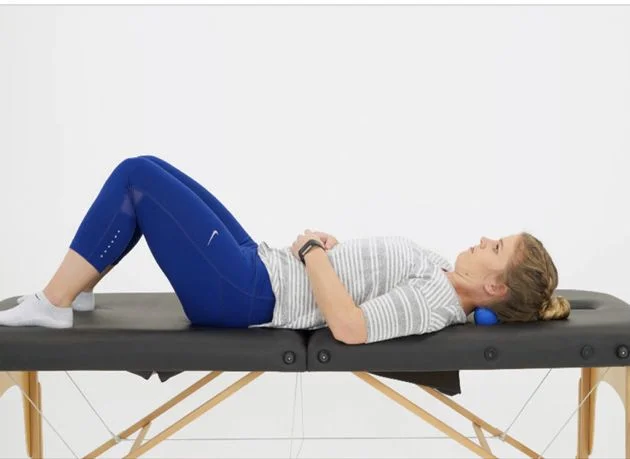
Often used when sitting exercises are painful.
How to perform
- Lie on your back without a pillow.
- Gently push your head into the surface.
- Hold for a few seconds.
Repetitions
10 repetitions.
Benefit
- Activates deep cervical muscles
- Reduces neck strain.
7. Cervical Retraction with Therapist Overpressure

Usually performed under physiotherapist supervision.
Steps
- Perform chin tuck.
- Therapist applies gentle pressure to increase retraction.
Benefit
- Improves mobility in stiff cervical joints.
9. Cervical Extension with Overpressure

Advanced progression.
Steps
- Perform extension.
- Apply light pressure using hands or therapist assistance.
Benefit
Restores extension mobility in chronic stiffness.
Read about: How to Relieve Morning Neck Stiffness Naturally
What Does Scientific Research Say About the McKenzie Method?
Recent research supports the use of the McKenzie method in the management of mechanical neck pain.
A systematic review and meta-analysis published in 2023 reported that the McKenzie method produced statistically significant improvement in neck pain, particularly in individuals with moderate to severe symptoms. (Baumann et al., 2023)
Another clinical study comparing McKenzie exercises with other physiotherapy techniques found improvements in pain intensity and functional disability among patients with mechanical neck pain. (Abbass et al., 2024)
More recent research suggests that combining McKenzie therapy with stabilization exercises may produce even better outcomes in reducing pain and improving cervical mobility. (Amin et al., 2024)
Emerging research is also exploring the effect of McKenzie therapy on cervical proprioception and postural control in individuals with chronic neck pain. (Baraskar et al., 2025)
These findings suggest that the McKenzie method can be a valuable component of modern physiotherapy programs.
Also read: Why Neck Pain in Swimmers Develop and How to Prevent It
Lesser Known Facts About the McKenzie Method
It Is Not Just a Set of Exercises
Many people believe that the McKenzie method consists only of extension exercises.
In reality, it is a comprehensive diagnostic and treatment system used by trained physiotherapists.
It Helps Identify the Cause of Pain
The McKenzie assessment helps determine whether pain originates from:
- intervertebral discs
- joints
- muscles
- postural stress
This allows physiotherapists to select more targeted treatment strategies.
It Encourages Patient Independence
Unlike passive treatments that require continuous therapist involvement, the McKenzie method emphasizes patient independence and self-management.
It May Reduce Recurrence of Neck Pain
Patients who learn corrective postural movements and self-treatment techniques are often better able to manage future episodes of spinal pain.
Read in detail: Best Desk Setup to Reduce Neck and Back Pain
Who Can Benefit From the McKenzie Method?

The McKenzie method may help individuals with:
- mechanical neck pain
- postural neck pain
- cervical disc problems
- cervical radiculopathy
- work related neck strain
- smartphone related neck pain
However, it may not be appropriate for serious spinal conditions such as fractures or severe neurological disorders.
Consultation with a physiotherapist is recommended before beginning any exercise program.
Read About: Best Sleeping Position for Neck Pain: A Physiotherapist’s Complete Guide
When the McKenzie Method May Not Be Suitable
Although the McKenzie Method is widely used in physiotherapy, it may not be appropriate for every type of neck pain.
Certain medical conditions require medical evaluation before exercise therapy is started.
The method may not be suitable in situations such as:
- Recent cervical spine fractures or major trauma
- Severe spinal instability
- Spinal infections or tumors
- Advanced neurological disorders affecting the spine
- Progressive nerve compression causing severe arm weakness
If neck pain is accompanied by symptoms such as persistent arm numbness, severe headaches, loss of balance, or worsening weakness, medical assessment should be performed before starting any exercise program.
A physiotherapist can perform a detailed mechanical evaluation to determine whether the McKenzie Method is appropriate for a specific condition.
Also Read: Why Neck Pain in Surgeons Is So Common And How To Tackle It
Lifestyle Habits That Improve Neck Pain Recovery
Exercises alone may not completely resolve neck pain if daily habits continue to stress the cervical spine.
Improve Workplace Ergonomics
Adjust your workstation so that the computer screen is at eye level. Maintain neutral neck posture and proper back support.
Limit Smartphone Use
Frequent downward head posture during smartphone use significantly increases stress on cervical structures.
Strengthen Upper Back Muscles
Weak upper back muscles contribute to poor posture.
Exercises such as scapular retractions and resistance band rows can improve postural stability.
Maintain Healthy Sleep Posture
Use a pillow that supports the natural curve of your neck. Extremely high pillows may increase cervical strain.
Read about: Simple Posture Correction Exercises for Forward Head Posture
When Should You See a Physiotherapist?
Professional assessment is recommended if neck pain is associated with:
- numbness or tingling in the arms
- severe headaches
- persistent stiffness
- arm weakness
- pain lasting more than two weeks
Early physiotherapy intervention can prevent chronic neck problems.
Read in detail: Whiplash Injury After An Accident? Here’s Treatment And Expert Rehab Guide
Final Thoughts From a Physiotherapist
The McKenzie method remains one of the most practical and empowering physiotherapy approaches for managing neck pain.
Its focus on mechanical assessment, targeted movement therapy, and patient self-management makes it particularly effective for individuals with mechanical cervical spine disorders.
When performed correctly and combined with good posture habits, McKenzie exercises can help:
- reduce neck pain
- improve spinal mobility
- correct posture
- prevent recurrence of symptoms
If you experience persistent neck discomfort, consulting a physiotherapist trained in Mechanical Diagnosis and Therapy can help guide you toward safe and effective recovery.
Read about: Top 5 Posture Mistakes Causing Back Pain and How to Fix Them
Frequently Asked Questions
1. What is the McKenzie Method for neck pain?
The McKenzie Method is a physiotherapy approach that uses repeated movements and posture correction to diagnose and treat spinal pain including neck pain.
2. Are McKenzie exercises effective for neck pain?
Research studies suggest that McKenzie exercises can reduce pain and improve neck function in individuals with mechanical neck disorders.
3. Can McKenzie exercises be done at home?
Yes. Many McKenzie exercises are designed for self treatment at home once a physiotherapist teaches the correct technique.
4. How long does it take for McKenzie therapy to relieve neck pain?
Some patients experience improvement within a few days while others may require several weeks depending on the severity of the condition.
5. Who developed the McKenzie Method?
The McKenzie Method was developed by New Zealand physiotherapist Robin McKenzie.
Stay tuned with us for more health related topics.
Follow us on LinkedIn and Instagram for more.
More Read


Medical Disclaimer!
This article has been reviewed and written under the guidance of our Head Physiotherapist, Dr. Kruti Raj (PT, MUHS,CPT,CMPT). The information shared is intended for educational purposes only and should not be considered a substitute for personalized medical advice, diagnosis, or treatment.
Please consult us or any other qualified healthcare professional before beginning any exercise program, especially if you are experiencing pain, recovering from injury, or managing a medical condition.


