


Why did I lose weight but still look the same?
Because weight loss is not only about the number on the scale, body composition and shape matter too.
You step on the scale and see that you have lost five kilograms.
You feel excited and expect to notice a dramatic difference in the mirror.
But when you look at yourself, nothing seems to have changed.
Your clothes fit almost the same.
Your stomach still looks bigger than you expected.
Your face looks familiar.
You may even wonder if the scale is wrong.
This experience is surprisingly common and can be frustrating.
Many people work hard to lose weight and expect visible results immediately.
When those changes are difficult to see, they may lose motivation or believe they are doing something wrong.
Quick Answer
Yes, it is completely possible to lose weight and still feel like you look the same.
Body composition, water retention, fat distribution, and gradual visual changes can all influence what you see in the mirror.
The scale is only one measure of progress. Your clothes, body measurements, strength, and overall health may reveal improvements before the mirror does.
The good news is that losing weight but looking the same does not necessarily mean your progress is not real.
Several factors can influence how your body changes, including:
body composition, fat distribution, water retention, and even how your brain perceives your own appearance.
In many cases, the mirror simply does not tell the whole story.
Key Takeaways
- Weight loss and fat loss are not always identical.
- Body composition has a major influence on appearance.
- The mirror may not immediately reflect gradual changes.
- Water retention can temporarily hide progress.
- Fat does not leave the body evenly.
- The Paper Towel Effect helps explain why early changes may seem small.
- Strength training may support healthy body composition.
- Progress photos, body measurements, and clothing fit can be useful tracking tools.
Why the Mirror Can Be Misleading
Most people judge their progress by one simple test:
They stand in front of a mirror and ask,
“Do I look thinner?”
The problem is that we see ourselves every day.
Because changes happen gradually, they can be difficult to notice.
Think about a child growing taller.
Parents who see their child every day may not notice the growth, while relatives who visit only once a year are often surprised.
Weight loss can work the same way.
Small changes accumulate over time, but because you see yourself daily, your brain adjusts to those changes.
This is one reason why friends or family members may notice your weight loss before you do.
Weight Loss vs Fat Loss
One of the biggest misunderstandings in fitness is believing that weight loss and fat loss are exactly the same thing.
They are related, but they are not identical.
Your body weight includes:
- Body fat
- Muscle
- Water
- Bones
- Organs
- Food and fluid inside the digestive system
When the scale goes down, the change may involve several of these components.
Body composition, the proportion of fat and lean tissue in the body, often has a major influence on physical appearance (ScienceDirect)
Because appearance depends on body composition rather than body weight alone, two people with the same weight may look very different.
This is one reason the scale does not always tell the whole story.
The Paper Towel Effect
One of the most popular ways to explain this phenomenon is something often called the Paper Towel Effect.
Imagine a brand-new roll of paper towels.
If you remove five sheets, the roll looks almost the same.
Now imagine the roll is nearly empty.
Removing five sheets creates a much bigger visual difference.
Weight loss can behave similarly.
During the early stages, losing a few kilograms may not dramatically change your appearance because fat is distributed across the entire body.
As body fat decreases further, each additional kilogram may become more noticeable.
This concept is not a scientific law, but many people find it useful for understanding why visible progress can seem slow at first.
Body Recomposition
The answer to why you lose weight but still look the same often lies in body composition, strength, and consistency.
Another important concept is body recomposition.
Body recomposition refers to changes in body fat and lean mass that may occur over time.
For example, a person who combines healthy eating with resistance exercise may lose some body fat while maintaining or building muscle.
Because muscle and fat have different physical characteristics, these changes may affect body shape differently than expected.
This does not mean the common saying,
“Muscle weighs more than fat,”
is correct.
A kilogram of muscle and a kilogram of fat weigh exactly the same.
However, muscle tissue occupies less space than the same weight of fat tissue.
As a result, improvements in body composition may eventually create a leaner appearance even if the scale changes slowly.
Why Your Clothes May Tell a Different Story
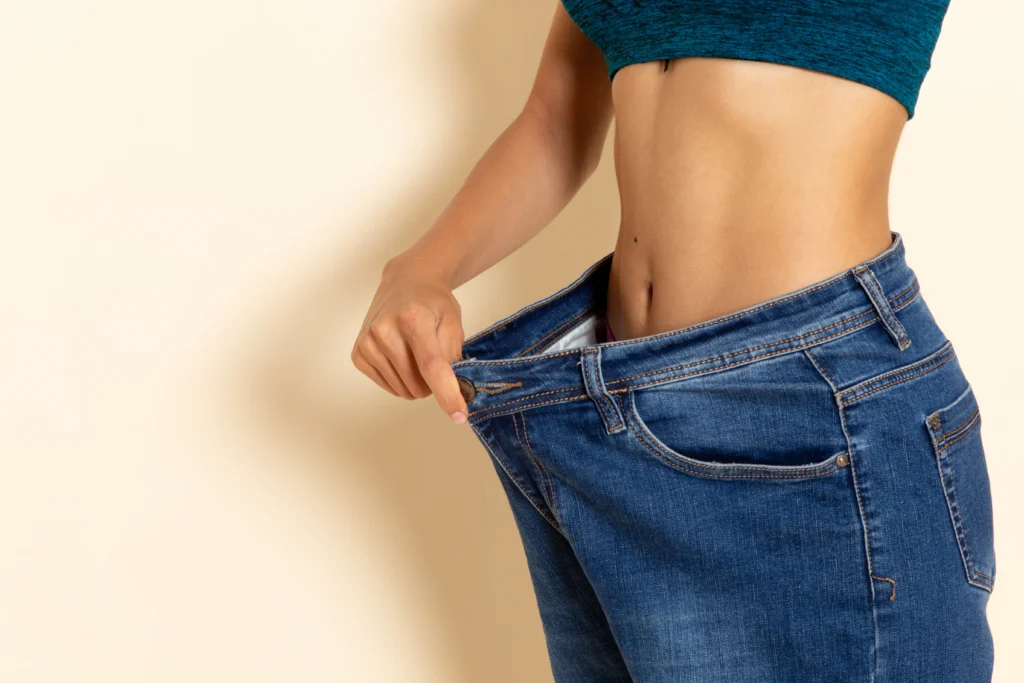
Many people focus entirely on mirrors and scales.
Clothing can sometimes provide another useful perspective.
A belt may fit differently.
A shirt may feel looser around the waist.
Jeans may become easier to button.
These small observations can indicate changes that are difficult to see visually.
Sometimes progress appears in everyday life before it becomes obvious in photographs.
Water Retention Can Hide Progress
The human body constantly regulates fluid balance.
Water retention can change from day to day for many reasons, including:
- High sodium intake
- Hormonal changes
- Intense exercise
- Stress
- Sleep patterns
- Carbohydrate intake
Temporary water retention may influence how the body looks.
Someone who has genuinely lost body fat may still feel bloated or notice little visual difference because of short-term fluid changes.
This is one reason experts often encourage people to evaluate progress over weeks and months rather than from one day to the next.
Fat Does Not Leave the Body Evenly
Many people expect fat to disappear from the exact areas they dislike the most.
Unfortunately, the body does not usually work that way.
Some people notice changes in their face first.
Others lose fat from their arms or legs before seeing changes around the stomach.
Some individuals find that their waist changes long before their hips.
Fat distribution is influenced by many factors, including genetics, age, hormones, and biological differences.
This variation helps explain why two people following the same program may experience different visual results.
It also explains why trying to reduce fat from one specific body part through targeted exercises is not generally supported by scientific evidence.
Why Belly Fat Often Feels Like the Last to Change

One of the most common complaints during weight loss is:
“I have lost weight everywhere except my stomach.”
Many people feel that abdominal fat is particularly stubborn.
While every individual is different, fat loss patterns are not always symmetrical or predictable.
Some body areas may appear to change more slowly than others.
This can make people believe they are making no progress, even when overall body fat is decreasing.
Patience often becomes an important part of long-term weight management.
Why Other People May Notice Before You Do
It can be surprising when a coworker or friend says,
“You look slimmer,”
while you still feel exactly the same.
This happens because other people do not see you every day.
They compare your current appearance with the version they remember from weeks or months earlier.
You, on the other hand, see gradual changes every morning.
Your brain adapts to those small differences.
As a result, your own perception may lag behind reality.
This is one reason progress photographs taken several weeks apart can sometimes reveal changes that are difficult to notice in a bathroom mirror.
Better Ways to Measure Progress
If the mirror is not always reliable, how should you measure success?
Many health professionals recommend looking at several indicators instead of relying on a single number.
Body Measurements
A tape measure can sometimes reveal changes that the scale and mirror miss.
Common areas include:
- Waist
- Hips
- Chest
- Thighs
- Arms
Measuring these areas every few weeks may provide a clearer picture of long-term progress.
Progress Photos
Photographs taken under similar lighting and clothing conditions can be useful.
Many people are surprised to discover visible improvements when comparing pictures taken several months apart.
How Clothes Fit
Looser clothing may indicate positive changes in body composition.
Strength and Fitness
Perhaps you can:
- Walk farther
- Climb stairs more easily
- Lift heavier weights
- Exercise longer without fatigue
These improvements are meaningful signs of progress even if the mirror changes slowly.
Energy and Well-Being
Better sleep, improved mood, and increased energy are also valuable outcomes of a healthier lifestyle.
Weight management is about more than appearance alone.
Why Rapid Expectations Can Create Frustration
Modern social media often shows dramatic transformation photos.
What people do not always see is the time involved.
Many successful weight-loss journeys take months or even years.
Progress is rarely perfectly linear.
There may be weeks where the scale barely moves.
There may be times when your appearance seems unchanged.
This does not automatically mean your efforts are failing.
Long-term habits often produce gradual rather than instant results.
Common Mistakes People Make
Focusing Only on the Scale
Body weight is only one measurement.
Comparing Yourself to Others
Everyone loses fat differently.
Expecting Spot Reduction
The body decides where fat is lost.
Ignoring Strength Training
Resistance exercise may help support healthy body composition. (Lopez et al. 2022)
Taking Progress Personally
Not seeing immediate visual changes does not mean you lack discipline or willpower.
Human biology is complex. (Anislie et al. 2022)
Common Myths About Looking the Same After Weight Loss
Myth: If I Look the Same, I Have Not Made Progress
Reality:
Progress may occur before it becomes visually obvious.
Myth: The Scale Tells the Whole Story
Reality:
Body composition also influences appearance.
Myth: Muscle Weighs More Than Fat
Reality:
A kilogram of muscle and a kilogram of fat weigh exactly the same.
The difference is that they occupy different amounts of space.
Myth: Fat Comes Off Evenly
Reality:
Fat distribution varies from person to person.
Myth: I Can Target Belly Fat With Specific Exercises
Reality:
Scientific evidence does not generally support spot reduction.
Healthy Habits That Support Visible Progress
Although there is no guaranteed formula for changing appearance quickly, several habits may support healthy body composition over time.
Eat a Balanced Diet
Focus on sustainable nutrition rather than extreme restrictions.
Stay Physically Active
Regular movement supports overall health.
Include Strength Training
Maintaining or improving muscle mass may influence body shape.
Be Patient
Visual changes often take longer than people expect.
Track Multiple Forms of Progress
Do not rely only on the scale.
Expert Tip
Do not rely on a single measure of success. The scale, mirror, body measurements, clothing fit, and physical performance can all provide valuable information.
What Health Organizations Recommend
The World Health Organization encourages adults to participate in regular physical activity and maintain healthy lifestyle habits for long-term well-being. (World Health Organization 2020)
The emphasis is not only on body weight but also on overall health and physical function.
Looking Beyond the Mirror
The mirror reflects only one moment.
It does not measure:
- Better cardiovascular fitness
- Improved strength
- Increased stamina
- Better sleep
- Healthier habits
- Greater confidence
Many positive changes happen before they become visually dramatic.
Remember that health improvements and visible changes do not always occur at the same speed.
Final Thoughts
Visible transformation often takes longer than people expect. Trust the process, focus on healthy habits, and remember that progress is not always immediately obvious in the mirror.
The Bottom Line
You lose weight but still look the same can be a normal part of the process.
Several factors may help explain this experience, including:
- Body composition
- Water retention
- Fat distribution
- Gradual physical changes
- The way we perceive our own appearance
The mirror does not always tell the complete story.
The scale does not always tell the complete story either.
Looking at multiple indicators of progress, including body measurements, clothing fit, strength, energy levels, and long-term habits, may provide a more balanced perspective.
Most importantly, not seeing immediate visual changes does not automatically mean your hard work is wasted.
Healthy habits often create gradual improvements that become easier to recognize over time.
The person you see in the mirror today may not look dramatically different from yesterday.
But if you continue building sustainable habits, the cumulative changes over weeks and months may become much more noticeable than you expect.
Frequently Asked Questions
Changes in body composition, water balance, and fat distribution may make visual changes slower than expected.
Yes. Because you see yourself every day, gradual changes can be difficult to notice.
Body recomposition refers to changes in body fat and lean tissue that may influence body shape.
Using several methods together may provide a more complete picture of progress.
Yes. Temporary fluid changes may influence appearance.
No. Fat loss patterns vary from person to person.
Strength training may help support healthy body composition and physical function.
Use multiple tools such as body measurements, progress photos, clothing fit, strength, and the scale.
Stay tuned with us for more health related topics.
Follow us on LinkedIn and Instagram for more.
More Read


Medical Disclaimer!
This article has been reviewed and written under the guidance of our Head Physiotherapist, Dr. Kruti Raj (PT, MUHS,CPT,CMPT). The information shared is intended for educational purposes only and should not be considered a substitute for personalized medical advice, diagnosis, or treatment.
Please consult us or any other qualified healthcare professional before beginning any exercise program, especially if you are experiencing pain, recovering from injury, or managing a medical condition.


