


Back pain affects millions of people around the world. It can be sudden, dull, sharp, or persistent and it often stems from muscle tightness, poor posture or repetitive strain. One of the most effective ways to reduce discomfort, improve flexibility, and protect your spine is through daily stretches for back pain routine designed specifically for back pain relief.
Modern clinical evidence consistently supports gentle, consistent stretching and mobility work as a cornerstone of non-surgical back pain management, often outperforming passive or isolated treatments by itself.
Long-term research shows that exercise including stretching, is one of the few interventions that reliably improves pain and function in chronic low back pain.
This guide outlines the 10 best daily stretches for back pain you can do at home, why they work, how to perform them safely, and how each contributes to lasting spinal health.
Why Daily Stretches for Back Pain Matters for Pain Relief
Stretching helps in several key ways:
- Reduces muscle tension: Tight muscles like hip flexors, hamstrings, and glutes can pull on the lower back and increase pain.
- Improves mobility: Increasing range of motion helps reduce stress on spinal tissues.
- Enhances blood flow: Stretching promotes circulation, which supports tissue healing and decreases stiffness.
- Supports postural balance: Balanced flexibility helps align the spine and reduces strain in daily activities.
Unlike static one-time stretching, daily stretching trains your muscles and nervous system for better movement, which is fundamental for long-term recovery.
Also read: Also read: Spinal Twists for Lower Back Pain Relief- A Complete Guide
How to Use This Guide
Perform these stretches gently once or twice daily, preferably in the morning and evening.
Hold each stretch for 20–30 seconds unless otherwise noted, and avoid any stretch that increases sharp or radiating pain.
1. Child’s Pose

According to Healthline, this pose is a foundational relaxation stretch that gently mobilizes the entire spine.
How to do it:
- Start on your hands and knees.
- Sit back on your heels, reaching your arms forward.
- Rest your forehead toward the floor.
- Breathe deeply for 20–30 seconds.
This pose decreases tension across your lower back, hips, and shoulders while calming the nervous system.
2. Knee-to-Chest Stretch
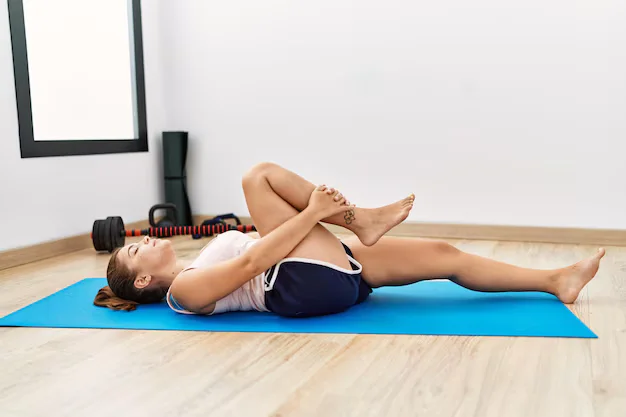
As per Harvard Health, Knee-to-chest stretch targets the muscles of the lower back and gently lengthens them; helpful for stiffness.
How to do it:
- Lie on your back with knees bent.
- Pull one knee toward your chest.
- Hold, then switch legs.
- You can also hug both knees at once for a deeper stretch.
This stretch helps ease tightness that contributes to lower back discomfort.
3. Pelvic Tilts
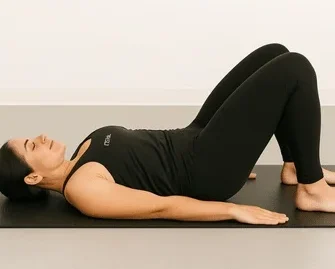
Harvard Health suggests this imple yet foundational for reducing back stiffness and teaching spinal control.
How to do it:
- Lie on your back with knees bent.
- Flatten your lower back gently into the floor.
- Hold for a few seconds, then release.
- Repeat slowly.
This movement teaches deep core activation and reduces strain on spinal tissues.
4. Supine Spinal Twist
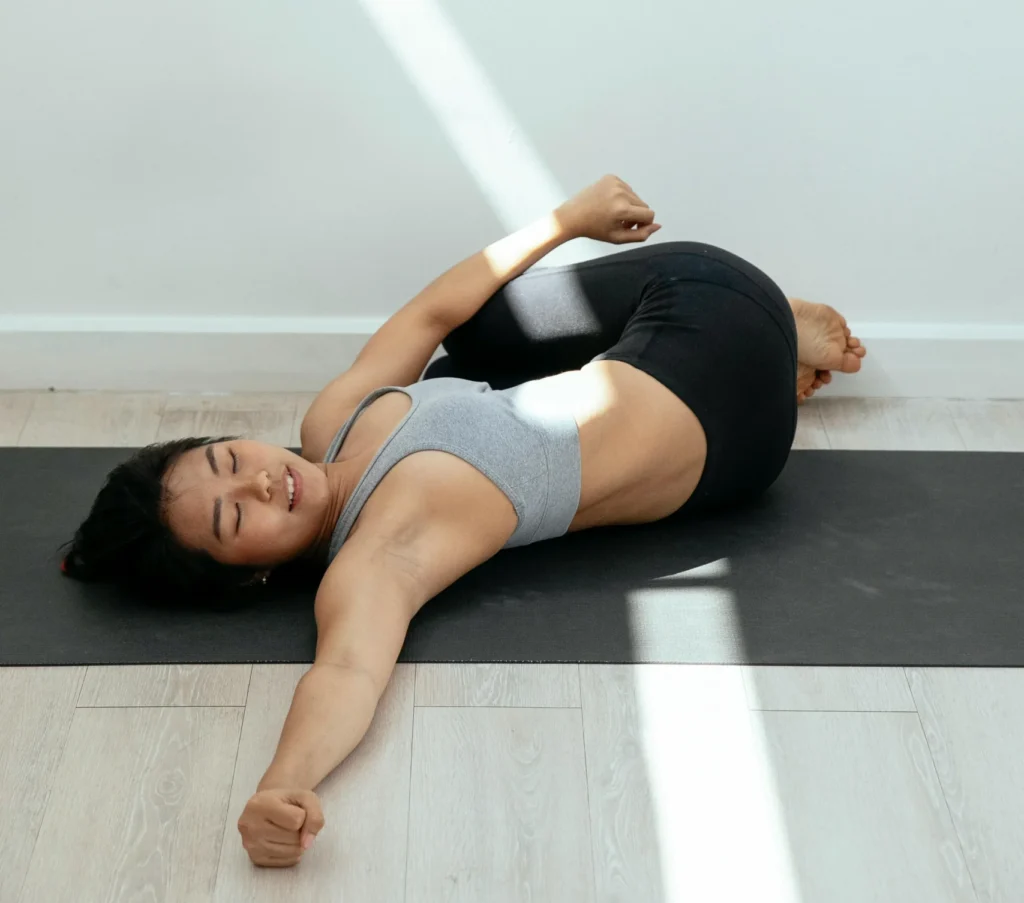
As per Prevention, this Spinal twists helps increase rotation mobility in the lower back and hips, areas often restricted in back pain.
How to do it:
- Lie on your back with knees bent and feet flat.
- Lower knees to one side while keeping shoulders grounded.
- Hold, then switch sides.
This stretch increases flexibility without aggressive loading.
5. Hip Flexor Stretch

NutriGardens says, Tight hip flexors increase lumbar stress, releasing them can relieve back tension.
How to do it:
- Kneel with one foot forward.
- Shift your weight forward until you feel the stretch in the front of your hip.
- Hold and repeat on the other side.
Keeping hip flexors flexible improves pelvic alignment and decreases lower back strain.
6. Glute Stretch
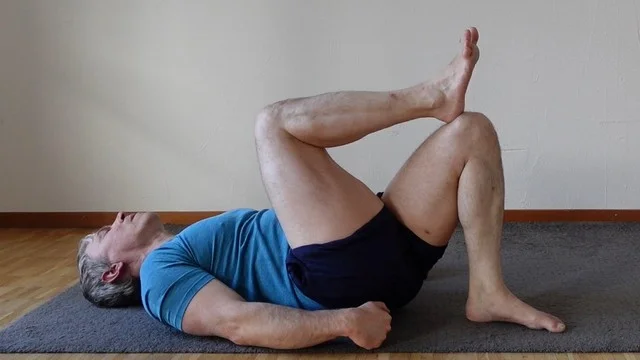
According to revisionhealthservices.com, your glutes help support your pelvis and lower back. Tightness here can lead to pain.
How to do it:
- Lie on your back.
- Cross one ankle over the opposite knee.
- Pull the uncrossed knee toward you.
This stretch releases deep hip muscles that can affect spinal alignment.
7. Hamstring Stretch

Cleveland Clinic suggests that the hamstrings that are short or tight can pull on the pelvis and increase lumbar stress.
How to do it:
- Sit with one leg extended.
- Hinge at hips and reach toward your toes.
- Keep your back long and avoid rounding.
Consistent hamstring stretching reduces compensatory lumbar curvature and enhances mobility.
8. Supported Cat-Cow Stretch

Cleveland Clinic advices this gentle, spine-mobilizing movement ideal for daily practice.
How to do it:
- Place hands on a countertop or table.
- Round your back toward the ceiling (cat).
- Arch your spine downward (cow).
- Flow slowly for 8–10 reps.
This variation reduces load while still improving cervical and lumbar mobility.
9. Bridge Stretch

Though technically more of a strengthening movement, it also gently stretches the hip flexors while mobilizing the spine, as per Harvard Health
How to do it:
- Lie on your back with knees bent.
- Lift hips until your body forms a straight line.
- Pause briefly then lower.
Stronger glutes support the pelvis and reduce lower back strain.
10. Child’s Pose with Side Stretch

A variation that increases lateral flexibility of the spine.
How to do it:
- Start in Child’s Pose.
- Walk hands to one side to feel a stretch along the opposite flank.
- Hold and switch sides.
This variation enhances flexibility along the side muscles that contribute to spinal stability.
Also read: Bridge Exercise for Back Pain and Strengthening: A Complete Evidence-Based Guide
Lesser-Known Stretching Techniques with Research Support

PNF and Active Isolated Stretching
Beyond simple static stretches, techniques like Proprioceptive Neuromuscular Facilitation (PNF) and Active Isolated Stretching (AIS) enhance overall flexibility more quickly by incorporating controlled contract-relax cycles. These methods can reduce stiffness and improve coordination around the spine. (Health Benefits Times)
Yoga Integration
Therapeutic yoga, which combines stretching, mindful breathing, and strength poses, has evidence demonstrating significant relief in chronic back pain by reducing muscular tension and neural sensitization. (PubMed)
Also read: How to Do a Pelvic Tilt Exercise for Lower Back Pain Relief
How to Structure Your Daily Routine
Perform:
- 5 mobility stretches in morning
- 5 activation exercises in evening
- Total time: 15–20 minutes daily
Consistency matters more than intensity.
Common Mistakes to Avoid
- Holding breath during stretches
- Forcing into pain
- Skipping strengthening work
- Resting completely
- Expecting overnight relief
How Daily stretches for back pain Helps at the Cellular Level
Consistent stretching increases blood flow and nutrient delivery to muscle tissue, which supports repair and reduces inflammatory signaling that contributes to chronic pain.
Passive stretching also influences the nervous system, decreasing pain sensitivity by promoting a sense of safety in movement. (Health Benefits Times)
When to Stretch and Safety Tips
- Stretch twice a day for best results, once in the morning and once in the evening.
- Always warm up briefly with light walking or gentle movement.
- Breathe slowly and deeply to facilitate muscle relaxation.
- Avoid overstretching or pushing into sharp pain, mild discomfort is normal, but never sharp worsening.
- Consistency matters more than intensity.
Newer Technologies That Can Boost Daily Stretching Adherence
Even though traditional stretching is highly effective, clinicians increasingly use digital feedback tools, camera-based motion analysis, and gamified rehabilitation systems that guide users through exercises in real time.
Early trials show improved user engagement and adherence, even though usability continues to evolve. (arXiv)
A mobile VR pose guidance system helped participants stay motivated on their home programs by tracking motion and providing real-time feedback, an innovation that could supplement traditional stretching regimens in the future. (arXiv)
Also Read: Top 5 Posture Mistakes Causing Back Pain and How to Fix Them
Common Misconceptions About Stretching and Back Pain
Myth: Stretching Alone “Cures” Back Pain
Truth: Stretching is a supportive tool, best used in combination with strengthening and postural awareness exercises, as part of an integrated mobility plan.
Myth: Deep Stretching Causes Healing
Truth: Gentle stretches that emphasize neural relaxation and blood flow are more effective and safer than forcing deep range of motion.
Also Read: Ultimate Guide to Home Physiotherapy for Back Pain
When to Seek Professional Help
Stretching is safe for most people, but consult a clinician if:
- You have pain that worsens or radiates down your leg
- You experience numbness, tingling, or weakness
- Pain persists beyond several weeks despite consistent practice
- You have a history of trauma or systemic health conditions
Physical therapists can tailor stretches to your anatomy and ensure you’re loading tissues safely.
What I See in My Clinic
Most patients improve not because of one magic stretch, but because they stay consistent. The spine thrives on gradual exposure to movement.
When people understand their pain and regain confidence, outcomes improve significantly.
What I Would Advise You to Do This Week
- Stretch daily for 15 minutes
- Walk 20–30 minutes
- Sleep 7–8 hours
- Increase protein intake for tissue repair
- Stay hydrated
- Avoid prolonged sitting
Small habits compound.
My Final Advice to You
Your spine is strong and adaptable. It responds to what you practice.
Stretch gently. Strengthen progressively. Move consistently.
Back pain recovery is rarely dramatic; it’s disciplined.
Also Read : Best Knee Strengthening Exercises for Beginners to Reduce Knee Pain
Conclusion: Make Stretching Habitual
Back pain doesn’t need to control your life. A consistent daily stretching routine, focusing on spinal mobility, hip flexibility, and core-support muscle length, can significantly reduce pain, enhance function, and improve quality of life.
Daily stretches for back pain are not just a series of movements, it trains your body and nervous system to move safely and confidently.
When done gently and regularly, these stretches empower you with control over your pain rather than feeling controlled by it.
Frequently Asked Questions About Back Pain and Stretching
1. How often should I stretch for back pain relief?
In most cases, daily stretching is safe and beneficial. Performing stretching exercises for 10–20 minutes once or twice a day can help reduce muscle tightness, improve flexibility, and support spinal health. Consistency is more important than intensity.
2. Can stretching make my back pain worse?
Gentle stretching should not significantly worsen pain. Mild discomfort during stretching is normal, but sharp, radiating, or worsening pain indicates that the movement should be stopped and reassessed.
3. How long does it take for stretches to reduce back pain?
Some individuals experience immediate relief due to muscle relaxation. However, long-term improvement in flexibility and pain reduction usually requires 2–4 weeks of consistent stretching.
4. Should I stretch if I have a slipped disc?
Stretching may help in certain cases, but it depends on the symptoms and severity of the disc condition. Some movements may relieve pressure on the spine, while others may aggravate pain. Individual assessment is recommended.
5. Is walking better than stretching for back pain?
Both walking and stretching are beneficial. Walking improves circulation and reduces stiffness, while stretching restores flexibility and mobility. Combining both activities often produces the best results.
6. Should I stretch before bed or in the morning?
Morning stretching helps reduce stiffness after sleep, while evening stretching relaxes muscles tightened during daily activities. Performing light stretches at both times can be beneficial.
7. Can tight hamstrings cause lower back pain?
Yes. Tight hamstrings increase stress on the lumbar spine during bending and lifting activities. This additional strain can contribute to lower back discomfort and reduced mobility.
8. Is yoga enough to treat back pain?
Yoga can improve flexibility, posture, and core strength. However, yoga routines should be adapted based on the individual’s condition because not all poses are suitable for every type of back pain.
9. Can strengthening exercises be more important than stretching?
Stretching reduces muscle tightness, while strengthening exercises improve spinal stability and support the back muscles. Long-term back pain prevention often requires both stretching and strengthening.
10. Is bed rest helpful for back pain?
Prolonged bed rest is generally not recommended for back pain. Gentle movement, light activity, and controlled exercises usually promote faster recovery.
11. Why does my back feel stiff even if imaging is normal?
Back stiffness can occur due to muscle guarding, reduced mobility, inflammation, or nervous system sensitivity. Pain is not always caused by structural abnormalities visible on imaging tests.
12. Can stress increase back pain?
Yes. Stress increases muscle tension and may heighten pain sensitivity, which can worsen existing back discomfort.
13. Are back braces better than stretching?
Back braces may provide temporary support, but long-term dependence can weaken muscles. Active rehabilitation, including stretching and strengthening exercises, is usually more beneficial.
14. How hard should I push during a stretch?
You should feel a gentle pulling sensation during stretching, not sharp pain. Stretches should be controlled, slow, and comfortable rather than forced.
Stay tuned with us for more health related topics.
Follow us on LinkedIn and Instagram for more.


