


Shoulder pain after COVID can continue even after recovery, especially when inflammation and muscle weakness persist.
COVID may leave the body long before the body feels normal again.
One complaint physiotherapists started hearing repeatedly after the pandemic was surprisingly specific:
“My shoulder has not felt right since COVID.”
Sometimes it starts as stiffness while reaching overhead.
Sometimes it feels like a deep ache near the shoulder blade.
Some people notice weakness while lifting a bag.
Others wake up at night because turning onto one side suddenly hurts.
What makes this frustrating is that many people never had shoulder issues before getting COVID.
And no, it is not always “just body pain.”
Quick Answer
Shoulder pain after COVID is more common than many people realize. It may happen due to inflammation, frozen shoulder, poor posture during recovery, muscle weakness, breathing dysfunction, or reduced physical activity after infection. Many people notice stiffness, night pain, shoulder blade tightness, or difficulty lifting the arm weeks after recovering from COVID.
In clinics, physiotherapists started seeing a pattern after the pandemic:
- frozen shoulders appearing earlier than expected
- persistent upper back and shoulder tightness
- rotator cuff irritation after prolonged recovery
- pain linked to breathing dysfunction
- postural collapse after weeks of inactivity
- shoulder weakness in people who spent too long resting
The conversation around long COVID often focuses on lungs, fatigue, or brain fog.
But musculoskeletal symptoms became one of the most common lingering issues after infection.
A 2022 review published in the PubMed Central reported that musculoskeletal pain is among the most persistent symptoms in long COVID patients.
From a physiotherapy perspective, shoulder pain after COVID is rarely caused by a single thing.
It is usually a mix of inflammation, altered movement patterns, muscle deconditioning, posture changes, and reduced physical activity during recovery.
The good news is that most people improve significantly with the right rehabilitation approach.
Not aggressive exercise. Not complete rest.
But smart recovery.
Key Takeaways
- Shoulder pain after COVID may result from inflammation, inactivity, posture changes, or breathing dysfunction.
- Frozen shoulder and rotator cuff irritation became more common after the pandemic.
- Many people develop symptoms weeks after recovering from COVID, not during the infection itself.
- Breathing problems can overload neck and shoulder muscles, causing persistent tightness.
- Complete rest may worsen stiffness and shoulder weakness over time.
- Physiotherapy focuses on restoring movement, posture, muscle balance, and breathing mechanics.
- Early rehabilitation may reduce the risk of long-term shoulder stiffness and chronic pain.
- Most people improve with gradual movement, mobility exercises, and consistent recovery strategies.
Why Shoulder Pain Happens After COVID
The shoulder is one of the most mobile joints in the body.
That mobility comes with a trade-off.
It depends heavily on:
- muscle coordination
- posture
- breathing mechanics
- joint stability
- nerve function
When even one of these systems gets disrupted, the shoulder starts compensating.
COVID disrupted all of them.
What Physiotherapists Started Noticing After the Pandemic
One interesting thing many physiotherapists observed was this:
People recovering from COVID were moving differently without realizing it.
Some became less active for weeks.
Some avoided arm movement because of fatigue.
Some stayed in bed longer than usual.
Some worked from couches or beds during isolation.
Some developed shallow breathing patterns after respiratory symptoms.
Over time, these habits quietly overloaded the neck and shoulder muscles.
Instead of one major injury, it became a gradual buildup of stiffness and irritation.
That is why many people cannot point to a single moment when the pain started.
The Most Common Types of Shoulder Pain Seen After COVID
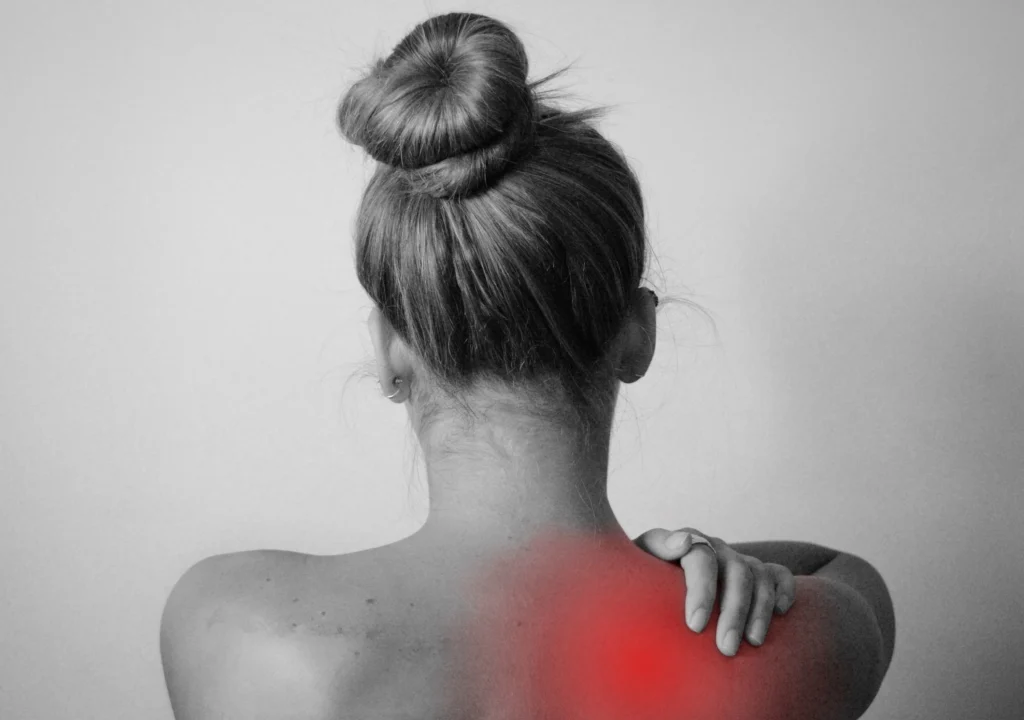
1. Frozen Shoulder
This became surprisingly common after the pandemic.
Frozen shoulder, also called adhesive capsulitis, causes:
- severe stiffness
- pain during arm movement
- difficulty reaching behind the back
- restricted overhead movement
- night pain
People often describe it like this:
“It feels like my shoulder is stuck.”
Reduced movement during illness may contribute significantly to this condition.
Researchers also believe prolonged inflammation may play a role.
Physiotherapists noticed that some patients developed frozen shoulder even after relatively mild COVID infections.
People with diabetes appeared particularly vulnerable.
2. Rotator Cuff Irritation
The rotator cuff is a group of muscles that stabilizes the shoulder joint.
After weeks of inactivity, these muscles weaken faster than most people expect.
That weakness changes how the shoulder moves, leading to rotator cuff irritation.
Then simple activities start hurting:
- lifting utensils
- reaching into cupboards
- wearing shirts
- lifting a laptop bag
Many patients think they “slept wrong” when actually the shoulder has been gradually overloaded for weeks.
3. Pain Around the Shoulder Blade
This became extremely common among people working from home during recovery.
Physiotherapists often saw:
- rounded shoulders
- forward head posture
- tight upper trapezius muscles
- weak mid-back muscles
The result was a heavy, burning ache near the shoulder blade.
Not sharp pain.
More like constant tension that refuses to disappear.
4. Breathing-Related Shoulder Pain
This is one of the lesser-known reasons.
After COVID, many people unconsciously shift to shallow chest breathing.
When that happens, neck and shoulder muscles begin assisting breathing more than they should.
These muscles include:
- upper trapezius
- scalenes
- sternocleidomastoid
Over time they become overworked.
That is why some people say:
“My shoulders feel tired even when I do nothing.”
Breathing dysfunction after COVID has been increasingly discussed in rehabilitation research.
5. Post-Viral Muscle and Joint Pain
Some people experience widespread aching after viral infections.
COVID appears to trigger prolonged inflammatory responses in certain individuals.
Instead of feeling pain only during illness, symptoms continue for months.
This may include:
- shoulder pain
- joint aches
- muscle heaviness
- neck stiffness
- exercise intolerance
The symptoms are real and increasingly recognized in long COVID rehabilitation clinics worldwide.
A Strange Thing Many Patients Notice
One pattern physiotherapists hear frequently is:
“The pain got worse after I recovered.”
This confuses many people.
But it actually makes sense.
During active infection, the body is focused on survival and rest.
Once people return to work, lifting, driving, and daily tasks again, hidden weakness and stiffness become more obvious.
The shoulder suddenly has to function normally again.
That is often when symptoms appear.
Symptoms People Should Not Ignore
Not every shoulder ache is serious.
But some signs deserve proper evaluation.
Common Symptoms Seen After COVID
Pain while reaching overhead
Especially during:
- combing hair
- hanging clothes
- reaching shelves
Night pain
Many people struggle to sleep on the painful side.
Shoulder stiffness
Particularly while:
- fastening bras
- tucking shirts
- reaching behind the back
Weakness
Some patients describe the arm as:
“heavy” or “lazy.”
Burning near the shoulder blade
Usually linked to posture or muscle overload.
Clicking sensations
This may happen due to poor muscle coordination after inactivity.
When Shoulder Pain May Need Immediate Medical Attention
Do not ignore:
- chest pain
- sudden breathlessness
- arm swelling
- severe weakness
- numbness
- redness with fever
- sudden inability to move the arm
These symptoms need medical assessment immediately.
One Mistake That Delays Recovery
Many people completely stop using the arm.
This usually backfires.
The shoulder stiffens quickly when movement decreases.
Physiotherapists often see patients who rested for too long because they feared making the pain worse.
The goal is not “no movement.”
The goal is controlled, gradual movement.
Why Physiotherapy Helps More Than Just Painkillers
Painkillers may temporarily reduce symptoms.
But they do not restore:
- mobility
- posture
- muscle balance
- breathing mechanics
- shoulder stability
Physiotherapy focuses on why the shoulder became overloaded in the first place.
That is the difference.
What Physiotherapists Actually Assess
A proper assessment usually includes:
- shoulder range of motion
- neck mobility
- posture
- breathing pattern
- shoulder blade movement
- muscle strength
- nerve symptoms
- daily activity limitations
Interestingly, many post-COVID shoulder problems are not isolated to the shoulder itself.
Sometimes the neck, rib cage, thoracic spine, and breathing pattern are equally involved.
The Recovery Approach That Usually Works Best
Early Stage
The focus is reducing irritation.
This may include:
- gentle movement
- heat therapy
- breathing exercises
- mobility drills
- posture correction
Aggressive strengthening too early often increases pain.
Later Stage
Once pain settles, strengthening becomes important.
Especially:
- rotator cuff muscles
- scapular stabilizers
- postural muscles
This helps restore proper shoulder mechanics.
Breathing Exercises Matter More Than People Think
This surprises many patients.
When breathing improves, shoulder tension often improves too.
Physiotherapists commonly use:
- diaphragmatic breathing
- rib expansion exercises
- thoracic mobility work
These techniques reduce excessive neck and shoulder muscle activation.
Home Exercises Commonly Recommended
Pendulum Exercise
Lean forward slightly and let the arm hang relaxed.
Move it gently in circles.
Pendulum Exercises helps:
- reduce stiffness
- improve circulation
- relax protective muscle guarding
Wall Walk Exercise
Walk fingers slowly upward on a wall.
This is useful for restoring overhead movement gradually without forcing the joint.
Shoulder Blade Squeezes
Gently pull shoulder blades backward.
This helps improve posture and reduce upper trapezius overload.
Thoracic Extension Mobility
Many people focus only on the shoulder while ignoring upper back stiffness.
Improving thoracic mobility often reduces shoulder strain significantly.
Lesser-Known Facts About Shoulder Pain After COVID
Inactivity weakens stabilizing muscles surprisingly fast
Even short periods of reduced movement can decrease shoulder stability.
Anxiety increases muscle tension
Stress after illness often increases upper trapezius tightness.
Some patients carry their shoulders elevated all day without realizing it.
ICU positioning contributed to shoulder problems
Patients hospitalized in prone positions sometimes developed nerve irritation or shoulder dysfunction.
A rehabilitation review published in Healthcare discussed musculoskeletal complications after severe COVID hospitalization. (Piquet et al. 2023)
Many patients develop “protective movement behavior”
This means they unconsciously avoid normal arm movement because the body expects pain.
Over time this creates more stiffness and weakness.
Physiotherapists see this frequently in persistent shoulder conditions.
How Long Does Recovery Usually Take?
That depends on:
- inflammation level
- activity level
- stiffness severity
- diabetes
- breathing dysfunction
- consistency with rehab
General patterns look like this:
Mild cases
2 to 6 weeks
Moderate cases
6 to 12 weeks
Frozen shoulder cases
Several months
The biggest factor is consistency.
Not intensity.
What About Shoulder Pain After the COVID Vaccine?
Some people experience shoulder pain after vaccination.
In rare cases, improper injection technique may irritate deeper shoulder tissues.
This is sometimes called SIRVA, or Shoulder Injury Related to Vaccine Administration.
Symptoms may include:
- severe pain within 48 hours
- reduced range of motion
- persistent stiffness
Physiotherapy often helps improve recovery significantly.
However, this remains relatively uncommon.
Recovery Post Movement
Recovery Usually Improves Once People Start Moving Properly Again
One thing physiotherapists repeatedly notice is this:
People often improve once they:
- stop fearing movement
- restore normal shoulder mechanics
- improve posture
- rebuild strength gradually
- correct breathing habits
The shoulder usually responds well to progressive rehabilitation.
But it needs patience.
Trying to “push through” pain aggressively often prolongs recovery.
Final Thoughts
Shoulder pain after COVID is more complex than most people realize.
For some people it is mild stiffness.
For others it becomes months of discomfort that affects sleep, work, exercise, and confidence in movement.
The important thing is understanding that persistent pain after COVID is not always “in your head” and not always a simple muscle strain either.
Sometimes the body is still recovering from:
- inflammation
- deconditioning
- breathing changes
- altered posture
- movement compensation
That is why physiotherapy can play such an important role.
Not by simply treating pain.
But by helping the body move normally again.
And in many cases, that is what finally allows recovery to begin properly.
Frequently Asked Questions
Can COVID really cause shoulder pain?
Yes. Many people experience shoulder pain after COVID because of inflammation, reduced activity, poor posture, muscle weakness, breathing changes, or frozen shoulder development during recovery.
Why does my shoulder hurt weeks after recovering from COVID?
Some post-COVID symptoms appear later when people return to normal activities. Weakness, stiffness, altered movement patterns, and lingering inflammation may become more noticeable during daily tasks.
Can COVID trigger frozen shoulder?
Yes. Physiotherapists noticed an increase in frozen shoulder cases after the pandemic, especially in people with diabetes or prolonged inactivity during illness.
Is physiotherapy useful for shoulder pain after COVID?
Yes. Physiotherapy helps improve shoulder mobility, posture, breathing mechanics, muscle strength, and functional movement during recovery.
How long does post-COVID shoulder pain last?
Mild cases may improve within a few weeks, while frozen shoulder or severe stiffness can take several months depending on the condition and consistency with rehabilitation.
Can breathing problems cause shoulder pain after COVID?
Yes. Shallow breathing patterns can overload neck and shoulder muscles, leading to upper shoulder tightness and pain near the shoulder blades.
Should I completely rest my shoulder after COVID?
Not usually. Gentle movement and guided rehabilitation are often more effective than prolonged rest, which may worsen stiffness and weakness.
When should I see a doctor for shoulder pain after COVID?
Seek medical attention if you experience severe weakness, numbness, chest pain, arm swelling, fever, or sudden inability to move the shoulder.
Stay tuned with us for more health related topics.
Follow us on LinkedIn and Instagram for more.
More Read


Medical Disclaimer!
This article has been reviewed and written under the guidance of our Head Physiotherapist, Dr. Kruti Raj (PT, MUHS,CPT,CMPT). The information shared is intended for educational purposes only and should not be considered a substitute for personalized medical advice, diagnosis, or treatment.
Please consult us or any other qualified healthcare professional before beginning any exercise program, especially if you are experiencing pain, recovering from injury, or managing a medical condition.


