


Exercises for gestational diabetes can help improve blood sugar control, circulation, and overall pregnancy wellness safely.
Pregnancy already asks a lot from the body.
Then comes a gestational diabetes diagnosis and suddenly every meal, every blood sugar reading, and even every craving starts feeling stressful.
Many women I meet in physiotherapy sessions immediately assume they must stop moving, rest more, or avoid exercise completely to “protect the baby.”
Ironically, staying inactive is often what makes gestational diabetes harder to manage.
Movement is one of the most underrated tools for blood sugar control during pregnancy.
Not intense workouts. Not exhausting gym sessions.
Just the right kind of movement, done consistently and safely.
What surprises many women is how quickly the body responds to gentle exercise during pregnancy.
Sometimes a simple 10 minute walk after lunch changes glucose readings more than expected.
Some women notice less swelling within a week of becoming more active.
Others sleep better once they stop sitting for long hours.
Quick Answer
Exercise is one of the safest and most effective ways to manage gestational diabetes naturally during pregnancy. Gentle activities like walking after meals, prenatal strengthening exercises, pelvic tilts, breathing exercises, and stationary cycling can help improve insulin sensitivity, reduce blood sugar spikes, improve circulation, decrease swelling, and support a healthier pregnancy.
Most pregnant women benefit more from short movement sessions spread throughout the day rather than intense workouts. A simple 10 to 15 minute walk after meals may significantly improve glucose control and energy levels.
As a physiotherapist, I also notice something else. Women with gestational diabetes are often afraid of movement, but their body usually needs movement more than ever.
This article is not another generic “exercise is good” pregnancy blog. It is a practical, physiotherapy-focused guide based on recent research, real movement patterns seen during pregnancy, and safe exercise strategies that actually fit into daily life.
Key Takeaways
- Walking after meals may help lower post-meal blood sugar spikes during pregnancy.
- Short movement sessions throughout the day often work better than one intense workout.
- Gentle exercises like pelvic tilts, prenatal strength training, and breathing exercises can improve comfort and circulation.
- Staying sedentary for long periods may worsen insulin resistance during gestational diabetes.
- Exercise during pregnancy should feel supportive and controlled, not exhausting.
- Stress, poor sleep, and inactivity can affect blood sugar regulation during pregnancy.
- Physiotherapy-guided exercises can help reduce pelvic pain, swelling, and postural strain.
- Consistency matters more than intensity for managing gestational diabetes safely.
What Is Gestational Diabetes Really Doing Inside the Body?
Gestational diabetes happens when pregnancy hormones make the body more resistant to insulin.
Insulin is the hormone that helps glucose move from the bloodstream into cells for energy.
During pregnancy, the placenta releases hormones that support the baby’s growth.
The problem is that these hormones also interfere with insulin function.
Some women can compensate by producing more insulin.
Others cannot.
That is when blood sugar starts rising.
Most women expect symptoms to feel dramatic, but gestational diabetes is often surprisingly silent.
Some women only notice:
- unusual tiredness after meals
- stronger sugar cravings
- excessive thirst
- heaviness in the legs
- poor sleep
- sudden fatigue during walking
A lesser-known fact is that prolonged sitting may worsen insulin resistance during pregnancy.
Even women who “exercise once daily” can still experience poor glucose control if they remain sedentary for the rest of the day.
Recent research now suggests that breaking up long sitting periods may improve metabolic health during pregnancy. (Davenport et al. 2018)
Why Exercise Works Better Than Many Women Expect
One thing many women do not realize is that muscles act like a sponge for glucose.
When muscles contract during walking, cycling, or gentle strengthening exercises, they absorb glucose from the bloodstream.
This process can happen even without large insulin demands.
That is why movement often lowers post-meal sugar spikes so effectively.
But the benefits go far beyond glucose readings.
Women who stay physically active during pregnancy often report:
- less swelling in feet and hands
- reduced lower back pain
- better sleep quality
- fewer energy crashes
- improved bowel movements
- less pelvic stiffness
- better mood stability
And honestly, those daily quality-of-life improvements matter a lot during pregnancy.
The Mistake I Commonly See After a Gestational Diabetes Diagnosis
Many women suddenly become “careful” after diagnosis.
They stop walking too much.
They avoid stairs.
They sit more often.
They reduce activity because they fear overexertion.
But in uncomplicated pregnancies, gentle movement is usually beneficial, not harmful.
The real issue is choosing the correct type and intensity of exercise.
There is a huge difference between:
- safe pregnancy movement
and - aggressive fat-loss workouts copied from social media.
Pregnancy is not the time for punishment-style exercise.
Your body is already working hard enough.
Why Walking After Meals Works So Well
This is one of the simplest but most effective strategies for gestational diabetes.
A short walk after meals helps muscles use circulating glucose before blood sugar rises too high.
Even 10 to 15 minutes can help.
Research has shown post-meal walking may improve glucose control significantly in women with gestational diabetes. (PubMed)
Another interesting detail is that timing matters more than intensity in many cases.
Some women assume they need one long workout daily. In reality, shorter movement sessions spread throughout the day may work better for blood sugar regulation.
That is why physiotherapists often recommend “movement snacks.”
Instead of:
- one exhausting 60 minute session
Try:
- 10 minutes after breakfast
- 10 minutes after lunch
- 15 minutes after dinner
This approach is easier on joints, safer during pregnancy, and often more sustainable.
The Surprising Connection Between Calf Muscles and Blood Sugar
This is something rarely discussed in typical pregnancy articles.
Your calf muscles help pump blood and improve circulation while walking.
They are sometimes called the “second heart” because muscle contractions help move blood back toward the heart.
When pregnant women become sedentary:
- circulation slows
- swelling increases
- muscle glucose use decreases
That sluggish heavy-leg feeling many women describe after sitting for long periods is real.
Even ankle pumps, slow walking, and calf raises can improve circulation surprisingly fast.
Best Exercises for Gestational Diabetes
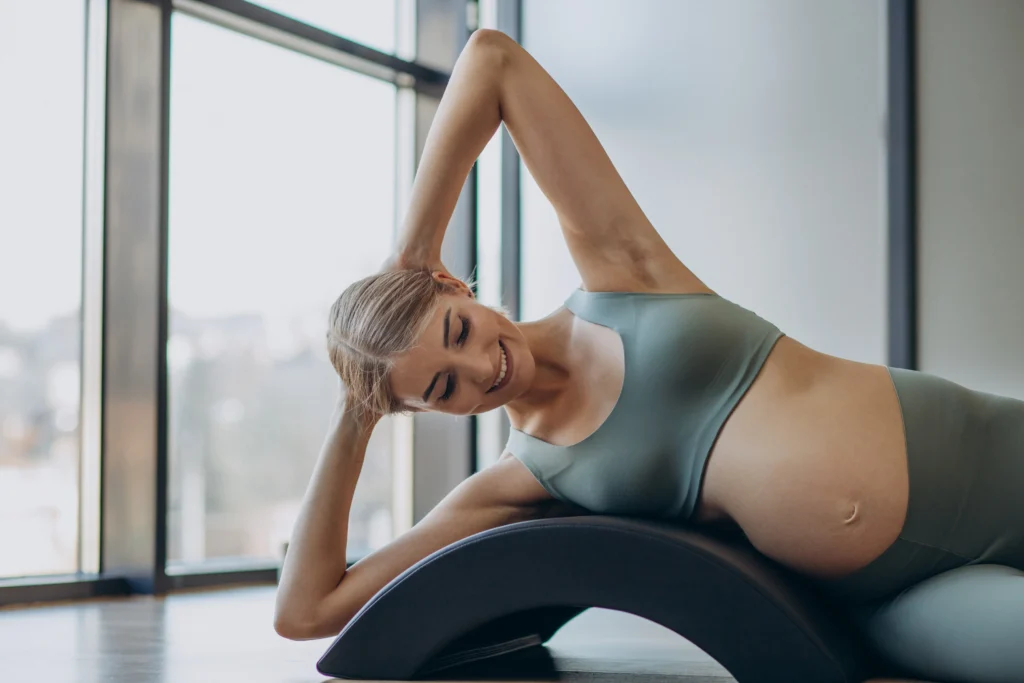
Not every pregnant woman needs a complex routine.
The safest programs are usually simple, realistic, and repeatable.
Walking
Walking remains one of the most effective exercises for gestational diabetes management.
Why it works
- low joint stress
- easy to start
- improves circulation
- supports digestion
- helps glucose control
- reduces stiffness
A physiotherapy tip many women appreciate:
Do not walk too fast immediately after eating.
Start slow for the first few minutes.
Also, supportive footwear matters more during pregnancy because ligament laxity increases due to hormonal changes.
Sit-to-Stand Exercise
This simple movement is excellent during pregnancy.
How to do it
- Sit on a stable chair
- Stand up slowly
- Sit back down with control
- Repeat 10 to 15 times
Benefits
- strengthens glutes
- improves thigh strength
- supports pelvic stability
- improves daily movement capacity
Side-Lying Leg Raises
Many pregnant women develop hip weakness without realizing it.
Weak hip muscles can increase:
- pelvic strain
- lower back discomfort
- walking fatigue
Side-lying leg raises gently strengthen pelvic stabilizers.
This becomes especially helpful during the third trimester.
Stationary Cycling
Cycling is often easier than walking for women with pelvic heaviness or foot pain.
Benefits
- low-impact cardio
- reduced joint stress
- improved endurance
- better circulation
Indoor cycling is generally safer than outdoor cycling during pregnancy because balance changes as the belly grows.
Pelvic Tilts
Pelvic tilts are one of my favorite physiotherapy exercises during pregnancy because they help several issues at once.
They may improve
- pelvic stiffness
- posture
- lower back discomfort
- deep abdominal activation
Many women unknowingly stand with exaggerated lower back arching during pregnancy.
Pelvic tilts gently correct this posture.
Prenatal Strength Training
This area is often misunderstood.
Light resistance training during pregnancy is not dangerous when properly guided.
In fact, resistance exercises improve glucose uptake very efficiently because muscles become metabolically active.
The key is controlled movement, not heavy lifting.
Safe examples
- wall push-ups
- resistance band rows
- mini squats
- seated shoulder presses with light weights
Avoid
- breath holding
- straining
- maximal lifting
Why Breathing Exercises Matter More Than People Think
Stress hormones can influence blood sugar levels.
When women are anxious, overwhelmed, sleep deprived, or constantly worried about glucose readings, cortisol levels may rise.
This can indirectly affect glucose control.
Breathing exercises help calm the nervous system.
Diaphragmatic Breathing
- Sit comfortably
- Place one hand on the ribs
- Inhale slowly through the nose
- Let the rib cage expand gently
- Exhale slowly
Even five minutes daily may help reduce physical tension.
The Hidden Problem With Staying Seated After Meals
This habit quietly worsens blood sugar regulation for many women.
After eating:
- glucose enters the bloodstream
- muscles are inactive while sitting
- circulation slows
This combination may contribute to sharper glucose spikes.
You do not need intense exercise after meals.
Even:
- light house walking
- slow corridor walking
- gentle stair climbing
- standing mobility drills
can help.
A UCLA Health report also highlighted how post-meal walking improves glucose control. (UCLA Health 2022)
Sleep and Gestational Diabetes Connection
Women with gestational diabetes often struggle with:
- interrupted sleep
- frequent urination
- leg discomfort
- anxiety
Poor sleep itself may worsen insulin resistance.
That creates a frustrating cycle.
One practical thing I often suggest is gentle evening movement instead of complete inactivity.
A slow evening walk sometimes improves:
- digestion
- circulation
- sleep quality
- morning stiffness
Small habits matter more than perfection.
Calculate your ideal sleep timings here: “Sleep Calculator“
Exercises to Avoid During Gestational Diabetes
Not every exercise is pregnancy-friendly.
Avoid
- contact sports
- jumping workouts
- overheating
- exercises with fall risk
- high-intensity interval sessions without medical clearance
- prolonged flat-on-back exercises after the first trimester
Also, avoid copying random online pregnancy workouts without understanding your own condition.
Every pregnancy is different.
Signs You Should Stop Exercising Immediately
Stop and seek medical advice if you experience:
- vaginal bleeding
- chest pain
- dizziness
- severe pelvic pain
- contractions
- fluid leakage
- unusual breathlessness
- reduced fetal movement
Safety always comes first.
The Role of Physiotherapy in Gestational Diabetes
Many people still think physiotherapy is only for injuries.
But pregnancy physiotherapy is incredibly valuable.
A women’s health physiotherapist can help with:
- posture correction
- pelvic pain
- swelling management
- safe strengthening
- breathing mechanics
- labor preparation
- movement modification during each trimester
Sometimes the biggest improvement comes from very small corrections.
For example:
- changing walking posture
- reducing hip drop
- improving breathing pattern
- activating glutes correctly
These details affect comfort more than most women expect.
Why Over-Exercising Can Backfire
Some women panic after diagnosis and suddenly begin aggressive workouts to “fix” blood sugar quickly.
That usually does not work well.
Excessive exercise during pregnancy may:
- increase fatigue
- worsen pelvic discomfort
- elevate stress hormones
- reduce recovery
Consistency matters more than intensity.
Gentle daily movement almost always beats occasional extreme effort.
The Emotional Side Nobody Talks About Enough
A gestational diabetes diagnosis often creates guilt.
Many women blame themselves immediately.
But gestational diabetes is heavily influenced by placental hormones, genetics, and insulin sensitivity changes during pregnancy.
It is not simply about eating sugar.
And honestly, constant fear around food and glucose readings can become emotionally exhausting.
Exercise helps psychologically too.
Movement often gives women:
- confidence
- routine
- mental clarity
- emotional relief
- better body awareness
Sometimes that emotional shift is just as important as the glucose numbers.
A Realistic Weekly Exercise Routine
The best routine is the one you can actually continue.
Monday
15 minute post-breakfast walk
Pelvic tilts
Breathing exercises
Tuesday
Sit-to-stand exercises
Resistance band rows
Evening walk
Wednesday
20 minute comfortable walk
Gentle stretching
Thursday
Prenatal yoga
Breathing work
Friday
Stationary cycling
Hip strengthening exercises
Saturday
Post-meal walks
Mobility exercises
Sunday
Recovery day
Gentle circulation movements
You do not need perfection.
You need consistency.
Final Thoughts
One thing I genuinely wish more pregnant women understood is this:
Exercise during gestational diabetes is not about “burning calories.”
It is about helping the body function better.
Movement supports:
- circulation
- glucose control
- joint mobility
- sleep
- stress regulation
- posture
- pelvic health
- labor preparation
And sometimes the smallest habits create the biggest changes.
A slow walk after dinner.
Standing instead of sitting.
Gentle breathing before sleep.
Stretching stiff hips in the morning.
These things sound simple because they are simple.
But simple does not mean ineffective.
Most importantly, movement during pregnancy should feel supportive, not punishing.
Your body is already doing something extraordinary.
Frequently Asked Questions
Can walking really lower blood sugar during gestational diabetes?
Yes. Walking after meals helps muscles use glucose more efficiently, which may reduce post-meal blood sugar spikes during pregnancy.
How many minutes should I exercise with gestational diabetes?
Most guidelines recommend around 150 minutes of moderate activity weekly. Even 10 to 15 minute walks after meals can be beneficial.
Which exercises are safest during gestational diabetes?
Walking, prenatal yoga, pelvic tilts, stationary cycling, breathing exercises, and light strengthening exercises are generally considered safe for uncomplicated pregnancies.
Can exercise reduce the need for insulin during pregnancy?
For some women, regular exercise and proper nutrition may improve blood sugar control enough to reduce insulin requirements. However, medical advice should always be followed.
Should I exercise immediately after eating?
A gentle walk 10 to 20 minutes after meals may help improve glucose control. Avoid very intense activity immediately after eating.
What exercises should I avoid during gestational diabetes?
Avoid high-impact workouts, contact sports, exercises with fall risks, overheating, and heavy lifting unless approved by your healthcare provider.
Can exercise help reduce pregnancy swelling?
Yes. Gentle movement improves circulation, especially in the legs and feet, which may help reduce swelling and heaviness.
Is physiotherapy useful for gestational diabetes?
Yes. Women’s health physiotherapists can guide safe exercises, improve posture, reduce pelvic pain, and help manage movement safely during pregnancy.
Stay tuned with us for more health related topics.
Follow us on LinkedIn and Instagram for more.
More Read


Medical Disclaimer!
This article has been reviewed and written under the guidance of our Head Physiotherapist, Dr. Kruti Raj (PT, MUHS,CPT,CMPT). The information shared is intended for educational purposes only and should not be considered a substitute for personalized medical advice, diagnosis, or treatment.
Please consult us or any other qualified healthcare professional before beginning any exercise program, especially if you are experiencing pain, recovering from injury, or managing a medical condition.


