


Advanced maternal age pregnancy exercises can help support strength, mobility, circulation, and overall well-being during pregnancy after 35.
Pregnancy after 35 is becoming increasingly common across the world.
Many women are choosing motherhood later due to career goals, financial stability, fertility treatments, second marriages, or simply personal choice.
While the term “Advanced Maternal Age” (AMA) traditionally refers to pregnancy at age 35 and above,
Modern research shows that age alone does not determine pregnancy outcomes.
Your fitness level, muscle strength, metabolic health, stress levels, and lifestyle habits often play a much bigger role.
From a physiotherapy perspective, exercise during an advanced maternal age pregnancy is not just about staying active.
It is one of the most powerful tools available to improve circulation, reduce pregnancy complications, support labor preparation, minimize aches and pains, and improve postpartum recovery.
Quick Answer
Advanced maternal age pregnancy exercises include walking, prenatal strength training, pelvic floor exercises, prenatal yoga, swimming, breathing exercises, and deep core activation. Research shows that regular moderate exercise during pregnancy may help reduce the risk of gestational diabetes, excessive weight gain, back pain, prenatal depression, and cesarean delivery while improving overall maternal health and labor preparation.
Studies have shown that appropriately prescribed prenatal exercise may reduce the risk of gestational diabetes, excessive weight gain, cesarean delivery, pregnancy-related hypertension, and prenatal depression. (ACOG)
The key is choosing the right exercises at the right intensity while understanding the unique changes that occur in pregnancies after 35.
Key Takeaways
- Pregnancy after 35 can still be healthy and active.
- Aim for 150 minutes of moderate exercise weekly.
- Walking remains one of the safest prenatal workouts.
- Strength training helps reduce back pain and improve labor endurance.
- Pelvic floor exercises should be performed daily.
- Swimming is ideal for women with joint pain or swelling.
- Avoid overheating, dehydration, and breath holding.
- Exercise may lower risks of gestational diabetes and hypertension.
- Breathing exercises improve pelvic floor coordination and stress control.
- Always stop exercising if warning signs develop.
What Is Advanced Maternal Age Pregnancy?
Advanced maternal age refers to pregnancy occurring at 35 years or older.
Although many women have completely healthy pregnancies in their late 30s and early 40s, healthcare providers monitor these pregnancies more closely because risks of :
gestational diabetes, preeclampsia, placental complications, chromosomal abnormalities, and cesarean birth gradually increase with age.
What many women do not realize is that physical inactivity may contribute more significantly to certain pregnancy complications than age itself.
Regular movement improves cardiovascular fitness, insulin sensitivity, circulation, muscle strength, and pelvic health, all crucial during pregnancy. (ACOG)
Why Exercise Becomes Even More Important After 35
As a physiotherapist,
one pattern I repeatedly observe is that women entering pregnancy after 35 often begin pregnancy with more:
desk work, lower muscle mass, reduced flexibility, previous injuries, chronic neck or back pain, and higher stress levels compared to younger pregnancies.
Exercise helps counteract many of these factors.
Research shows prenatal exercise can help:
- Reduce gestational diabetes risk
- Improve blood circulation
- Lower excessive pregnancy weight gain
- Reduce back pain
- Improve pelvic stability
- Enhance sleep quality
- Reduce anxiety and depressive symptoms
- Improve labor endurance
- Speed postpartum recovery (ACOG)
How Pregnancy Changes Exercise Needs After 35
Increased Joint Stress
Pregnancy hormones cause ligaments to become more flexible.
Combined with age-related reductions in tissue elasticity, this may increase the risk of joint discomfort and instability.
Reduced Recovery Capacity
Women over 35 may notice longer recovery times after workouts compared to their 20s.
This means:
- More recovery days
- Better hydration
- Higher protein intake
- Lower exercise intensity when fatigued
are often necessary.
Greater Risk of Pelvic Floor Dysfunction
The pelvic floor naturally experiences more cumulative stress with age.
Pregnancy places additional pressure on these muscles.
This is why pelvic floor training becomes essential rather than optional.
The Best Exercises for Advanced Maternal Age Pregnancy
Walking
Walking remains one of the safest and most evidence-supported exercises during pregnancy.
Benefits include:
- Improved circulation
- Better glucose control
- Reduced swelling
- Improved endurance for labor
- Lower stress levels
Aim for:
- 20-45 minutes daily
- Comfortable pace
- Ability to maintain conversation
This “talk test” is recommended by pregnancy exercise guidelines. (ACOG)
Prenatal Strength Training
One of the biggest mistakes older pregnant women make is avoiding strength training because they fear injury.
In reality, appropriately modified resistance training may:
- Reduce back pain
- Improve posture
- Enhance pelvic stability
- Improve energy levels
- Reduce excessive weight gain
Research reviews have shown strength training during pregnancy can improve quality of life and reduce musculoskeletal discomfort. (Reddit)
Safe exercises include:
- Wall squats
- Chair squats
- Glute bridges (modified)
- Resistance band rows
- Side leg raises
- Seated shoulder presses
- Bird-dog exercises
Perform:
- 2-3 sessions weekly
- 10-15 repetitions
- Moderate effort
Pelvic Floor Exercises
Pelvic floor exercises are especially important for women over 35 because age-related connective tissue changes may increase susceptibility to urinary leakage.
Basic Pelvic Floor Contraction
- Tighten muscles around the vagina and anus.
- Hold for 5 seconds.
- Relax completely.
- Repeat 10 times.
Perform:
- 3 sets daily
A stronger pelvic floor can help reduce postpartum urinary incontinence and improve recovery.
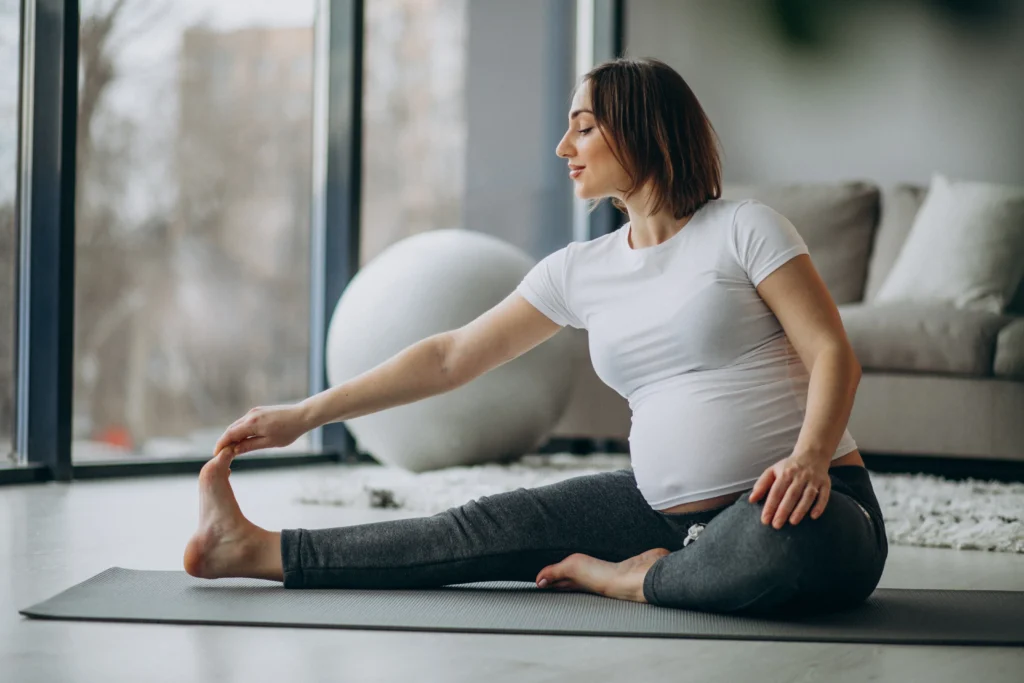
Prenatal Yoga
Prenatal yoga helps:
- Improve flexibility
- Reduce stress hormones
- Improve breathing patterns
- Relieve lower back discomfort
Avoid:
- Hot yoga
- Deep twists
- Prolonged flat-back positions
according to pregnancy exercise recommendations. (PMC)
Swimming and Water Exercises
Water provides natural support for the growing abdomen.
Benefits include:
- Reduced joint pressure
- Improved circulation
- Reduced swelling
- Lower back pain relief
Water workouts are particularly useful for women experiencing pelvic girdle pain or obesity during pregnancy. (NCBI)
Deep Core Training
Contrary to popular belief, pregnancy does not mean abandoning abdominal exercises.
Safe core activation helps:
- Support the spine
- Reduce back pain
- Improve posture
- Lower risk of severe abdominal separation
Safe examples include:
- Diaphragmatic breathing
- Pelvic tilts
- Heel slides
- Modified bird-dogs
Avoid aggressive crunches and intense abdominal bracing.
Weekly Exercise Plan for Advanced Maternal Age Pregnancy
Monday
- 30-minute walk
- Pelvic floor exercises
Tuesday
- Prenatal strength training (20–30 minutes)
Wednesday
- Gentle yoga
- Breathing exercises
Thursday
- 30-minute walk
Friday
- Strength training
Saturday
- Swimming or water aerobics
Sunday
- Recovery walk
- Stretching
Lesser-Known Physiotherapy Tips
Train Your Breathing Before Labor
Many women spend months preparing nursery items but never practice breathing mechanics.
Diaphragmatic breathing improves:
- Oxygen delivery
- Stress control
- Pelvic floor coordination
- Labor endurance
Spend 5 minutes daily practicing slow nasal breathing.
Improve Ankle Mobility
Limited ankle mobility is associated with poorer squat mechanics.
Since squatting positions are commonly used during labor, improving ankle flexibility during pregnancy can be surprisingly beneficial.
Try:
- Calf stretches
- Heel raises
- Ankle circles
daily.
Train Side-Glute Muscles
Weak gluteus medius muscles contribute significantly to:
- Pelvic girdle pain
- Hip pain
- SI joint discomfort
Simple side leg raises and resistance-band walks can help.
Strengthen Upper Back Muscles
As breast size and abdominal weight increase, many women develop rounded shoulders.
Rows and scapular strengthening exercises improve posture and reduce neck pain.
Practice Getting Up From the Floor
This sounds simple but becomes surprisingly challenging during the third trimester.
Learning safe transitions:
- Side roll
- Hands-and-knees position
- Supported standing
can reduce strain and improve confidence.
Things To Avoid During Advanced Maternal Age Pregnancy Workouts
Avoid Exercising Through Exhaustion
Pregnancy is not the time for personal records.
Overtraining may increase:
- Fatigue
- Recovery time
- Injury risk
Avoid Breath Holding
Holding your breath increases pressure within the abdomen and pelvic floor.
Instead:
- Exhale during effort
- Inhale during relaxation
Avoid Sudden Direction Changes
Because pregnancy hormones loosen ligaments, rapid movements increase injury risk.
Avoid Overheating
High temperatures may increase stress on the body.
Exercise in:
- Well-ventilated rooms
- Comfortable clothing
- Cooler times of the day
Warning Signs to Stop Exercising Immediately
Contact your healthcare provider if you experience:
- Vaginal bleeding
- Fluid leakage
- Chest pain
- Severe dizziness
- Persistent contractions
- Significant shortness of breath
- Calf swelling
- Severe headache
These are recognized pregnancy exercise warning signs. (ACOG)
The Surprising Connection Between Oral Health and Pregnancy Complications
One lesser-known fact is that poor gum health may be associated with an increased risk of preeclampsia.
Research suggests periodontal disease can contribute to systemic inflammation during pregnancy.
Good oral hygiene, dental checkups, and anti-inflammatory lifestyle habits may therefore play a role in overall pregnancy health. (arXiv)
This is rarely discussed during prenatal fitness consultations but deserves more attention.
Mental Health Benefits of Exercise After 35
Many advanced maternal age mothers balance:
- Careers
- Financial responsibilities
- Previous children
- Fertility treatment journeys
This often creates significant emotional stress.
Research suggests moderate prenatal exercise may reduce prenatal depression and depressive symptoms. (Reddit)
Physiotherapy is not only about muscles and joints. It is also about supporting emotional well-being through movement.
Even a 20-minute walk can improve mood, circulation, sleep quality, and energy levels.
The “Exercise Reserve” Concept
Why Pregnant Women Over 35 Should Never Train at 100%
One lesser-known fact is that physiotherapists increasingly encourage women over 35 to maintain an “exercise reserve” during pregnancy.
Think of your body as having an energy bank account.
Pregnancy already demands energy for:
- Placental growth
- Fetal development
- Increased blood volume
- Hormonal adaptation
- Tissue remodeling
Unlike younger women, recovery capacity may gradually decline with age.
This means pushing to complete exhaustion can sometimes lead to prolonged fatigue, increased pelvic pain, sleep disturbances, and slower recovery.
Instead of aiming for the hardest workout possible, aim to finish every exercise session feeling like you could have completed another 10-15 minutes if needed.
This approach often improves consistency, which ultimately matters more than workout intensity during pregnancy.
A good rule is:
“Train for tomorrow, not just for today.”
Why Grip Strength May Predict Pregnancy Health Better Than You Think
A fascinating but rarely discussed area of research suggests that handgrip strength is associated with overall muscle function, metabolic health, and functional capacity.
Studies have found lower grip strength may correlate with poorer physical function and increased health risks in adults.
For pregnant women over 35, maintaining whole-body strength, not just cardiovascular fitness, can be important for:
- Carrying a growing baby
- Managing postpartum lifting demands
- Improving functional independence
- Reducing musculoskeletal strain
Simple exercises like:
- Farmer carries
- Resistance band holds
- Light dumbbell carries
can help maintain grip and upper-body strength safely during pregnancy.
The Hidden Importance of Preparing for the Fourth Trimester
Many women spend nine months preparing for labor but almost no time preparing for postpartum physical demands.
For women over 35,
postpartum recovery may sometimes take longer because of reduced tissue elasticity and slower recovery capacity.
Consider practicing:
- Sit-to-stand repetitions
- Safe lifting mechanics
- Carrying light weights
- Core breathing exercises
- Single-leg balance drills
during pregnancy.
These exercises are less about birth and more about preparing for months of:
- Carrying a baby
- Feeding positions
- Lifting strollers
- Sleep-deprived movement
As physiotherapists, we often say:
“Train for motherhood, not just delivery.”
Lesser-Known Tip
Your Balance Starts Changing Before Your Belly Gets Big
Many women assume balance problems only happen in the third trimester.
However, research suggests hormonal changes can affect proprioception (the body’s awareness of position and movement) much earlier.
This means subtle balance changes may begin before significant weight gain occurs.
Simple balance exercises can help:
- Tandem walking
- Single-leg standing near support
- Heel-to-toe walking
- Controlled step-ups
These exercises may improve confidence and reduce fall risk throughout pregnancy.
The Maternal Muscle Bank Theory
Here’s a highly reader-friendly concept that performs exceptionally well in health content.
Think of every walk, squat, pelvic floor contraction, and strength-training session as a deposit into your “Maternal Muscle Bank.”
During labor, sleep deprivation, breastfeeding, and postpartum recovery, you will be making withdrawals from that bank.
Women who stay active during pregnancy often enter postpartum recovery with:
- Better strength reserves
- Better cardiovascular fitness
- Improved mobility
- Faster functional recovery
The goal isn’t to look fit during pregnancy.
The goal is to build enough physical reserves to handle the demanding months after your baby arrives.
My Clinical Insight
The healthiest advanced maternal age pregnancies I see are rarely the ones doing extreme workouts.
They are usually women who :
stay consistently active, prioritize strength training, maintain mobility, practice pelvic floor awareness, manage stress, and respect recovery.
Pregnancy after 35 is not automatically a high-risk experience.
In many cases, women enter pregnancy more emotionally prepared, financially stable, and health-conscious than ever before.
Movement becomes your biggest ally when performed safely and consistently.
Physio Prescription
Perform:
- Walking 5-6 days weekly
- Strength training 2-3 times weekly
- Pelvic floor exercises daily
- Breathing exercises daily
- Stretching 10 minutes daily
Aim for approximately 150 minutes of moderate activity per week unless your healthcare provider advises otherwise. (PubMed)
Red Flags
Seek medical clearance before exercising if you have:
- Placenta previa
- Severe anemia
- Preeclampsia
- Significant heart disease
- Cervical insufficiency
- Multiple pregnancy with complications
- Persistent vaginal bleeding
Always follow guidance from your obstetric team.
Myth vs Reality
Myth:
Pregnancy after 35 means you should rest more and avoid exercise.
Reality:
Evidence consistently shows that safe, medically approved exercise improves maternal and fetal outcomes for most women with uncomplicated pregnancies.
Final Word
Advanced maternal age pregnancy does not mean fragile pregnancy.
Your body is designed to adapt, strengthen, and prepare for birth when given the right support.
The goal is not intense fitness.
The goal is intelligent movement.
Walking, strength training, pelvic floor work, breathing exercises, posture correction, and recovery-focused physiotherapy:
can help you move through pregnancy with greater confidence, less pain, better energy, and improved preparation for labor and postpartum recovery.
The strongest pregnancy is not necessarily the most athletic one, it is the one where movement becomes a daily habit.
Frequently Asked Questions
1. Is pregnancy after 35 considered high risk?
Not necessarily. While certain risks increase with age, many women over 35 have healthy pregnancies with proper prenatal care, regular exercise, good nutrition, and medical monitoring.
2. What are the safest exercises during advanced maternal age pregnancy?
Walking, swimming, prenatal yoga, pelvic floor exercises, breathing exercises, and physiotherapist-guided strength training are among the safest and most beneficial options.
3. Can exercise reduce pregnancy complications after age 35?
Research suggests regular prenatal exercise may help lower the risk of gestational diabetes, excessive weight gain, prenatal depression, and pregnancy-related hypertension in many women.
4. How many minutes should pregnant women over 35 exercise each week?
Most health organizations recommend at least 150 minutes of moderate-intensity physical activity per week unless advised otherwise by a healthcare provider.
5. Is strength training safe during pregnancy after 35?
Yes. Modified strength training can improve posture, support joints, reduce back pain, and prepare the body for labor and postpartum recovery when performed safely.
6. Should I start exercising if I was inactive before pregnancy?
Yes, but gradually. Begin with low-impact activities such as walking and gentle stretching, and seek guidance from your healthcare provider or physiotherapist.
7. Can pelvic floor exercises make labor easier?
Pelvic floor exercises help improve muscle awareness, support bladder control, and may contribute to better recovery after childbirth.
8. Which exercises should be avoided during advanced maternal age pregnancy?
Activities with a high risk of falling, contact sports, heavy lifting beyond individual capability, overheating, and exercises that cause pain or dizziness should generally be avoided.
9. Can exercise help with back pain during pregnancy?
Yes. Strengthening the core, hips, and back muscles while maintaining mobility often helps reduce pregnancy-related back and pelvic discomfort.
10. What is the biggest exercise mistake women over 35 make during pregnancy?
Many women either avoid exercise completely due to fear or push themselves too hard. The ideal approach is consistent, moderate, and medically approved physical activity.
Stay tuned with us for more health related topics.
Follow us on LinkedIn and Instagram for more.
More Read


Medical Disclaimer!
This article has been reviewed and written under the guidance of our Head Physiotherapist, Dr. Kruti Raj (PT, MUHS,CPT,CMPT). The information shared is intended for educational purposes only and should not be considered a substitute for personalized medical advice, diagnosis, or treatment.
Please consult us or any other qualified healthcare professional before beginning any exercise program, especially if you are experiencing pain, recovering from injury, or managing a medical condition.


