


Not all home remedies for period pain are backed by evidence. Learn which options really help and which are best avoided.
Menstrual cramps can make even the simplest daily activities feel challenging.
Whether you’re attending classes, working long hours, managing your home, or simply trying to get through the day, period pain can affect your energy, mood, concentration, and overall quality of life.
While many women reach for painkillers as their first option, medication isn’t the only way to find relief.
As a women’s health physiotherapist, one of the questions I hear most often is, “Are there natural ways to reduce period pain?”
The answer is yes.
Although home remedies cannot cure underlying conditions such as :
endometriosis or adenomyosis, several evidence-based self-care strategies can help reduce pain intensity, relax tense muscles, improve circulation, and make your menstrual cycle more manageable.
Quick Answer
Many women can manage mild to moderate period pain naturally through heat therapy, gentle exercise, stretching, diaphragmatic breathing, hydration, anti-inflammatory foods, adequate sleep, and stress management. While these home remedies may significantly reduce menstrual cramps, severe or worsening pain should always be assessed by a healthcare professional to rule out underlying conditions such as endometriosis or adenomyosis.
The key is understanding that menstrual pain is influenced by more than just the uterus.
Your muscles, nervous system, breathing pattern, stress levels, sleep quality, hydration, and physical activity all play an important role in how your body experiences pain.
Small changes in your daily routine can often make a noticeable difference over time.
Research shows that painful periods, medically known as dysmenorrhea,
affect a large proportion of menstruating women and are among the leading causes of recurrent school and workplace absenteeism.
Despite this, many women continue to believe that severe menstrual pain is something they simply have to tolerate. (Serya et al. 2025)
In this article,
we’ll explore practical, research-backed home remedies that can help relieve menstrual cramps naturally while also discussing when home care is no longer enough and medical evaluation becomes necessary.
Key Takeaways
- Heat therapy is one of the simplest and most effective natural ways to relieve menstrual cramps.
- Regular exercise throughout the month may reduce the severity of future period pain.
- Hydration, healthy nutrition, and quality sleep support better menstrual health.
- Deep breathing and stress management help calm the nervous system and reduce pain perception.
- Ginger and magnesium-rich foods may provide additional relief for some women.
- Physiotherapy addresses muscle tension, posture, pelvic floor health, and movement patterns.
- If your pain disrupts daily life or continues to worsen, seek medical evaluation.
Why Do Period Cramps Happen?
Before looking at home remedies, it’s helpful to understand why menstrual cramps occur in the first place.
Every month, your uterus prepares for a possible pregnancy by developing a thick inner lining.
When pregnancy does not occur, this lining needs to be shed during menstruation.
To make this happen, the uterus contracts rhythmically.
These contractions are triggered by naturally occurring chemicals called prostaglandins.
Think of prostaglandins as messengers that tell the uterine muscles when to contract.
Higher prostaglandin levels cause stronger contractions, which temporarily reduce blood flow to the uterine muscle.
This reduced oxygen supply activates pain-sensitive nerves, resulting in the cramping sensation many women experience during their period.
While this process is completely normal, excessive prostaglandin production can make cramps significantly more painful. (Cleveland Clinic)
From a physiotherapy perspective, these cramps often trigger a protective response throughout the body.
The abdominal muscles tighten, the pelvic floor may become overactive, breathing becomes shallower, and the lower back and hips may stiffen.
This explains why menstrual pain often feels much more widespread than discomfort in the uterus alone.
Do Home Remedies Really Work?
This is an important question because the internet is filled with advice ranging from genuinely helpful to completely misleading.
The good news is that many non-drug approaches are supported by scientific evidence.
While no home remedy completely eliminates period pain for every woman, combining several evidence-based strategies often provides meaningful relief.
In clinical practice, I rarely recommend relying on just one technique.
Instead, I encourage women to build a simple routine that includes movement, heat therapy, breathing exercises, hydration, and healthy lifestyle habits throughout the month rather than only when pain begins.
A recent systematic review involving more than 3,000 women found that exercise-based interventions, including:
stretching, resistance training, aerobic exercise, and combined exercise programs, significantly reduced menstrual pain intensity and improved daily function (Zheng et al. 2024).
Myth vs Fact
| Myth | Fact |
|---|---|
| You should stay in bed all day during your period. | Gentle movement and stretching often help reduce cramps and improve circulation. |
| Painkillers are the only solution. | Heat therapy, exercise, physiotherapy, breathing exercises, and healthy lifestyle habits also provide meaningful relief. |
| Exercise makes menstrual cramps worse. | Regular physical activity is supported by research as an effective non-drug treatment for primary dysmenorrhea. |
| Severe period pain is always normal. | Persistent or worsening pain may indicate conditions such as endometriosis or adenomyosis and should be evaluated. |
Home Remedy #1: Heat Therapy
If I had to recommend one simple home remedy that benefits many women, it would be heat therapy.
Applying warmth to the lower abdomen helps relax muscles, improve local blood circulation, and reduce cramping.
Many women notice relief within 15 to 20 minutes.
You can use:
- A hot water bottle
- A reusable heat pack
- An electric heating pad
- A warm towel
- A warm bath
Heat therapy is particularly helpful during the first one or two days of menstruation, when prostaglandin levels are highest and cramps tend to be most intense.
One lesser-known tip is to apply heat before the pain becomes severe rather than waiting until the cramps peak.
Early use may help reduce the intensity of muscle spasms.
Always ensure that the heating device is warm rather than excessively hot to avoid burns.
Home Remedy #2: Don’t Stay in Bed All Day
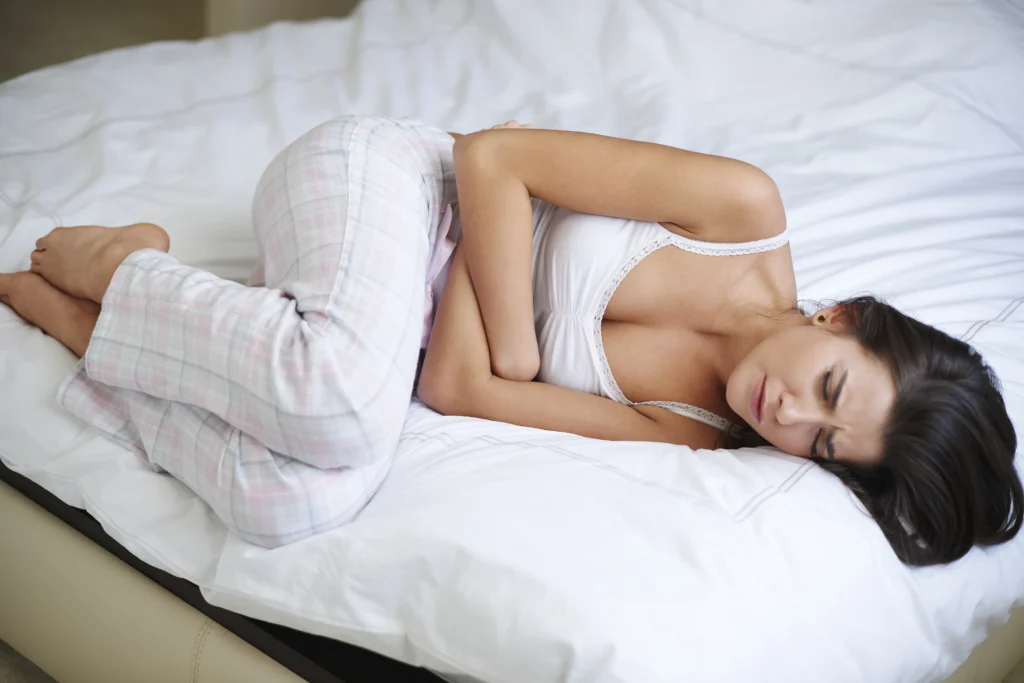
Many women naturally want to curl up in bed when cramps begin.
While resting for a short period is completely reasonable, remaining inactive for the entire day may actually increase muscle stiffness.
Gentle movement improves circulation, encourages the release of endorphins (the body’s natural pain-relieving chemicals), and reduces tension around the pelvis and lower back.
Good options include:
- A 15-20 minute walk
- Gentle cycling
- Light household activities
- Slow mobility exercises
- Easy stretching
The goal is not intense exercise. Instead, aim for comfortable movement that keeps your body relaxed without increasing pain.
One common misconception is that exercise worsens menstrual cramps. Modern research consistently suggests the opposite for most women.
Home Remedy #3: Gentle Stretching
Stretching is one of the simplest ways to reduce muscle tension associated with menstrual cramps.
During menstruation, muscles around the pelvis, hips, abdomen, and lower back often tighten as part of the body’s protective response to pain.
Gentle stretching helps restore mobility and reduce this unnecessary tension.
Some of my favorite beginner-friendly stretches include:
Child’s Pose
This yoga-inspired Child’s Pose gently stretches the lower back while encouraging slow, deep breathing.
Cat-Cow Stretch
Cat-Cow Stretch improves spinal mobility and helps relieve stiffness across the lower back and pelvis.
Supine Knee-to-Chest Stretch
This stretch relaxes the lumbar muscles while gently mobilizing the hips.
Hip Flexor Stretch
Women who spend long hours sitting often develop tight hip flexors, which can increase pelvic discomfort during menstruation.
Hold each stretch comfortably for 20 to 30 seconds without bouncing, and remember that stretching should feel relieving, not painful.
A Physiotherapist’s Tip
One of the biggest mistakes I see is waiting until pain reaches a score of 9 or 10 before trying to manage it.
Instead, think of home remedies as preventive care.
Gentle movement, stretching, hydration, and heat therapy are often most effective when introduced early in the menstrual cycle rather than after severe cramps have already developed.
Consistency is far more valuable than intensity.
Building healthy habits throughout the month creates a body that is better prepared to cope with the natural changes that occur during menstruation.
Home Remedy #4: Practice Diaphragmatic Breathing
Breathing may not be the first thing that comes to mind when you think about period pain,
but it can have a surprisingly powerful effect on how your body experiences discomfort.
When cramps become intense, many women unconsciously hold their breath or begin breathing rapidly from the chest.
This activates the body’s stress response, increases muscle tension, and can make pain feel even worse.
Diaphragmatic breathing, also known as belly breathing, encourages the diaphragm to move fully during each breath.
This helps relax the abdominal muscles, reduce pelvic floor tension, and calm the nervous system.
Try this simple exercise:
- Lie comfortably on your back or sit in a supported chair.
- Place one hand on your chest and the other on your abdomen.
- Breathe in slowly through your nose for four seconds, allowing your abdomen to rise.
- Exhale gently through your mouth for six seconds.
- Repeat for five to ten minutes.
I often recommend combining this breathing exercise with a heating pad placed over the lower abdomen.
Many women find that this combination helps reduce pain more effectively than using either technique alone.
Home Remedy #5: Stay Well Hydrated
Although drinking water will not stop uterine contractions, staying hydrated can help minimise bloating, improve circulation, and reduce fatigue during menstruation.
Even mild dehydration may contribute to headaches, muscle tightness, and low energy levels, making menstrual discomfort feel more intense.
Practical tips include:
- Drink water regularly throughout the day instead of waiting until you feel thirsty.
- Increase fluid intake if the weather is hot or if you are physically active.
- Include water-rich foods such as cucumber, watermelon, oranges, and soups.
If plain water feels unappealing during your period, herbal teas or infused water with lemon and mint can help increase your daily fluid intake.
Home Remedy #6: Eat Anti-Inflammatory Foods
Food cannot cure period pain, but your diet can influence inflammation and the way your body responds to pain.
A balanced diet rich in whole foods supports overall health and may help reduce menstrual discomfort over time.
Aim to include:
- Green leafy vegetables
- Colorful fruits
- Whole grains
- Beans and lentils
- Nuts and seeds
- Olive oil
- Fatty fish such as salmon or sardines
These foods provide antioxidants, vitamins, minerals, and healthy fats that support normal inflammatory processes.
On the other hand, try to reduce excessive intake of:
- Highly processed foods
- Sugary drinks
- Deep-fried foods
- Excess alcohol
- Very salty snacks
Healthy eating is most effective when practised throughout the month rather than only during your period.
Home Remedy #7: Ginger May Help Ease Menstrual Cramps
Ginger has been used in traditional medicine for centuries, and modern research suggests it may help reduce menstrual pain in some women.
Its natural anti-inflammatory compounds may help reduce prostaglandin activity, which is one of the main drivers of menstrual cramps.
You can enjoy ginger in several ways:
- Fresh ginger tea
- Grated ginger in soups
- Ginger added to warm water with lemon
- Ginger incorporated into meals
Although ginger is generally well tolerated, it may not be suitable for everyone, particularly those taking certain blood-thinning medications.
If you have an underlying medical condition or are unsure whether ginger is appropriate for you, seek advice from your healthcare provider.
A systematic review has reported that ginger may be beneficial in reducing pain associated with primary dysmenorrhea, although further high-quality studies are still encouraged (Negi et al. 2021).
Home Remedy #8: Include Magnesium-Rich Foods
Magnesium is involved in muscle relaxation and normal nerve function.
Although research is still evolving, ensuring adequate magnesium intake may support normal muscle function and contribute to overall menstrual health.
Foods naturally rich in magnesium include:
- Pumpkin seeds
- Almonds
- Cashews
- Spinach
- Black beans
- Oats
- Dark chocolate (in moderation)
Rather than immediately turning to supplements, I usually encourage women to improve their dietary intake first unless advised otherwise by their doctor.
Home Remedy #9: Gentle Self-Massage
Massage is a simple technique that many women overlook.
Light circular massage over the lower abdomen or lower back can help:
- Reduce muscle tension
- Improve local circulation
- Promote relaxation
- Increase body awareness
You may choose to use a small amount of massage oil or simply massage through comfortable clothing.
Some women find additional comfort by combining self-massage with a warm heating pad.
The pressure should always feel soothing rather than painful.
Home Remedy #10: Consider TENS Therapy
Transcutaneous Electrical Nerve Stimulation (TENS) is frequently used by physiotherapists to help manage pain.
Small adhesive electrodes are placed on the skin, delivering gentle electrical impulses that may reduce pain perception by influencing the nervous system.
Women who benefit from TENS often report:
- Reduced cramping
- Greater comfort while working or studying
- Less dependence on pain medication
Evidence suggests that high-frequency TENS may provide effective short-term relief for primary dysmenorrhea when used appropriately (Elboim-Gabyzon et al. 2020).
Always follow the manufacturer’s instructions and seek professional advice if you are unsure whether TENS is suitable for you.
Home Remedy #11: Prioritize Quality Sleep
Sleep and pain are closely connected.
Poor sleep can increase pain sensitivity, while severe menstrual cramps often make it harder to sleep well.
To improve sleep during your period:
- Keep a regular bedtime.
- Avoid excessive screen time before bed.
- Keep your bedroom cool and comfortable.
- Use a pillow under your knees if lower back pain is troubling you while lying on your back.
- Consider gentle stretching or breathing exercises before sleep.
Improving sleep quality may not eliminate cramps, but it often improves your ability to cope with discomfort the following day.
Home Remedy #12: Reduce Stress Levels
Stress does not directly cause menstrual cramps, but it can amplify the way your nervous system processes pain.
When stress levels remain high, muscles become tenser, breathing becomes shallower, and the body’s pain threshold may decrease.
Simple stress-management techniques include:
- Mindfulness meditation
- Gentle yoga
- Journaling
- Spending time outdoors
- Listening to calming music
- Progressive muscle relaxation
As a physiotherapist, I often remind women that managing period pain involves caring for the entire body, not just the uterus.
Research continues to support exercise-based interventions as effective non-pharmacological treatments for primary dysmenorrhea, with improvements seen in both pain intensity and quality of life (Tsai et al. 2024)
A Physiotherapist’s Advice
Home remedies work best when they become part of your routine rather than emergency measures used only when pain becomes unbearable.
Small habits such as regular movement, healthy eating, adequate sleep, stress management, and early heat therapy can work together to reduce the intensity of menstrual cramps over time.
Remember, however, that persistent or severe pain should never be ignored.
If your symptoms continue to worsen despite trying these strategies, or if they interfere with your daily life every month, it is important to seek medical evaluation to identify any underlying cause.
Home Remedy #13: Maintain Regular Exercise Throughout the Month
One of the biggest misconceptions about period pain is that you only need to think about it when your period starts.
In reality, the habits you build throughout the month can have a significant impact on how your body responds during menstruation.
Women who exercise regularly often report less intense menstrual cramps than those who are largely inactive.
This doesn’t mean you need to spend hours in the gym.
Even 30 minutes of moderate physical activity on most days of the week can improve circulation, support hormonal balance, reduce stress, and strengthen the muscles that support your pelvis and lower back.
Good long-term exercise options include:
- Brisk walking
- Swimming
- Cycling
- Pilates
- Yoga
- Strength training
- Low-impact aerobic exercise
As a physiotherapist, I encourage consistency rather than intensity.
A sustainable exercise routine is far more beneficial than occasional high-intensity workouts (Armour et al. 2019).
Home Remedy #14: Limit Habits That May Worsen Cramps
While every woman responds differently, some habits may increase discomfort during menstruation.
Consider reducing:
- Excess caffeine if it makes you feel more anxious or worsens cramps.
- Smoking, which may reduce blood flow and is associated with more severe menstrual pain.
- Excess alcohol, which may contribute to dehydration and poor sleep.
- Long periods of sitting without movement.
Instead, take short walking breaks, stretch regularly, and stay hydrated throughout the day.
Home Remedy #15: Track Your Menstrual Cycle
Keeping a menstrual diary is one of the simplest yet most valuable self-care habits.
Record:
- The first and last day of your period.
- Pain intensity (for example, on a scale of 1 to 10).
- Bleeding pattern.
- Associated symptoms such as nausea, headaches, or back pain.
- Remedies that helped.
- Activities or foods that appeared to make symptoms better or worse.
Tracking patterns helps you understand your body better and provides valuable information if you need to consult a healthcare professional.
Common Mistakes That Can Make Period Pain Worse
Sometimes, small everyday habits unintentionally increase menstrual discomfort.
Common mistakes include:
- Waiting until pain becomes severe before taking action.
- Remaining in bed all day without moving.
- Ignoring hydration.
- Depending entirely on painkillers every month without investigating persistent symptoms.
- Skipping meals.
- Sleeping poorly.
- Assuming severe pain is “just normal.”
Addressing these habits may improve your symptoms over time.
When Home Remedies Are Not Enough
Home remedies work well for many women with mild to moderate primary dysmenorrhea.
However, they should never replace medical evaluation if your symptoms suggest an underlying condition.
Seek professional advice if:
- Pain suddenly becomes much worse than usual.
- Pain continues after your period ends.
- Heavy bleeding soaks through a pad or tampon every hour.
- Large blood clots occur frequently.
- Pain prevents you from attending work or school.
- Pain medication provides little or no relief.
- You develop fever, foul-smelling discharge, or severe pelvic tenderness.
- You experience pain during intercourse or have difficulty becoming pregnant.
These symptoms may indicate conditions such as :
endometriosis, adenomyosis, uterine fibroids, or pelvic inflammatory disease that require medical assessment.
A Physiotherapist’s Perspective
One of the most rewarding parts of my work is seeing women realize that they do not have to organize their lives around menstrual pain.
Many patients arrive believing they have only two options: suffer through the pain or take painkillers every month.
In reality, there are many evidence-based strategies that can help.
Physiotherapy is not about treating the uterus directly.
It focuses on improving movement, reducing muscle tension, restoring pelvic floor function, encouraging healthy breathing patterns, and helping women remain active throughout their menstrual cycle.
The best results usually come from combining medical care with healthy lifestyle habits rather than relying on a single treatment.
Final Thoughts
Home remedies can be a valuable part of managing period pain, especially when used consistently rather than only during severe cramps. Healthy habits such as regular exercise, balanced nutrition, adequate sleep, stress management, and physiotherapy not only help relieve discomfort but also support your overall menstrual health. Listen to your body, stay proactive, and don’t hesitate to seek medical advice if your symptoms change or begin to interfere with your daily life.
Conclusion
Home remedies for period pain are not simply old-fashioned advice passed down through generations.
Many of them are now supported by scientific research and can form an important part of an effective pain management plan.
Simple measures such as applying heat, staying physically active, practicing diaphragmatic breathing, eating a balanced diet, improving sleep, managing stress, and maintaining regular exercise can all contribute to reducing menstrual cramps and improving your overall quality of life.
However, it is equally important to recognize that severe or worsening period pain should never be dismissed.
If your symptoms regularly interfere with work, education, relationships, or everyday activities, or if they are accompanied by heavy bleeding or persistent pelvic pain, consult a healthcare professional.
Early diagnosis of conditions such as endometriosis or adenomyosis can lead to more effective treatment and better long-term outcomes.
Remember that every woman’s body is different.
The most effective approach is one that is personalised to your symptoms, lifestyle, and overall health.
By combining evidence-based home remedies with professional guidance when needed, you can take meaningful steps towards managing menstrual pain and living more comfortably throughout your menstrual cycle.
Frequently Asked Questions
1. What is the fastest home remedy for period pain?
Applying a heating pad to the lower abdomen, staying gently active, and practicing diaphragmatic breathing are among the quickest natural ways to ease menstrual cramps.
2. Can drinking more water reduce period cramps?
While water does not stop uterine contractions, staying hydrated can reduce bloating, support circulation, and improve overall comfort during menstruation.
3. Is ginger effective for period pain?
Research suggests that ginger may help reduce menstrual pain by supporting the body’s natural inflammatory response, although results may vary between individuals.
4. Which exercises are best during periods?
Walking, gentle yoga, stretching, swimming, Pilates, and light strength exercises are generally well tolerated and may reduce menstrual discomfort.
5. Can stress make period pain worse?
Yes. Chronic stress may increase muscle tension and pain sensitivity, making menstrual cramps feel more severe.
6. When should home remedies not be relied upon?
If your pain is severe, getting worse every month, associated with heavy bleeding, fever, painful intercourse, or persistent pelvic pain, consult a healthcare professional.
7. Can physiotherapy help with menstrual cramps?
Yes. Women’s health physiotherapy focuses on exercises, pelvic floor rehabilitation, posture correction, breathing techniques, and movement education to reduce pain and improve function.
8. Should I avoid exercise during my period?
No. Most women benefit from light to moderate physical activity during menstruation, provided they exercise within their comfort level.
Stay tuned with us for more health related topics.
Follow us on LinkedIn and Instagram for more.
More Read


Medical Disclaimer!
This article has been reviewed and written under the guidance of our Head Physiotherapist, Dr. Kruti Raj (PT, MUHS,CPT,CMPT). The information shared is intended for educational purposes only and should not be considered a substitute for personalized medical advice, diagnosis, or treatment.
Please consult us or any other qualified healthcare professional before beginning any exercise program, especially if you are experiencing pain, recovering from injury, or managing a medical condition.


