


THIRUVANANTHAPURAM, INDIA: Researchers at the BRIC-Rajiv Gandhi Centre for Biotechnology (BRIC-RGCB) in Kerala have developed a nanopore-based sensing technology that could support the early detection and monitoring of biomarkers associated with Parkinson’s disease and other neurodegenerative disorders.
The technology uses self-assembling nanopores to detect and distinguish individual protein molecules through electrical signals. The development was reported by The Hindu following the publication of the underlying research in Nature Nanotechnology.

RGCB Develops Nanopore Sensors
The RGCB research team developed self-assembling nanopores designed to detect disease-associated biomarkers at very low concentrations.
Nanopores are extremely small structures that can act as molecular sensors.
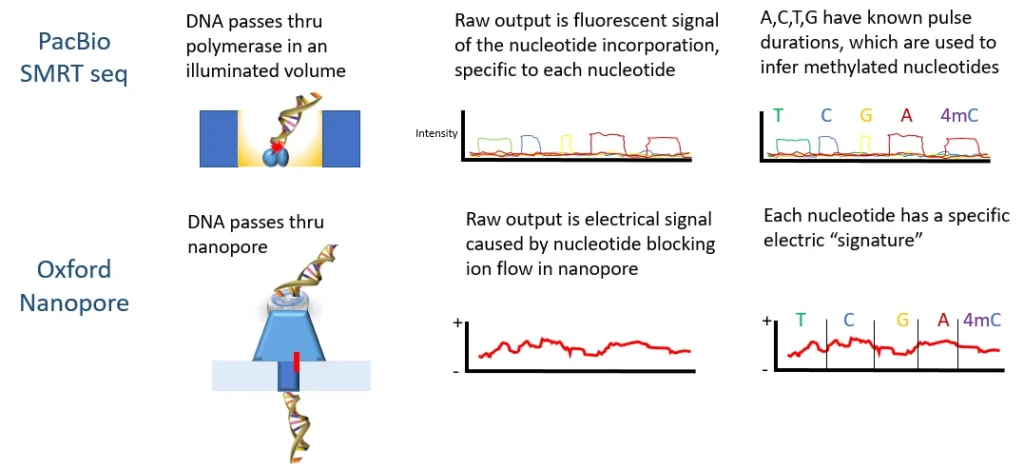
When a molecule passes through a nanopore embedded in a membrane, it produces a change in electrical current.
Researchers can analyze these changes to identify and characterize individual molecules.
The study, published in Nature Nanotechnology, demonstrates that a short peptide called pPorA can self-assemble into flexible alpha-helical nanopores with different conductance states.
Parkinson’s Protein Takes Centre Stage
A major focus of the research was alpha-synuclein, a protein closely associated with Parkinson’s disease.
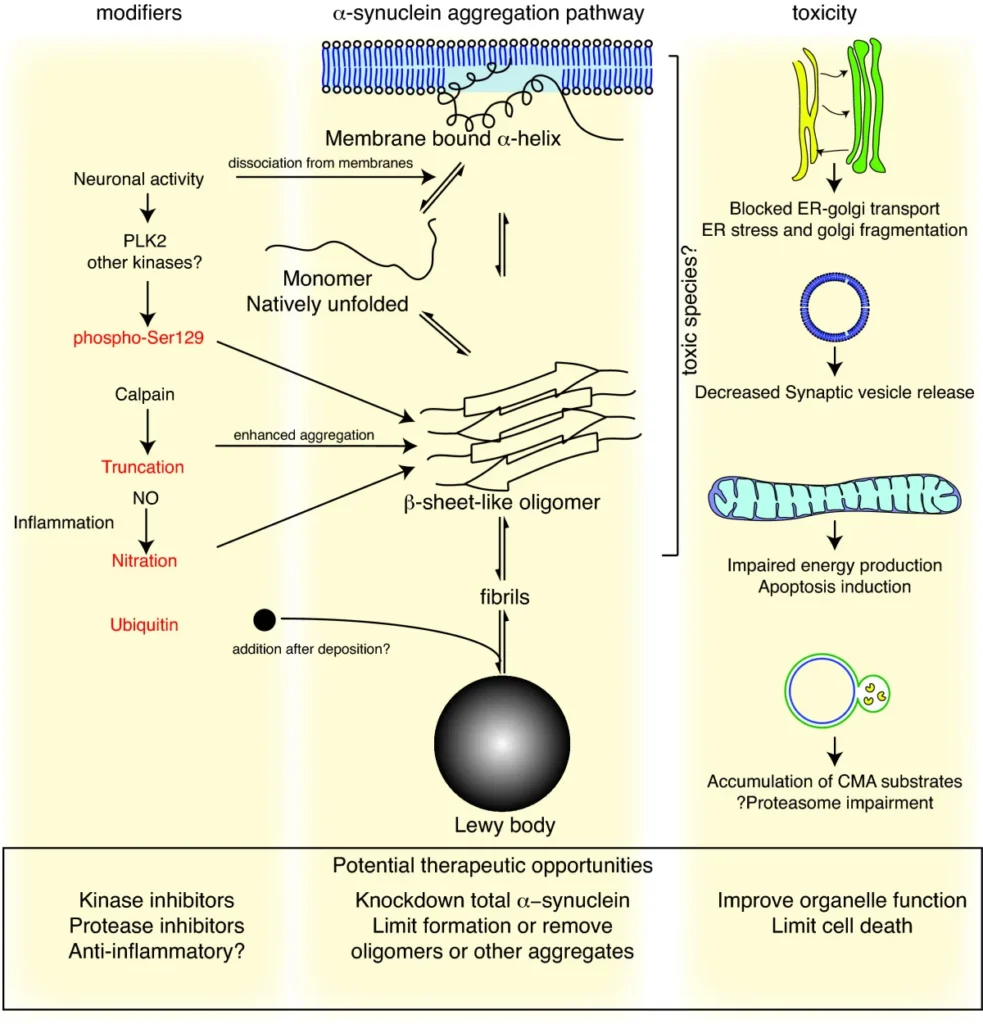
Alpha-synuclein can exist in different molecular forms and can assemble into larger structures. Understanding and distinguishing these forms is important because some aggregates are associated with the biological processes involved in neurodegeneration.
The RGCB-led study found that its larger nanopores could detect multiple alpha-synuclein variants, including a Parkinson’s disease-associated C-terminal deletion mutant.
The researchers were also able to distinguish individual alpha-synuclein species by analyzing the electrical signals generated as the molecules interacted with the nanopores.
Tracking Alpha-Synuclein Aggregation
The technology goes beyond simply detecting the presence of alpha-synuclein.
The researchers used the nanopores to examine different alpha-synuclein aggregation states, including monomers, intermediate assemblies, oligomers and fibrils.
This is relevant because alpha-synuclein does not remain in one fixed form. Its ability to assemble into different structures makes it challenging to study using conventional detection approaches.
The nanopore system provides researchers with a way to examine these molecular changes at the single-molecule level.
The approach could help researchers better understand disease-associated protein behavior and investigate potential biomarkers for neurodegenerative conditions.
Could It Enable Blood Testing?
One potential future application of the technology is biomarker detection in biological samples such as blood.
A major challenge in developing blood-based tests for neurodegenerative diseases is the extremely low concentration of some disease-associated biomarkers. A highly sensitive sensing platform could potentially help researchers detect these molecules more efficiently.
The RGCB study demonstrates sensitive detection and profiling of alpha-synuclein under experimental conditions.
However, the technology is not currently a clinically validated blood test for Parkinson’s disease.
Additional research using patient samples and larger clinical populations would be required before the technology could be considered for routine medical diagnosis.

Why Early Detection Matters
Parkinson’s disease is a progressive neurodegenerative disorder that primarily affects movement but can also cause a range of non-motor symptoms.
Diagnosis currently relies largely on clinical evaluation. Researchers are therefore investigating biological markers that could complement clinical assessment and potentially help identify disease-related changes earlier.
Sensitive molecular sensors are part of a wider international effort to improve biomarker detection for neurological disorders.
The RGCB technology could contribute to this field if future studies establish that it can reliably identify relevant biomarkers in real-world clinical samples.
How Nanopore Detection Works
The principle behind nanopore sensing is relatively simple despite the sophisticated technology involved.
A nanopore creates a tiny passage through a membrane. An electrical current passes through the pore, and when a molecule enters or interacts with it, the current changes.
Different molecules and molecular structures can produce different electrical signatures.
Researchers can analyze these signals to identify or characterize individual molecules.
In the RGCB research, the nanopores were designed with different structural and electrical properties to investigate biomolecules with different characteristics.
Two Pore Sizes, Different Targets
The researchers developed small- and large-diameter nanopores while retaining a common octameric architecture.
The different pore configurations produced distinct electrical conductance characteristics, allowing the researchers to investigate biomolecules with different structures and dimensions.
The larger pores were particularly useful for studying alpha-synuclein variants, while the smaller pores were used to examine other peptides.
This flexibility could make the platform useful for investigating a wider range of biomolecules.
Potential Beyond Parkinson’s
The research is not limited to Parkinson’s disease.
The nanopore platform was also used to examine other peptides, including molecules associated with different biological processes and neurological conditions.
One example is superoxide dismutase 1 (SOD1), a protein relevant to research into amyotrophic lateral sclerosis (ALS).
The ability to use the nanopore platform to study different peptides suggests that the technology could potentially be adapted for broader biomarker research.
A Nature-Inspired Sensor Design
The nanopores developed by the RGCB team use a nature-inspired approach.
The system is based on a peptide derived from the bacterial porin PorACj. The peptide can self-assemble into alpha-helical pore structures within lipid membranes.
The researchers engineered the peptide to produce nanopores with specific sensing characteristics.
The approach combines biological molecular design with electrical sensing, allowing researchers to investigate individual biomolecules at very small scales.
The researchers suggest that such programmable nanopores could provide a versatile platform for ultrasensitive biomarker profiling.
International Research Collaboration
The research involved scientists from several institutions in India and Germany.
The project brought together researchers from BRIC-RGCB in Thiruvananthapuram, the Regional Centre for Biotechnology in Faridabad, CSIR-Indian Institute of Chemical Biology in Kolkata and Constructor University in Bremen, Germany.
The collaboration combined expertise in molecular biology, nanopore technology, computational analysis and biomolecular research.
What Comes Next?
The RGCB development represents a research-stage advance in molecular sensing rather than a finished Parkinson’s diagnostic device.
The next challenge is determining whether the nanopore technology can reliably identify disease-associated biomarkers in complex biological samples from patients.
Researchers will also need to establish its sensitivity, specificity, reproducibility and scalability before the technology could move towards clinical use.
That distinction is important. The current research demonstrates that the nanopores can detect and profile disease-associated protein forms under experimental conditions. It does not mean that patients can currently undergo a nanopore-based blood test for Parkinson’s disease at a hospital or diagnostic center.
If future studies confirm the technology’s performance in clinical settings, nanopore sensors could eventually contribute to more sensitive approaches for detecting Parkinson’s-related biomarkers and other neurodegenerative disease signatures.
For now, the RGCB research offers a new way of studying disease-associated proteins at the single-molecule level and highlights the growing role of nanotechnology in biomedical research.
Stay tuned with us for more health related topics.
Follow us on LinkedIn and Instagram for more.


