


A femoral neck stress fracture is a bone injury affecting the narrow section of the thigh bone just below the hip joint.
It can begin as a mild ache during running or exercise, making it easy to mistake for muscle strain.
Quick Answer: What Is a Femoral Neck Stress Fracture?
A femoral neck stress fracture is a crack or stress-related injury in the narrow part of the thigh bone just below the hip joint. It can cause deep groin pain during running, jumping, or walking and may worsen if the bone continues to bear excessive load.
Early medical assessment and appropriate imaging are important because some fractures can progress or become displaced, potentially damaging the hip joint.
However, continuing to train through the pain can allow the fracture to progress, potentially causing serious damage to the hip joint.
This injury is particularly important in runners, dancers, military personnel, and people with reduced bone strength.
Early diagnosis can help guide treatment before the fracture becomes displaced.
Physiotherapy plays an important role in recovery, but suspected femoral neck stress fracture requires urgent medical assessment, not stretching or strengthening exercises.
Key Takeaways
- Groin pain during exercise can be an early warning sign of a femoral neck stress fracture.
- Pain that returns with activity, causes a limp, or develops during ordinary walking needs prompt medical assessment.
- An early X-ray may not reveal the fracture. MRI may be needed when clinical suspicion remains.
- Continuing to run, jump, or test the painful hip can put additional stress on the bone.
- Do not start stretching or strengthening exercises for a suspected fracture before medical assessment.
- Physiotherapy helps restore strength, walking ability, and function after diagnosis, with progression guided by the treating team.
- Return to sport should depend on healing, clinical clearance, and gradual rehabilitation, not pain relief alone.
What Is a Femoral Neck Stress Fracture?
The femoral neck connects the rounded femoral head to the main shaft of the thigh bone.
It transfers substantial forces during walking, running, jumping, and other weight-bearing activities.
A stress fracture develops when repetitive loading creates bone damage faster than the body can repair it.
Unlike a fracture caused by a single major injury, symptoms may develop gradually over days or weeks.
Femoral neck stress fractures are classified by their location and extent.
Compression-sided fractures occur along the lower side of the femoral neck, while tension-sided fractures occur along the upper side and can be less stable.
A fracture may also become displaced, meaning the bone fragments move out of their normal alignment.
Displacement can compromise the blood supply to the femoral head and increase the risk of avascular necrosis, non-union, and long-term hip problems. (Robertson and Wood, 2017)
Six Warning Signs of a Femoral Neck Stress Fracture
1. Deep groin pain during exercise
Pain deep in the groin is a common presenting symptom. It may begin during running, jumping, dancing, or other repetitive weight-bearing activities.
Initially, the discomfort may appear only towards the end of exercise.
As the injury progresses, pain may begin earlier during activity or become more intense.
Do not automatically attribute persistent groin pain to a tight hip flexor or adductor muscle, particularly after a sudden increase in training.
2. Pain that improves with rest but returns during activity
Early symptoms may settle when you stop exercising. This temporary relief can create the impression that the problem has resolved.
However, pain that repeatedly returns during subsequent workouts can indicate an ongoing bone stress injury.
Do not resume running to test whether the pain has disappeared.
3. Pain while walking or bearing weight
As the injury progresses, pain may occur during ordinary walking, climbing stairs, or standing.
You may start shortening your stride or avoiding weight through the affected leg.
Pain during everyday weight-bearing is particularly concerning and warrants urgent medical assessment.
4. Limping or altered walking
A new limp may develop as you try to reduce discomfort.
You might walk more slowly, take shorter steps, or shift your weight towards the opposite leg.
A limp accompanied by deep groin pain following repetitive exercise should not be managed with a trial of strengthening exercises.
5. Increasing pain with less activity
Pain that initially occurred only during demanding workouts may begin during lighter activities or persist after exercise.
Some people experience discomfort at rest.
The severity of symptoms does not reliably indicate the extent of the fracture.
Do not wait for severe pain before seeking help.
6. Sudden worsening of hip pain
A stress fracture can progress to a complete or displaced fracture.
Sudden severe pain or an inability to bear weight requires emergency assessment.
Stop moving on the affected leg and seek emergency assistance.
Do not attempt to walk it off, hop, or stretch the hip to see whether it improves.
Who Is at Higher Risk?
Femoral neck stress fractures are associated with repetitive impact, sudden training changes, and factors that weaken bone.
Important risk factors include:
- Sudden increases in training: Rapidly increasing running distance, speed, hill work, jumping, or training frequency may exceed the bone’s ability to adapt.
- Endurance sports and military training: Repetitive impact, marching, and load-bearing activity can place substantial stress on the femoral neck.
- Reduced bone strength: Osteoporosis and other conditions affecting bone density can increase susceptibility.
- Low energy availability: Consuming insufficient energy to support exercise and normal body functions can impair bone health.
- Menstrual or hormonal disturbances: These may indicate an underlying problem affecting bone health in some athletes.
- Previous bone stress injuries: A history of stress fractures may indicate underlying training, nutritional, or bone-health issues.
Older adults and people with weakened bones may develop insufficiency fractures during ordinary activities.
These differ from fatigue fractures caused by repetitive loading of otherwise healthy bone, although both require appropriate assessment.
A recent international consensus on bone stress injuries identifies training load, bone health, biomechanics, and nutritional factors as important parts of risk assessment. (Mountjoy et al., 2023)
Why This Fracture Should Never Be Ignored
The femoral neck experiences substantial forces during weight-bearing. If the fracture progresses, the crack may extend across more of the bone and become displaced.
A displaced fracture is more difficult to manage and may compromise the blood supply to the femoral head. Complications can include avascular necrosis, delayed healing, non-union, and the need for more extensive surgery.
This is why persistent exercise-related groin pain should not automatically be treated as a routine sports injury. Early medical assessment can identify the injury and help prevent further damage.
How Is a Femoral Neck Stress Fracture Diagnosed?
Clinical assessment
A doctor may ask when the pain began, whether training recently changed, whether walking is painful, and whether you have risk factors for reduced bone strength.
Do not perform hopping tests or forceful hip movements on yourself. These maneuvers can place additional stress on an already vulnerable bone.
Why an X-ray may not be enough
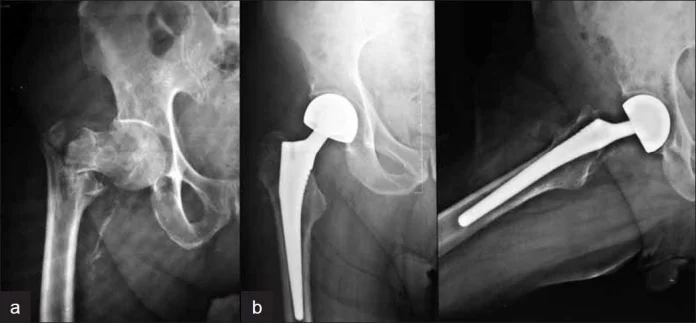
X-rays are commonly used as the initial imaging investigation. However, early femoral neck stress fractures may not be visible on the first X-ray.
If symptoms and clinical findings continue to suggest a fracture, a normal X-ray should not be treated as proof that the bone is healthy.
Why MRI is important
MRI is particularly useful for detecting early bone stress injury and assessing the location and extent of the fracture. These findings help the orthopedic team decide whether protected weight-bearing, close monitoring, or surgery is appropriate.
The American College of Radiology recommends MRI without contrast as an appropriate next investigation when a suspected stress fracture remains unresolved after negative or indeterminate radiographs. (American College of Radiology, 2024)
What Should You Do If You Suspect This Injury?
Stop exercise and seek urgent medical assessment. Do not wait several days to see whether the pain settles.
Until you have been assessed:
- Stop running, jumping, dancing, and other impact activities.
- Avoid putting weight through the affected leg.
- Do not stretch, strengthen, or repeatedly test the painful hip.
- Seek emergency care if you cannot bear weight or develop sudden severe pain.
- Follow medical advice about crutches or other methods of protected or non-weight-bearing.
Do not independently decide that walking is safe because the pain is mild. The appropriate level of loading depends on the fracture and its stability.
How Does Physiotherapy Help During Recovery?
Physiotherapy becomes important after medical assessment and an appropriate fracture management plan. It cannot replace urgent diagnosis or surgical treatment when fixation is indicated.
1. Follow weight-bearing restrictions
Some fractures can be managed without surgery using protected or non-weight-bearing and close follow-up. Others require surgical fixation based on fracture location, extent, and displacement risk.
The physiotherapist can help you follow prescribed restrictions during transfers, walking, and everyday activities. Do not increase weight-bearing simply because your pain has improved.
2. Maintain safe movement and conditioning
When approved by the treating team, rehabilitation may include suitable movement exercises and conditioning that do not compromise the injured hip.
Exercise selection must reflect the fracture pattern, symptoms, treatment approach, and healing progress. Unapproved loading through the affected leg should be avoided.
3. Restore strength and walking ability
As healing progresses and the clinician permits greater loading, physiotherapy may introduce progressive hip and lower-limb strengthening, balance work, and gait retraining.
The goal is to restore function without exceeding the bone’s capacity to heal. Progress should follow clinical review and imaging when indicated.
4. Address contributing factors
Rehabilitation may also involve reviewing training load, recovery, and nutritional or bone-health factors. A doctor or dietitian may recommend further assessment for low bone density, nutritional deficiencies, or low energy availability when appropriate.
When Can You Return to Running or Sport?
Returning to running too early can put the healing bone at risk. Being able to walk with less pain does not automatically mean the fracture has healed sufficiently for high-impact activity.
Return to sport should be decided by the treating orthopedic team, with physiotherapy support where appropriate. Considerations may include:
- Evidence of healing on follow-up imaging when required.
- Comfortable walking and daily activities.
- Adequate strength and movement control for the intended activity.
- Gradual progression of loading without recurrence of symptoms.
- Appropriate management of relevant training and bone-health risk factors.
A systematic review found that return-to-sport outcomes following femoral neck stress fractures vary, and the available evidence is limited. Recovery timelines therefore need to be individualized rather than based on a fixed number of weeks. (Yang et al., 2023)
Femoral Neck Stress Fracture: Myth vs Fact
MYTH: If the pain disappears after resting, the fracture has healed.
FACT: Pain relief does not confirm bone healing. Repeated symptoms during activity require medical assessment.
MYTH: A normal X-ray rules out a stress fracture.
FACT: Early fractures may not appear on X-rays. MRI may be appropriate if suspicion remains.
MYTH: Stretching and strengthening are the best first steps for hip pain.
FACT: A suspected femoral neck stress fracture needs urgent medical assessment before exercise-based rehabilitation begins.
MYTH: You can return to running once walking feels comfortable.
FACT: Return to impact activity should follow clinical clearance and an individualized rehabilitation plan.
Common Mistakes That Can Delay Recovery
Continuing to run because the pain settles with rest
Temporary relief does not prove that the bone has healed. Repeated impact can allow the injury to progress.
Assuming a normal X-ray rules out a fracture
Early stress fractures may not appear on X-rays. Further investigation may be necessary when clinical suspicion remains.
Starting exercises before diagnosis
Stretching, strengthening, and mobility drills are not substitutes for investigating a suspected femoral neck stress fracture.
Returning to sport based only on pain relief
Symptoms may improve before the bone is ready for high-impact activity. Return-to-sport decisions should follow medical guidance and a structured progression.
Final Thoughts: Protect Your Hip Before Returning to Sport
A femoral neck stress fracture is not an injury to push through. Deep groin pain during exercise, a new limp, or pain while walking deserves attention, particularly after an increase in training or when bone health may be reduced.
The safest approach is early medical assessment, appropriate imaging, and adherence to weight-bearing restrictions. Physiotherapy can then help restore movement and strength through a carefully progressed rehabilitation plan.
Conclusion
A femoral neck stress fracture can begin as a mild ache in the groin during exercise, but it may progress if the affected bone continues to bear excessive load.
Pain that returns during activity, develops during ordinary walking, or causes a limp should never be dismissed as routine muscle soreness.
From a physiotherapy perspective, the first priority is recognizing the possibility of a high-risk fracture and ensuring urgent medical assessment.
Once the injury has been diagnosed and managed, an individualized rehabilitation program can help restore movement, strength, walking ability, and confidence while protecting the healing bone.
If you suspect a femoral neck stress fracture, stop exercise, avoid weight-bearing, and seek urgent medical assessment. Do not wait for the pain to become severe.
Frequently Asked Questions
1. What is the first sign of a femoral neck stress fracture?
An early sign can be deep groin pain during running, jumping, or other weight-bearing activities. Pain may initially improve with rest but return during exercise. Persistent symptoms require prompt medical assessment.
2. Can an X-ray miss a femoral neck stress fracture?
Yes. Early stress fractures may not be visible on X-rays. If a clinician still suspects a fracture after initial radiographs, MRI may be recommended to investigate further.
3. Should I walk if I suspect a femoral neck stress fracture?
Avoid weight-bearing on the affected leg and seek urgent medical assessment. Do not try to walk through the pain. If you cannot bear weight or have sudden severe pain, seek emergency care.
4. Can physiotherapy heal a femoral neck stress fracture?
Physiotherapy supports recovery by helping manage movement restrictions and gradually restore strength and function when medically appropriate. It cannot replace fracture diagnosis or surgery when surgery is indicated.
5. How long does recovery take?
Recovery varies according to the fracture pattern, displacement, treatment, bone health, and healing progress. Your treating team should guide weight-bearing and return-to-sport decisions rather than relying on a fixed timeline.
6. When can I return to running?
Return to running should occur only after clearance from the treating team. Progression may depend on evidence of healing, comfortable daily activities, restored strength, and a supervised increase in loading.
Stay tuned with us for more health related topics.
Follow us on LinkedIn and Instagram for more.
More Read


Medical Disclaimer
This article is for general educational purposes only and is not a substitute for professional medical advice, diagnosis, or treatment. Hip and groin pain can have several causes, and symptoms alone cannot confirm or exclude a femoral neck stress fracture.
If you suspect a femoral neck stress fracture, stop exercise, avoid weight-bearing on the affected leg, and seek urgent medical assessment. Seek emergency care for sudden severe pain or an inability to bear weight. Begin or progress physiotherapy only in accordance with the treating clinician’s recommendations.


