


Democratic Republic of the Congo (DRC), Africa: The World Health Organization (WHO) has clarified that Ebola virus may remain in the semen of some male survivors after clinical recovery, creating a potential risk of sexual transmission.
However, people who have recovered and met the criteria for discharge from treatment are not expected to transmit the virus through sweat or saliva, according to comments by a WHO emergency response official.
Patrick Otim, programme area manager for emergency response at the WHO Regional Office for Africa, explained the distinction in a video answering public questions about Ebola.
His comments come as the ongoing outbreak of Bundibugyo virus disease continues to pose a serious public health challenge across parts of Africa.
The WHO’s official guidance on Ebola disease advises male survivors to practise safer sex and undergo regular semen testing where testing programmes are available. The virus has been documented in infected semen for as long as 15 months after clinical recovery.
Key Points
- Ebola virus may persist in semen after clinical recovery, creating a potential risk of sexual transmission.
- The WHO recommends monthly semen testing until two consecutive negative results are obtained.
- Where semen testing is unavailable, male survivors should practise safer sex for 12 months.
- Survivors who meet the criteria for discharge are not expected to transmit Ebola through sweat or saliva, according to WHO emergency response guidance.
- As of 26 October 2026, the DRC had recorded 10,141 confirmed cases and 4,928 related deaths in the latest ECDC report published on 28 October.
Source: WHO and ECDC. Outbreak figures are date-specific and may change.
Why Ebola Can Still Be Transmitted After Recovery
Clinical recovery does not necessarily mean that every trace of the virus has disappeared from every part of the body.
According to the WHO, orthoebolaviruses can persist in certain protected sites in some people who recover from Ebola disease. These sites include the testicles, the inside of the eye and the brain.
The persistence of the virus in semen is particularly important because it can create a risk for sexual partners even after a survivor has been discharged from a treatment centre.
This is different from ongoing acute Ebola disease, in which the virus can spread through direct contact with the blood or other infectious bodily fluids of an infected person.
The possibility of post-recovery transmission is one reason health authorities recommend continuing medical follow-up for survivors rather than treating discharge from hospital as the end of all precautions.
What WHO Recommends for Male Ebola Survivors
The WHO recommends counselling male survivors and their sexual partners about the potential risk of sexual transmission.
Survivors should receive information about safer sex practices, including the use of condoms, and should have access to appropriate testing and follow-up services.
Where a semen-testing programme is available, the WHO recommends monthly testing until two consecutive test results are negative. Once both results are negative, survivors can resume normal sexual practices with a minimised risk of transmission.
Where semen testing is unavailable, the WHO advises male survivors to practise safer sex for 12 months.
These recommendations are designed to reduce the risk of transmission while supporting survivors’ return to everyday life. They should be implemented alongside respectful counselling and continuing healthcare, rather than used to stigmatise people who have recovered.
The WHO has documented sexual transmission through infected semen for up to 15 months after clinical recovery.
The 12-month recommendation applies specifically when a semen-testing programme is unavailable, while the testing pathway allows individual follow-up based on results.
Can Ebola Survivors Transmit the Virus Through Sweat or Saliva?
Otim said survivors who have recovered and met the criteria for discharge from treatment are not expected to transmit Ebola through sweat or saliva.
The distinction matters because viral persistence after recovery is not the same as active illness.
Patients must satisfy the relevant clinical and laboratory requirements before being discharged, and appropriate post-recovery precautions must still be followed when recommended.
The WHO does not recommend isolating recovered patients whose blood has tested negative for orthoebolavirus. Its survivor-care guidance instead emphasises counselling, appropriate biological testing, long-term support and reintegration into the community.
However, the situation is different for people who are actively ill. Ebola can spread through direct contact with the blood and other bodily fluids of an infected person, or through contaminated objects.
Bodily fluids that may carry infection include saliva and sweat during active disease.
People should therefore follow public health instructions when an Ebola infection is suspected or confirmed. The fact that some survivors need continued follow-up does not mean that ordinary social contact with recovered people should be avoided.
Ebola Outbreak 2026: Latest Cases and Deaths
The guidance comes amid an ongoing outbreak of Bundibugyo virus disease, a form of Ebola disease that has spread beyond the Democratic Republic of the Congo (DRC).
According to the European Centre for Disease Prevention and Control’s update published on 28 October 2026, the DRC had recorded 10,141 confirmed cases and 4,928 related deaths, based on data through 26 October. The outbreak had affected eight provinces, with community transmission continuing.
The figures underline the scale of the public health challenge. However, outbreak statistics are updated as investigations, laboratory confirmation and reporting continue, so dated figures should not be presented as permanently current.
Kenya Reports Nine Cases and Two Deaths
Kenya had recorded nine confirmed cases, including two deaths, as of 26 October, according to the ECDC. All nine cases were linked to the initial imported case, and the last confirmed case in the reported cluster was recorded on 20 October.
The country’s response has included contact tracing, isolation of confirmed cases and monitoring of people who may have been exposed. On 26 October, Kenyan authorities reported that 20 contacts had completed the 21-day follow-up period, while 98 remained under monitoring.
The cluster highlights why rapid identification of cases and careful monitoring of exposed contacts remain important in preventing further transmission.
Nigeria Reports No Active Case After Evacuation
Nigeria confirmed an imported case of Bundibugyo virus disease on 20 October 2026. The patient, a woman who had travelled from Uganda, developed symptoms on 7 October and sought medical care in Abuja on 11 October before laboratory confirmation.
The patient was medically evacuated to Switzerland on 26 October for continued treatment. The WHO’s Regional Director for Africa subsequently said that Nigeria had no active Ebola cases following the evacuation. However, this did not mean that all containment measures could end.
The ECDC reported that 54 contacts linked to the case were under follow-up as of 26 October. Surveillance and contact monitoring remained important while authorities continued investigating the patient’s movements and possible source of exposure.
Nigeria’s situation also illustrates the distinction between having no active confirmed case within the country and being formally declared free of an outbreak. Public health monitoring must continue according to established protocols.
Further details are available in the WHO African Region’s announcement on Nigeria’s imported case.
How Ebola Spreads
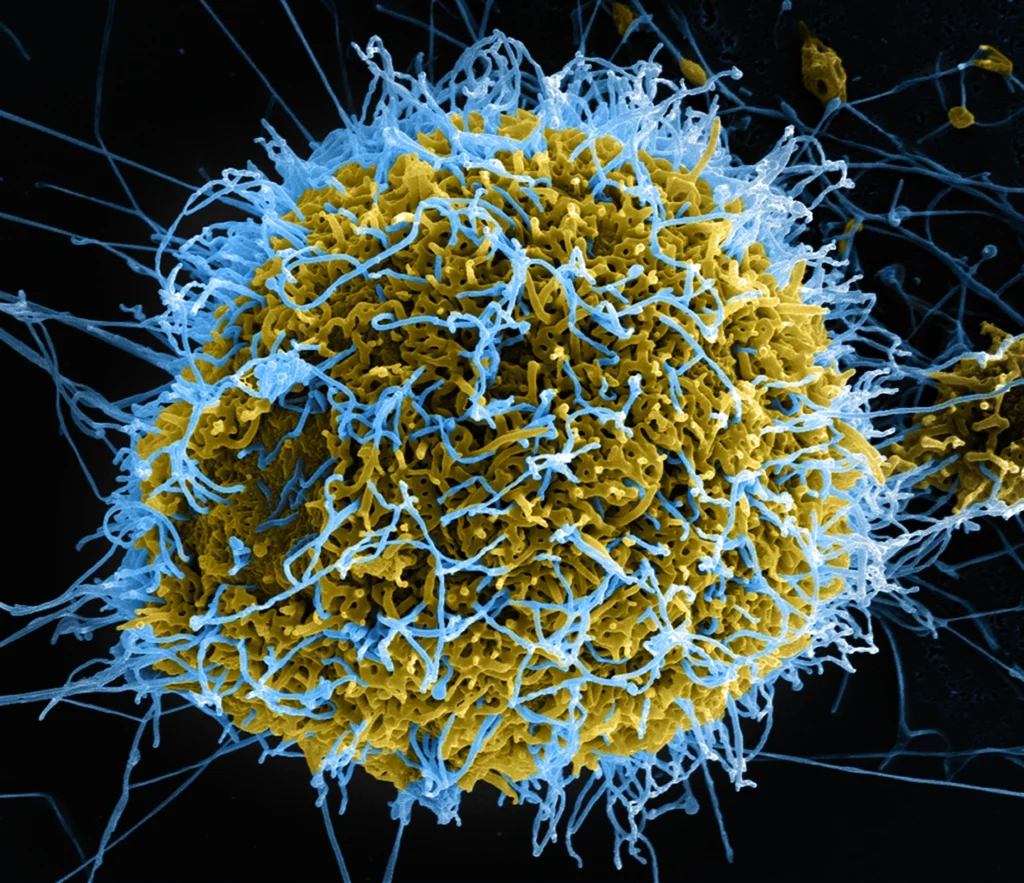
Ebola primarily spreads through direct contact with the blood or other bodily fluids of a person who is sick with or has died from the disease. Transmission can also occur through objects contaminated with infectious bodily fluids.
The disease is not spread in the same way as common respiratory infections through routine, casual proximity alone. The type of exposure, whether a person is actively ill and the presence of infectious bodily fluids are important considerations when assessing risk.
According to the WHO, symptoms may include fever, fatigue, muscle pain, headache and sore throat. Other symptoms can develop, including vomiting, diarrhoea, rash and impaired kidney or liver function. Severe bleeding can occur, but it is not present in every patient.
Anyone who develops symptoms after a possible exposure should contact public health authorities or seek urgent medical advice, clearly explaining the potential exposure and following instructions on where to receive assessment.
This allows healthcare facilities to take appropriate infection prevention and control measures.
Survivor Care Must Include Testing and Dignity
Ebola survivor programmes play an important role in supporting recovery and preventing potential transmission after discharge. They can provide follow-up testing, counselling, medical support and help with the physical and psychological effects that may continue after illness.
The WHO has also highlighted the importance of survivor clinics in the DRC, where recovered people can receive medical care and advice about the possibility of viral persistence in bodily fluids.
These services must be accompanied by respectful treatment. Survivors should not face unnecessary isolation or social exclusion because of concerns that they remain infectious. Appropriate medical assessment, not fear or stigma, should guide public health decisions.
The Key Takeaway
The WHO’s guidance makes an important distinction: some male Ebola survivors may remain at risk of transmitting the virus through semen after recovery, while survivors who have met the criteria for discharge are not expected to transmit it through sweat or saliva.
Monthly semen testing until two consecutive negative results is recommended where testing is available. When a testing programme is unavailable, the WHO advises safer sex for 12 months.
Meanwhile, the Bundibugyo virus disease outbreak continues to require surveillance, rapid diagnosis, contact tracing and appropriate care for patients and survivors. Clear public communication is essential to control transmission without creating unnecessary fear of people who have recovered from Ebola.
Data note: Outbreak figures in this report reflect information published by the ECDC on 28 October 2026, using DRC data through 26 October. Figures may change as additional information becomes available.
Stay tuned with us for more health related topics.
Follow us on LinkedIn and Instagram for more.


