


Primitive reflexes are automatic movements that babies develop before birth or shortly after delivery.
They help newborns respond to touch, changes in position and their surroundings.
Quick Answer: What Are Retained Primitive Reflexes?
Primitive reflexes are automatic movements seen during early infancy. As a baby’s nervous system develops, these responses generally become less dominant and voluntary movement improves.
When a primitive reflex remains unusually strong, obligatory or asymmetrical beyond the expected developmental period, it may be relevant to difficulties with coordination, posture, balance or voluntary movement.
A retained reflex alone does not indicate a neurological disorder. A pediatric physiotherapist or pediatrician can assess the child’s overall movement and development.
As the nervous system matures, these early responses gradually become less dominant, allowing more controlled movements to develop.
Sometimes, primitive reflex responses remain noticeable beyond the expected developmental period.
If a response is strong, persistent or difficult for a child to control voluntarily, it may be relevant when assessing movement difficulties such as poor coordination, postural instability or reduced use of one side of the body.
However, a retained reflex does not automatically indicate a neurological condition.
Understanding how primitive reflexes develop, when they may matter and how pediatric physiotherapy assesses movement can help parents make informed decisions.
Key Takeaways
- Primitive reflexes are normal automatic responses during early infancy.
- They generally become less dominant as voluntary movement develops.
- Persistent, strong or asymmetrical responses may warrant further assessment when they interfere with movement.
- Possible movement difficulties include poor coordination, postural instability and reduced use of one side.
- A retained reflex alone cannot diagnose cerebral palsy or another neurological condition.
- Pediatric physiotherapy focuses on functional movement, balance, posture, coordination and age-appropriate motor skills.
- Early assessment helps identify children who may benefit from appropriate developmental support.
What Are Primitive Reflexes in Babies?
Primitive reflexes are automatic movement responses controlled by early neurological pathways.
They are present at birth or emerge during early infancy and help babies perform important functions before they develop voluntary movement control.
For example, when a newborn’s cheek is gently touched, the baby may turn their head towards that side.
This is the rooting reflex, which helps the baby locate the breast or bottle during feeding.
Other examples include:
- Moro reflex: An automatic startle response involving the arms and body.
- Palmar grasp reflex: Automatic closing of the fingers when the palm is touched.
- Rooting reflex: Turning the head towards a touch near the mouth.
- Asymmetrical Tonic Neck Reflex (ATNR): A fencing-like arm position when the head turns.
As the central nervous system develops, these early responses become less dominant and more controlled voluntary movements emerge.
This developmental process is often called reflex integration.
It does not mean that the reflex pathways disappear completely.
Instead, the child develops greater control over movement, posture and responses to the environment. (American Academy of Pediatrics)
Why Are Primitive Reflexes Important for Motor Development?
Primitive reflexes are part of normal early neurological development.
They provide automatic responses before babies have developed the strength, coordination and voluntary control needed for more complex activities.
As babies grow, their movement abilities become increasingly purposeful. They gradually learn to:
- Bring both hands together at the midline.
- Reach for toys and transfer objects between hands.
- Roll from their back to their tummy.
- Support their body while sitting.
- Move towards crawling and standing.
- Develop balance and controlled walking.
These skills develop through a combination of nervous system maturation, muscle development, sensory feedback and opportunities to explore movement.
Primitive reflexes are only one part of this process.
Their integration should not be considered the sole reason a child develops a particular motor skill.
When Do Primitive Reflexes Usually Become Less Noticeable?
Different primitive reflexes follow different developmental timelines.
Their responses generally become less prominent during infancy, although the exact timing varies.
| Reflex | Main response | Approximate period when it becomes less prominent |
|---|---|---|
| Rooting | Turns the head towards a touch on the cheek | Around 3-4 months |
| Moro | Produces an automatic startle response | Usually by 4-6 months |
| ATNR | Produces a fencing-like position when the head turns | Around 4-6 months |
| Palmar grasp | Closes the fingers when the palm is stimulated | Around 5-6 months |
| Stepping | Produces stepping-like movements when held upright with feet touching a surface | Usually by around 2 months |
| Plantar grasp | Causes the toes to curl when the sole is stimulated | Around 9-12 months |
These are approximate clinical guides, not strict deadlines.
Reflex responses can vary between babies, and their significance depends on the child’s age, neurological examination and overall development.
The STNR and tonic labyrinthine reflex (TLR) are also discussed in developmental movement assessment.
However, their classification and developmental timelines differ across clinical and educational literature.
They should not be treated as interchangeable with the better-established newborn reflexes listed above.
What Happens When Primitive Reflexes Persist?
A primitive reflex may become clinically relevant when its response remains unusually strong, obligatory or asymmetrical beyond the expected developmental period and interferes with voluntary movement.
For example, an infant may show a noticeable arm response when turning their head.
If the response is strong enough to interfere with reaching or bringing both hands together, a clinician may investigate whether it is affecting movement development.
Research has identified associations between persistent primitive reflex responses and differences in motor performance.
A 2026 systematic review of 14 studies reported associations involving locomotion, balance and manual dexterity.
However, the researchers also highlighted limitations and differences in the available evidence.
This means that persistent reflexes may be relevant clinical findings, but they cannot independently explain a child’s movement difficulties or establish a diagnosis. (Provazník et al., 2026)
Five Primitive Reflexes That May Be Relevant to Movement
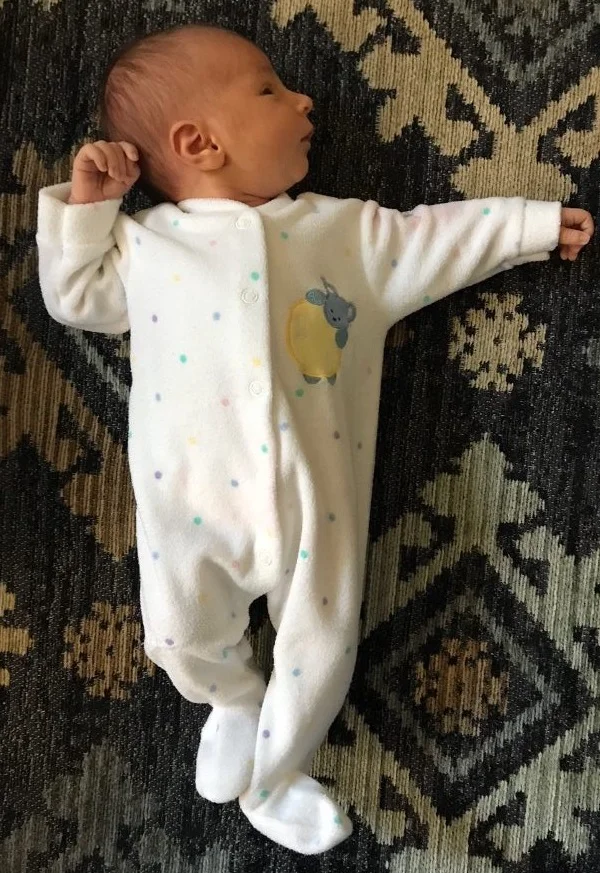
1. Asymmetrical Tonic Neck Reflex (ATNR)
The ATNR is sometimes called the fencing reflex.
When a baby’s head turns to one side, the arm and leg on the face side tend to extend, while the opposite limbs tend to bend.
This is a normal early response. However, an unusually strong or obligatory response may interfere with:
- Bringing both hands together.
- Reaching across the body’s midline.
- Using both hands during play.
- Rolling smoothly.
- Developing symmetrical movement patterns.
For example, a child may find it difficult to reach for a toy across their body if turning their head produces an associated arm position.
2. Symmetrical Tonic Neck Reflex (STNR)
The STNR is associated with changes in arm and leg positions when the neck bends or extends.
It is commonly discussed in relation to the transition towards hands-and-knees positioning.
If an associated response interferes with voluntary control, a child may have difficulty maintaining a stable crawling position, coordinating their arms and legs or moving between sitting and crawling.
However, these difficulties have several possible explanations.
They should not automatically be attributed to a retained STNR.
3. Tonic Labyrinthine Reflex (TLR)
The TLR is associated with changes in body posture and muscle activity in response to head position relative to gravity.
An unusually prominent response may be considered during an assessment of postural control.
A child with movement difficulties may also demonstrate:
- Difficulty maintaining an upright posture.
- Reduced balance during movement.
- Challenges when changing body positions.
- Difficulty controlling movements against gravity.
These observations are not specific to TLR and require a broader assessment.
4. Moro Reflex
The Moro reflex is commonly known as the startle reflex.
When a baby experiences a sudden change in position or a startling stimulus, the arms typically extend outwards before moving back towards the body.
This response is normal during early infancy.
An unusually persistent or exaggerated response may be relevant when other neurological or developmental concerns are present.
Sensitivity to loud noises, sudden movements or changes in position alone does not establish that the Moro reflex is retained.
5. Palmar Grasp Reflex
The palmar grasp reflex causes a baby’s fingers to close automatically when the palm is stimulated.
As voluntary hand control develops, babies gradually become better at opening their hands, reaching, grasping and releasing objects.
An unusually persistent obligatory grasp response may interfere with these activities.
Parents may notice persistent fisting, difficulty releasing toys or reduced spontaneous hand use.
These signs deserve assessment, particularly when one hand is affected more than the other.
Signs That Persistent Reflex Responses May Be Affecting Movement
Parents are more likely to notice difficulties during everyday activities than identify a specific reflex.
Possible signs include:
- Difficulty bringing both hands together during play.
- Consistently using one hand more than the other.
- Difficulty reaching across the body.
- Unusual rolling or crawling patterns.
- Difficulty maintaining balance while sitting or standing.
- Awkward coordination during walking, running or jumping.
- Difficulty moving between sitting, crawling and standing.
- Persistent fisting or reduced voluntary hand release.
A child may demonstrate one or more of these difficulties for reasons unrelated to primitive reflexes.
The overall movement pattern and developmental progress are more important than any single observation.
Can Persistent Primitive Reflexes Be Associated With Cerebral Palsy?
Yes.
Persistent, exaggerated or asymmetrical primitive reflex responses can be among the neurological findings seen in children with cerebral palsy.
Cerebral palsy affects movement, posture and muscle control because of an early disturbance in the developing brain.
Other possible signs include:
- Persistent stiffness or unusual muscle tone.
- Delayed motor milestones.
- Asymmetrical movement.
- Early hand preference before 12 months.
- Persistent fisting or reduced spontaneous movement.
- Difficulty maintaining head or trunk control.
However, a retained primitive reflex alone cannot diagnose cerebral palsy.
Early identification relies on a combination of clinical history, neurological examination and appropriate standardized assessments.
Tools such as the General Movements Assessment (GMA) and Hammersmith Infant Neurological Examination (HINE) may be used in specialist early-detection pathways. (Novak et al., 2017)
How Does a Pediatric Physiotherapist Assess Persistent Reflex Responses?
A pediatric physiotherapist evaluates the child’s overall movement development rather than relying only on reflex testing.
The assessment may include:
1. Developmental History
The physiotherapist asks about the child’s birth history, prematurity, developmental milestones and current movement difficulties.
2. Posture and Movement Symmetry
The physiotherapist observes how the child uses both sides of the body during reaching, rolling, sitting, crawling, standing and walking.
3. Muscle Tone and Strength
Muscle tone, strength and voluntary control are assessed to identify possible difficulties affecting movement.
4. Balance and Postural Control
The child may be observed during sitting, standing, reaching and changing positions to assess stability and control.
5. Neurological Assessment
Primitive reflexes may be examined as part of a wider neurological assessment.
The clinician also considers spontaneous movement, postural reactions, protective responses and coordination.
For infants with suspected neurological difficulties, standardized tools such as HINE and GMA may be used by appropriately trained clinicians as part of a broader diagnostic pathway.
The American Academy for Cerebral Palsy and Developmental Medicine recommends combining appropriate neurological, movement and imaging assessments when evaluating infants at risk of cerebral palsy. (AACPDM, 2020)
How Can Pediatric Physiotherapy Help?
Physiotherapy focuses on improving the child’s functional movement abilities.
Treatment is individualized according to age, developmental level, assessment findings and specific difficulties.
The goal is not simply to make a reflex disappear.
It is to improve voluntary movement, postural control, coordination and participation in everyday activities.
1. Improving Postural Control
Activities may encourage better head, trunk and pelvic stability during sitting, reaching, crawling and standing.
2. Developing Bilateral Coordination
Play involving both hands and both legs can help children practice coordinated movement.
Examples include passing toys between hands, reaching across the midline and age-appropriate crawling activities.
3. Encouraging Controlled Weight-Bearing
Supervised floor play, supported standing and reaching activities can help develop strength and control through the arms and legs.
4. Improving Balance and Coordination
Age-appropriate balance games, stepping activities and movement transitions can support stability and coordinated movement.
5. Practicing Functional Movement Skills
Rolling, sitting, crawling, standing and walking activities are practised according to the child’s current abilities.
6. Parent Education and Home Activities
Parents receive guidance on safe play positions, movement opportunities and activities that can be incorporated into everyday routines.
Are Primitive Reflex Integration Exercises Necessary for Every Child?
No.
Not every child who demonstrates a residual primitive reflex needs a specific reflex integration program.
Some children show residual responses without meaningful difficulties in everyday movement.
Others may have genuine motor challenges that require broader developmental and neurological assessment.
Some programs marketed as reflex integration therapies claim to improve movement, attention, behavior and learning.
However, the evidence supporting these broad claims remains limited.
A systematic review by McWhirter and colleagues examined the relationship between primitive reflexes, motor function and learning disorders in preschool children.
It highlighted limitations in the available evidence and the need for better-quality research before drawing firm conclusions about clinical benefits. (McWhirter et al., 2024)
For children with movement difficulties, treatment should focus on measurable functional goals, meaningful activities and the underlying clinical findings.
Parents should be cautious about programs promising to eliminate retained reflexes or resolve multiple developmental difficulties through a fixed set of exercises.
Primitive Reflexes: Myth vs Fact
Myth: Every retained primitive reflex indicates a neurological disorder.
Fact: A residual reflex response does not automatically indicate a disorder. Its strength, symmetry, developmental context and effect on movement need to be considered.
Myth: Primitive reflexes disappear completely as babies grow.
Fact: Early reflex responses generally become less dominant as voluntary movement control develops. This does not mean the underlying neural pathways disappear.
Myth: Retained primitive reflexes always cause ADHD, autism or learning difficulties.
Fact: Current evidence does not establish that retained primitive reflexes cause these conditions. They should not be used to diagnose them.
Myth: Every child needs a reflex integration program.
Fact: Treatment is not necessary for every residual reflex response. Physiotherapy should address identified functional difficulties and individual developmental needs.
Myth: Parents should test their child’s reflexes at home.
Fact: Reflex testing should be performed and interpreted by trained healthcare professionals as part of an appropriate clinical examination.
Simple Activities Parents Can Encourage at Home
Parents can support movement development through safe, age-appropriate play.
- Reaching across the body: Place a toy slightly to one side to encourage reaching across the midline.
- Two-handed play: Encourage holding, passing and exploring toys with both hands.
- Supervised tummy time: For babies who are not yet mobile, provide comfortable periods of tummy time while awake and supervised.
- Rolling games: Encourage babies to reach for toys placed to the side during supervised floor play.
- Crawling activities: Create safe floor spaces that encourage movement towards toys.
- Standing and balance games: For children who can stand, introduce supported reaching and simple weight-shifting activities.
Activities should match the child’s developmental abilities.
Never force a movement, deliberately trigger a startle response or attempt to test primitive reflexes at home.
When Should Parents Seek Professional Help?
Consider consulting a pediatrician if your child has persistent movement difficulties or signs that suggest unusual neurological development.
Professional assessment is particularly important if you notice:
- Persistent or unusually strong reflex responses beyond the expected developmental period.
- Consistent differences between the two sides of the body.
- Early hand preference before 12 months.
- Persistent fisting or reduced hand movement.
- Delayed sitting, crawling or walking.
- Unusual stiffness or floppiness.
- Difficulty maintaining head or trunk control.
Seek prompt medical attention if your child loses previously acquired movement skills, develops sudden weakness or experiences a sudden deterioration in balance or coordination.
Early assessment can help identify the underlying reason and ensure appropriate support is provided.
Final Thoughts
Every child’s movement development follows an individual path. Although primitive reflexes are an important part of early neurological development, their presence alone does not determine whether a child has a developmental condition.
Parents should pay attention to their child’s overall movement, coordination, balance and ability to perform everyday activities rather than focusing on a single reflex.
With timely assessment and appropriate pediatric physiotherapy, children experiencing movement difficulties can receive individualized support to develop greater control, confidence and functional independence.
Conclusion
Primitive reflexes are a normal part of early neurological development.
They help newborns respond to their surroundings before more controlled voluntary movement develops.
As children grow, these early responses generally become less dominant.
However, persistent, exaggerated or asymmetrical responses may sometimes be relevant when assessing difficulties with reaching, rolling, crawling, balance and other functional activities.
Parents should remember that a retained reflex alone does not establish a developmental diagnosis.
The child’s overall movement pattern, neurological findings and developmental progress are much more important.
Pediatric physiotherapy can help assess movement difficulties and support functional skills through individualized, age-appropriate activities.
When neurological concerns are present, early medical evaluation and coordinated care are essential.
Frequently Asked Questions
1. What happens if primitive reflexes do not integrate?
If a primitive reflex response remains unusually strong or interferes with voluntary movement beyond the expected developmental period, a healthcare professional may assess the child’s neurological development, posture, coordination and motor skills. A residual response alone does not confirm a disorder.
2. At what age should primitive reflexes disappear?
Different primitive reflexes become less prominent at different ages. For example, the Moro reflex generally fades by around 4–6 months, while the palmar grasp response usually becomes less prominent by around 5–6 months. These are approximate developmental guides rather than strict deadlines.
3. Can retained primitive reflexes affect walking?
An unusually persistent reflex response may be relevant when assessing posture, balance or coordination. However, walking difficulties have many possible causes, and a retained reflex alone cannot explain them. A broader developmental and neurological assessment is important.
4. Are retained primitive reflexes a sign of cerebral palsy?
Persistent or asymmetrical primitive reflex responses can occur in children with cerebral palsy, but they are not diagnostic on their own. Diagnosis involves neurological examination, developmental history and appropriate standardized assessments.
5. Can physiotherapy help with retained primitive reflexes?
Paediatric physiotherapy can help children who have associated movement difficulties. Treatment may address postural control, strength, balance, bilateral coordination and functional motor skills. The programme depends on the child’s individual assessment.
6. What are primitive reflex integration exercises?
These are activities marketed to reduce the influence of persistent primitive reflex responses. Evidence for specific reflex integration programs remains limited and inconsistent. Children should receive treatment based on identified functional needs rather than a standardized program for every reflex.
7. Can retained primitive reflexes affect handwriting or coordination?
Some studies report associations between persistent reflex responses and motor performance, including manual dexterity. However, handwriting and coordination difficulties can have several causes and should be assessed individually.
8. When should parents consult a pediatric physiotherapist?
Consider an assessment if your child has persistent difficulty with balance, posture, coordination, reaching, crawling, walking or using both sides of the body. Consult a pediatrician for developmental or neurological concerns, particularly if skills are being lost or weakness develops suddenly.
Stay tuned with us for more health related topics.
Follow us on LinkedIn and Instagram for more.
More Read


Medical Disclaimer
The information in this article is intended for general educational purposes only and should not be considered a substitute for professional medical advice, diagnosis or treatment.
Every child’s neurological and motor development is different. The presence of a primitive reflex or a movement difficulty does not independently confirm a medical or developmental condition.
Parents should consult a qualified paediatrician or paediatric physiotherapist for an appropriate assessment. Seek prompt medical attention if a child develops sudden weakness, loses previously acquired skills or experiences a sudden deterioration in movement.


