


Fifth disease in children, also called erythema infectiosum or slapped-cheek syndrome, is a common viral infection caused by human parvovirus B19.
It mainly affects children, particularly those in the preschool and primary school years.
Quick Answer: What Is Fifth Disease?
Fifth disease is a common childhood viral infection caused by human parvovirus B19. It is best known for producing a bright red rash across one or both cheeks, giving the appearance of a slap mark.
- Common name: Slapped-cheek syndrome.
- Early symptoms: Mild fever, runny nose, headache and tiredness.
- Characteristic rash: Red cheeks followed by a lacy rash on the arms, legs and body.
- Cause: Human parvovirus B19.
- Contagious period: Usually before the characteristic rash appears.
- Treatment: Rest, fluids and relief of symptoms. Most children recover without specific treatment.
Important: Children with sickle cell disease, thalassemia or weakened immunity need prompt medical advice if exposed or symptomatic. Pregnant people who may have been exposed should contact their healthcare professional.
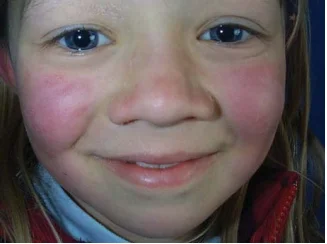
The infection gets its familiar name from the bright red rash that can appear across one or both cheeks. It may look as though the child has been slapped.
A few days later, a second rash may develop on the arms, legs and body, often forming a delicate, lace-like pattern.
Although the rash can look dramatic, fifth disease is usually mild in otherwise healthy children. Most recover without specific medical treatment.
However, the infection needs closer attention in children with certain blood disorders or weakened immune systems.
It is also important for pregnant people to know about possible exposure because parvovirus B19 can occasionally affect an unborn baby.
Key Takeaways for Parents
Fifth disease is caused by human parvovirus B19 and is common in school-age children.
Red cheeks may be followed by a lacy rash across the arms, legs and body.
The infection can spread before parents recognise the characteristic skin changes.
Rest, fluids and symptom relief are generally sufficient for uncomplicated cases.
Blood disorders and weakened immunity can increase the risk of complications.
Most children return to normal play and movement as their energy improves.
Why Is It Called Fifth Disease?
The name comes from an older classification of common childhood illnesses associated with skin rashes.
Fifth disease was listed as the fifth condition in a historical group of childhood exanthems.
Today, healthcare professionals generally use the terms fifth disease, slapped-cheek syndrome and erythema infectiosum to describe the same infection.
It should not be confused with other childhood illnesses that cause fever and rashes, such as measles, rubella or scarlet fever.
Why Does Fifth Disease Cause a Slapped-Cheek Rash?
Fifth disease begins when parvovirus B19 enters the body, usually through respiratory droplets.
The virus infects developing red blood cell precursors in the bone marrow and temporarily affects red blood cell production.
As the immune system responds and produces antibodies, the characteristic skin rash can develop. This is why the facial rash often appears after the initial cold-like symptoms have started to settle.
The rash is therefore not simply a sign that the virus is spreading across the skin. It is part of the body’s response to the infection.
Not every child develops the classic slapped-cheek appearance. Some have a mild body rash, while others experience no noticeable symptoms at all. (CDC, 2025)
What Does the Fifth Disease Rash Look Like?
The rash often develops in two stages, although the timing and appearance can vary.
1. Bright Red Slapped-Cheek Rash
The most recognizable feature is a red or reddish-purple rash on one or both cheeks.
Parents may notice:
- Bright redness across the cheekbones.
- A flushed appearance that resembles sunburn.
- Relative paleness around the mouth.
- A clear contrast between the cheeks and surrounding facial skin.
The rash may be less obvious on brown or darker skin. Parents may notice a change in skin tone or texture rather than a bright red color.
2. Lacy Rash on the Body
A few days after the facial rash appears, a second rash may develop on the:
- Arms and forearms.
- Thighs and legs.
- Chest and abdomen.
- Back and buttocks.
It may begin as small pink or red patches. As the patches fade in the center, they can leave a net-like or lace-like pattern.
The rash may feel slightly raised or itchy. It can be more noticeable after physical activity, warm baths or exposure to heat.
The palms and soles are usually spared in typical fifth disease, although unusual skin presentations can occur. (CDC, 2025)
What Are the Early Symptoms of Fifth Disease?
Before the characteristic rash develops, fifth disease can resemble a mild respiratory infection.
Possible early symptoms include:
- Low-grade fever.
- Runny or blocked nose.
- Sore throat.
- Headache.
- Muscle aches.
- Mild tiredness.
- General discomfort.
Some children have no obvious early symptoms. Others may feel unwell for a few days before the rash becomes visible.
This change can confuse parents. A child may appear to be recovering from a minor illness, only for the cheeks to become red several days later.
When Does the Slapped-Cheek Rash Appear?
Symptoms usually develop around 4 to 14 days after exposure to parvovirus B19. In some cases, the incubation period can extend to 21 days.
The illness commonly follows this pattern:
- Exposure: The child comes into contact with someone carrying parvovirus B19.
- Early illness: Mild fever, runny nose, headache or other flu-like symptoms may develop.
- Facial rash: One or both cheeks become noticeably red.
- Body rash: A lacy rash may appear on the arms, legs and trunk.
- Recovery: The rash gradually fades, although it may return temporarily.
This sequence is not identical in every child. Some develop a rash without noticeable early symptoms, while others may never develop the typical rash. (NHS)
Why Does the Rash Disappear and Then Come Back?
One unusual feature of fifth disease is that the rash can fade and then reappear.
Parents may notice that their child’s skin looks almost normal in the morning but becomes blotchy again after playing, taking a warm bath or spending time outdoors.
Common triggers include:
- Hot weather or warm environments.
- Hot baths and showers.
- Physical activity.
- Sun exposure.
- Emotional stress.
This does not necessarily mean that the child has caught the infection again. The skin reaction can remain sensitive for a while after the initial illness.
The rash usually fades within one to three weeks, although intermittent flare-ups can continue for longer. (NHS, 2024)
Is Fifth Disease Contagious?
Yes. Parvovirus B19 spreads mainly through respiratory droplets released when an infected person coughs or sneezes.
Contact with contaminated respiratory secretions can also contribute to transmission.
The timing of contagiousness is particularly important.
Children are generally most contagious before the characteristic rash appears.
By the time the slapped-cheek rash develops, most otherwise healthy children are no longer considered infectious.
This means a child may spread the virus at school or childcare before parents or teachers realize that they have fifth disease.
There are exceptions. People who develop an aplastic crisis or persistent infection may remain infectious for longer and need individual medical advice.
Can a Child Go to School With Fifth Disease?
In general, a child does not need to stay away from school solely because the characteristic rash has appeared, provided they feel well enough to participate and do not have a fever or another reason to remain at home.
Parents should follow the school’s illness policy and local medical advice.
Useful hygiene measures include:
- Washing hands regularly with soap and water.
- Covering coughs and sneezes with a tissue or elbow.
- Disposing of used tissues promptly.
- Avoiding the sharing of cups and eating utensils.
- Cleaning frequently touched surfaces.
Keeping a child home only after the rash appears is unlikely to prevent much transmission because the most infectious period has usually already passed. (NHS, 2024)
How Is Fifth Disease Diagnosed?
A pediatrician can often identify fifth disease from the child’s symptoms, medical history and characteristic rash.
The doctor may ask when the fever began, when the rash appeared and whether the child has been in contact with someone who had a similar illness.
Does Every Child Need a Blood Test?
No. Most otherwise healthy children with a typical presentation do not need laboratory testing.
A blood test may be considered when:
- The diagnosis is uncertain.
- The child has a blood disorder or weakened immune system.
- There is a concern about a recent infection during pregnancy.
- A healthcare professional needs to establish whether someone has previously been infected or may be immune.
Parvovirus B19 antibody testing can help identify recent or past infection and possible immunity.
Other tests may be considered in selected clinical situations. (CDC, 2025)
What Conditions Can Look Like Fifth Disease?
Not every red cheek or childhood rash is caused by parvovirus B19. Other conditions can produce similar skin changes.
| Condition | How it may differ |
|---|---|
| Scarlet fever | Often causes a fine, rough, sandpaper-like rash with fever and sore throat. |
| Measles | Usually causes fever and respiratory symptoms followed by a widespread rash that starts on the face. |
| Rubella | May cause a mild pink rash that begins on the face and spreads downwards. |
| Allergic reaction | May cause itchy raised patches or hives that appear and change quickly. |
| Contact dermatitis | Usually develops where the skin has contacted an irritating or allergenic substance. |
| Other viral rashes | May cause widespread spots or patches alongside fever or respiratory symptoms. |
The appearance of a rash alone cannot always confirm the diagnosis.
A child with fever and a new rash should be medically assessed if symptoms are severe, unusual or worsening.
Myth vs Fact: Understanding Fifth Disease
MYTH: Fifth disease is caused by poor hygiene.
FACT: Fifth disease is caused by human parvovirus B19. It spreads mainly through respiratory droplets and can affect children regardless of their hygiene habits.
MYTH: A child is most contagious when the red cheek rash appears.
FACT: Most children are contagious before the characteristic rash develops. By the time the rash appears, they are generally no longer infectious.
MYTH: The rash will disappear permanently once it fades.
FACT: The rash can temporarily return after heat, exercise, sunlight or warm baths, even while the child is recovering.
MYTH: Every child with fifth disease needs antibiotics.
FACT: Fifth disease is viral. Antibiotics do not treat parvovirus B19, and uncomplicated cases usually need only supportive care.
MYTH: Fifth disease is always dangerous for children.
FACT: Most otherwise healthy children recover without complications. Children with certain blood disorders or weakened immunity need closer medical attention.
MYTH: Physiotherapy is needed to treat the slapped-cheek rash.
FACT: Physiotherapy does not treat the virus or rash. Most children regain their normal activity naturally as they recover.
How Is Fifth Disease Treated in Children?
There is no specific antiviral medicine routinely prescribed for uncomplicated fifth disease.
Most otherwise healthy children recover as their immune system clears the infection.
Treatment focuses on relieving symptoms and keeping the child comfortable.
1. Encourage Rest
Allow the child to rest when tired or uncomfortable. They can gradually return to their usual routine as their energy improves.
Complete bed rest is generally unnecessary if the child feels well enough to move around.
2. Maintain Fluid Intake
Offer water and other suitable fluids regularly, particularly if the child has a fever.
Infants should continue their usual breast milk or formula feeds unless a healthcare professional advises otherwise.
3. Manage Fever and Discomfort
Age-appropriate paracetamol or ibuprofen may help relieve fever, headache or discomfort when suitable for the child.
Always follow the recommended dose based on the child’s age and weight. Do not give aspirin to children unless specifically directed by a specialist.
4. Reduce Skin Irritation
If the rash is itchy, parents can try:
- Keeping the child’s skin cool.
- Choosing loose, breathable clothing.
- Using a cool compress for comfort.
- Avoiding very hot baths.
- Preventing excessive scratching.
Ask a pharmacist or healthcare professional before using an antihistamine or medicated cream. (NHS)
Can Fifth Disease Cause Complications?
Most healthy children recover completely. However, parvovirus B19 can cause complications in certain groups.
Children With Blood Disorders
The virus can temporarily reduce red blood cell production.
This is particularly important for children who already have conditions that cause red blood cells to break down more quickly.
Examples include:
- Sickle cell disease.
- Thalassemia.
- Hereditary spherocytosis.
- Other significant chronic blood disorders.
In some cases, the infection can cause a sudden and severe fall in red blood cell levels. This is called a transient aplastic crisis.
Warning signs include unusual paleness, extreme tiredness, dizziness, fainting or breathlessness. These symptoms need urgent medical assessment.
Children With Weakened Immune Systems
Children receiving chemotherapy, those with certain cancers or those who have undergone an organ transplant may have difficulty clearing the virus.
In some cases, the infection can persist and cause ongoing anemia. These children need individual medical advice if they have been exposed to parvovirus B19 or develop symptoms.
Risks During Pregnancy
Parvovirus B19 can sometimes pass from a pregnant person to the developing baby.
Infection during the first half of pregnancy may cause severe fetal anemia and, in uncommon cases, pregnancy loss or other serious complications.
Exposure does not automatically mean that infection has occurred or that the baby will be affected.
However, anyone who is pregnant and has been exposed to fifth disease or develops a compatible rash or joint symptoms should contact their obstetrician or healthcare professional promptly.
Depending on the circumstances, blood tests and additional pregnancy monitoring may be recommended. (CDC, 2025)
When Should Parents Seek Medical Attention?
Although fifth disease is usually mild, parents should not assume that every childhood rash is harmless.
Arrange medical assessment if the child:
- Has a persistent or high fever.
- Becomes unusually tired or weak.
- Develops a rash that is painful, blistering or rapidly worsening.
- Has significant joint pain or swelling.
- Is drinking poorly or shows signs of dehydration.
- Has an underlying blood disorder or weakened immune system.
Seek urgent medical attention if the child develops severe breathlessness, fainting, marked paleness, unusual drowsiness or other signs of serious illness.
A child with a known blood disorder or weakened immune system should receive prompt medical advice after a suspected exposure, even if symptoms initially seem mild. (NHS, 2024)
Does Fifth Disease Affect a Child’s Physical Activity and Mobility?
Fifth disease is an infectious condition, not a musculoskeletal disorder. Most children do not need physiotherapy during or after the infection.
However, temporary symptoms can affect everyday movement and participation in play. Fever, tiredness and muscle aches may make a child less interested in walking, running or taking part in sports.
Joint pain and swelling can also occur, although joint involvement is less common in children than in adults.
When Can Children Return to Normal Activities?
Children can gradually resume their usual activities when they are feeling well, fever-free and have enough energy to participate comfortably.
Parents should avoid pushing a child to return to strenuous exercise while they are still tired or unwell.
If joint discomfort occurs, observe whether it affects walking, climbing stairs, running or normal play.
When Might Physiotherapy Be Helpful?
Physiotherapy does not treat parvovirus B19, the facial rash or the underlying infection. Routine exercises, massage or rehabilitation are not necessary for most children.
A physiotherapy assessment may be considered if a child continues to experience movement difficulties after the illness, such as reduced mobility, persistent stiffness or difficulty returning to normal physical activities.
However, ongoing joint swelling, significant pain, weakness or difficulty walking should first be medically assessed to identify the cause.
For most children, recovery simply involves a gradual return to normal movement, play and daily routines.
Can Fifth Disease Be Prevented?
There is currently no routinely available vaccine to prevent parvovirus B19 infection.
Because people can spread the virus before the rash appears, preventing every case can be difficult. However, everyday hygiene measures can help reduce the spread of respiratory infections.
Encourage children to wash their hands regularly, cover coughs and sneezes, avoid sharing drinking bottles and dispose of used tissues properly.
People who are pregnant or have a blood disorder or weakened immune system should seek medical advice if they know they have been exposed. (UK Health Security Agency, 2024)
Final Thoughts
The bright red cheeks associated with fifth disease can look worrying, but the infection is usually mild in otherwise healthy children. Understanding the characteristic rash, its timing and how the virus spreads can help parents make informed decisions.
Focus on keeping your child comfortable with adequate rest and fluids. Seek medical advice if symptoms become unusual or severe, particularly if your child has an underlying blood disorder or weakened immune system.
Most children recover fully and return to their usual play and daily activities without needing specific rehabilitation.
Conclusion
Fifth disease is a common childhood viral infection caused by parvovirus B19.
Its most recognizable feature is the bright red slapped-cheek rash, which may be followed by a lacy rash across the body.
Although the rash can look dramatic, most otherwise healthy children experience a mild illness and recover without specific treatment.
The infection is generally most contagious before the rash appears, so recognizing this timing helps parents understand how it spreads.
Rest, fluids and simple measures to relieve discomfort are usually sufficient.
Children with blood disorders or weakened immune systems need closer medical attention, while pregnant people who may have been exposed should contact their healthcare professional.
Physiotherapy is not routinely required, but persistent movement difficulties or joint symptoms should not be ignored.
With appropriate care and monitoring, most children can return to their usual activities once they feel well again.
Frequently Asked Questions About Fifth Disease
1. What is the first sign of fifth disease in children?
The first signs are often mild fever, runny nose, headache, sore throat or tiredness. The characteristic slapped-cheek rash usually appears several days later.
2. What does a fifth disease rash look like?
It commonly starts as a bright red or reddish-purple rash on one or both cheeks. A few days later, a lacy or net-like rash may appear on the arms, legs and body.
3. How long does the fifth disease rash last?
The rash generally fades within one to three weeks, although it can temporarily return after heat, exercise, sunlight or warm baths.
4. Is fifth disease contagious?
Yes. It spreads mainly through respiratory droplets. Children are generally most contagious before the characteristic rash appears.
5. Can a child go to school with fifth disease?
Usually, yes. Once the characteristic rash appears, most otherwise healthy children are no longer contagious. They should feel well enough to attend and follow their school’s illness policy.
6. Does fifth disease need antibiotics?
No. Fifth disease is caused by a virus, so antibiotics do not treat the infection. Most children need rest, fluids and symptom relief.
7. Can fifth disease cause joint pain?
Yes, joint pain or swelling can occur, although it is less common in children than adults. Persistent pain, swelling or difficulty walking should be medically assessed.
8. Is fifth disease dangerous during pregnancy?
Parvovirus B19 can occasionally affect an unborn baby, particularly during the first half of pregnancy. Anyone who is pregnant and may have been exposed should contact their healthcare professional for advice.
9. Does physiotherapy help children recover from fifth disease?
Physiotherapy does not treat fifth disease itself. Most children recover their normal movement naturally. Assessment may be useful if persistent joint symptoms or mobility difficulties remain after the infection.
Stay tuned with us for more health related topics.
Follow us on LinkedIn and Instagram for more.
More Read


Medical Disclaimer
The information in this article is intended for general educational purposes only. It should not replace professional medical advice, diagnosis or treatment.
A child’s rash should not be diagnosed solely through online information or photographs. Consult a qualified healthcare professional if your child develops a new rash, persistent fever, unusual tiredness, joint swelling or other concerning symptoms.
Children with underlying blood disorders or weakened immune systems may need prompt medical assessment. Pregnant individuals who may have been exposed to parvovirus B19 should contact their healthcare professional for appropriate guidance.


