


A child develops a fever, complains of a sore throat and then breaks out in a rough, red rash. Could it be scarlet fever?
Quick Answer
Scarlet fever causes a fine, raised rash that feels rough like sandpaper. It usually begins on the chest, stomach or skin folds before spreading across the body. The rash may look pink or red, depending on the child’s skin tone.
- It often appears 12–48 hours after the first symptoms.
- Other signs include fever, sore throat, flushed cheeks and strawberry tongue.
- The initial rash usually spares the palms and soles.
- Antibiotics prescribed by a healthcare professional treat the bacterial infection.
- Most children recover with appropriate treatment and supportive care.
Important: A fever with a rough rash should be assessed by a healthcare professional. Seek emergency care if your child has difficulty breathing, is difficult to wake or appears seriously unwell.
Scarlet fever is a bacterial infection that commonly affects children. Its rash has a distinctive sandpaper-like texture, but the colour and appearance can vary depending on the child’s skin tone.
Some children also develop flushed cheeks, a pale area around the mouth and a red, bumpy tongue.
Although scarlet fever can look alarming, it is usually treatable with antibiotics.
Recognizing the symptoms and arranging medical assessment are important because untreated group A streptococcal infection can sometimes lead to complications.
This guide explains what the scarlet fever rash looks like, how it develops, which symptoms may appear alongside it, and when parents should seek medical attention.
Key Takeaways for Parents
- Cause: Scarlet fever is caused by certain strains of group A Streptococcus bacteria.
- Distinctive rash: The skin develops tiny raised bumps with a rough, sandpaper-like texture.
- Early symptoms: Fever and sore throat often appear before the rash.
- Other signs: Flushed cheeks, strawberry tongue and Pastia’s lines may also occur.
- Diagnosis: A healthcare professional may use a rapid strep test, throat culture or molecular test.
- Treatment: Prescribed antibiotics help treat the infection and reduce transmission.
- Recovery: Most children improve with appropriate treatment, fluids and rest.
- Physiotherapy: It does not treat scarlet fever, but may help address persistent functional difficulties after medical assessment.
What Is Scarlet Fever in Children?
Scarlet fever, also known as scarlatina, is an infection caused by certain strains of group A Streptococcus bacteria, also called group A strep.
These bacteria commonly cause strep throat. Some strains produce toxins that trigger the characteristic skin rash.
The infection is most common in children between 5 and 15 years of age. It is less common in children under 3 years old.
Scarlet fever usually develops after exposure to an infected person. The incubation period is approximately 2 to 5 days, although the timing can vary.
The infection most often occurs alongside a throat infection, but group A strep can also cause scarlet fever in association with certain skin or wound infections. (CDC, 2026)
What Does the Scarlet Fever Rash Look Like?
The most recognizable feature of scarlet fever is a widespread rash made up of tiny, raised bumps. It often feels rough, similar to fine sandpaper.
The rash usually starts on the trunk or around the neck, underarms and groin before spreading across the body. Its appearance can change as the illness progresses.
1. Small red or pink bumps
The rash may begin as small, flat red blotches that gradually develop into closely spaced, raised bumps. The skin can look flushed or slightly sunburned.
On lighter skin, the rash often appears pink or red. On brown or darker skin, the color change may be less obvious, so the raised bumps and rough texture can be more useful clues.
2. Sandpaper-like skin texture
The texture is one of the most characteristic signs. When gently touched, the affected skin feels rough rather than smooth.
Some children experience mild itching, although this is not always present. The rash may also feel more noticeable than it looks.
3. Brighter redness in skin folds
The rash can become more prominent in natural skin creases, including the underarms, elbows and groin.
These deeper red lines are called Pastia’s lines. They are caused by a more intense appearance of the rash in the skin folds and may be easier to notice in some children than the general rash.
4. Flushed cheeks and a pale area around the mouth
A child’s cheeks may look unusually red or flushed. The skin immediately around the mouth may appear paler by comparison. This is known as circumoral pallor.
The rash itself does not usually spread across the face in the same way as it does over the body.
5. Rash usually spares the palms and soles
An important feature is that the typical scarlet fever rash usually spares the palms of the hands and soles of the feet.
Parents may notice peeling in these areas later during recovery, but this is different from the initial rash. (CDC, 2026)
When Does the Scarlet Fever Rash Appear?
The rash does not always appear with the first symptoms. Many children initially develop fever, sore throat or swollen neck glands.
The rash often appears around 12 to 48 hours after the illness begins. However, it can sometimes appear before other symptoms or several days later.
| Stage | What parents may notice |
|---|---|
| Early illness | Fever, sore throat, headache or tiredness |
| First rash changes | Small, flat red blotches or fine bumps |
| Rash spreads | Rough, sandpaper-like skin across the trunk and body |
| Around one week | Rash usually begins to fade |
| Recovery | Peeling may develop around the fingertips, toes and groin |
The rash generally fades in about seven days. Peeling can continue for several weeks, particularly around the fingertips and toes.
This timeline is typical rather than fixed. A child may not experience every stage or symptom. (CDC, 2025)
What Other Symptoms Can Occur Alongside the Rash?
Scarlet fever usually causes symptoms beyond the skin. These are often related to the accompanying throat infection.
Common symptoms include:
- Fever: A raised temperature, sometimes with chills.
- Sore throat: Pain or discomfort when swallowing.
- Headache: Some children complain of headaches or general body aches.
- Swollen neck glands: Lymph nodes at the front of the neck may become enlarged and tender.
- Nausea or vomiting: Some children experience stomach discomfort or vomiting.
- Abdominal pain: Stomach pain can occur, particularly in younger children.
- Reduced appetite: Fever and throat pain can make eating uncomfortable.
What Is Strawberry Tongue?
Another characteristic sign is a change in the appearance of the tongue.
Early in the illness, the tongue may have a whitish coating with prominent red bumps visible underneath.
As the coating disappears, the tongue can become red, swollen and bumpy.
This is known as strawberry tongue, because the enlarged red bumps resemble the surface of a strawberry.
The tonsils may also look red and swollen, sometimes with white patches. These signs can support suspicion of scarlet fever, but they do not confirm the diagnosis by themselves. (CDC, 2025)
Can Scarlet Fever Rash Be Confused With Other Skin Conditions?
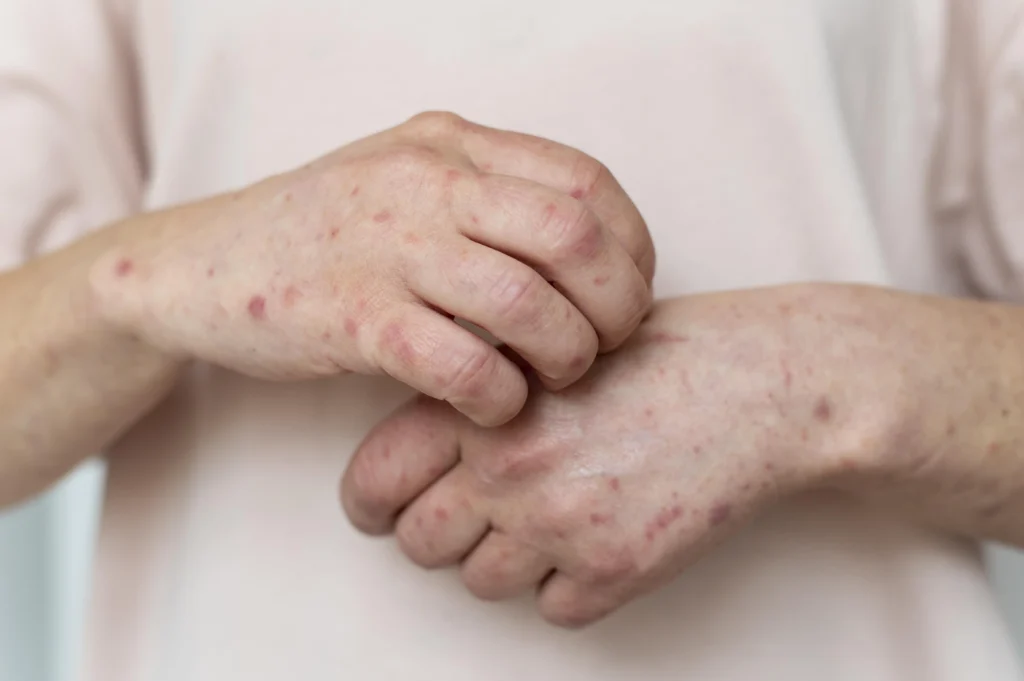
Yes. Several childhood illnesses can cause fever and a widespread rash. This makes it important not to diagnose scarlet fever based on appearance alone.
Some conditions that may look similar include:
- Viral rashes: Common viral infections can cause widespread red spots or blotches, sometimes with fever.
- Measles: May cause fever, cough, runny nose, red eyes and a rash that typically begins on the face before spreading.
- Allergic reactions: Hives usually appear as raised, itchy welts that can change location or shape.
- Other bacterial infections: Some infections can cause skin changes alongside fever and general illness.
Scarlet fever is more likely when a child has a rough, sandpaper-like rash together with a sore throat, fever, flushed cheeks or strawberry tongue. However, these features are not enough to confirm it.
A healthcare professional should assess the child and arrange appropriate testing when scarlet fever is suspected.
Scarlet Fever in Children: Myths vs Facts
Myth: Scarlet fever only causes a bright red rash.
Fact: The rash may appear pink, red or less noticeable on darker skin. Its rough, sandpaper-like texture is an important clue.
Myth: The rash always appears before the fever.
Fact: Fever and sore throat often develop first, followed by the rash. However, the timing can vary.
Myth: Scarlet fever is caused by a virus.
Fact: Scarlet fever is caused by certain strains of group A Streptococcus bacteria.
Myth: Antibiotics are unnecessary once the rash appears.
Fact: Appropriate antibiotics are important for treating confirmed scarlet fever and reducing the risk of complications and transmission.
Myth: Every childhood rash with fever is scarlet fever.
Fact: Viral infections, measles and other conditions can cause similar symptoms. Medical assessment and appropriate testing are important.
Myth: Physiotherapy can cure scarlet fever.
Fact: Scarlet fever requires medical treatment with appropriate antibiotics. Physiotherapy is not a treatment for the infection.
Is Scarlet Fever Contagious?
Yes. Scarlet fever spreads easily, particularly in households, schools and childcare settings where children have close contact.
Group A strep bacteria can spread through respiratory droplets when an infected person coughs or sneezes.
Close contact with infected respiratory secretions can also spread the bacteria.
To reduce transmission, parents should:
- Encourage regular handwashing with soap and water.
- Teach children to cover coughs and sneezes.
- Avoid sharing cups, bottles, cutlery and towels.
- Wash used clothing and bedding as appropriate.
- Clean frequently touched household surfaces.
- Keep an infected child away from school or childcare until they meet the recommended return criteria.
Children should not share personal items while unwell, even if their symptoms appear mild. (NHS, 2024)
How Is Scarlet Fever Diagnosed in Children?
A healthcare professional will ask about the child’s symptoms and examine the throat, tongue, neck and skin. However, a rash alone cannot reliably confirm scarlet fever.
Testing for group A strep is important when scarlet fever is suspected, particularly when it occurs with a throat infection.
Rapid strep test
A healthcare professional collects a sample from the back of the throat using a swab. A rapid antigen detection test can identify group A strep relatively quickly.
Throat culture
A throat culture checks whether group A strep bacteria grow from the collected sample. It can detect some infections that a rapid test may miss.
For children and teenagers, a negative rapid antigen test may need confirmation with a throat culture.
The clinician will decide based on the child’s age, symptoms and applicable guidance.
Molecular testing
A nucleic acid amplification test (NAAT) can detect genetic material from group A strep bacteria and may also be used for diagnosis.
Parents should not rely on photographs, online symptom checkers or home rash comparisons to confirm scarlet fever.
Other infections can produce similar symptoms and may require different treatment. (CDC, 2026)
How Is Scarlet Fever Treated?
Scarlet fever is treated with antibiotics prescribed by a healthcare professional. Penicillin or amoxicillin is commonly recommended when suitable.
The choice of antibiotic depends on factors such as the child’s age, allergy history and clinical assessment.
Antibiotic treatment helps to:
- Shorten the duration of symptoms.
- Reduce the spread of infection to other people.
- Lower the risk of certain complications.
- Treat the underlying bacterial infection.
Parents should give the medicine exactly as prescribed and complete the recommended course, even if the child starts feeling better earlier.
Do not use leftover antibiotics or medicines prescribed for another person. Antibiotics do not treat viral infections, and unnecessary use can contribute to antibiotic resistance.
If the child is not improving after approximately 48 hours of antibiotic treatment, contact the treating healthcare professional. (CDC, 2026)
How Can Parents Care for a Child at Home?
Alongside prescribed antibiotics, simple home-care measures can make recovery more comfortable.
Encourage regular fluid intake
Fever and throat pain can reduce a child’s willingness to drink. Offer water, cool drinks and other age-appropriate fluids regularly.
Watch for signs of dehydration, such as a dry mouth, reduced urination, unusual tiredness or fewer wet nappies in babies.
Offer soft, easy-to-swallow foods
A sore throat can make eating uncomfortable. Suitable options may include:
- Soft rice or khichdi
- Porridge
- Mashed vegetables
- Yoghurt
- Soft fruits
- Mild soups
Avoid very spicy, acidic or rough foods if they make throat discomfort worse.
Help manage fever and discomfort
Paracetamol or ibuprofen may help relieve fever and pain when appropriate for the child’s age and health.
Follow the recommended dose based on the child’s age and weight.
Ask a healthcare professional if you are unsure which medicine is suitable.
Never give aspirin to a child unless specifically directed by a specialist.
Care for irritated skin
Keep the skin clean and avoid vigorous rubbing or scratching. Loose, breathable clothing may help reduce irritation.
If the rash is itchy, ask a healthcare professional or pharmacist about suitable options rather than applying multiple creams or medicated products without advice.
Allow enough rest
Fever and infection can leave children tired. Encourage sleep, quiet activities and a gradual return to their normal routine as their energy improves.
When Can a Child Return to School or Daycare?
A child with scarlet fever should stay home while they are infectious and unwell.
A commonly used recommendation is to return only when the child:
- Has been free from fever.
- Has received appropriate antibiotics for at least 24 hours.
- Feels well enough to participate in normal activities.
CDC guidance allows a 12-to-24-hour period after starting appropriate antibiotics, provided the child is also fever-free.
The NHS recommends staying away for 24 hours after the first antibiotic dose.
Parents should follow their treating clinician’s advice and local school or public health guidance. (CDC, 2026)
What Complications Should Parents Know About?
Most children recover without serious problems, particularly when scarlet fever is diagnosed and treated appropriately.
However, complications can occur during the infection or in the weeks afterwards.
Possible complications include:
- Ear or sinus infections: The bacteria may spread to nearby structures.
- Throat abscess: A collection of pus may develop around the tonsils or in deeper throat tissues.
- Pneumonia: Infection may affect the lungs.
- Acute rheumatic fever: An inflammatory condition that can affect the heart, joints, skin and nervous system.
- Post-streptococcal glomerulonephritis: An immune-related condition that affects the kidneys.
These complications are uncommon, but new symptoms after apparent recovery should not be ignored.
For example, joint pain or swelling, dark urine, facial puffiness or a child becoming unwell again needs medical assessment. (CDC, 2025)
When Should Parents Seek Medical Attention?
Contact a healthcare professional promptly if a child develops a fever with a rough, sandpaper-like rash, particularly when accompanied by a sore throat or swollen neck glands.
Seek urgent medical assessment if the child develops:
- Difficulty breathing or swallowing.
- Drooling or difficulty opening the mouth.
- Signs of dehydration, such as very little urine or unusual drowsiness.
- Persistent high fever or worsening symptoms.
- Severe abdominal pain or repeated vomiting.
- New joint pain or swelling.
- Dark or bloody urine, especially during the weeks after the infection.
A rash that does not fade when pressed, particularly when accompanied by fever or a child who appears seriously unwell, needs urgent assessment.
Do not assume that this is scarlet fever, as other serious infections can cause a non-blanching rash.
If a child is difficult to wake, confused, struggling to breathe, having a seizure or appears critically unwell, seek emergency medical care immediately.
Can Scarlet Fever Affect a Child’s Movement and Physical Activity?
Scarlet fever is an infectious disease, not a musculoskeletal condition. Physiotherapy does not treat the bacterial infection, remove the rash or replace antibiotics.
However, fever, throat pain and fatigue can temporarily affect a child’s willingness to walk, climb stairs, play or take part in physical activities.
During the acute illness, allow the child to rest rather than encouraging strenuous exercise. Once the fever has settled and the child feels better, normal activities can usually resume gradually.
Persistent joint pain, swelling, unusual weakness, difficulty walking or reduced movement after the infection needs medical assessment before starting physiotherapy.
These symptoms may indicate a complication that requires investigation.
Most children recover their usual activity levels without a formal rehabilitation programme.
Paediatric physiotherapy may be considered if a child has ongoing functional difficulties after medical assessment.
Final Thoughts
Scarlet fever can be concerning for parents, especially when a child develops a widespread rash alongside fever and a sore throat. Recognizing the sandpaper-like texture, flushed cheeks and other associated symptoms can help parents know when to seek medical advice.
The good news is that most children recover well with timely diagnosis, appropriate antibiotics and supportive care at home. Follow the prescribed treatment, encourage fluids and rest, and watch for any unusual or worsening symptoms.
Remember: Every child’s symptoms may be different. If you suspect scarlet fever, arrange a medical assessment rather than relying on the rash’s appearance alone.
Conclusion
Scarlet fever in children typically causes a fine, raised rash that feels rough like sandpaper.
It often develops after fever and sore throat, spreads across the trunk and other body areas, and may be accompanied by flushed cheeks, strawberry tongue and swollen neck glands.
The rash can be harder to recognize on darker skin, so parents should pay attention to its texture and the child’s other symptoms.
The palms and soles are usually spared by the initial rash, although peeling may occur during recovery.
A healthcare professional can confirm the diagnosis through appropriate testing and prescribe antibiotics when needed.
With timely treatment, supportive home care and adequate rest, most children recover without complications.
Parents should seek medical advice if they suspect scarlet fever and remain alert to new or worsening symptoms during recovery.
Frequently Asked Questions
1. What is the first sign of scarlet fever in children?
Fever and sore throat are common early symptoms. The characteristic rough, sandpaper-like rash often develops within the next 12–48 hours, although timing can vary.
2. What does scarlet fever rash feel like?
The rash usually feels rough and slightly raised, similar to fine sandpaper. It may also cause mild itching.
3. How long does scarlet fever rash last?
The rash generally fades in about seven days. Peeling of the skin, particularly around the fingertips and toes, may continue for several weeks.
4. Can scarlet fever occur without a rash?
The characteristic rash is a defining feature of scarlet fever, but it may be subtle or difficult to recognize. A clinician should assess suspected group A strep infection rather than relying on skin changes alone.
5. Is scarlet fever contagious?
Yes. Group A strep bacteria can spread through respiratory droplets and close contact with an infected person. Appropriate antibiotic treatment helps reduce transmission.
6. Can scarlet fever be treated at home?
Home care can support recovery, but it does not replace prescribed antibiotics. Encourage fluids, offer soft foods, manage fever appropriately and allow adequate rest.
7. When can a child return to school after scarlet fever?
A child can generally return when fever-free and at least 24 hours have passed since starting appropriate antibiotics. Follow local public health and school guidance.
8. Does physiotherapy help children recover from scarlet fever?
Physiotherapy does not treat scarlet fever or the bacterial infection. It may be considered for persistent movement or functional difficulties after medical assessment, although most children do not need formal rehabilitation.
Stay tuned with us for more health related topics.
Follow us on LinkedIn and Instagram for more.
More Read


Medical Disclaimer
The information in this article is intended for general educational and informational purposes only. It should not be considered a substitute for professional medical advice, diagnosis or treatment.
Scarlet fever requires appropriate medical assessment and may need prescription antibiotics. Do not delay seeking medical attention or change prescribed medication based on information found online.
Always consult a qualified healthcare professional regarding your child’s symptoms, diagnosis and treatment. Seek emergency medical care if your child has difficulty breathing, is difficult to wake, has a seizure or appears seriously unwell.


