
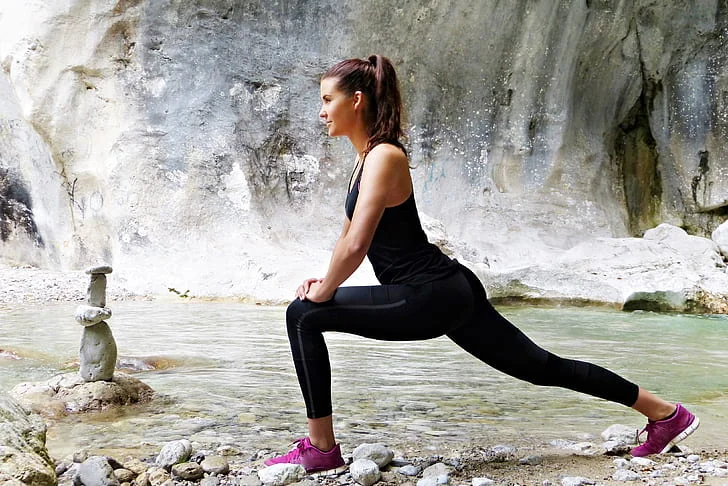

Knee health is foundational to everyday movement. Whether you are walking, climbing stairs, or playing sports, strong knees help prevent injury and improve overall mobility. For many people, especially beginners, the idea of strengthening their knees can feel intimidating. However, incorporating the best knee strengthening exercises for beginners into a simple and consistent routine can make the process safe, approachable, and highly effective.
With the right routine tailored to your level, you can gradually build knee stability, functionality, and endurance without risk of harm.
Why Knee Strength Matters
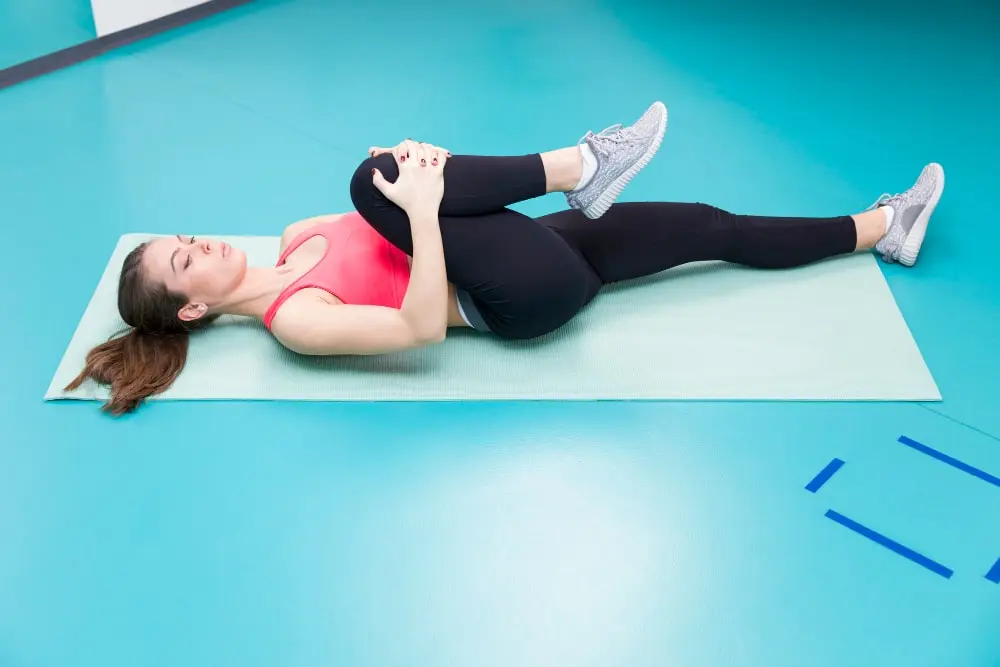
Knees bear a significant amount of stress daily, up to 1.5 times your body weight during normal activities like walking or jogging. Therefore, poor knee strength or muscle imbalance can result in pain, instability, and even long-term issues like arthritis or tendinopathies.
Strengthening the muscles that support your knees, primarily the quadriceps, hamstrings, glutes (especially gluteus medius), and calves, improves joint alignment and reduces excessive strain on the knee joint itself.
This concept is widely supported by physical therapy and orthopedic recommendations for knee pain and prevention.(Verywell Fit)
Most beginner routines focus on low-impact, joint-friendly exercises that improve strength and stability before progressing to more dynamic movements. Importantly, correct form, consistency, and gradual progression are the keys to long-term success.(hingehealth)
Understanding Knee Basics: Muscles Involved
Your knee doesn’t function in isolation. Several muscle groups around it support movement and stability:
- Quadriceps (Front Thigh Muscles)– These muscles are crucial for knee extension and absorbing forces during walking and stair climbing.
- Hamstrings (Back Thigh Muscles)– Support knee flexion and reduce strain on the knee joint.
- Glutes (Hip Muscles)– Stabilize the pelvis and control knee alignment during movement.
- Calves (Lower Leg Muscles)– Help with balance and shock absorption during gait.
Together, these muscle groups create a balanced support system for your knees. If any of these are weak, the knee can absorb more stress than it should, accelerating discomfort or injury.
Principles of a Good Knee Strengthening Routine
Before we dive into specific workouts, let’s understand some principles that make a knee routine effective:
1. Start Slow and Focus on Form
Beginners should perform exercises with controlled movements and without added weights initially. This helps build neuromuscular habit (your brain learning how to activate muscles efficiently) and reduces injury risk. (NCBI)
2. Use Progressive Overload
Progressive overload refers to gradually increasing stress on muscles over time, such as adding repetitions, sets, or difficulty, to stimulate continuous strength gains. This principle is standard in fitness and rehabilitation.(Wikipedia)
3. Balance Strength and Flexibility
Strong muscles alone aren’t enough if flexibility is limited. Tight muscles can pull the knee out of alignment. Therefore, incorporating stretches and mobility work is crucial. (hingehealth)
4. Frequency and Consistency
For beginners, aiming for a minimum of 3–4 sessions per week ensures your muscles adapt while still allowing time for recovery. If you experience knee pain during exercise, stop and consult a healthcare provider. (NCBI)
Best Knee Strengthening Routine for Beginners
Below is a step-by-step routine you can perform at home without equipment. Start with 1 round of the circuit and progress to 2–3 rounds as you grow stronger:
1. Warm-Up (5-7 Minutes)

Before strengthening, warm up your joints and muscles to improve blood flow and reduce injury risk. Try:
- Marching in place for 1 minute
- Gentle knee circles (10 each direction)
- Leg swings (10 forward/backward and 10 side to side per leg)
2. Straight Leg Raises (Quadriceps Focus)

How to Do It:
- Lie on your back with one knee bent and the other leg straight on the floor.
- Lift the straight leg up to meet the height of the bent knee.
- Hold for 2 seconds.
- Lower slowly.
Reps: 12–15 per leg
Why It Works:
Straight leg raises strengthen the quadriceps without putting direct stress on the knee joint, making this a staple beginner move.
3. Wall Squats (Supported Squat)
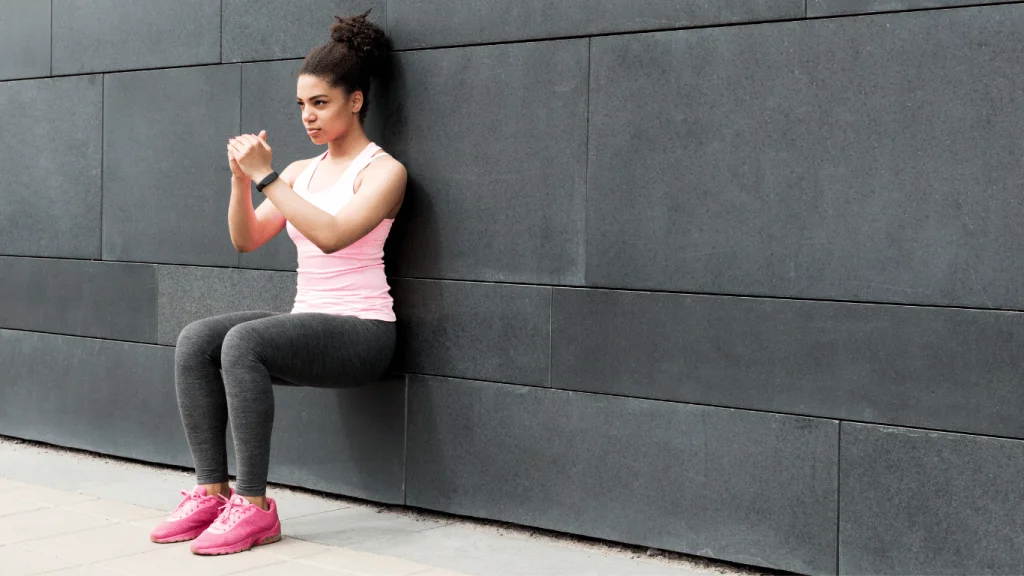
How to Do It:
- Stand with your back against a wall and feet hip-width apart.
- Slide down until your knees bend about 45 degrees.
- Hold for 10 seconds.
- Slide up slowly.
Reps: 10–12
Why It Works:
Wall squats train the quadriceps, glutes, and hamstrings in a controlled way that builds strength and stability with minimal knee strain.
4. Step-Ups (Functional Strength & Balance)
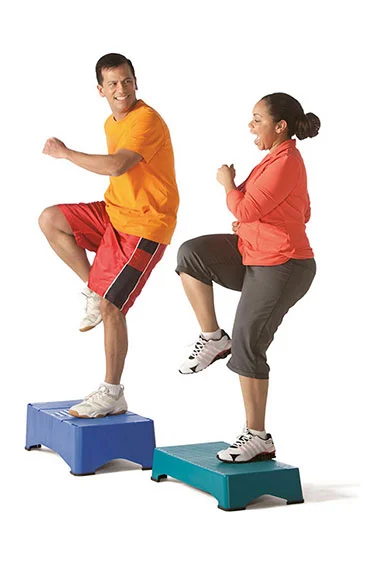
How to Do It:
- Stand in front of a sturdy step or low box.
- Place one foot on the step.
- Step up, pushing through the heel.
- Bring the other foot up and then step down slowly.
Reps: 10 per leg
Why It Works:
Step-ups mimic everyday movement patterns, training knee stability and strength in a real-world functional way.
5. Bridges (Glute & Hamstring Activation)
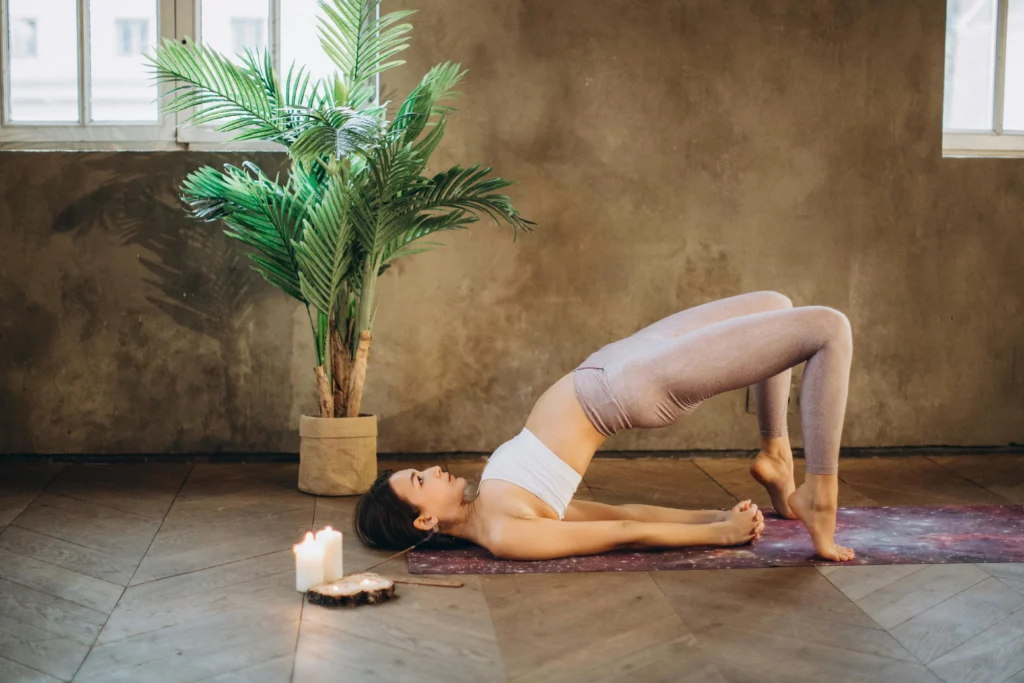
How to Do It:
- Lie on your back with knees bent and feet flat.
- Push through your heels to lift your hips, squeezing your glutes.
- Hold at the top for 2 seconds.
- Lower slowly.
Reps: 15
Why It Works:
Strong glutes guide proper knee alignment and enhance load distribution across the lower extremity.
6. Calf Raises (Calf Strength & Balance)
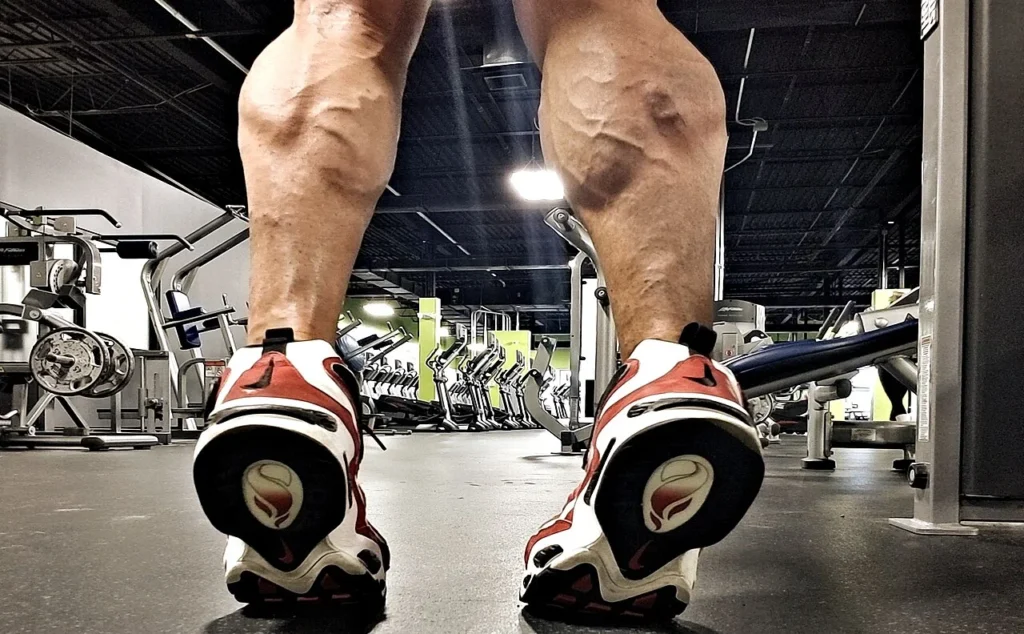
How to Do It:
- Stand with feet hip-width apart.
- Slowly raise up onto your toes.
- Lower with control.
Reps: 15–20
Why It Works:
Calf strength improves overall stability and reduces undue strain on your knees during walking and balance tasks.
7. Gentle Knee Stretch (Cool Down)
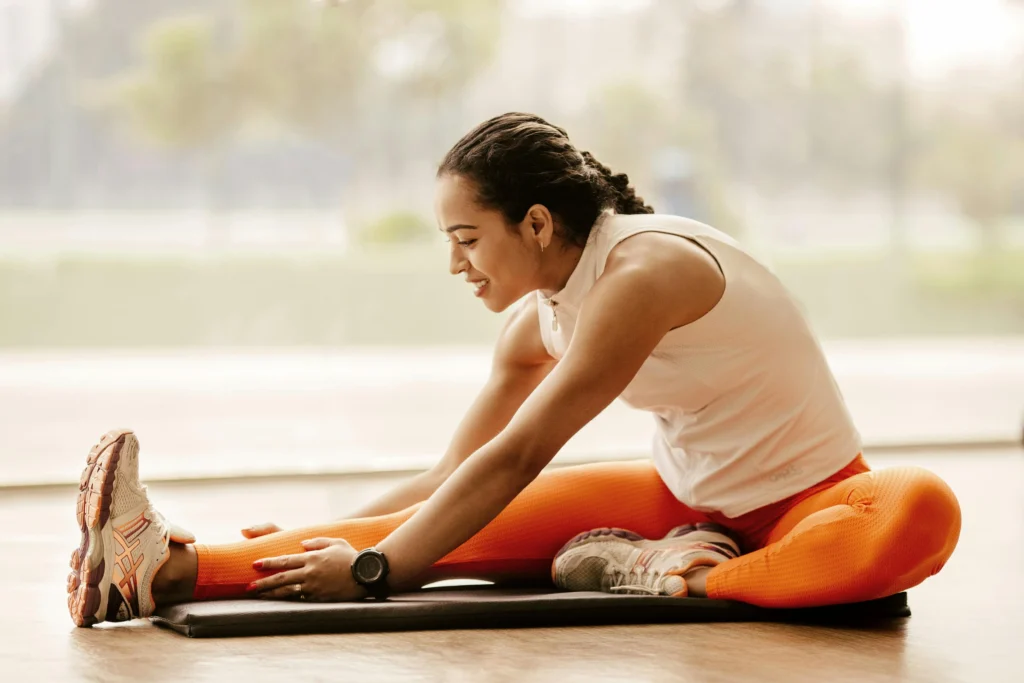
Conclude your session with gentle stretching:
- Hamstring stretch
- Quad stretch
- Calf stretch
Hold each for 20–30 seconds.
Progressing the Routine
Once you can comfortably perform 2–3 rounds with proper form and minimal effort, you can add:
- A resistance band for leg extensions or mini squats
- Longer hold times in wall squats
- Increase step-height for step-ups
Remember to always prioritize technique over quantity to prevent knee overload.
Also Read: Ultimate Guide to Home Physiotherapy for Back Pain
Lesser-Known Tips for Knee Health
While strengthening exercises are primary, the following lesser-known but impactful strategies enhance outcomes:
1. Work the Hip Muscles (Especially Gluteus Medius)
Strong hip muscles reduce inward knee collapse (a common cause of pain), which in turn improves knee joint alignment. An isometric gluteus medius exercise (lasting 5–10 seconds) improves neuromuscular recruitment and provides a stable foundation for further knee work.
2. Low-Impact Activities Boost Strength Without Stress
Activities like swimming or cycling strengthen legs and improve joint lubrication with minimal impact, making them excellent cross-training options for beginners.
3. Dynamic Warm-Up Beats Static Stretching Before Exercise
Research suggests that dynamic warm-ups, gentle movement patterns, prepare muscles better and reduce injury risk more effectively than static stretches done before workouts.
Topics like dynamic mobility routines are gaining traction in rehab protocols.
Also Read: Unlocking Knee Pain Relief: How Physiotherapy Can Change Your Life!
Emerging Treatments & Research
Interestingly, cutting-edge research is exploring programmable knitted orthoses, garment-like knee supports tailored to individual biomechanics, which may one day augment traditional strengthening and rehabilitation.
This research is still in development but shows promise in improving joint stiffness and comfort compared to traditional rigid braces.
Moreover, personalized 1RM-based exercise programs, where resistance and training loads are tailored to individual strength thresholds, are being studied as advanced osteoarthritis treatment strategies, showing better patient outcomes when compared with one-size-fits-all routines.
These advances reflect a broader trend toward personalization and data-informed knee care.
Also Read: Do you hear sounds in your knee? Read about crepitus.
Common Mistakes to Avoid
Even with the best routine, mistakes can hinder progress:
- Skipping Warm-Up or Cool Down: This increases injury risk.
- Pushing Through Pain: Pain is a signal that form or intensity needs adjustment.
- Rushing Progression: Moving too fast without proper strength and control can cause setbacks.
Also Read: This 7 day knee strengthening exercise plan works like Miracle
Frequently Asked Questions (FAQ)
1. How often should a beginner do knee strengthening exercises?
Beginners should aim for 3–4 sessions per week, allowing at least one rest day between workouts to let muscles recover.
2. Can knee strengthening reduce arthritis pain?
Yes. Strengthening supporting muscles distributes load away from painful joint surfaces and improves stability, which often leads to reduced arthritis discomfort.
3. Is it normal to feel mild soreness after these exercises?
Yes, mild muscle soreness is normal, but sharp joint pain is not. If you experience joint pain, modify or pause the movement and consult a healthcare provider.
4. How long before I see improvements?
Most beginners start noticing improvements in strength, joint control, and reduction in discomfort within 4–6 weeks of consistent practice.
5. Should elderly people follow this routine?
Absolutely, with appropriate modifications such as chair support or reduced intensity. Low-impact movements benefit older adults by improving functional strength and reducing fall risk.
Also read: Home Physiotherapy Exercises for Knee Pain That Actually Work
Conclusion
Knee strengthening for beginners doesn’t require complex gym equipment or advanced training knowledge.
With a focused routine that emphasizes proper form, balanced muscle activation, and gradual progression, you can build stronger, more resilient knees that support daily activities and athletic performance alike.
Moreover, integrating hip and calf strength, low-impact cross-training, and emerging scientific insights can elevate your results and safeguard your knees for years to come.
Start slow, stay consistent, and listen to your body, your knees will thank you.
Stay tuned with us for more health related topics.
Follow us on LinkedIn and Instagram for more.


