


If your headache isn’t constant, but keeps appearing, disappearing, and returning again, you’re not imagining it.
This “on-and-off” pattern is one of the most commonly misunderstood symptoms in clinical practice.
Many patients walk into my clinic saying, “It comes for a few hours, then disappears, then suddenly returns again.”
As a physiotherapist, I can tell you this pattern is often your body’s warning system, not just a random occurrence.
Let’s break this down deeply, with research-backed insights, so you understand why this happens and what your body is trying to tell you.
Quick Answer
A headache that comes and goes is usually caused by triggers like neck strain, stress, posture issues, or migraines. It often indicates a reversible problem rather than a serious condition, but recurring patterns should be evaluated early.
Key Takeaways
- Headaches that come and go are usually trigger-based, not random.
- Neck dysfunction (cervicogenic headache) is a major hidden cause.
- Poor posture, stress, and dehydration commonly trigger episodes.
- These headaches are often reversible with physiotherapy.
- Ignoring early symptoms may lead to chronic pain.
What Does a “Headache That Comes and Goes” Actually Mean?
An intermittent headache is one that:
- Appears for minutes to hours (sometimes days)
- Reduces or disappears completely
- Returns again under certain triggers
Unlike continuous headaches, these are often linked to trigger-based or mechanical causes, especially involving:
- Neck joints
- Muscles
- Nervous system sensitivity
- Lifestyle habits
In many cases, these headaches are secondary headaches, meaning they are caused by an underlying issue rather than being the primary condition. (Medical News Today)
Headaches That Come and Go Causes
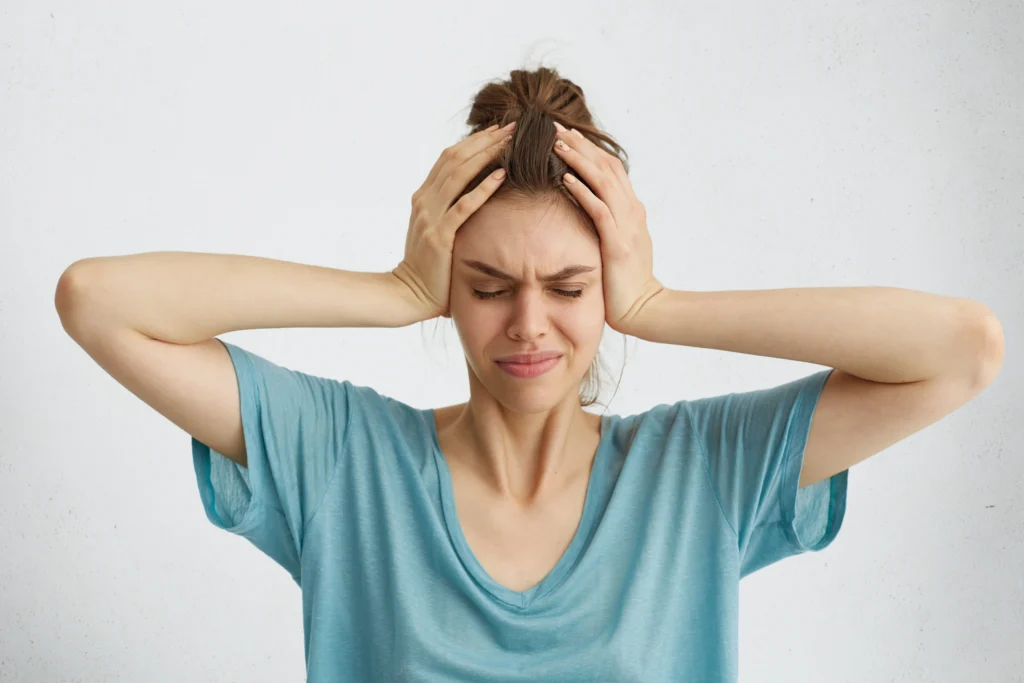
1. Cervicogenic Headache (Neck-Related Headache)
This is one of the most overlooked causes, especially in people working long hours on screens.
A cervicogenic headache originates from the neck but is felt in the head. It may come and go depending on posture or movement. (Cleveland Clinic)
Why it fluctuates:
- Neck position changes throughout the day
- Muscle fatigue builds and releases
- Trigger points activate intermittently
Key signs:
- Pain starts at the base of the skull and travels upward
- One-sided headache
- Worse with neck movement or prolonged sitting
These headaches occur due to dysfunction in cervical joints, muscles, or nerves. (Healthline)
Lesser-known fact: Even mild forward head posture (as little as 2-3 cm) can significantly increase strain on cervical muscles, triggering episodic headaches.
2. Tension-Type Headaches
The most common type worldwide.
These tension headaches come and go based on:
- Stress levels
- Sleep quality
- Muscle tightness
They are often described as:
- A tight band around the head
- Mild to moderate intensity
- Gradually increasing and fading
Triggers include stress, fatigue, and dehydration, which can fluctuate throughout the day. (Health)
3. Migraine
Migraines are naturally cyclical.
They occur in phases:
- Trigger phase
- Attack
- Recovery
This is why they appear to “come and go.”
Common triggers:
- Hormonal changes
- Skipped meals
- Screen exposure
- Lack of sleep
Unlike tension headaches, migraines often include:
- Nausea
- Light sensitivity
- Pulsating pain
4. Posture-Related Headaches
Modern lifestyle = silent trigger.
Poor posture leads to:
- Muscle imbalance
- Reduced blood flow
- Increased inflammatory chemicals
This can activate myofascial trigger points, which cause headaches that fluctuate depending on activity. (Verywell Health)
Example:
- You sit → pain starts
- You move/stretch → pain reduces
That’s why it feels inconsistent.
5. Occipital Neuralgia (Nerve Irritation)
This condition involves irritation of nerves at the back of the head.
Characteristics:
- Sharp, shooting pain
- Comes in sudden bursts
- May disappear completely between episodes
Often triggered by:
- Neck tightness
- Injury
- Poor ergonomics
6. Cervicogenic Dizziness
Sometimes headaches come and go along with dizziness.
This is due to altered communication between:
- Neck joints
- Balance system (inner ear)
Symptoms can last minutes to hours and fluctuate depending on neck position. (Verywell Health)
7. Lifestyle Triggers That Fluctuate Daily
These are subtle but powerful:
- Dehydration
- Irregular meals
- Excess caffeine
- Screen overuse
- Sleep disturbances
Because these factors vary daily, the headache pattern becomes inconsistent.
Why Do These Headaches Feel So Unpredictable?
From a physiotherapy perspective, intermittent headaches are usually:
1. Load-Dependent
Your body tolerates stress up to a point. Once exceeded → pain appears.
2. Trigger-Based
Certain movements or habits activate symptoms.
3. Reversible (Early Stage)
Pain disappears when the trigger is removed.
The Neck–Head Connection
Here’s something many people don’t realize:
The upper cervical spine (C1-C3) shares nerve pathways with the head.
This is why:
- Neck problems = head pain
- Muscle tightness = headache
- Joint restriction = referred pain
This phenomenon is called referred pain, where the source and location of pain differ. (WebMD)
Lesser-Known Causes You Shouldn’t Ignore
1. Jaw (TMJ) Dysfunction
- Teeth clenching → intermittent headaches
- Often worse in the morning
2. Eye Strain
- Screen fatigue → evening headaches
3. Sleep Position
- Poor pillow support → morning headaches
4. Breathing Patterns
- Shallow chest breathing → muscle tension
When Should You Be Concerned?
Most intermittent headaches are benign, but watch for:
- Sudden severe headache (“worst ever”)
- Headache with fever or confusion
- Persistent vomiting
- Weakness or numbness
- Vision loss
These require immediate medical evaluation.
Physiotherapy Approach to Managing These Headaches
Assessment Includes:
- Posture analysis
- Neck mobility testing
- Muscle tightness evaluation
- Trigger point identification
Treatment Strategies
1. Manual Therapy
- Joint mobilization
- Soft tissue release
2. Exercise Therapy
- Deep neck flexor strengthening
- Postural correction
3. Ergonomic Correction
- Screen height
- Sitting posture
4. Neuromuscular Re-education
- Movement retraining
New & Emerging Treatments
Recent research trends highlight:
1. Sensorimotor Training
Improves neck proprioception and reduces recurrent headaches.
2. Pain Neuroscience Education
Helps patients understand triggers and reduce fear-based pain cycles.
3. Dry Needling & Myofascial Release
Effective for trigger-point related headaches.
4. Multimodal Therapy
Combining exercise + manual therapy shows better long-term outcomes than medication alone.
Home Exercises for Headaches That Come and Goes
If your headache keeps coming and going, your goal is not just pain relief, it’s breaking the trigger cycle.
These exercises focus on correcting the neck, posture, and muscle imbalances that commonly cause intermittent headaches.
Do these daily for best results.
1. Chin Tucks (Deep Neck Flexor Activation)
Why it works
Strengthens deep neck stabilizers and reduces strain on overactive muscles (a major cause of cervicogenic headaches).
How to do it
- Sit or stand upright
- Look straight ahead
- Gently pull your chin backward (like making a double chin)
- Do NOT tilt your head up or down
- Hold for 5–7 seconds
Reps
- 10 repetitions
- 2–3 sets per day
Common mistakes
- Tilting the head instead of gliding it backward
- Using too much force
You should feel a gentle activation deep in the neck, not strain.
2. Upper Trapezius Stretch
Why it works
Releases tight muscles that commonly refer pain to the head.
How to do it
- Sit upright
- Hold the side of your chair with one hand
- Tilt your head to the opposite side
- Use your other hand to gently increase the stretch
- Keep shoulders relaxed
Hold
- 20-30 seconds
- Repeat 3 times each side
You should feel a stretch along the side of your neck.
3. Levator Scapulae Stretch
Why it works
Targets a deep muscle often responsible for pain at the base of the skull.
How to do it
- Sit upright
- Turn your head 45° to one side
- Look down toward your armpit
- Use your hand to gently pull your head downward
Hold
- 20-30 seconds
- Repeat 3 times each side
This is one of the most effective but underrated headache-relief stretches.
4. Suboccipital Release
Why it works
Relieves tension in small muscles at the base of the skull that trigger headaches.
How to do it
- Lie on your back
- Place a tennis ball (or two taped together) under the base of your skull
- Gently rest your head on it
- Allow muscles to relax (no pressure pushing)
Duration
- 1-2 minutes
You may feel a “melting” sensation, this is muscle release.
5. Shoulder Blade Squeezes
Why it works
Improves posture and reduces forward head strain.
How to do it
- Sit or stand upright
- Pull your shoulder blades back and down
- Imagine trying to hold a pencil between them
- Hold without shrugging shoulders
Hold
- 5 seconds
Reps
- 10-15 reps
- 2 sets daily
6. Thoracic Extension
Why it works
A stiff upper back forces your neck to overwork, leading to headaches.
How to do it
- Sit on a chair with back support
- Place hands behind your head
- Gently arch backward over the chair
- Look slightly upward
Reps
- 10 repetitions
- 1-2 times daily
Movement should come from upper back, not lower back.
7. Neck Rotation Mobility Exercise
Why it works
Improves joint mobility and reduces stiffness-related headaches.
How to do it
- Sit upright
- Slowly turn your head to one side
- Hold 2-3 seconds
- Return to center
- Repeat on other side
Reps
- 10 each side
Move slowly, no jerky movements.
8. Eye Relaxation Exercise
Why it works
Reduces eye strain, a hidden trigger for recurring headaches.
How to do it
Follow the 20-20-20 rule:
- Every 20 minutes
- Look 20 feet away
- For 20 seconds
Simple but extremely effective for modern lifestyle headaches.
9. Breathing Reset
Why it works
Reduces muscle tension and nervous system overload.
How to do it
- Sit comfortably
- Place one hand on chest, one on abdomen
- Inhale deeply through nose (belly rises)
- Exhale slowly through mouth
Reps
- 10 slow breaths
- 2-3 times daily
10. Wall Posture Correction Drill
Why it works
Re-trains proper alignment (key for preventing recurrence).
How to do it
- Stand against a wall
- Keep:
- Head
- Shoulders
- Buttocks touching the wall
- Slightly tuck chin
- Hold position
Duration
- 30-60 seconds
- Repeat 2-3 times
Daily Routine Plan
Morning (5-7 min):
- Chin tucks
- Neck stretches
During Work:
- Eye exercise
- Shoulder blade squeezes
Evening (10 min):
- Suboccipital release
- Thoracic extension
- Breathing exercise
Clinical Insight
Most people only stretch when they feel pain.
But the real solution is: Consistency, not intensity
These headaches come and go because your triggers come and go.
Fix the trigger → you fix the pattern.
Red Flags
Stop and consult a professional if you feel:
- Sharp or shooting pain
- Dizziness worsening
- Numbness or tingling
- Vision changes
Myth vs Reality
Myth: “If it comes and goes, it’s nothing serious.”
Reality: It often indicates an early-stage dysfunction, best time to treat.
Final Word
A headache that comes and goes is your body’s warning signal, not a mystery.
Most of the time, it reflects:
- Neck dysfunction
- Postural stress
- Lifestyle imbalance
The good news?
These are highly treatable with physiotherapy, especially when addressed early.
Frequently Asked Questions
1. Why does my headache come and go throughout the day?
It is usually due to posture, stress, or neck strain that changes during daily activities.
2. Is an intermittent headache serious?
Most are not serious, but frequent or worsening headaches should be evaluated.
3. Can neck problems cause headaches?
Yes, cervicogenic headaches originate from the neck and are very common.
4. How do I know if my headache is from posture?
If it worsens with sitting and improves with movement, posture is likely the cause.
5. Can dehydration cause headaches that come and go?
Yes, fluctuating hydration levels can trigger intermittent headaches.
6. What is the best exercise for these headaches?
Chin tucks and neck stretches are highly effective.
7. When should I worry about my headache?
If it is sudden, severe, or associated with neurological symptoms.
8. Can physiotherapy permanently cure these headaches?
In many cases, yes—especially when caused by posture or neck dysfunction.
Stay tuned with us for more health related topics.
Follow us on LinkedIn and Instagram for more.
More Read


Medical Disclaimer!
This article has been reviewed and written under the guidance of our Head Physiotherapist, Dr. Kruti Raj (PT, MUHS,CPT,CMPT). The information shared is intended for educational purposes only and should not be considered a substitute for personalized medical advice, diagnosis, or treatment.
Please consult us or any other qualified healthcare professional before beginning any exercise program, especially if you are experiencing pain, recovering from injury, or managing a medical condition.


