


Correct sitting posture during pregnancy can help reduce back strain, pelvic pressure, and daily discomfort.
A pregnant woman once told me something that stayed with me for a long time.
She said, “I can still walk. I can still cook.
But sitting for half an hour makes me feel ninety years old.”
Honestly, that sentence describes pregnancy posture problems better than most medical definitions.
A lot of women expect discomfort while lifting things or climbing stairs during pregnancy.
Very few expect sitting on a sofa or office chair to suddenly feel exhausting.
But somewhere around the second trimester, many women start noticing that sitting feels strangely heavy.
Their lower back aches faster.
Their ribs feel compressed after meals.
Their hips stiffen when they stand up.
Some even feel out of breath after sitting too long in one position.
And usually, nobody explains why this happens.
Quick Answer
The best sitting posture during pregnancy is one that feels supported, breathable, and easy to maintain without excessive stiffness. Most physiotherapists recommend sitting with the feet flat, lower back gently supported, shoulders relaxed, and the ribs stacked comfortably over the pelvis.
Pregnant women usually feel better when they avoid staying in one position too long, reduce slouching on soft sofas, take regular movement breaks, and focus on relaxed breathing rather than forcing “perfect posture” all day.
As a physiotherapist, I spend a surprising amount of time helping pregnant women adjust how they sit, breathe, work, and move throughout the day.
Not because posture has to look perfect, but because pregnancy changes how pressure moves through the body.
That changes everything. (American College of Obstetricians and Gynecologists 2025)
Postural changes during pregnancy commonly contribute to back pain, pelvic discomfort, and muscular fatigue.
Key Takeaways
- The best pregnancy sitting posture supports breathing, spinal comfort, and regular movement.
- Very soft sofas often worsen slouching, rib compression, and lower back discomfort during pregnancy.
- Standing and changing positions every thirty to forty minutes may reduce stiffness and swelling.
- Pregnancy posture should feel sustainable and relaxed rather than rigid or forced.
- Breath-holding while sitting or standing up may increase abdominal and pelvic pressure.
- Feet support and chair height affect lower back and pelvic comfort more than most women realize.
- Birth balls may encourage gentle pelvic movement and posture variation during pregnancy.
- Jaw tension, stress, and fatigue can quietly affect posture and muscular tension patterns.
Pregnancy Changes Sitting More Than Most Women Realize
The body starts adapting long before the belly becomes very large.
Gradually:
- abdominal muscles stretch,
- ligaments soften,
- spinal loading changes,
- breathing mechanics shift,
- and the center of gravity moves forward.
The body responds automatically.
Some women lean backward while sitting without realizing it.
Others collapse into the ribs and shoulders because they are tired.
A lot of women grip through the hips or lower back trying to “sit properly.”
By evening, everything usually feels worse.
And honestly, fatigue changes posture dramatically.
One thing I notice constantly in clinic is that women who sit beautifully in the morning often slump heavily by late afternoon because postural endurance drops throughout the day.
That is not laziness.
That is physiology.
The Biggest Pregnancy Posture Myth
The internet loves rigid posture advice.
“Sit straight.”
“Engage your core.”
“Keep your shoulders back.”
That sounds simple until you are carrying extra weight, your ribs feel tight, your pelvis is adapting daily, and your energy disappears by 6 PM.
The truth is, the body tolerates movement far better than stiffness.
Even excellent posture becomes uncomfortable if held too long.
This is one reason modern physiotherapy focuses less on “perfect posture” and more on movement variability.
Recent pregnancy posture research increasingly supports reducing prolonged static positions instead of forcing one ideal sitting posture all day. (Healthcare 2024)
Researchers discussed how pregnancy alters spinal mechanics, pelvic positioning, and muscular loading patterns throughout gestation.
Why Soft Sofas Feel Amazing at First and Terrible Later
This surprises almost every pregnant woman eventually.
Soft couches feel comforting initially because the body sinks into them.
Then twenty minutes later:
- the lower back aches,
- the ribs collapse,
- hips feel trapped,
- and standing up suddenly becomes difficult.
One woman described it perfectly in clinic:
“I feel like the sofa swallowed my pelvis.”
That is actually a pretty accurate biomechanical description.
Very soft seating often encourages:
- pelvic sinking,
- spinal rounding,
- rib compression,
- and reduced core support.
Some women even notice reflux worsening after long periods on deep couches because abdominal pressure changes while slouched.
The Best Sitting Posture During Pregnancy
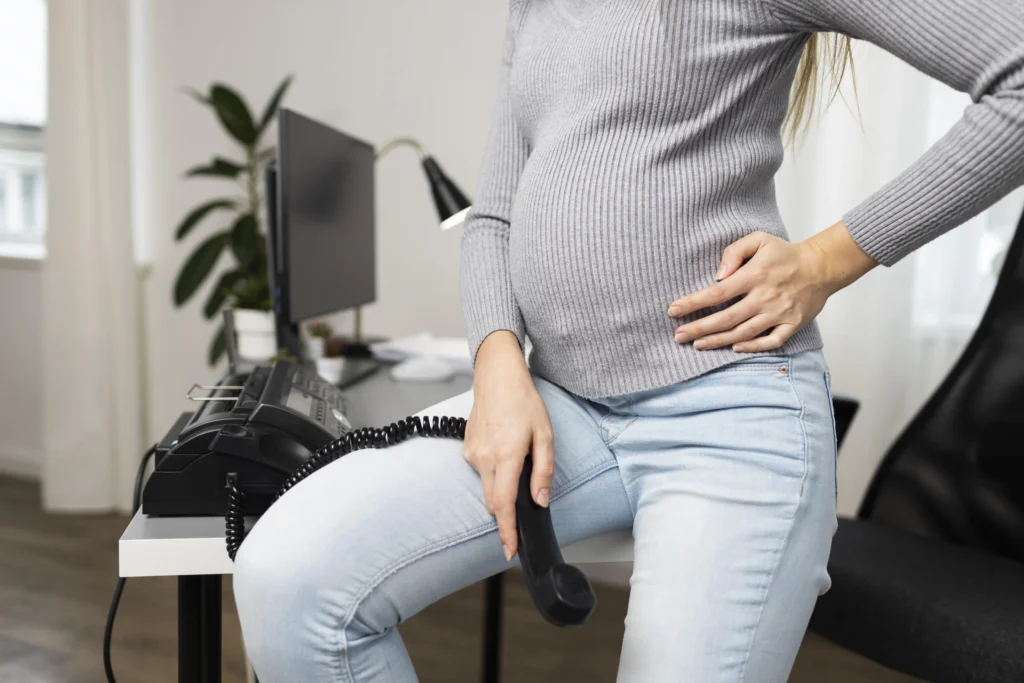
The Best Sitting Posture During Pregnancy Is Usually the Most Sustainable One
This is important.
Good posture during pregnancy should feel:
- supported,
- breathable,
- adjustable,
- and realistic.
Not rigid.
Not forced.
Not exhausting.
The best sitting setup usually allows:
- relaxed shoulders,
- supported lower back,
- grounded feet,
- easy breathing,
- and freedom to shift positions often.
Tiny adjustments matter more than dramatic corrections.
What “Ribs Over Pelvis” Actually Means
This phrase gets repeated constantly in physiotherapy.
But most women never hear it explained practically.
It simply means:
- avoiding excessive leaning backward,
- avoiding collapsing completely forward,
- and allowing the upper body to rest more naturally over the hips.
Pregnancy changes abdominal support significantly.
So many women compensate by flaring the ribs upward while sitting.
Then they wonder why:
- their lower back tightens,
- breathing feels shallow,
- or sitting becomes tiring quickly.
One small posture change often helps immediately:
softening the ribs instead of forcing the chest upward aggressively.
The Lesser-Known Connection Between Sitting and Breathing
This part gets ignored constantly online.
Many pregnant women unknowingly hold their breath while:
- shifting position,
- standing up,
- rolling in bed,
- or trying to stabilize themselves while sitting.
That repeated breath-holding increases abdominal pressure more than most people realize.
Breathing mechanics are closely connected to spinal support, core coordination, and pressure management.
One thing I tell women often is:
“If your shoulders lift every time you inhale, your neck is probably doing too much work.”
That observation changes posture awareness surprisingly fast.
Why Long Car Rides Feel So Much Worse During Pregnancy
Women ask this constantly.
And honestly, car posture is usually terrible during pregnancy.
Most car seats encourage:
- slouched pelvis positioning,
- rounded shoulders,
- forward head posture,
- and prolonged stillness.
Add traffic, fatigue, swelling, and reduced movement on top of that, and the body stiffens quickly.
Many women notice:
- tailbone pain,
- hip tightness,
- rib pressure,
- or numb legs after long drives.
Movement breaks help more than people expect.
Even standing beside the car for two minutes changes circulation and spinal loading significantly.
Working From Bed Sounds Comfortable but Usually Backfires
This became extremely common after work-from-home culture increased.
A lot of pregnant women work from laptops while sitting in bed or reclining heavily against pillows.
Initially it feels relaxing.
Then:
- the neck starts hurting,
- shoulders round forward,
- ribs compress,
- and the lower back loses support.
One thing I notice constantly is that women who work from soft surfaces often complain more about upper back tightness and breathing discomfort later in pregnancy.
The body likes support.
But it also likes movement.
Why Crossing Your Legs Sometimes Makes Pelvic Pain Worse
Crossing the legs occasionally is not dangerous.
But prolonged asymmetrical sitting may increase strain through:
- the pelvis,
- hips,
- and lower back in some women.
Especially women already dealing with pelvic girdle pain. (National Health Service 2025)
Pelvic girdle pain is commonly aggravated by asymmetrical movements and prolonged uneven loading.
Some women feel dramatically better simply by reducing long periods of twisted sitting.
Sitting and Pelvic Floor Pressure Are More Connected Than Most Women Think
When women slump heavily into sitting positions, pressure shifts downward differently through the abdomen and pelvic floor.
Some women notice:
- pelvic heaviness,
- urine urgency,
- pressure,
- or discomfort after prolonged sitting.
Especially later in pregnancy.
And interestingly, women often think the issue is weakness when sometimes the body is actually over-bracing instead.
I frequently see pregnant women gripping through:
- upper abs,
- glutes,
- shoulders,
- jaw,
- and pelvic floor all day.
The body tries to create “stability” through tension.
Then sitting becomes exhausting because nothing ever truly relaxes.
Why Evening Posture Always Looks Worse
Honestly, this is normal.
Muscles fatigue throughout the day.
Breathing becomes shallower.
Ribs stiffen.
The pelvis becomes less supported.
Women are not imagining it when they say:
“I feel huge by evening.”
The body simply loses endurance as the day progresses.
That is one reason posture advice needs to feel realistic.
Nobody maintains elegant posture for twelve hours straight during late pregnancy.
The Best Chair During Pregnancy Is Usually Not Expensive
Women often assume they need expensive ergonomic chairs.
Sometimes all they really need is:
- firmer support,
- better chair height,
- lower back support,
- grounded feet,
- and freedom to move easily.
Small adjustments matter more than fancy equipment.
A pillow behind the lower back often helps immediately.
Especially for women sitting long hours at work.
Why Birth Balls Help Some Women Sit More Comfortably
Birth balls encourage subtle movement automatically.
That gentle movement helps:
- pelvic mobility,
- circulation,
- posture variability,
- and spinal unloading.
But honestly, even birth balls become uncomfortable if women sit on them too long without breaks.
There is a pattern here.
The body likes movement.
Not perfection.
One Thing Pregnancy Posture Articles Rarely Mention: Jaw Tension
This sounds unrelated initially.
But it is not.
Jaw tension and pelvic floor tension are neurologically connected.
Women under stress often:
- clench the jaw,
- tighten shoulders,
- brace through the ribs,
- and grip through the pelvic floor without realizing it.
Then sitting starts feeling strangely tiring.
Stress changes posture more than people realize.
Why Eating While Slouched Feels Worse During Pregnancy
Another thing women notice frequently:
rib pressure and reflux become worse after meals while sitting poorly.
Slouched sitting compresses the abdomen upward.
Then women feel:
- short of breath,
- overly full,
- or uncomfortable under the ribs.
Sometimes sitting more upright after meals helps more than changing foods entirely.
What Research Says About Pregnancy Posture
Research consistently shows pregnancy changes:
- spinal curvature,
- pelvic mechanics,
- muscular endurance,
- and movement strategies significantly.
Researchers discussed how pregnancy-related postural adaptations influence lumbar loading, pelvic positioning, and muscular fatigue. (MDPI)
Another review published in BMC Pregnancy and Childbirth emphasized the importance of movement variability and musculoskeletal support during pregnancy. (NIH)
Interestingly, newer physiotherapy approaches focus more on adaptability than rigid posture correction.
That shift matters.
A lot.
Common Sitting Mistakes I See Constantly
Staying Frozen in One Position
Even good posture becomes uncomfortable when held too long.
Sitting With Feet Dangling
Unsupported feet increase lower back and thigh strain.
Especially for shorter women at desks.
Leaning Backward Constantly
Many pregnant women compensate for belly weight by arching backward excessively.
That increases lumbar compression.
Working From Sofas for Hours
Soft surfaces usually worsen slouching and rib collapse.
Holding the Breath While Moving
This increases abdominal pressure immediately.
Especially while standing up.
A Realistic Sitting Routine That Helps Many Women
Honestly,
correct sitting posture during pregnancy usually improves more from consistency than perfection.
Simple things help:
- standing every thirty to forty minutes,
- changing sitting positions,
- using lower back support,
- relaxing the shoulders,
- breathing deeply,
- and avoiding prolonged slouched sitting.
Tiny adjustments often matter more than dramatic posture corrections.
When Sitting Pain Needs Professional Assessment
You should seek medical or physiotherapy advice if sitting causes:
- severe pelvic pain,
- numbness,
- sciatic symptoms,
- sharp back pain,
- worsening pelvic pressure,
- or increasing daily discomfort.
Not all pregnancy pain should simply be ignored.
Final Thoughts
Maintaining correct sitting posture during pregnancy may help improve comfort, posture, and spinal support throughout pregnancy.
The best sitting posture during pregnancy is not about sitting perfectly straight all day long.
Honestly, that usually makes women more tired.
Good pregnancy posture is more about adaptability than perfection.
Movement matters.
Breathing matters.
Support matters.
And sometimes the smallest adjustments help the most.
A slightly firmer chair.
A pillow behind the lower back.
Standing up more often.
Relaxing the ribs.
Stopping unconscious breath-holding.
These things sound simple.
But during pregnancy, simple changes often make the biggest difference.
Frequently Asked Questions
What is the best sitting posture during pregnancy?
The best sitting posture during pregnancy usually includes keeping the feet flat, lower back supported, shoulders relaxed, and avoiding prolonged slouching.
Why does sitting become uncomfortable during pregnancy?
Pregnancy changes spinal loading, pelvic positioning, breathing mechanics, and muscular endurance, which may increase discomfort during prolonged sitting.
Are soft sofas bad during pregnancy?
Very soft sofas may encourage slouching and increase lower back compression, pelvic strain, and rib discomfort in some women.
How often should pregnant women take movement breaks while sitting?
Many physiotherapists recommend standing, stretching, or changing position every thirty to forty minutes during prolonged sitting.
Can sitting posture affect pelvic pain during pregnancy?
Yes, prolonged asymmetrical sitting and poor posture may aggravate pelvic girdle pain in some pregnant women.
Is sitting on a birth ball safe during pregnancy?
Birth balls may support gentle movement and pelvic mobility during pregnancy when used safely and comfortably.
When should I seek professional help for pregnancy sitting pain?
Seek medical or physiotherapy advice if sitting causes severe pelvic pain, numbness, sciatic symptoms, or worsening back pain.
Stay tuned with us for more health related topics.
Follow us on LinkedIn and Instagram for more.
More Read


Medical Disclaimer!
This article has been reviewed and written under the guidance of our Head Physiotherapist, Dr. Kruti Raj (PT, MUHS,CPT,CMPT). The information shared is intended for educational purposes only and should not be considered a substitute for personalized medical advice, diagnosis, or treatment.
Please consult us or any other qualified healthcare professional before beginning any exercise program, especially if you are experiencing pain, recovering from injury, or managing a medical condition.


