


What babies learn before birth may surprise many parents, as research suggests that babies can recognize sounds, voices, and even certain patterns while still in the womb.
Most parents spend pregnancy wondering what their baby looks like.
How big is the baby now?
Can the baby kick harder this week?
Has the baby opened their eyes yet?
But there is another fascinating question that receives far less attention:
What babies learn before birth?
For many years, scientists believed babies entered the world as blank slates, with learning beginning only after birth.
Quick Answer
Before birth, babies can become familiar with voices, language rhythms, repeated sounds, music patterns, and daily movements. While they are not learning academic skills, they are developing sensory awareness and forming some of their earliest memories.
Research now tells a different story.
Long before a baby takes their first breath, their developing brain is already collecting information from the world around them.
That does not mean your baby is learning mathematics or memorizing songs.
It does mean they are becoming familiar with sounds, rhythms, voices, and sensory experiences that will greet them after birth.
As a physiotherapist, I often remind parents that pregnancy is not simply a period of growth.
It is also a period of sensory development.
Every day, your baby is receiving information through movement, sound, touch, and the unique environment of the womb.
The most remarkable part?
Some of those experiences appear to be remembered after birth.
Key Takeaways
- Learning begins before birth.
- Babies become familiar with their mother’s voice.
- Language rhythms can be recognized before birth.
- Repeated stories and sounds may be remembered.
- Music can create familiarity but does not increase intelligence.
- Maternal movement provides important sensory experiences.
- The womb is an active learning environment.
- Connection matters more than special stimulation programs.
Your Baby Is Doing More Than Growing
When people think about fetal development, they often focus on physical milestones.
- Fingers forming
- Bones strengthening
- Organs maturing
- Weight increasing
These developments are important.
At the same time, the brain is undergoing one of the fastest periods of growth that will ever occur during a human lifetime.
Billions of neural connections begin forming during pregnancy.
These connections help prepare the baby for life outside the womb.
Rather than existing in complete isolation, the fetus is continuously exposed to sensory information.
Scientists now understand that babies are active participants in their development, responding to and interacting with aspects of their environment long before birth.
When Does Learning Begin Before Birth?
The answer depends on how learning is defined.
A fetus is obviously not studying facts or solving problems.
However, researchers define learning more broadly.
Learning can include:
- Becoming familiar with a sound
- Recognizing a voice
- Responding differently to repeated experiences
- Forming early memories
Using this definition, learning begins before birth.
Researchers have found evidence that fetuses can respond to repeated sensory experiences and demonstrate signs of memory formation during late pregnancy. (Hanna et al. 2022)
This discovery transformed how scientists think about prenatal development.
The Developing Brain Starts Gathering Information
Throughout pregnancy, the nervous system develops at an extraordinary pace.
As brain structures mature, the fetus becomes increasingly capable of processing sensory information.
The womb may seem quiet from the outside, but it is actually filled with stimulation.
Your baby experiences:
- Your heartbeat
- Your breathing
- Your voice
- Digestive sounds
- Body movements
- External sounds filtered through the womb
These experiences provide a continuous stream of information.
Over time, some of this information becomes familiar.
Amazing Baby Fact
Long before birth, your baby’s brain is creating millions of neural connections that help prepare them for hearing, movement, communication, and learning after delivery.
Your Baby Learns Your Voice
One of the most fascinating discoveries in developmental science is that babies begin learning their mother’s voice before birth.
The maternal voice is one of the most consistent sounds a fetus hears throughout pregnancy.
Although sounds are muffled by the abdominal wall, uterus, and amniotic fluid, the rhythm and patterns of speech still reach the developing baby.
Researchers have demonstrated that fetuses respond differently to their mother’s voice compared with unfamiliar voices. (Kristin et al. 2013)
Why Your Voice Is Special
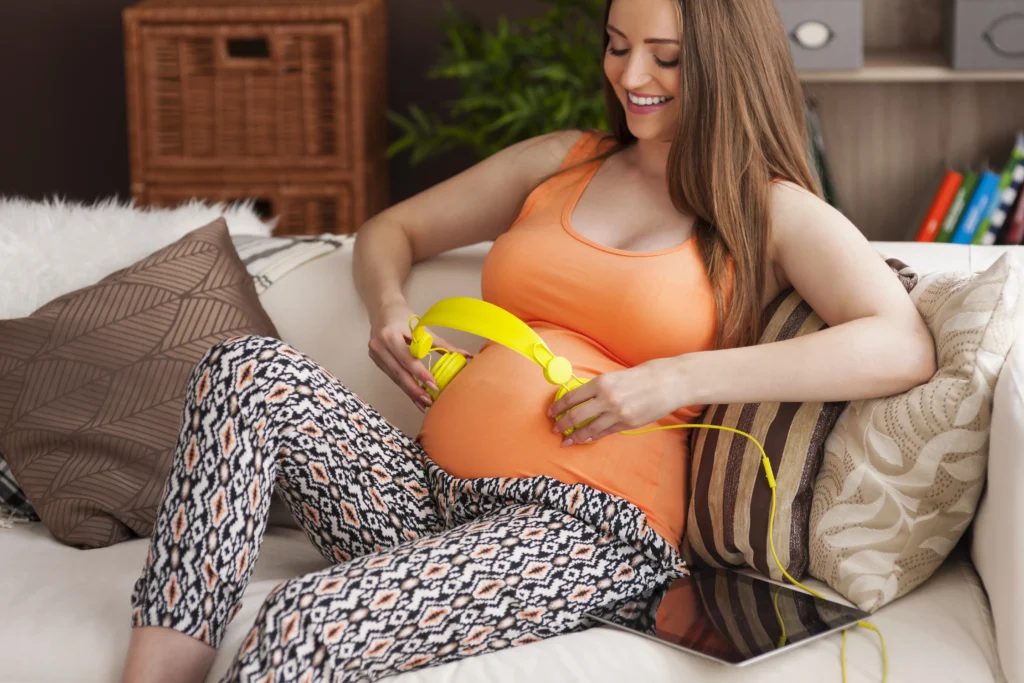
Your baby hears your voice in two ways.
First, through sound waves traveling through the environment.
Second, through vibrations conducted directly through your body.
This means your voice becomes one of the most familiar sensory experiences available before birth.
Did You Know?
Researchers have found that many newborns prefer their mother’s voice over unfamiliar voices shortly after birth, suggesting that voice recognition begins before they are born.
What Happens After Birth?
One of the most remarkable findings is that newborn babies often show a preference for their mother’s voice shortly after birth.
Research suggests that this preference begins developing during pregnancy. (webb et al. 2015)
This does not mean babies understand words.
Rather, they recognize familiar patterns and rhythms.
In many ways, your voice becomes one of your baby’s first sources of comfort.
Simple Bonding Tip
Talking to your baby during pregnancy does not have to be formal. Reading aloud, singing, chatting about your day, or simply speaking naturally may help create familiar sound patterns your baby can recognize later.
How Babies Hear Inside the Womb
Many parents imagine the womb as completely silent.
In reality, it is surprisingly noisy.
The fetus constantly hears:
- Heartbeat sounds
- Blood flow
- Breathing rhythms
- Digestive activity
External sounds also reach the baby, although they are softened and filtered.
When Hearing Develops
The structures necessary for hearing develop gradually throughout pregnancy.
By the second half of pregnancy, the auditory system has matured enough for fetuses to respond to sounds.
Researchers have observed fetal heart rate changes and movement responses when specific sounds are presented. (Camillo et al. 2006)
What Does Sound Actually Feel Like for the Baby?
Inside the womb, sound is experienced differently than it is after birth.
Amniotic fluid conducts vibrations extremely well.
As a result, babies may experience sound partly as vibration and movement.
This creates a rich sensory environment that supports developing auditory pathways.
Your Baby Learns Language Patterns Before Birth
One of the most exciting areas of research involves language learning.
Babies are obviously not learning vocabulary inside the womb.
However, they may begin learning aspects of language rhythm and speech patterns.
Researchers have found that newborn babies can distinguish between languages they were exposed to before birth and unfamiliar languages. (Rene et al. 2025)
What Babies Are Actually Learning
Rather than learning words, babies appear to become familiar with:
- Speech rhythm
- Intonation patterns
- Melody of language
- Cadence of conversation
These patterns may help prepare the brain for language learning after birth.
Why This Matters
This finding highlights something important.
Learning before birth is not academic learning.
It is sensory learning.
The developing brain is becoming familiar with the world it will soon enter.
And one of the most important parts of that world is human communication.
Myth vs Reality
Myth: Babies learn words and vocabulary before birth.
Reality: Research suggests babies learn rhythms, tones, and speech patterns rather than actual language content while in the womb.
Familiar Sounds Become Meaningful
Think about your favorite song.
The first time you hear it, it is unfamiliar.
After repeated exposure, it becomes recognizable.
Researchers believe something similar may happen with prenatal sound exposure.
Repeated sounds can become familiar to the developing baby.
This familiarity may influence behavior after birth.
One of the most famous examples involves stories read repeatedly during pregnancy.
Studies have suggested that newborn babies may show signs of recognizing stories they heard before birth.
This finding attracted enormous attention because it suggested that prenatal memory may extend beyond simple sound detection.
Instead, babies may retain information about repeated auditory experiences.
What This Means for Parents
Many parents become excited when they learn that babies can hear and remember certain sounds before birth.
That excitement is understandable.
However, it is important not to turn pregnancy into a classroom.
The goal is not to “teach” a fetus.
The goal is simply to understand that normal daily life already provides meaningful sensory experiences.
Every conversation.
Every laugh.
Every bedtime story.
Every familiar voice.
All become part of the sensory world your baby experiences before birth.
And this is only part of the story.
Research also suggests babies may respond to music, movement, and other sensory experiences long before they are born.
What Happens When You Read to Your Baby?
Many parents begin reading to their baby during pregnancy.
Some do it to bond.
Others do it because they have heard babies can recognize familiar stories after birth.
Interestingly, research suggests there may be some truth to that idea.
What Does This Actually Mean?
It does not mean babies understand the story.
They are not following the plot or learning vocabulary.
What they may recognize is:
- The rhythm of speech
- The sound patterns
- The cadence of the reader’s voice
In other words, babies become familiar with the experience rather than the content itself.
Is Reading Worth Doing?
Absolutely.
Reading during pregnancy can:
- Encourage bonding
- Create a calming routine
- Familiarize the baby with your voice
- Help parents feel connected to their developing child
Even if your baby never hears the same book again, the shared experience can still be meaningful.
Story Time Surprise
Studies suggest that babies may recognize repeated stories heard during late pregnancy. They are not understanding the plot, but they may remember familiar sound patterns and rhythms.
Can Babies Learn Music Before Birth?
Music is one of the most popular topics in prenatal learning.
Many parents wonder whether playing classical music or special prenatal playlists can make their baby smarter.
Research does not support claims that music increases intelligence before birth.
However, studies do suggest that fetuses can respond to musical stimulation and may become familiar with repeated musical patterns. (Movalled et al. 2023)
What Babies May Learn From Music
Babies may become familiar with:
- Rhythm
- Tempo
- Repeated melodies
- Musical patterns
This familiarity may influence how they respond to those sounds after birth.
The Real Benefit of Music
From a physiotherapy perspective, the greatest benefit may not be for the baby alone.
Music can help mothers:
- Relax
- Reduce stress
- Improve mood
- Support gentle movement
A calm and comfortable mother creates a positive environment for both herself and her baby.
Music Fact
There is no evidence that playing classical music makes babies smarter before birth. However, babies may become familiar with repeated melodies and musical patterns they hear regularly.
What Your Baby Learns From Your Movements
One of the most overlooked forms of prenatal learning involves movement.
Your baby experiences movement every day.
When you:
- Walk
- Climb stairs
- Change positions
- Exercise
- Dance
- Ride in a vehicle
your baby experiences gentle shifts in motion.
The Womb Is Rarely Still
Many people imagine the womb as a quiet, motionless environment.
In reality, babies are constantly exposed to movement.
Researchers believe these repeated movement experiences help support sensory system development.
The vestibular system, which helps regulate balance and spatial awareness, begins developing before birth.
Why Movement Matters
As a physiotherapist, I find this particularly fascinating.
Everyday activities provide natural sensory stimulation.
You do not need special exercises designed to “teach” your baby.
Normal daily movement already provides valuable experiences.
This is one reason regular physical activity during pregnancy remains beneficial for most women.
Physiotherapist Insight
Every walk, stretch, and position change creates gentle movement experiences for your baby. Daily movement naturally stimulates developing sensory systems without requiring special exercises.
The Womb Is a Complete Sensory Environment
The womb is often described as protective.
It is also educational.
Not in the academic sense.
In the sensory sense.
Before birth, babies experience:
- Sounds
- Vibrations
- Movement
- Rhythms
- Light changes
- Touch sensations
These experiences help prepare the nervous system for life outside the womb.
Familiarity Matters
One theme appears repeatedly throughout prenatal learning research.
Familiarity.
The baby becomes familiar with:
- Mother’s voice
- Frequently heard voices
- Language patterns
- Repeated sounds
- Daily rhythms
After birth, these familiar experiences may provide comfort and reassurance.
What Babies Cannot Learn Before Birth
This is an important topic because misinformation is common.
Some advertisements suggest that parents can dramatically increase intelligence before birth through specialized programs.
Current evidence does not support these claims.
Babies are not learning:
- Mathematics
- Reading
- Foreign languages
- Advanced concepts
- Academic skills
before birth.
The fetal brain is learning in a very different way.
Sensory Learning Is Not Academic Learning
Prenatal learning involves:
- Recognition
- Familiarity
- Memory of repeated experiences
- Sensory adaptation
This is impressive in its own right.
There is no need to exaggerate what science actually shows.
Should Parents Try to “Teach” Their Baby in the Womb?
Many parents feel pressure to optimize every aspect of pregnancy.
Play the right music.
Read the right books.
Use the right stimulation techniques.
The reality is far less complicated.
Your baby does not need a curriculum.
What Matters Most
Research suggests that ordinary daily experiences are already providing rich sensory input.
Talking.
Reading.
Laughing.
Walking.
Listening to music you enjoy.
Living your life.
These everyday experiences naturally expose the baby to sounds, rhythms, and movement patterns.
Avoid Turning Pregnancy Into a Performance
One of the healthiest things parents can do is remove the pressure to create a “perfect” prenatal learning environment.
Your baby does not need constant stimulation.
Your baby needs a healthy environment in which development can unfold naturally.
What Actually Matters
- Talking naturally
- Reading if you enjoy it
- Listening to music you like
- Staying active
- Managing stress
- Getting adequate rest
- Enjoying the pregnancy journey
Physiotherapist’s Advice
One of the most beautiful aspects of prenatal development is that learning often happens without parents realizing it.
You do not need expensive programs.
You do not need special recordings.
You do not need to spend hours trying to stimulate your baby.
Simply living your life provides countless opportunities for sensory experiences.
As a physiotherapist, I encourage parents to focus on:
Staying Active
Movement benefits both mother and baby.
Managing Stress
A calmer pregnancy often supports better overall well-being.
Prioritizing Sleep
Maternal recovery matters.
Calculate your ideal sleep timings here: “Sleep Calculator“
Enjoying Connection
Talk to your baby.
Read if you enjoy reading.
Play music if it makes you feel good.
The goal is connection, not perfection.
Expert Tip
You do not need expensive prenatal learning programs. Your baby is already experiencing a rich world of sounds, movements, rhythms, and familiar voices through everyday life.
Physiotherapist’s Perspective
Prenatal learning is not about creating a genius baby. It is about understanding how the developing brain responds to voices, sounds, movement, and sensory experiences. Everyday activities often provide all the stimulation a baby needs before birth.
Final Thoughts
Understanding what babies learn before birth offers a fascinating glimpse into early development and the remarkable abilities of the growing fetus.
Long before your baby sees your face, they are already becoming familiar with your world.
They hear your voice.
They experience your movements.
They encounter the rhythms of daily life.
These experiences help shape some of the earliest forms of learning.
Not learning in the classroom sense.
Learning in the human sense.
Recognizing familiar sounds.
Responding to repeated experiences.
Preparing for life outside the womb.
As a physiotherapist, I believe one of the most reassuring messages for parents is this:
You do not need to create extraordinary experiences for your baby before birth.
The simple moments already matter.
Every conversation.
Every story.
Every walk.
Every laugh.
Together, they become part of the remarkable sensory environment in which your baby begins learning about the world.
A Reassuring Reminder
Your baby does not need a perfect prenatal learning environment. Everyday moments such as talking, laughing, walking, reading, and listening to familiar voices already provide meaningful experiences before birth.
Frequently Asked Questions
Can babies really learn before birth?
Yes. Research suggests babies can become familiar with voices, language rhythms, repeated sounds, and movement patterns before birth. This type of learning is sensory rather than academic.
Can babies recognize their mother’s voice in the womb?
Studies indicate that babies can become familiar with their mother’s voice before birth and may show a preference for it shortly after delivery.
Can babies hear sounds during pregnancy?
Yes. During the second half of pregnancy, babies can hear sounds such as their mother’s voice, heartbeat, breathing, and some external noises filtered through the womb.
Does reading to your baby during pregnancy help?
Reading can help expose babies to familiar voice patterns and rhythms. Some studies suggest newborns may recognize stories that were repeatedly read during late pregnancy.
Can music make babies smarter before birth?
There is no evidence that prenatal music exposure increases intelligence. However, babies may become familiar with repeated musical patterns and melodies.
What does a baby learn from movement during pregnancy?
Babies experience motion every time the mother walks, changes position, or exercises. These movements help stimulate developing sensory systems.
Should parents try to teach babies in the womb?
There is no need for special teaching programs. Everyday experiences such as talking, reading, moving, and listening to music already provide meaningful sensory stimulation.
What is the most important thing a baby learns before birth?
One of the most important prenatal learning experiences is becoming familiar with the mother’s voice, which may help create comfort and recognition after birth.
Stay tuned with us for more health related topics.
Follow us on LinkedIn and Instagram for more.
More Read


Medical Disclaimer!
This article has been reviewed and written under the guidance of our Head Physiotherapist, Dr. Kruti Raj (PT, MUHS,CPT,CMPT). The information shared is intended for educational purposes only and should not be considered a substitute for personalized medical advice, diagnosis, or treatment.
Please consult us or any other qualified healthcare professional before beginning any exercise program, especially if you are experiencing pain, recovering from injury, or managing a medical condition.


