


Pain during or immediately after ejaculation is not something men should simply ignore, particularly when it happens repeatedly.
The pain may be felt in the penis, testicles, perineum, pelvis, lower abdomen or sometimes the lower back.
It may last only briefly or continue for longer after orgasm.
Quick Answer
Pain during or after ejaculation is not something men should repeatedly ignore. Possible causes include prostate or urinary conditions, infections, chronic pelvic pain, medication effects and pelvic-floor dysfunction. When pelvic-floor muscle tension or poor coordination contributes to symptoms, pelvic-health physiotherapy may help. However, persistent, severe or recurrent painful ejaculation should be medically assessed to identify the underlying cause.
Painful ejaculation can have several possible causes, including prostate or urinary conditions, chronic pelvic pain, infections, medication effects, nerve-related problems and pelvic-floor muscle dysfunction.
Because the causes are varied, persistent painful ejaculation deserves an appropriate medical assessment rather than assuming that it is simply a muscular problem. (Waqar et al., 2020)
From a physiotherapy perspective, the pelvic floor is particularly relevant when painful ejaculation occurs alongside pelvic pain, perineal discomfort, urinary symptoms or muscle tenderness.
Research has identified a relationship between pelvic-floor dysfunction, male sexual dysfunction and pelvic pain. (Cohen et al., 2016)
Key Takeaways
- Pain during or after ejaculation can have several possible causes.
- Pelvic-floor muscle dysfunction may contribute to painful ejaculation in some men.
- A tense or overactive pelvic floor is not the same as a weak pelvic floor.
- Pelvic-floor strengthening is not automatically appropriate for every man with pelvic pain.
- Physiotherapy may focus on relaxation, breathing, coordination, mobility and appropriately prescribed strengthening.
- Prostate, urinary, infectious and other medical conditions may also cause painful ejaculation.
- Persistent or recurrent pain should be medically assessed.
- Blood in the urine or semen, fever, severe testicular pain or difficulty urinating requires medical attention.
- A pelvic-health physiotherapist can assess whether pelvic-floor dysfunction is contributing to symptoms.
- Physiotherapy should complement rather than replace appropriate medical or urological care.
What Does Pain During Ejaculation Feel Like?
Painful ejaculation can vary considerably from person to person.
Some men may experience:
- Sharp or aching pain in the penis
- Pain around the perineum
- Testicular or scrotal discomfort
- Deep pelvic pain
- Lower abdominal discomfort
- Pain around the prostate region
- Burning or discomfort during ejaculation
- Pain immediately after orgasm
The timing can also vary.
Pain may occur during ejaculation, immediately afterward, or for several minutes after orgasm.
It is important to distinguish occasional mild discomfort from recurrent or significant pain.
Repeated painful ejaculation should be investigated because different underlying conditions require different treatments.
What Causes Pain During Ejaculation?
There isn’t one universal cause.
Prostate and Pelvic Conditions
Conditions affecting the prostate or the wider pelvic region can be associated with painful ejaculation.
Chronic prostatitis/chronic pelvic pain syndrome is one example in which pelvic pain and sexual symptoms may occur together.
The 2025 American Urological Association guideline on male chronic pelvic pain notes that pain with ejaculation can occur alongside pelvic-floor myalgia, and that a musculoskeletal source should be considered during assessment. (American Urological Association, 2025)
Pelvic-Floor Muscle Dysfunction
The pelvic floor is involved in male sexual function, including ejaculation and orgasm.
If these muscles are excessively tense, poorly coordinated or painful, sexual activity may sometimes aggravate symptoms.
Research on overactive pelvic-floor muscles has identified ejaculatory pain as one of the sexual symptoms that can occur in men with pelvic-floor overactivity. (Padao et al., 2021)
Other Possible Causes
Painful ejaculation can also be associated with:
- Urinary or genital infections
- Benign prostate enlargement
- Ejaculatory duct obstruction
- Previous prostate or pelvic procedures
- Certain medications
- Nerve-related problems
- Chronic pelvic pain conditions
This is why self-diagnosing the problem as “weak pelvic-floor muscles” isn’t appropriate.
Can Physiotherapy Help Painful Ejaculation?
Potentially, when pelvic-floor or musculoskeletal dysfunction is contributing to the pain.
A pelvic-health physiotherapist may assess:
- Pelvic-floor muscle tenderness
- Muscle tone and relaxation
- Pelvic-floor coordination
- Abdominal and pelvic muscle function
- Hip and pelvic movement
- Breathing patterns
- Urinary symptoms
- Pain behaviour and movement sensitivity
The aim is not automatically to strengthen the pelvic floor.
If the muscles are already overactive or tender, treatment may instead focus on relaxation, down-training, breathing, movement and reducing unnecessary muscle tension.
A recent review of pelvic physical therapy for male sexual disorders describes approaches including exercise, manual techniques, pain-management strategies and behavioural interventions, while emphasizing the need for individualized treatment. (Sahin et al., 2025)
How Can Pelvic-Floor Muscles Cause Pain During Ejaculation?
The pelvic floor is involved in the rhythmic muscular activity that occurs during ejaculation.
Normally, these muscles need to contract and relax in a coordinated way.
If the muscles remain excessively tense, are tender to touch, or have difficulty relaxing, sexual activity may aggravate pelvic or perineal pain.
This does not mean that every man with painful ejaculation has a pelvic-floor problem.
However, pelvic-floor dysfunction becomes more relevant when pain occurs together with symptoms such as perineal discomfort, urinary difficulties, constipation, pelvic pressure or pain with prolonged sitting.
What Is Pelvic-Floor Overactivity?
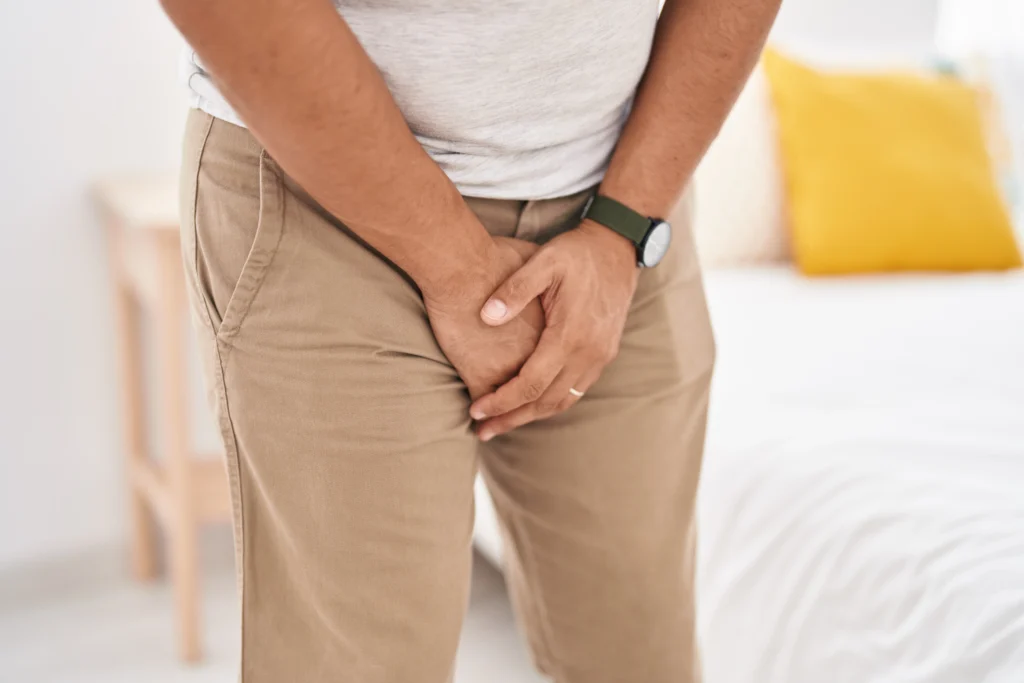
Pelvic-floor overactivity means the muscles remain more active or tense than necessary and may have difficulty returning to a relaxed state.
For some men, this can develop alongside chronic pelvic pain.
Pain itself can also cause protective muscle tightening, creating a cycle:
Pain → muscle guarding → increased tension → more sensitivity → pain
Breaking this cycle may require more than strengthening exercises.
Does Pelvic-Floor Physiotherapy Involve Kegel Exercises?
Not necessarily.
This is particularly important when painful ejaculation is associated with pelvic-floor tightness.
Kegel exercises are designed to strengthen the pelvic-floor muscles.
They can be useful when weakness is identified, but repeatedly contracting an already tense pelvic floor may not address the underlying problem.
Treatment may instead involve:
Pelvic-Floor Relaxation
Learning to consciously reduce unnecessary pelvic-floor tension can be an important part of rehabilitation.
Diaphragmatic Breathing
Slow, relaxed breathing can help improve awareness of abdominal and pelvic movement and may be incorporated into pelvic-floor down-training.
Manual Therapy
Where clinically appropriate, a trained pelvic-health physiotherapist may use hands-on techniques to address musculoskeletal restrictions or pelvic-floor tenderness.
Hip and Pelvic Mobility
The pelvic floor does not function in isolation.
Hip and pelvic movement can influence how the surrounding muscles work, so mobility and movement may be included in an individualized rehabilitation program.
Gradual Activity Progression
If certain movements, sitting positions or physical activities consistently aggravate pelvic symptoms, rehabilitation may involve gradually improving tolerance rather than avoiding activity indefinitely.
Can Physiotherapy Cure Painful Ejaculation?
It would be inappropriate to promise a cure.
Physiotherapy may help when pelvic-floor dysfunction or other musculoskeletal factors contribute to the symptoms, but painful ejaculation can have medical causes that require other treatment.
For example, chronic prostatitis/chronic pelvic pain syndrome can involve urinary, pelvic and sexual symptoms and may require a multimodal treatment approach rather than one intervention alone.
Clinical guidance emphasizes individualized management based on the underlying presentation. (European Association of Urology)
This is why physiotherapy should be considered part of a broader healthcare approach when appropriate.
What Can You Do at Home?
If your symptoms are mild and you have already been medically assessed, general strategies may include:
- Avoiding prolonged sitting when it aggravates symptoms
- Maintaining regular gentle physical activity
- Practicing relaxed diaphragmatic breathing
- Avoiding constant pelvic-floor clenching
- Taking breaks from activities that clearly aggravate pelvic discomfort
- Maintaining adequate hydration
- Following your healthcare professional’s exercise recommendations
Avoid starting an aggressive pelvic-floor strengthening program simply because you are experiencing painful ejaculation.
When Should You See a Physiotherapist?
Consider a pelvic-health physiotherapy assessment if painful ejaculation occurs alongside:
- Persistent pelvic or perineal pain
- Pain while sitting
- Pelvic-floor tenderness
- Difficulty relaxing the pelvic floor
- Urinary symptoms
- Pain that increases with certain physical activities
- Recurrent symptoms despite medical evaluation
A physiotherapist can determine whether the pelvic floor appears weak, overactive, poorly coordinated or otherwise contributing to your symptoms.
When Should You See a Doctor?
Painful ejaculation should be medically evaluated when it is persistent, recurrent, severe or associated with other symptoms.
Seek medical attention if you experience:
- Fever or chills
- Blood in urine or semen
- Significant testicular swelling or pain
- Burning urination
- Difficulty urinating
- New penile discharge
- Severe or sudden pelvic pain
- Symptoms following a procedure or injury
- New sexual symptoms that persist
These symptoms can indicate conditions that require medical investigation and should not simply be treated with exercises.
Can Pain During Ejaculation Go Away on Its Own?
Sometimes, mild and short-lived discomfort may resolve, particularly when there is a temporary trigger.
However, recurrent or persistent painful ejaculation should not simply be ignored.
The cause matters.
If the problem is related to pelvic-floor tension, rehabilitation may help.
If it is related to an infection, prostate condition, medication or another medical problem, the appropriate treatment will be different.
This is why the goal should be finding the reason for the pain rather than simply treating the symptom.
What Should You Avoid If Ejaculation Is Painful?
Until the cause is understood, avoid repeatedly doing anything that clearly makes your symptoms worse.
This may include:
- Aggressive pelvic-floor strengthening
- Constantly clenching the pelvic floor
- Exercising through significant pelvic pain
- Ignoring urinary or genital symptoms
- Delaying medical assessment when symptoms are persistent
- Assuming that all pelvic pain is caused by weak muscles
A particularly common mistake is to assume that more Kegel exercises will solve every male pelvic-floor problem.
If the muscles are already overactive, strengthening without assessment may not be the appropriate approach.
Does Painful Ejaculation Mean You Have Prostatitis?
Not necessarily.
Prostatitis or chronic prostatitis/chronic pelvic pain syndrome is one possible explanation, but painful ejaculation can occur for several different reasons.
Symptoms of chronic pelvic pain syndromes can overlap with urinary and sexual problems, making a proper assessment important.
The European Association of Urology recommends evaluating chronic pelvic pain according to the individual’s symptoms and considering pelvic-floor muscle dysfunction as part of the assessment. (European Association of Urology)
Did You Know?
Painful ejaculation does not automatically mean that your pelvic-floor muscles are weak. In some men, the pelvic floor may actually be excessively tense or difficult to relax. This is why repeatedly performing strengthening exercises without an assessment may not be the best approach. A pelvic-health physiotherapist can evaluate both muscle contraction and relaxation.
Can Stress Make Pelvic-Floor Pain Worse?
Stress does not mean that the pain is “all in your head.”
The nervous system, muscles and pain-processing systems interact.
When someone is worried about pain occurring during sexual activity, they may unconsciously tighten their pelvic-floor muscles.
That increased muscle activity can potentially contribute to discomfort in susceptible individuals.
For this reason, treatment may sometimes include breathing, relaxation, pain education and gradual return to comfortable activity, alongside other medical or physiotherapy interventions.
Lesser-Known Fact: Pelvic-Floor Strength Is Not Always the Goal
One of the most important facts for men with painful ejaculation is that a stronger pelvic floor is not automatically a healthier pelvic floor.
A healthy pelvic floor needs to:
Contract when necessary → relax when necessary → coordinate with surrounding muscles → respond appropriately to activity.
If a man already has excessive pelvic-floor tension, repeatedly squeezing the muscles may potentially maintain that tension.
This is why a pelvic-health physiotherapist may assess both contraction and relaxation before prescribing strengthening exercises.
Can Physiotherapy Help You Return to Comfortable Sexual Activity?
Potentially, when pelvic-floor or musculoskeletal factors contribute to the symptoms.
Treatment may involve a combination of:
- Pelvic-floor relaxation
- Breathing exercises
- Movement retraining
- Hip and pelvic mobility
- Manual therapy where appropriate
- Gradual activity progression
- Education about pelvic-floor function
- Strategies to reduce unnecessary muscle guarding
The exact approach depends on the assessment.
Physiotherapy should not be viewed as a replacement for urological or medical care when a medical cause is suspected.
Pain During Ejaculation: Myth vs Fact
| Myth | Fact |
|---|---|
| Pain during ejaculation is always caused by weak pelvic-floor muscles. | Painful ejaculation has many possible causes, including pelvic-floor dysfunction, prostate conditions, infections and other medical problems. |
| More Kegel exercises will fix painful ejaculation. | Strengthening may not be appropriate when the pelvic floor is already tense or overactive. |
| Pelvic-floor muscles should always be kept tight. | Healthy pelvic-floor function requires both contraction and relaxation. |
| Painful ejaculation always means prostatitis. | Prostate conditions are one possible cause, but they are not the only explanation. |
| Pain after ejaculation is harmless if it goes away quickly. | Occasional mild symptoms may resolve, but recurrent or significant pain should be assessed. |
| Pelvic pain is always a muscle problem. | Pelvic pain can have muscular, urinary, prostate, infectious, neurological or other causes. |
| Physiotherapy can treat every cause of painful ejaculation. | Physiotherapy may address musculoskeletal contributors, while medical causes may require treatment from a doctor or urologist. |
| Pelvic-floor relaxation is unnecessary for men. | The ability to relax the pelvic floor can be important, particularly when excessive muscle tension contributes to symptoms. |
| You should exercise through pelvic pain. | Significant or worsening pain should be assessed rather than repeatedly aggravated. |
| Painful ejaculation is something men simply have to live with. | The appropriate treatment depends on the cause, and several medical and rehabilitation options may be available. |
When Should You Take Pain During Ejaculation Seriously?
Arrange a medical assessment if the pain:
- Happens repeatedly
- Is becoming more intense
- Persists after ejaculation
- Occurs with urinary symptoms
- Occurs with blood in semen or urine
- Is accompanied by fever
- Occurs with significant testicular pain or swelling
- Begins suddenly without an obvious explanation
- Causes significant anxiety or affects your sexual relationships
Sudden severe testicular pain is particularly important and requires urgent medical assessment.
Final Thoughts
Pain during ejaculation is not something you should simply learn to tolerate. The underlying cause can be muscular, urinary, prostate-related, infectious or related to another medical condition.
From a physiotherapy perspective, the pelvic floor is particularly important when pain occurs alongside pelvic or perineal discomfort, muscle tension or difficulty relaxing. Treatment may involve relaxation, breathing, movement, coordination and appropriately prescribed strengthening.
If painful ejaculation is persistent, recurrent or accompanied by warning signs such as blood, fever, severe testicular pain or difficulty urinating, seek medical assessment rather than trying to treat the problem with exercises alone.
Conclusion
Pain during ejaculation is not something men should simply learn to live with.
The causes can range from pelvic-floor dysfunction and chronic pelvic pain to prostate, urinary, infectious, medication-related or other medical conditions.
Because of this wide range, proper assessment is more useful than assuming that the problem is caused by weak pelvic-floor muscles.
From a physiotherapy perspective, the pelvic floor becomes particularly relevant when painful ejaculation occurs alongside pelvic or perineal pain, muscle tenderness, urinary symptoms or difficulty relaxing the muscles.
Treatment may involve relaxation, breathing, movement, coordination and appropriately prescribed strengthening, depending on what the assessment shows.
The key message is simple:
Don’t automatically strengthen. Don’t ignore persistent pain. Find the cause first.
A pelvic-health physiotherapist can help identify musculoskeletal contributors, while a doctor or urologist can investigate medical causes that require specific treatment.
Frequently Asked Questions About Pain During Ejaculation
1. Why does ejaculation hurt?
Painful ejaculation can have several possible causes, including prostate or urinary conditions, infections, chronic pelvic pain, medication effects and pelvic-floor dysfunction.
2. Is painful ejaculation normal?
Occasional mild discomfort may resolve, but recurrent, persistent or significant pain should not be considered normal and should be assessed.
3. Can a tight pelvic floor cause painful ejaculation?
An overactive or poorly relaxing pelvic floor may contribute to pelvic and sexual pain in some men. An assessment is needed to determine whether this is relevant to your symptoms.
4. Can Kegel exercises help painful ejaculation?
Not necessarily. Kegels strengthen the pelvic floor, but if the muscles are already tense or overactive, relaxation-based treatment may be more appropriate.
5. Can physiotherapy help painful ejaculation?
Physiotherapy may help when pelvic-floor or musculoskeletal dysfunction contributes to the symptoms. Treatment may include relaxation, breathing, mobility, coordination and appropriately prescribed strengthening.
6. What does a pelvic-health physiotherapist assess?
Assessment may include pelvic-floor muscle tone, tenderness, strength, relaxation, coordination, breathing, hip and pelvic movement and related urinary or pain symptoms.
7. Can prostatitis cause painful ejaculation?
Yes, prostate-related conditions can be associated with painful ejaculation, but prostatitis is only one possible cause.
8. Can stress make painful ejaculation worse?
Stress and anxiety can contribute to increased muscle tension and may influence pain and sexual function in some individuals. This does not mean the pain is imaginary.
9. When should I see a physiotherapist?
Consider pelvic-health physiotherapy when painful ejaculation occurs alongside pelvic or perineal pain, muscle tension, urinary symptoms or other signs suggesting a musculoskeletal contribution.
10. When should I see a doctor?
Seek medical assessment for persistent or severe pain, fever, blood in urine or semen, significant testicular pain or swelling, difficulty urinating, discharge or sudden severe symptoms.
Stay tuned with us for more health related topics.
Follow us on LinkedIn and Instagram for more.
More Read


Medical Disclaimer!
This article has been reviewed and written under the guidance of our Head Physiotherapist, Dr. Kruti Raj (PT, MUHS,CPT,CMPT). The information shared is intended for educational purposes only and should not be considered a substitute for personalized medical advice, diagnosis, or treatment.
Please consult us or any other qualified healthcare professional before beginning any exercise program, especially if you are experiencing pain, recovering from injury, or managing a medical condition.


