
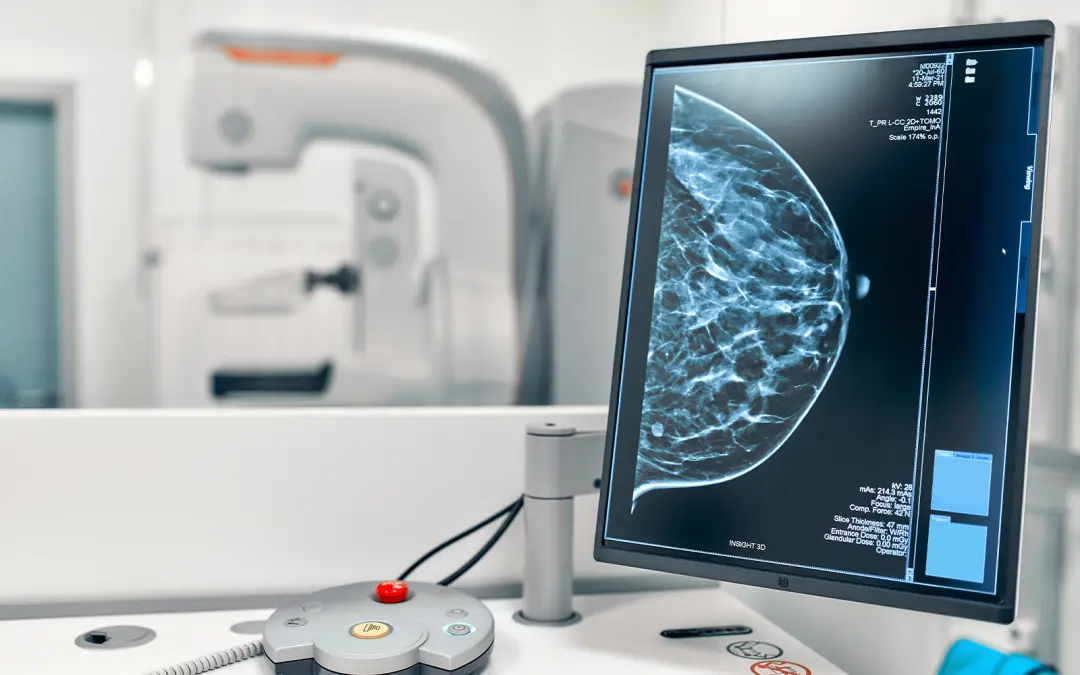

Artificial intelligence (AI) is revolutionizing the way medical professionals detect and diagnose breast cancer. By analyzing vast amounts of imaging data with speed and precision, AI has the potential to enhance early detection, reduce false positives, and improve patient outcomes. Recent studies have shown that AI-assisted mammography can outperform traditional methods, offering new hope in the fight against breast cancer.
While AI is not yet a standalone diagnostic tool, its integration into breast cancer screening is showing promising results. With ongoing research and clinical trials, the medical community is working towards making AI a reliable and widely accessible complement to radiologists. Understanding how AI detects breast cancer and its potential benefits can help pave the way for improved screening and early intervention.
How AI Enhances Breast Cancer Detection
Artificial intelligence functions by learning patterns in vast datasets, allowing it to analyze medical images more efficiently than the human eye. By training AI models on thousands or even millions of mammograms, researchers can develop systems that recognize subtle abnormalities, increasing detection rates and reducing errors.
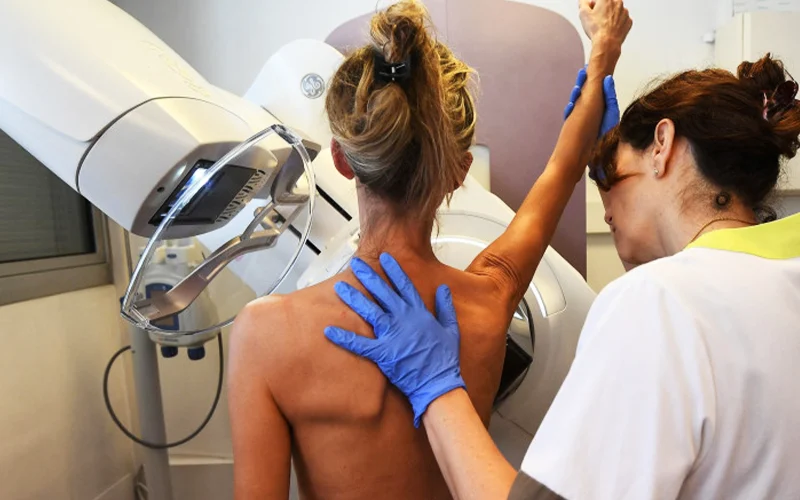
Pattern Recognition and Machine Learning
AI systems are trained using labeled mammograms, where radiologists have identified normal and cancerous tissues. Over time, AI learns to distinguish between benign and malignant growths with increasing accuracy. The technology continuously improves as it processes more data, refining its ability to detect abnormalities that might be overlooked by human radiologists.
Integration with Radiology
AI is not designed to replace radiologists but rather to assist them. Some AI applications act as a second reader, double-checking mammograms for missed signs of cancer. Others prioritize cases, helping radiologists focus on the most urgent and suspicious findings first. This approach enhances efficiency and improves diagnostic accuracy.
The Benefits of AI in Breast Cancer Screening
Early Detection of Cancerous Tissue
Early detection is crucial for improving breast cancer survival rates. According to the National Cancer Institute, traditional mammograms miss approximately 20% of breast cancers. AI-assisted screening has demonstrated the ability to detect cancers at an earlier stage, which could lead to more effective treatment options.
A study published in The Lancet Oncology examined AI’s effectiveness in screening mammograms from over 80,000 women in Sweden. The results showed that AI-assisted readings detected 20% more cancers compared to human radiologists alone. A similar study in The Lancet Digital Health found that AI and radiologists working together improved detection accuracy by 2.6% compared to radiologists alone.
Reducing False Positives
False positives occur when mammograms incorrectly identify cancerous tissue, leading to unnecessary follow-up tests, biopsies, and emotional distress. AI can reduce these occurrences by analyzing patterns more precisely.
A study published in Nature analyzed over 91,000 mammograms from women in the U.S. and the U.K. and found that AI-assisted screenings reduced false positives by nearly 6% in the U.S. and 1.2% in the U.K. This reduction in unnecessary procedures can improve patient experiences and reduce healthcare costs.
Preventing Unnecessary Biopsies
Breast biopsies, while necessary for confirming cancer, often result in benign findings. AI may help reduce the number of unnecessary biopsies by improving risk assessment.
One AI tool, iBRISK (intelligent-augmented breast cancer risk calculator), was shown in Radiology: Artificial Intelligence to predict with high accuracy whether an abnormality flagged by radiologists was likely benign or malignant. If widely implemented, such technology could prevent thousands of unnecessary biopsies each year.
AI’s Role in Predicting Breast Cancer Risk
AI is also proving valuable in predicting who is most likely to develop breast cancer. Traditional risk assessment models rely on factors like age, family history, and breast density. However, AI can enhance these predictions by incorporating mammographic patterns that humans may not recognize.
A 2023 study compared AI’s predictive accuracy to the Breast Cancer Surveillance Consortium (BCSC) risk model. AI-generated risk scores, when combined with BCSC calculations, provided the most accurate predictions for a five-year breast cancer risk. This advancement could help doctors personalize screening schedules based on individual risk profiles.
Challenges and Considerations for AI Implementation
Data Diversity and Bias
AI models are only as good as the data used to train them. If training datasets lack diversity, AI may be less accurate for certain ethnicities or body types. Researchers are working to ensure AI systems perform well across all populations by using inclusive datasets and rigorous validation processes.
Clinical Adoption and Regulatory Approval
Despite promising results, AI is not yet widely adopted in clinical settings. The U.S. has been slow to integrate AI-assisted mammography, with only 9% of radiologists currently using AI for breast imaging, according to the American College of Radiology Data Science Institute. More research and clinical trials are needed to establish AI’s long-term reliability.
AI as a Support Tool, Not a Replacement
While AI can significantly enhance radiology practices, it is not expected to replace human radiologists. Experts agree that AI should serve as an aid rather than an independent diagnostic tool. Radiologists bring essential contextual knowledge and clinical judgment that AI cannot replicate.
Dr. Amy K. Patel, a breast radiologist at The Breast Care Center at Liberty Hospital, emphasizes that AI should be viewed as a tool that enhances, rather than replaces, human expertise. As AI adoption increases, radiologists will play a crucial role in ensuring its effective and ethical use.
The Future of AI in Breast Cancer Imaging
As AI technology advances, researchers are exploring its potential beyond screening. Future AI applications in breast cancer care may include:
Assessing treatment response: AI could help monitor how well a patient’s breast cancer responds to chemotherapy before surgery.
Predicting metastasis risk: AI might identify whether cancer is likely to spread, helping doctors tailor treatment plans accordingly.
Optimizing personalized care: AI could integrate genetic, lifestyle, and imaging data to create highly personalized risk profiles for each patient.
One ongoing study, the Leeds Investigation of Breast-screening AI (LIBRA), is evaluating AI’s role in improving detection rates and reducing unnecessary recalls. If successful, such studies could accelerate AI’s integration into standard breast cancer screening protocols.
Conclusion
Artificial intelligence is poised to revolutionize breast cancer detection by improving accuracy, reducing false positives, and aiding risk assessment. While AI is not yet a replacement for radiologists, it serves as a powerful tool to enhance early detection and streamline diagnostic processes. As more clinical trials validate AI’s reliability, its adoption in routine breast cancer screening is likely to grow, offering new hope for patients and medical professionals alike.
Read About : Breast cancer : A result of Awareness deficit
Visit us at our Advance Physiotherapy Clinics : https://g.co/kgs/rTqAjgt


