How to lose weight after menopause is a common concern.
Hormonal shifts, muscle changes, and metabolism changes can affect how your body stores and uses energy.
Many women reach their forties and notice something frustrating.
The eating habits and exercise routines that once worked no longer seem to produce the same results.
You may feel that you are making healthy choices, staying active, and watching your diet, yet to lose weight after menopause feels slower and more difficult than it used to.
Quick Answer
Weight loss often feels more difficult after 40 because of natural changes in muscle mass, hormones, sleep, activity levels, and lifestyle. The good news is that healthy weight loss is still possible with strength training, balanced nutrition, regular movement, and realistic expectations.
As a physiotherapist, I often hear women say,
“My metabolism must have stopped working.”
The truth is usually more complex.
Weight loss after 40 often feels different because several natural changes begin to happen at the same time.
Muscle mass gradually changes, hormones evolve, sleep patterns may shift, and daily life often becomes busier.
Understanding these changes can help you work with your body instead of feeling that it is working against you.
Key Takeaways
- Weight loss after 40 often changes because of several natural factors working together.
- Gradual loss of muscle mass can affect body composition.
- Perimenopause and menopause may influence fat distribution.
- Sleep and stress can make healthy habits more difficult to maintain.
- Strength training becomes increasingly important with age.
- Crash diets are rarely sustainable.
- The scale is only one measure of progress.
- Healthy aging focuses on strength, movement, and long-term well-being.
Does Your Metabolism Suddenly Slow Down at 40?
One of the biggest myths is that metabolism suddenly crashes when you turn forty.
The body does not usually change overnight.
Instead, gradual changes occur over many years.
One important factor is muscle mass.
As people age, they naturally experience changes in body composition, including a gradual decline in skeletal muscle mass if they do not remain physically active.
The European Working Group on Sarcopenia describes age-related loss of muscle mass and function as an important aspect of healthy aging. (Alexzendra et al. 2014)
As a physiotherapist, I often explain that muscle is important because it supports movement, strength, and overall physical function.
Why Does Muscle Matter for Weight Loss?
Many women focus only on the number on the scale.
However, body composition matters just as much.
Muscle helps the body perform everyday activities and supports an active lifestyle.
When muscle strength decreases, people may naturally become less active, reducing overall energy expenditure.
This is one reason why strength training becomes increasingly valuable with age.
The goal is not to become a bodybuilder.
The goal is to maintain healthy movement and physical independence.
Hormones Can Influence the Journey
Many women over 40 enter the years of perimenopause or menopause.
During this time, hormonal changes may influence where the body stores fat and how the body composition changes over time.
Researchers explains that menopause is associated with changes in body composition and fat distribution. (kodoth et al. 2022)
However, it is important not to blame every change on hormones.
Lifestyle, physical activity, nutrition, sleep, and genetics also play important roles.
Sleep Becomes More Important Than Ever
Many women in their forties juggle careers, family responsibilities, and caregiving roles.
At the same time, sleep quality may change.
Poor sleep can leave people feeling:
- More tired
- Less motivated to exercise
- More likely to choose convenient foods
- Less able to recover from physical activity
As a physiotherapist, I often remind women that recovery is an important part of health.
A body that never gets enough rest may struggle to perform at its best.
Calculate your ideal sleep timings here: “Sleep Calculator“
Daily Life Changes Too
Weight management is not only about biology.
Life after forty often looks very different from life at twenty-five.
Many women spend long hours:
- Sitting at work
- Caring for children
- Supporting aging parents
- Managing busy households
These responsibilities may reduce opportunities for exercise and recovery.
Sometimes the challenge is not a slower metabolism.
It is simply a much busier life.
Why Crash Diets Often Fail
When weight loss becomes difficult, many people turn to strict diets.
Unfortunately, these approaches are often hard to maintain.
Extreme calorie restriction may leave people feeling:
- Hungry
- Fatigued
- Irritable
- Less active
As a physiotherapist, I prefer sustainable habits over short-term solutions.
Healthy movement and balanced nutrition are usually more realistic than chasing rapid results.
A Lesser-Known Fact About Weight After 40
Many women become frustrated because their body shape changes even when their weight stays relatively stable.
Body composition can change over time.
This means that muscle and fat distribution may not look the same as they did years earlier.
The scale does not always tell the complete story.
Strength, mobility, and physical function are equally important measures of health.
Can Strength Training Really Help?
One of the most effective ways to support healthy aging is to maintain muscle strength.
Strength training may help improve:
- Muscle function
- Balance
- Physical confidence
- Everyday movement
It also supports long-term independence.
As a physiotherapist, I encourage women to think of exercise as an investment in future health rather than simply a way to burn calories.
Posture and Body Appearance
Many women notice that changes in posture can affect how their body looks.
Reduced muscle strength, prolonged sitting, and age-related changes in movement patterns may influence body alignment.
Improving posture will not magically remove body fat.
However, healthy posture supports efficient movement and may improve the way the body carries itself.
Physiotherapist’s Perspective
One of the biggest mistakes to lose weight after menopause I see is women believing that their body has somehow failed them.
In reality, the body is adapting to a new stage of life.
Instead of asking,
“Why is my body working against me?”
try asking,
“What does my body need now that it did not need twenty years ago?”
The answer often includes:
- More strength training
- Better recovery
- Consistent movement
- Balanced nutrition
- Realistic expectations
Healthy aging is not about trying to have the body of a twenty-year-old.
It is about building a strong and active body for the years ahead.
What Type of Exercise Works Best After 40?
Many women believe they simply need to do more cardio.
While walking, cycling, and other aerobic activities are excellent for overall health, they are only one part of the picture.
As a physiotherapist, I often encourage women to think beyond burning calories and focus on maintaining strength and movement quality.
A balanced exercise routine may include:
- Walking
- Strength training
- Mobility exercises
- Balance training
- Flexibility work
The goal is to build a body that stays active and independent for years to come.
Why Strength Training Becomes More Important
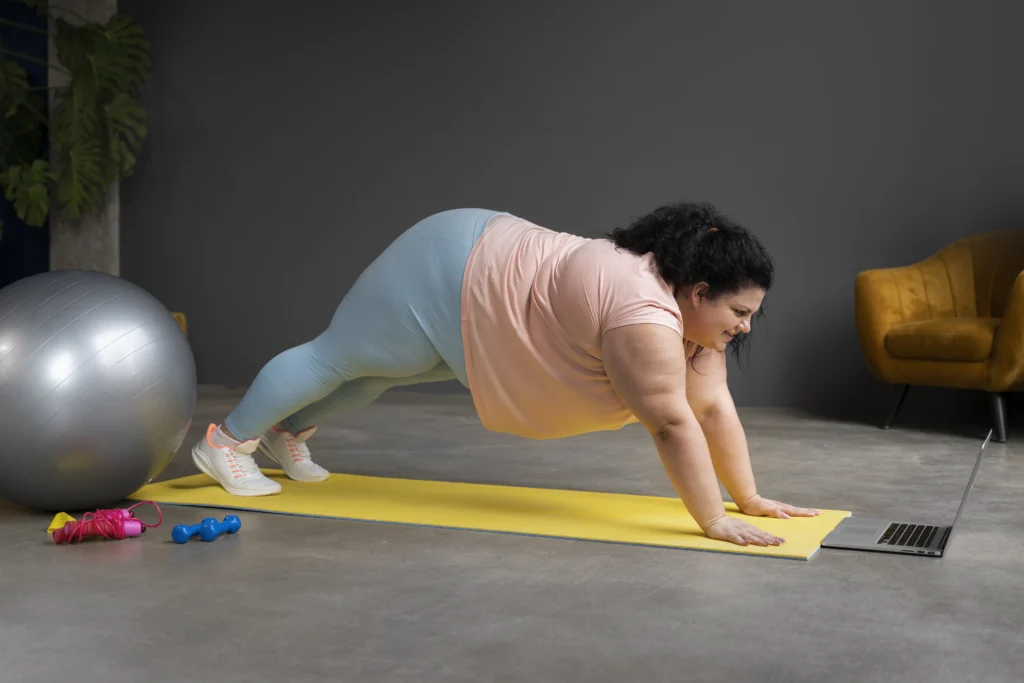
One of the biggest changes after forty is that maintaining muscle becomes increasingly valuable.
Strength training can help support:
- Muscle function
- Bone health
- Balance
- Joint stability
- Everyday physical activities
As a physiotherapist, I often remind women that strength training is not just for athletes.
It is one of the best long-term investments in healthy aging.
Nutrition Matters, but Perfection Is Not Necessary
Many women become trapped in a cycle of strict dieting followed by frustration.
Healthy nutrition does not have to be complicated.
Simple habits often work best:
- Eat balanced meals.
- Include adequate protein.
- Choose whole foods when possible.
- Stay hydrated.
- Avoid skipping meals.
Extreme diets may create short-term changes, but sustainable habits are usually easier to maintain.
Stress Can Influence Healthy Habits
Life after forty often includes many responsibilities.
Work, family, caregiving, and daily stress can make it difficult to prioritize personal health.
Many women find themselves eating quickly, sleeping less, and exercising less consistently.
As a physiotherapist, I encourage women to focus on manageable changes rather than trying to transform everything at once.
Small improvements often become lasting habits.
Joint Pain Can Reduce Activity
A lesser-known challenge is that joint discomfort may gradually reduce physical activity.
Some women avoid exercise because of:
Unfortunately, moving less may create a cycle where strength and mobility gradually decline.
Physiotherapy can help many women find safe ways to remain active while respecting their body’s limitations.
Why Recovery Takes Longer
Many women notice that they cannot recover from exercise the same way they did in their twenties.
A hard workout may leave them feeling sore for longer.
This does not mean they should stop exercising.
It simply means that recovery deserves more attention.
Healthy recovery includes:
- Adequate sleep
- Good nutrition
- Rest days
- Gradual progression
- Listening to your body
The Scale Is Not the Only Measure of Success
One of the biggest mistakes I see is allowing the scale to determine whether a healthy lifestyle is working.
There are many other signs of progress:
- Feeling stronger
- Walking farther
- Better balance
- Improved posture
- Less joint discomfort
- More energy
- Greater confidence
These improvements matter just as much as body weight.
Common Myths About Weight Loss After 40
Myth
You cannot lose weight after forty or menopause.
Fact
Healthy weight loss is still possible, although the approach may need to change.
Myth
Menopause completely destroys metabolism, thus making it difficult to lose weight.
Fact
Hormonal changes are only one part of the picture.
Muscle mass, activity levels, sleep, and nutrition also play important roles.
Myth
Cardio is all you need.
Fact
Strength training, mobility, and healthy daily movement are also important.
Myth
If the scale does not change, nothing is improving.
Fact
Strength, mobility, and body composition can improve even when weight changes slowly.
A Lesser-Known Fact About Body Composition
Many women focus only on losing weight.
However, improving body composition by maintaining muscle and reducing excess body fat may be more meaningful than chasing a specific number on the scale.
This is one reason why two people with the same body weight may look and feel very different.
Final Thoughts
Weight loss after 40 is not simply about eating less or exercising more. Natural changes in muscle mass, hormones, sleep, and lifestyle can all influence the journey.
As a physiotherapist, I encourage women to think beyond the number on the scale. Building strength, improving movement, and maintaining independence are equally important goals.
Healthy aging is not about fighting your body. It is about understanding what your body needs now and supporting it with sustainable habits.
A Gentle Reminder:
Your body is changing, not failing. Small daily habits, patience, and consistency often create the strongest long-term results.
Physiotherapist’s Perspective
One of the most rewarding parts of my work is seeing women realize that healthy aging is not about fighting their body.
It is about understanding it.
Your body at forty or fifty is not supposed to function exactly like it did at twenty.
It has experienced decades of work, family responsibilities, pregnancies for some women, injuries, stress, and countless life events.
Instead of trying to turn back the clock, focus on giving your body what it needs now:
- Consistent movement
- Strength training
- Healthy nutrition
- Recovery
- Patience
These habits build resilience that lasts far beyond weight loss.
Frequently Asked Questions
Why is it harder to lose weight after 40?
Natural changes in muscle mass, hormones, sleep, and lifestyle can all influence weight management.
Does metabolism stop after 40?
No. Metabolism changes gradually and is influenced by many factors, including muscle mass and physical activity.
Does menopause cause weight gain?
Menopause may influence body composition and fat distribution, but it is not the only factor involved.
What is the best exercise for women over 40?
A combination of strength training, walking, flexibility, and balance exercises is often recommended.
Is strength training important after 40?
Yes. Maintaining muscle strength supports healthy aging and everyday physical function.
Can poor sleep affect weight loss?
Yes. Sleep quality may influence energy levels, recovery, and healthy lifestyle habits.
Should I follow a strict diet?
Sustainable nutrition habits are often more effective than extreme dieting.
Can I still lose weight after 40?
Yes. Healthy weight loss is possible with consistent habits and realistic expectations.
Stay tuned with us for more health related topics.
Follow us on LinkedIn and Instagram for more.
More Read





Medical Disclaimer!
This article has been reviewed and written under the guidance of our Head Physiotherapist, Dr. Kruti Raj (PT, MUHS,CPT,CMPT). The information shared is intended for educational purposes only and should not be considered a substitute for personalized medical advice, diagnosis, or treatment.
Please consult us or any other qualified healthcare professional before beginning any exercise program, especially if you are experiencing pain, recovering from injury, or managing a medical condition.