
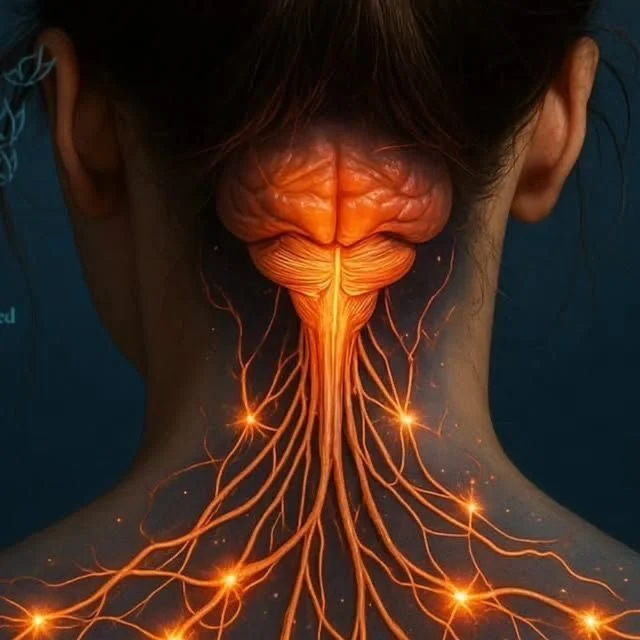

Lhermitte’s sign is a sudden, brief, electric shock–like sensation that travels down the spine, often into the arms and legs, when the neck is flexed forward.
Patients commonly describe it as a current, zap, or vibration running along the spine.
Lhermitte’s sign is sometimes informally referred to as the barber chair phenomenon because the sudden electric shock–like sensation felt during neck flexion can resemble the jolt experienced when sitting in a barber’s chair with the head tilted forward.
However, this term is not commonly used in modern medical practice, and Lhermitte’s sign remains the clinically accepted and widely recognized terminology in research and diagnosis.
From a physiotherapy perspective, this is not a disease itself but a neurological sign indicating irritation or dysfunction of the cervical spinal cord, particularly the posterior columns.
It is most commonly associated with conditions like:
- Multiple sclerosis (MS)
- Cervical spondylotic myelopathy
- Vitamin B12 deficiency
- Post-radiation myelopathy
- Cervical disc herniation
Read about our Complete Neck Pain Guide : Causes, Symptoms, Exercises and Treatment
Quick Answer: What is Lhermitte’s Sign?
Lhermitte’s sign is a sudden electric shock-like sensation that travels down the spine when bending the neck forward. It usually indicates irritation or dysfunction of the cervical spinal cord and is commonly associated with conditions like multiple sclerosis, cervical myelopathy, or vitamin B12 deficiency.
Also read: How to Relieve Neck Tightness Without Equipment
Pathophysiology: Why Does Lhermitte’s Sign Occur?
The Neurophysiological Mechanism
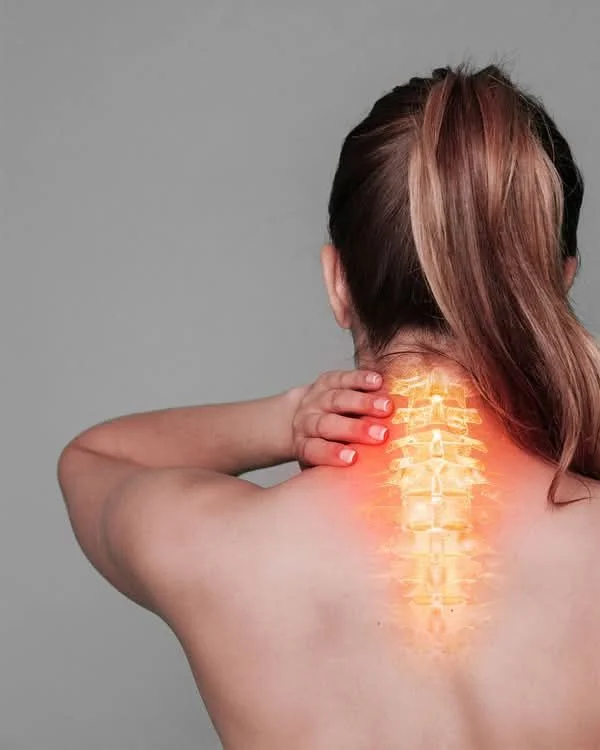
Lhermitte’s sign is primarily linked to dysfunction in the dorsal columns of the spinal cord, which are responsible for transmitting:
- Proprioception
- Vibration sense
- Fine touch
When these tracts are demyelinated or compressed, neck flexion stretches the spinal cord, triggering abnormal electrical impulses.
Advanced Insight
Recent neurophysiology research highlights that:
- Demyelinated axons become hyperexcitable, leading to “ectopic impulse generation”
- Mechanical stretch during neck flexion causes cross-talk between adjacent nerve fibers
- This results in a transient but intense sensory discharge
A 2022 study in Frontiers in Neurology emphasized that mechanical strain + demyelination synergy is key in producing Lhermitte’s phenomenon. (AIAN)
Read about : 15 Common Causes of Neck Pain You Should Know
Common Causes of Lhermitte’s Sign
Demyelinating Disorders
Multiple Sclerosis (MS)
- Most common cause
- Seen in ~30-40% of MS patients
Study Insight:
A longitudinal study published in Multiple Sclerosis Journal (2021) found that Lhermitte’s sign often correlates with cervical plaque activity, especially during relapses. (Pubmed)
Read about: The Best Physiotherapy Exercises for Cervical Spondylosis Relief
Cervical Spondylotic Myelopathy
Degenerative changes like:
- Osteophytes
- Disc protrusion
- Ligament thickening
These compress the spinal cord, leading to:
- Mechanical irritation
- Altered conduction
Research Evidence:
A 2023 study in Spine Journal showed that patients with cervical cord compression had higher incidence of Lhermitte-like symptoms during flexion MRI imaging. (Sciencedirect)
Read in detail about: Cervical Radiculopathy: Why Neck Nerve Pain Travels to the Arm
Vitamin B12 Deficiency (Subacute Combined Degeneration)
- Affects posterior columns
- Leads to demyelination
Clinical Insight:
Often overlooked in young adults with vague neurological symptoms.
Study Reference:
Neurology India (2020) reported that early B12 deficiency patients may present with Lhermitte’s sign before gait disturbances appear. (MedicalJournal)
Read in detail about: Cervical Disc Degeneration: The Hidden Cause of your Neck Pain
Radiation-Induced Myelopathy
Occurs months to years after cervical radiation therapy.
Important Finding:
A study in Journal of Neuro-Oncology (2022) noted Lhermitte’s sign as an early reversible radiation-induced symptom, often resolving within 6–12 months. (Hemonc)
Read more: Cervical Myelopathy: The Hidden Neck Condition Affecting Your Walking
Cervical Disc Herniation
Disc bulges can:
- Directly compress spinal cord
- Increase tension during flexion
Read in detail: Physiotherapy for Cervical Disc Degeneration: What Actually Works
Lesser-Known Causes
These are often missed but highly relevant:
Nitrous Oxide Toxicity (affects B12 metabolism)
Chronic or recreational exposure to nitrous oxide inactivates vitamin B12, leading to functional B12 deficiency.
This results in demyelination of the posterior columns of the spinal cord, similar to subacute combined degeneration, and can trigger Lhermitte’s sign even in otherwise healthy young individuals. (NCBI)
Systemic Lupus Erythematosus (SLE)
SLE is an autoimmune disease that can involve the central nervous system. In some cases, it causes inflammatory myelopathy, leading to spinal cord irritation or damage.
This can produce Lhermitte’s sign along with other neurological symptoms like weakness and sensory disturbances. (ncbi)
Behçet’s Disease
Behçet’s disease is a rare inflammatory vasculitis that can affect the brain and spinal cord (neuro-Behçet’s).
When spinal cord pathways are involved, especially the dorsal columns, patients may experience electric shock sensations with neck flexion, mimicking Lhermitte’s phenomenon. (PubMed)
Transverse Myelitis
This is an acute inflammatory condition of the spinal cord, often post-infectious or autoimmune.
It causes segmental demyelination and swelling, disrupting nerve signal transmission.
Lhermitte’s sign may appear during recovery phases as nerve conduction begins to return but remains unstable. (NINDS)
Chiari Malformation
In Chiari malformation, part of the brain (cerebellar tonsils) extends into the spinal canal, causing mechanical compression at the cervicomedullary junction.
Neck flexion can increase tension on neural structures, leading to Lhermitte-like shock sensations. (PubMed)
Read about: What Is Military Neck Or Cervical Kyphosis And How To Treat It
Symptoms: Beyond the “Electric Shock”
Primary Symptom
- Sudden electric shock sensation down spine on neck flexion
Associated Symptoms
Depending on the cause:
- Numbness or tingling in limbs
- Weakness in arms/legs
- Gait imbalance
- Bladder/bowel dysfunction
- Neck stiffness
Clinical Pattern Recognition
- Intermittent + position-dependent- likely mechanical cause
- Persistent + progressive neurological signs- suspect myelopathy
- Relapsing-remitting pattern- possible MS
Read about : What is Cervical Facet Joint Pain, how it causes cervicogenic headaches and how to correct it naturally
How is Lhermitte’s Sign Diagnosed?
Clinical Examination
- Reproduction of symptoms with neck flexion test
- Neurological assessment:
- Reflexes
- Sensation
- Coordination
Imaging
- MRI cervical spine (gold standard) (Radiopedia)
- Identifies:
- Demyelination plaques
- Cord compression
- Structural abnormalities
Blood Investigations
- Vitamin B12 levels
- Autoimmune markers
- Inflammatory markers
Read about: Which Is The Best Sitting Posture To Avoid Neck Pain And How To Achieve It
Physiotherapy Approach to Lhermitte’s Sign
As a physiotherapist, the goal is not to treat the sign directly, but to:
- Reduce spinal cord irritation
- Improve cervical mechanics
- Prevent symptom aggravation
- Enhance neural mobility
Read about: Effective Neck Pain Exercises At Home: A Complete Guide to Relief and Improved Mobility
Phase-Wise Physiotherapy Management
Acute Phase (Symptom Control)
Goals:
- Reduce mechanical stress on spinal cord
- Avoid symptom triggering
Interventions:
- Cervical neutral posture training
- Activity modification
- Use of soft cervical collar (short-term if needed)
Avoid:
- Repeated neck flexion
- Aggressive stretching
Read about: Yoga for Neck Pain: Poses That Actually Work
Subacute Phase (Mobility Restoration)
Gentle Exercises
- Cervical retraction exercises
- Thoracic extension mobility drills
- Scapular stabilization
Evidence:
A 2022 study in Journal of Orthopaedic & Sports Physical Therapy supports thoracic mobility improving cervical load distribution, indirectly reducing symptoms. (JOSPT)
Read more on : Manual Therapy for Neck Pain: A Physiotherapist’s Evidence Based Guide
Neural Mobility Training (Advanced Physio Insight)
Carefully introduced neural gliding techniques can help:
- Improve nerve conduction
- Reduce hypersensitivity
Important: Must be pain-free and symptom-controlled
Read about: Simple Posture Correction Exercises for Forward Head Posture
Postural Correction
Chronic forward head posture increases:
- Cervical cord tension
- Mechanical stress
Key Focus Areas:
- Deep neck flexor strengthening
- Scapular retraction
- Ergonomic correction
Read in detail: Best Ergonomic Desk Setup to Reduce Neck and Back Pain
Strengthening Phase
- Isometric neck exercises
- Core strengthening
- Upper back endurance training
Read About: Best Sleeping Position for Neck Pain: A Physiotherapist’s Complete Guide
Precautionary Measures
Patients must be educated thoroughly.
Daily Life Precautions
- Avoid sudden neck bending
- Do not look down at phone for long (text neck)
- Use eye-level screens
- Avoid high-impact activities initially
Sleeping Advice
- Use cervical support pillow
- Avoid excessive neck flexion during sleep
Exercise Precautions
- No jerky neck movements
- Avoid high-load axial compression (heavy lifting early on)
- Gradual progression only
Read About: How to Choose the Right and Best Pillow for Neck Pain
When Should You Seek Immediate Medical Help?
Red flag symptoms include:
- Progressive limb weakness
- Loss of balance
- Bladder or bowel dysfunction
- Persistent numbness
These may indicate spinal cord compression or serious neurological disease
Read about: The Most Effective McKenzie Exercises For Neck Pain
Lesser-Known Clinical Facts
1. Lhermitte’s sign can appear before MRI changes in early MS
Lhermitte’s sign may be one of the earliest clinical indicators of cervical spinal cord involvement, even before visible lesions appear on MRI.
This happens because functional conduction abnormalities in demyelinated fibers can precede structural changes detectable on imaging. (jamanetwork.com)
2. It may be temperature-sensitive (Uhthoff’s phenomenon)
In demyelinated nerves, even a slight rise in body temperature can slow or block nerve conduction, temporarily worsening symptoms like Lhermitte’s sensation.
This is due to temperature-induced conduction failure in damaged axons, a hallmark of Uhthoff’s phenomenon. (NCBI)
3. Can be transient and reversible, especially in radiation-induced cases
In conditions like radiation myelopathy, Lhermitte’s sign may occur due to temporary inflammation or demyelination of the spinal cord.
As neural tissue recovers or inflammation subsides, the symptom often resolves completely over time, making it a reversible neurological phenomenon. (NCBI)
4. Not always painful, sometimes just a “buzzing” sensation
Although classically described as an electric shock, Lhermitte’s sign can also present as mild tingling, vibration, or buzzing sensations.
This variation occurs due to differences in the degree of nerve fiber involvement and conduction disturbance in the cervical spinal cord. (Healthline)
Read more: Is Cervical Traction For Neck Pain Really Effective
Prognosis: Is It Permanent?
- Depends on the underlying cause
- In MS- may recur during relapses
- In B12 deficiency- reversible if treated early
- In cervical compression- improves with decompression
Also Read: Ultimate 6 Weeks Neck Rehabilitation Exercises For Pain Relief
Clinical Insight
Lhermitte’s sign is a warning signal, not a diagnosis.
Many patients ignore it because it lasts only seconds, but clinically, it can indicate early spinal cord involvement, which is crucial to detect.
Also Read : Neck Cracking: Benefits, Risks, and the Truth About Stroke
Physio Prescription
- Maintain neutral cervical posture
- Perform daily thoracic mobility drills
- Strengthen deep neck flexors
- Avoid repetitive neck flexion
- Follow ergonomic corrections strictly
Learn About: The Ultimate Neck Stretch Routine for Desk Workers in 2026
Red Flags
- Weakness in limbs
- Loss of coordination
- Bladder/bowel issues
- Persistent numbness
Read about: How to Relieve Morning Neck Stiffness Naturally
Myth vs Fact
Myth: It’s just a neck stiffness symptom
Fact: It often indicates spinal cord involvement and should never be ignored
Read more: Cervical Vertigo Explained: Why Neck Pain Make You Feel Dizzy
Frequently Asked Questions
1. Is Lhermitte’s sign dangerous?
It is not dangerous by itself but may indicate an underlying neurological condition that requires evaluation.
2. Does Lhermitte’s sign mean multiple sclerosis?
Not always. While it is common in MS, it can also occur in vitamin B12 deficiency or cervical spine disorders.
3. Can physiotherapy cure Lhermitte’s sign?
Physiotherapy helps manage symptoms and reduce spinal stress but treating the underlying cause is essential.
4. Is Lhermitte’s sign permanent?
It can be temporary or recurrent depending on the cause. Some cases resolve completely.
5. What movements should I avoid?
Avoid repeated neck flexion, sudden jerky movements, and poor posture.
Read in detail: Physiotherapy for Cervical Disc Degeneration: What Actually Works
Final Word
Lhermitte’s sign is your body’s way of telling you that your spinal cord is under stress. Early physiotherapy intervention combined with medical evaluation can prevent long-term neurological complications.
Read in detail about: How to Fix Upper Crossed Syndrome Naturally
Key Takeaways
- Lhermitte’s sign is a neurological symptom, not a disease.
- It is caused by irritation or demyelination of the cervical spinal cord.
- Most commonly linked to multiple sclerosis and cervical cord compression.
- Neck flexion triggers electric shock-like sensations.
- Early diagnosis is crucial to prevent neurological progression.
- Physiotherapy focuses on posture, mobility, and spinal protection.
- Avoid repetitive neck flexion and poor ergonomics.
- Red flag symptoms require immediate medical attention.
Stay tuned with us for more health related topics.
Follow us on LinkedIn and Instagram for more.
More Read


Medical Disclaimer!
This article has been reviewed and written under the guidance of our Head Physiotherapist, Dr. Kruti Raj (PT, MUHS,CPT,CMPT). The information shared is intended for educational purposes only and should not be considered a substitute for personalized medical advice, diagnosis, or treatment.
Please consult us or any other qualified healthcare professional before beginning any exercise program, especially if you are experiencing pain, recovering from injury, or managing a medical condition.


