


Hip pain is one of the most common musculoskeletal complaints in adults, affecting daily movement, sleep quality, and overall wellbeing. Whether it’s due to arthritis, bursitis, tendon irritation, or mechanical imbalance, many people look first to medications or rest. However, smart, targeted, best exercises for hip pain at home can significantly reduce pain, improve mobility, and prevent future flare-ups.
In this comprehensive guide, we explore the best exercises for hip pain at home, including foundational movements, evidence-based progressions, lesser-known tips, and cutting-edge findings from recent research.
Also Read: 10 Best Daily Stretches for Back Pain Relief at Home
Why Exercise Works for Hip Pain Relief
Before diving into exercises, it’s important to understand why movement helps:
- Muscles Support Joints: Strong hip muscles reduce strain on the joint and surrounding structures.
- Improves Circulation: Movement enhances blood flow, reducing inflammation and promoting healing.
- Modulates Pain Pathways: Gentle activity stimulates pain-inhibiting nerve signals.
- Corrects Movement Patterns: Poor mechanics, such as weak glutes or tight hip flexors, often contribute to pain.
Emerging research also shows that exercise impacts the central nervous system, helping the brain re-interpret pain signals rather than simply masking symptoms with rest or medication.
General Guidelines Before You Begin
- Warm Up: Always begin with 5-10 minutes of easy movement (e.g., walking in place) to increase circulation.
- Pain Scale Rule: Stop or modify exercise if pain exceeds 3-4/10 (on a 0–10 scale) during the activity.
- Progress Slowly: Gradually increase repetitions or difficulty every 3-4 days.
- Consistency Over Intensity: It’s better to do daily gentle exercises than sporadic intense workouts.
Below Are the Best Exercises for Hip Pain at Home
1. Hip Flexor Stretch

Why it helps: Hip flexors tighten with prolonged sitting, pulling the pelvis forward and straining the hip joint.
How to do it:
- Kneel on one knee (lunge position).
- Push hips forward gently until you feel a mild stretch in the front of the hip.
- Hold 30 seconds → 3 reps each side.
Pro Tip: Keep your torso tall; don’t arch the lower back.
2. Glute Bridge

Why it helps: Glute bridges activate the glute muscles, which often weaken with hip pain.
How to do it:
- Lie on your back with knees bent, feet flat.
- Lift your hips toward the ceiling.
- Pause for 2 seconds at the top.
- 10–15 reps × 2-3 sets.
Progression: Try single-leg bridges for added challenge.
3. Clamshells (Hip Abductor Strengthener)
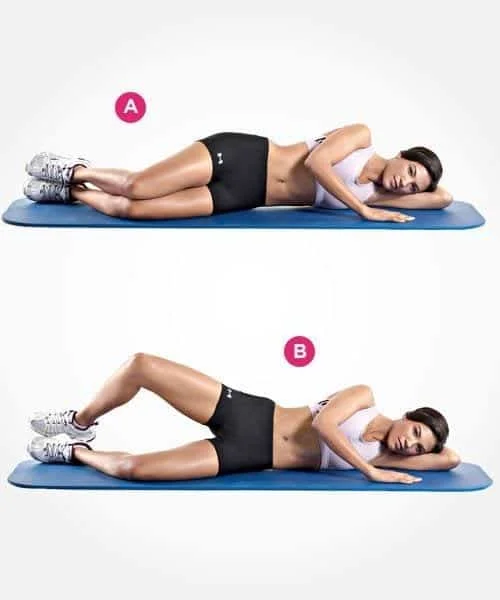
Why it helps: Strengthening hip abductors enhances pelvic stability and eases stress on the hip joint.
How to do it:
- Lie on your side, knees bent.
- Keep feet together, lift the top knee.
- 12–15 reps × 2-3 sets per side.
Common Error: Don’t roll your hips backward; keep movement slow and controlled.
4. Piriformis Stretch

Why it helps: Tight piriformis muscles can irritate the sciatic nerve and contribute to hip pain.
How to do it:
- Lie on your back.
- Cross one ankle over the opposite knee.
- Gently pull the bottom leg toward your chest.
- Hold 30 seconds × 3 reps each side.
5. Quadruped Hip Extensions (Donkey Kicks)
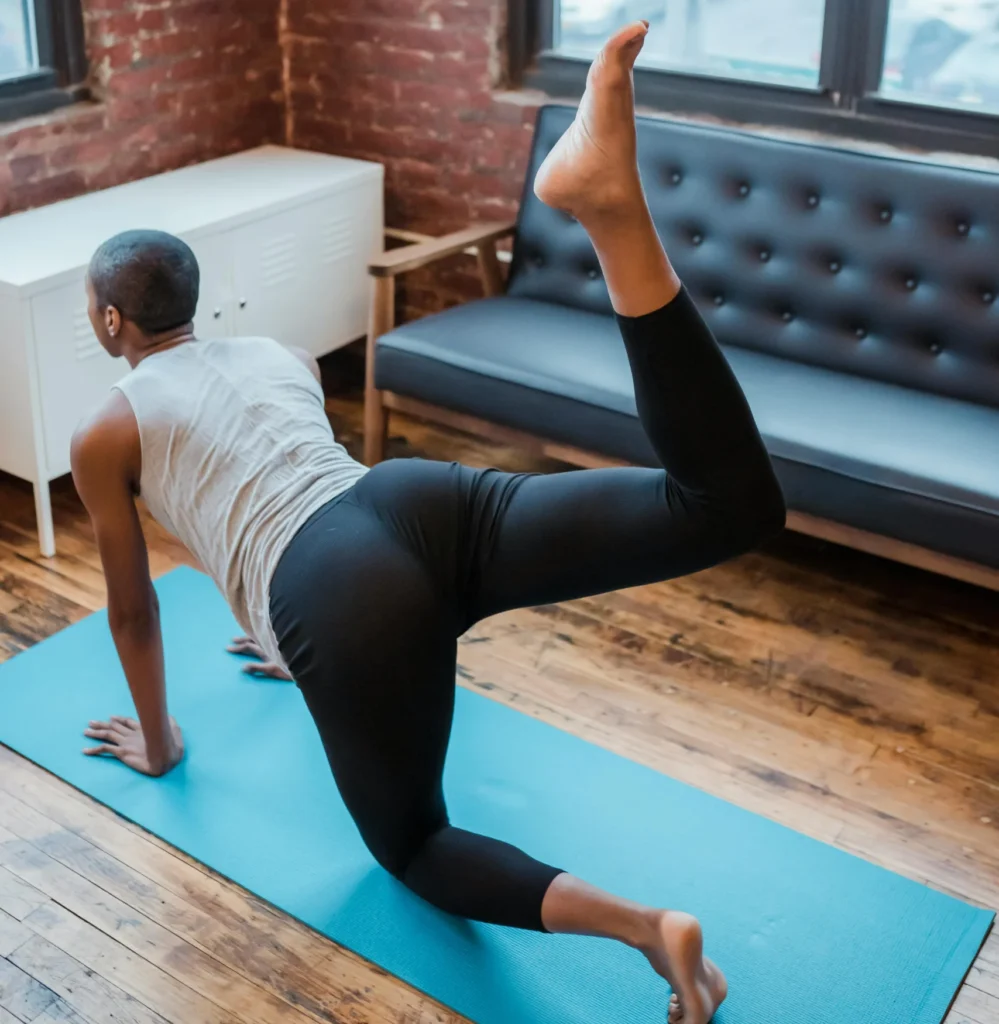
Why it helps: Strengthens glutes and core while improving hip extension control.
How to do it:
- On hands and knees.
- Lift one leg back, keeping knee bent.
- 10–12 reps × 2–3 sets per side.
6. Side-Plank Hip Lifts

Why it helps: Targets lateral hip stabilizers and core strength, key for pain reduction.
How to do it:
- Lie on your side with legs extended.
- Lift into a side plank.
- Lower hip toward the floor and lift again.
- 10 reps × 2 sets each side.
7. Standing Hip Flexion/Extension with Resistance Bands

Why it helps: Resistance bands provide a gentle strengthening stimulus without heavy load.
How to do it:
- Attach a band to a stable surface and loop around ankle.
- Lift leg forward (flexion) and backward (extension) slowly.
- 12 reps × 2–3 sets each direction.
8. Hip Internal Rotation Stretch
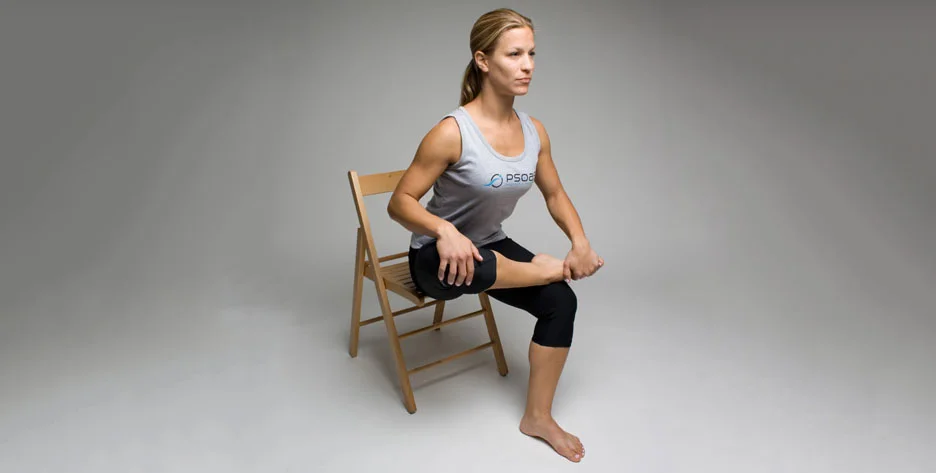
Why it helps: Internal rotation is often overlooked; restrictions here can cause compensations and pain.
How to do it:
- Sit on chair, knees bent.
- Place one ankle over opposite knee.
- Push down gently on the elevated knee.
- Hold 30 seconds × 3 each side.
Lesser-Known Exercises Worth Trying
9. Frog Stretch

This deep hip opening stretch targets the groin and inner thigh, areas often tight in people with hip pain.
- Start on all fours, spread knees wider.
- Rock hips back slightly to deepen the stretch.
- Hold 30 seconds × 2–3.
10. 90-90 Hip Switches
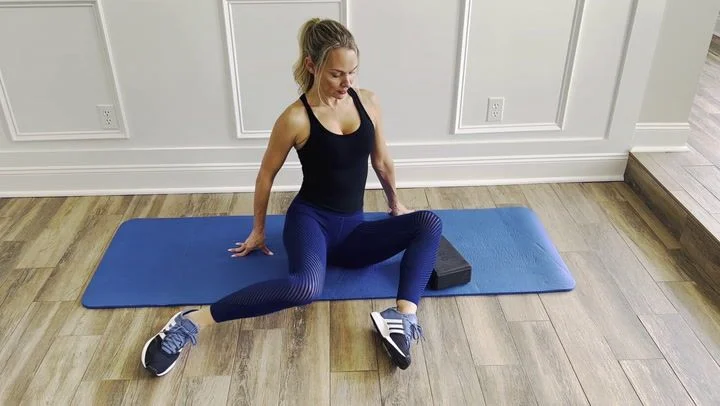
This movement improves rotational control and coordination between hip internal and external rotation.
- Sit with one leg in front (90°) and one behind (90°).
- Switch legs back and forth.
- 15–20 switches.
Also Read: 15 Minute Full-Body Stretch To Relieve Your Stress- Proven Ways
Emerging Research and Insights
1. Movement Is Medicine
A 2025 review in The Journal of Orthopaedic & Sports Physical Therapy found that low-load strength training combined with mobility work outperforms passive treatments (like massage or rest) for long-term hip pain relief.
Moreover, the neuromuscular control gained from such programs reduces risk of re-injury.
2. Pain Modification in the Brain
Studies increasingly show that chronic hip pain is not just structural, it involves changes in how the brain interprets pain signals.
This means that movement and graded exposure to activity can literally re-train the nervous system for less pain.
3. Importance of Movement Variability
Rather than repeating the same movement patterns, newer evidence suggests that incorporating varied functional tasks (e.g., step-ups, lateral movements) enhances muscular resilience and reduces “overuse” strain.
Also Read: Knee-to-Chest Stretch for Bach Pain Relief and Spinal Flexibility- A Complete Guide
How to Structure Your Home Program
Here’s a practical weekly template:
| Day | Focus |
|---|---|
| Mon | Mobility + Strength |
| Tue | Gentle Stretching + Balance |
| Wed | Strength + Functional Movement |
| Thu | Active Recovery (light walking, swimming) |
| Fri | Strength + Neuromuscular Control |
| Sat | Mixed Movement + Flexibility |
| Sun | Rest or Light Activity |
Also Read: Cat Cow Stretch Benefits for Back Pain- A Complete Guide
Common Mistakes to Avoid
- Skipping warm-ups
- Pushing through sharp pain
- Staying in one position too long
- Doing only stretches and no strength work
Remember: Movement should feel like progress, not punishment.
Also Read: Bird Dog Exercises for Back Pain Relief and Core Strengthening
Clinical Insight
From a clinical perspective, hip pain rarely stems from a single issue, it’s usually a combination of muscle weakness, mobility loss, and faulty patterns that develop over time.
Often, people compensate by overusing lower back muscles or knee stabilizers, which can create tension and imbalance.
That’s why a holistic approach, one that addresses strength, coordination, and movement variability, delivers the best results.
Also Read: Ultimate Guide to Home Physiotherapy for Back Pain
Physio Prescription
Use this progressive home exercise plan:
- Week 1–2: Daily mobility + gentle glute activation.
- Week 3–4: Add resistance band strengthening and balance work.
- Week 5–6: Incorporate functional movements (step-ups, hip rotations).
- Ongoing: Mix strength, flexibility, and varied activity.
Aim for at least 20–30 minutes daily, and transition exercises based on pain tolerance and progress.
Also Read: Child’s Pose Exercise for Back Pain Relief- A Complete Guide
Red Flags- When to Seek Professional Help
Seek immediate medical evaluation if:
- Pain is sudden and severe without explanation
- You experience numbness or weakness down the leg
- You have swelling, redness, or fever
- Pain limits daily activities significantly
- Symptoms last more than 4–6 weeks despite home care
Also Read: Unlocking Knee Pain Relief: How Physiotherapy Can Change Your Life!
Common Myth
Myth: “Resting is the best cure for hip pain.”
Fact: While acute rest may help initially, prolonged inactivity weakens muscles, stiffness increases, and recovery slows. Controlled movement is one of the most effective long-term treatments.
Also Read: Spinal Twists for Lower Back Pain Relief- A Complete Guide
Frequently Asked Questions (FAQ)
1. Can hip pain exercises really work without a therapist?
Yes. Many exercises can be done safely at home. However, it’s beneficial to consult a licensed therapist if pain persists beyond 4–6 weeks, or if the pain is severe.
2. How long before I see results?
Most people notice improvement within 2–4 weeks of consistent daily movement, although individual timelines vary.
3. Should I exercise if it hurts?
Mild discomfort is normal, but sharp or worsening pain is a sign to stop and modify the movement.
4. Do I need equipment?
Minimal equipment is needed, just a resistance band, a chair, and a yoga mat. You can progress without weights.
5. Can these exercises help hip arthritis?
Yes. Research shows that tailored strengthening and mobility exercises improve pain and function in hip osteoarthritis.
Also Read: How to Understand What Really Causes You Pain?
Final Word
Hip pain doesn’t have to be limiting. With the right combination of targeted exercises, consistency, and mindful progression, you can reduce pain, restore function, and move with confidence.
Moreover, as research increasingly shows, exercise doesn’t just strengthen muscles, it changes how your body and brain respond to pain.
Take charge of your recovery today, not with passive rest, but with empowered progression.
Stay tuned with us for more health related topics.
Follow us on LinkedIn and Instagram for more.
More Read


Medical Disclaimer!
This article has been reviewed and written under the guidance of our Head Physiotherapist, Dr. Kruti Raj (PT, MUHS,CPT,CMPT). The information shared is intended for educational purposes only and should not be considered a substitute for personalized medical advice, diagnosis, or treatment.
Please consult us or any other qualified healthcare professional before beginning any exercise program, especially if you are experiencing pain, recovering from injury, or managing a medical condition.


