Why do weekend headaches show up every week?
You finally get time to rest. You sleep longer. You slow down.
And then a headache shows up.
This is something I hear very often in clinic.
People assume they are doing something wrong on weekends. In reality, the issue is not rest.
It is the sudden shift in routine.
Your body likes rhythm.
When that rhythm breaks, even in a “good way,” it reacts.
Quick Answer
Weekend headaches are commonly caused by sudden changes in sleep timing, stress levels, and routine. Sleeping longer than usual, delaying caffeine, poor neck posture, and dehydration can trigger headaches. The best way to prevent them is to maintain consistent wake-up time, stay hydrated, support your neck properly, and avoid drastic lifestyle shifts between weekdays and weekends.
Key Takeaways
- Weekend headaches are usually caused by sudden routine changes, not rest itself
- The “let-down effect” plays a major role when stress levels drop
- Sleep timing matters more than total sleep duration
- Neck posture and muscle stiffness are often overlooked triggers
- Delaying caffeine and skipping hydration can worsen headaches
- Consistency in sleep, meals, and activity helps prevent recurrence
- Small daily corrections are more effective than drastic weekend changes
The real reason behind weekend headaches
1. The let-down effect
All week your body is in a slightly stressed state.
Even if you don’t feel it mentally, your system is active.
- Cortisol stays elevated
- Muscles stay slightly tight
- Nervous system stays alert
Then suddenly on the weekend:
- Stress drops
- Cortisol falls
- Blood vessels respond differently
That shift can trigger a headache.
This is clinically known as a let-down headache, and it has been studied in migraine patterns. (Buse et al. 2010)
2. Sleep timing disruption, not just oversleeping
Most people think the problem is sleeping too much.
It is not that simple.
The real issue is changing your sleep timing.
Example:
- Weekdays: sleep at 12, wake at 7
- Weekend: sleep at 2, wake at 10
Now your internal clock is confused.
The brain region that controls sleep and pain regulation gets affected.
This alters neurotransmitters like serotonin, which are directly linked to headaches.
Research shows that both lack of sleep and excess sleep can trigger headaches. (The Migraine Trust 2024)
3. Sleep quality matters more than sleep hours
Many people say, “I slept 9 hours, still got a headache.”
That usually means the sleep quality was poor.
Recent findings show that poor sleep quality is linked to higher headache intensity and frequency. (Wang et al. 2025)
4. The neck factor that most people ignore
This is where physiotherapy becomes important.
Weekend habits often include:
- Long hours on phone
- Watching shows in bed
- Using soft or unsupportive pillows
This leads to:
- Tight suboccipital muscles
- Reduced neck mobility
- Trigger points
These can directly cause cervicogenic headaches (The Migraine Trust 2024)
Interestingly, neck stiffness is sometimes not just a cause but an early sign of headache onset. (Falla et al. 2018)
Why Your Body Dislikes Sudden Change
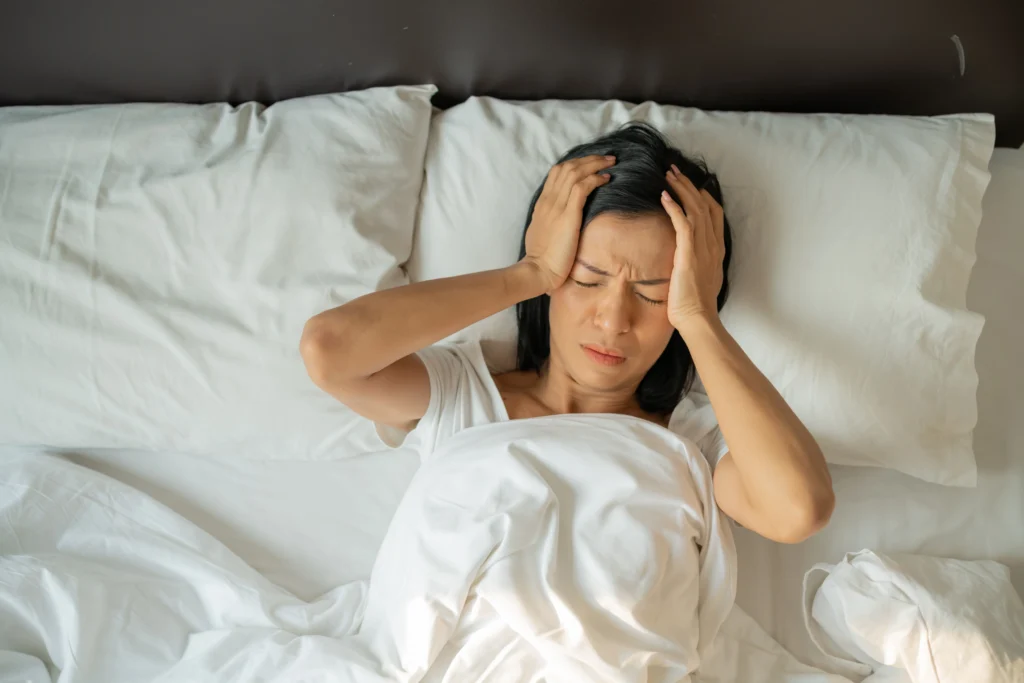
Your body works on predictability.
It adjusts hormones, sleep cycles, and muscle tone based on routine.
When you suddenly change:
- Sleep time
- Activity level
- Food timing
Your system needs time to adapt.
That gap is where headaches often occur.
How weekend headaches usually feel
Most people describe it like this:
- Dull or heavy pain
- Tight band around head
- Pain starting after waking up
- Neck stiffness present
- Temporary relief after coffee
A key pattern is that the headache improves once your routine normalizes again.
A Quick Real-Life Pattern You Might Recognize
Let me describe a very common situation.
You sleep late on Friday. Wake up late on Saturday. No alarm. Feels great.
Then slowly:
- You feel a slight heaviness in your head
- Neck feels tight
- You ignore it
- By afternoon, it becomes a proper headache
You take tea or coffee. It improves a bit.
By evening, you feel okay again.
If this sounds familiar, it’s not random.
It’s a pattern your body is repeating every week.
Common types of weekend headaches
Sleep-in headache
Triggered by waking up later than usual.
Caffeine timing headache
Not always withdrawal headaches. Even delaying your usual tea or coffee can trigger it.
Cervicogenic headache
Originates from the neck due to posture or pillow issues.
Weekend migraine
More common if you already have a migraine tendency.
Lesser-known triggers most people miss
These are things I see often but rarely get discussed.
1. Delayed hydration
You wake up late and directly start tea or coffee.
Mild dehydration itself is a known dehydration headache trigger. (The Migraine Trust 2024)
2. Heavy brunch meals
High-fat or high-sugar meals can affect blood flow and trigger headaches.
3. Sudden light exposure
Moving from a dark room to bright sunlight can trigger vascular changes.
4. Screen posture in bed
Looking down for long periods puts strain on upper cervical muscles.
5. Air conditioning exposure
Direct cold air on the neck during sleep can increase muscle stiffness.
Common Mistakes I See in Patients
These come up again and again:
- Sleeping 3 to 4 extra hours on weekends
- Using very soft pillows thinking it is comfortable
- Spending long time on phone in bed
- Skipping water intake in the morning
- Thinking “rest means doing nothing all day”
Most people don’t realize these are triggers.
Once corrected, headaches often reduce significantly.
How to prevent weekend headaches
This is the part that actually makes a difference.
1. Keep your wake-up time consistent
You don’t have to wake up at the exact same time, but try to stay within 60 to 90 minutes.
Consistency stabilizes your circadian rhythm and reduces headache frequency. (Rains et al. 2015)
2. Avoid “catch-up sleep” mindset
Sleeping 3 to 4 extra hours confuses your body more than it helps.
If you are tired, a short afternoon nap works better.
3. Start your morning with movement
You don’t need a full workout.
Just 5 minutes:
- Neck rotations
- Shoulder rolls
- Gentle stretching
This improves blood flow and reduces stiffness.
4. Hydrate before caffeine
Simple rule:
Water first, then tea or coffee.
5. Keep caffeine timing stable
If you usually have coffee at 8 AM, try not to push it to 11 AM.
6. Fix your pillow support
If you wake up with:
- Neck pain
- Pain at the base of skull
Your pillow likely needs adjustment.
A good pillow maintains the natural curve of your neck.
7. Reduce screen time in bed
This is one of the most common contributors.
It affects both:
- Neck posture
- Sleep quality
Calculate your idea sleep timings here: “Sleep Calculator“
8. Do a quick neck release technique
Place your fingers at the base of your skull and apply gentle pressure for 20 to 30 seconds.
This helps relax the muscles that often trigger headaches.
A Simple Weekend Routine That Works
You can try something like this:
Morning:
- Wake up within 1 hour of weekday timing
- Drink water
- Do 5 minutes of movement
Midday:
- Eat on time
- Avoid very heavy meals
Evening:
- Light activity instead of full inactivity
Night:
- Sleep close to your weekday timing
This alone can reduce headache frequency in many people.
Small Daily Habits That Make a Big Difference
You don’t need a big lifestyle overhaul.
These small things work surprisingly well:
- Step outside for sunlight within 30 minutes of waking
- Avoid staying in bed after waking up
- Keep meal timings roughly consistent
- Move your body at least once in the morning
- Don’t carry weekday exhaustion into the weekend
It’s not about doing everything perfectly.
It’s about reducing sudden changes.
When should you take it seriously
Occasional weekend headaches are common.
But seek medical advice if:
- Headaches become frequent
- Pain becomes severe or throbbing
- You experience nausea or vision issues
- Headaches occur even without routine change
Why Painkillers Are Not a Long-Term Fix
Painkillers can help occasionally. That’s fine.
But if you rely on them every weekend, you’re only masking the problem.
Over time:
- Your body adapts
- Effect reduces
- Headaches may come more frequently
There is also something called rebound headache, where frequent medication actually triggers more headaches.
The better approach is to fix:
- Sleep timing
- Neck tension
- Daily rhythm
Medication should support you, not become your routine.
A physiotherapist’s perspective
Weekend headaches are rarely random.
They are usually a signal.
Your body is reacting to:
- Inconsistent sleep
- Sudden stress changes
- Muscle stiffness
- Lifestyle imbalance
Medication may give temporary relief, but long-term improvement comes from correcting these patterns.
What Improves First When You Fix This?
Patients often expect headaches to disappear immediately.
But what improves first is:
- You wake up feeling lighter
- Neck stiffness reduces
- Headache intensity decreases
- Frequency slowly drops
It’s gradual, but noticeable.
That’s how you know you are on the right track.
Final Thoughts
Weekend headaches are easy to ignore because they come and go.
But when you look closely, they are not random.
They follow a pattern.
Your body is simply reacting to how quickly things change between your weekday and weekend routine.
In most cases, the solution is not complicated.
You don’t need strict rules or a perfect schedule.
You just need a bit more consistency.
Wake up around the same time.
Move a little in the morning.
Pay attention to your neck and posture.
Small adjustments like these often make a bigger difference than people expect.
If your headaches improve with these changes, that’s a good sign you’re on the right track.
And if they don’t, it’s worth getting it checked early rather than waiting for it to become a regular problem.
Frequently Asked Questions (FAQs)
1. Why do I get headaches only on weekends?
Weekend headaches usually happen due to sudden changes in sleep timing, stress levels, and daily routine.
2. Can oversleeping trigger a headache?
Yes, especially when your sleep schedule shifts significantly from your usual weekday pattern.
3. What is a let-down headache?
It is a headache that occurs when stress levels drop suddenly, commonly seen during weekends or holidays.
4. Does neck posture really cause headaches?
Yes, poor posture and tight neck muscles can lead to cervicogenic headaches.
5. Is caffeine delay linked to weekend headaches?
Yes, even delaying your usual tea or coffee timing can trigger headaches.
6. How can I prevent weekend headaches naturally?
Maintain consistent sleep timing, stay hydrated, keep caffeine timing stable, and include light morning movement.
7. Are weekend headaches dangerous?
They are usually not serious, but frequent or severe headaches should be evaluated by a doctor.
8. Can physiotherapy help with weekend headaches?
Yes, especially in managing posture, reducing muscle tension, and improving movement patterns.
Stay tuned with us for more health related topics.
Follow us on LinkedIn and Instagram for more.
More Read






Medical Disclaimer!
This article has been reviewed and written under the guidance of our Head Physiotherapist, Dr. Kruti Raj (PT, MUHS,CPT,CMPT). The information shared is intended for educational purposes only and should not be considered a substitute for personalized medical advice, diagnosis, or treatment.
Please consult us or any other qualified healthcare professional before beginning any exercise program, especially if you are experiencing pain, recovering from injury, or managing a medical condition.