


Urine leakage after childbirth causes are often linked to :
pelvic floor weakness, muscle stretching, and pressure changes during pregnancy and delivery.
Many women are shocked the first time they leak urine after childbirth.
It may happen while laughing, coughing, sneezing, lifting the baby, jumping, or even simply standing up quickly.
Some mothers quietly start wearing pads and assume this is a “normal part of motherhood.”
While postpartum urinary leakage is extremely common, it should never be ignored or dismissed.
From a physiotherapy point of view, urine leakage after delivery is often a sign that the pelvic floor, deep core system, breathing mechanics, and pressure management inside the abdomen are not working together properly.
The good news is that in many cases, the condition improves significantly with the right rehabilitation, lifestyle changes, and early treatment.
Quick Answer
New mothers leak urine mainly because pregnancy and childbirth stretch and weaken the pelvic floor muscles, nerves, and connective tissues that support the bladder. This condition is called postpartum urinary incontinence and is especially common after vaginal delivery, prolonged labor, and pelvic floor trauma. Physiotherapy, pelvic floor rehabilitation, breathing correction, and core strengthening can significantly improve symptoms in many women.
A 2023 systematic review published in BMC Pregnancy and Childbirth found postpartum urinary incontinence affects a substantial percentage of women worldwide, especially after vaginal birth, prolonged labor, instrumental delivery, and pelvic floor trauma. (Springer)
Key Takeaways
- Postpartum urine leakage is common but treatable.
- Pregnancy itself weakens pelvic support structures.
- Not all women need Kegels — some pelvic floors are too tight.
- Breathing and core function strongly affect bladder control.
- Returning to exercise too quickly may worsen symptoms.
- Pelvic floor physiotherapy is one of the most effective non-surgical treatments.
- Constipation and breath-holding increase pelvic pressure.
- Leaking urine months after delivery should not be ignored.
- Guided rehabilitation works better than random online exercises.
- Early treatment often leads to better long-term recovery.
What Is Postpartum Urinary Incontinence?
Postpartum urinary incontinence means accidental leakage of urine after childbirth.
It may involve:
- Leaking while coughing or sneezing
- Sudden strong urgency to urinate
- Difficulty holding urine on the way to the toilet
- Small dribbles throughout the day
- Leakage during exercise or lifting
The most common type in new mothers is stress urinary incontinence, where pressure inside the abdomen pushes down on weakened pelvic floor muscles.
Why Does Pregnancy Cause Urine Leakage?
Urine leakage after childbirth causes by?

The Pelvic Floor Gets Overstretched
Your pelvic floor muscles act like a supportive hammock at the base of the pelvis.
During pregnancy, these muscles carry the growing baby, placenta, amniotic fluid, and increased abdominal pressure for months.
Research shows pregnancy itself can weaken connective tissue and pelvic support even before delivery occurs. (Springer)
During childbirth, especially vaginal birth, the pelvic floor can stretch up to three times its resting length.
This may temporarily or permanently affect:
- Muscle strength
- Nerve supply
- Tissue elasticity
- Bladder support
- Coordination of the pelvic floor
Nerve Injury During Delivery
One lesser-known fact is that childbirth may temporarily compress or stretch the pudendal nerve, which helps control bladder function and pelvic floor muscles.
This explains why some mothers:
- Cannot “feel” their pelvic floor properly
- Struggle to stop urine flow
- Feel numbness or heaviness
- Have delayed muscle activation
In many women, nerves recover gradually over months.
Vaginal Birth vs C-Section: Does Delivery Type Matter?
Vaginal delivery increases the risk of postpartum leakage, especially if there was:
- Forceps or vacuum delivery
- Long pushing phase
- Large baby
- Severe tearing
- Episiotomy
However, cesarean birth does not completely prevent pelvic floor dysfunction.
Pregnancy itself creates major pressure changes in the abdomen and pelvis.
Some mothers after C-section leak urine because:
- Deep core muscles become weak
- Scar tissue affects pressure management
- Breathing mechanics change
- The pelvic floor becomes tight instead of weak
This is why physiotherapists assess the whole core system, not only the pelvic floor.
The Biggest Myth: “Just Do Kegels”
This is one of the most misunderstood parts of women’s health.
Not every leaking mother has a weak pelvic floor.
Some women actually have:
- Overactive pelvic floor muscles
- Tight pelvic muscles
- Poor coordination
- Breathing dysfunction
- Core weakness
- Pelvic organ prolapse
Interestingly, many women worsen symptoms by doing endless Kegels incorrectly.
A systematic review in BMC Women’s Health showed pelvic floor muscle training works better when guided by physiotherapists or combined with biofeedback. (Springer)
Real-life postpartum discussions also reveal that many women unknowingly perform Kegels incorrectly for months before getting professional help. (Reddit)
Signs Your Pelvic Floor May Be Weak
You may have weakness if you:
- Leak during coughing or sneezing
- Feel heaviness in the vagina
- Cannot hold urine during exercise
- Feel pelvic instability
- Notice reduced sensation
Signs Your Pelvic Floor May Be Too Tight
This surprises many mothers.
Symptoms of an overly tight pelvic floor include:
- Urinary urgency
- Pain during intercourse
- Difficulty fully emptying bladder
- Pelvic pain
- Constipation
- Feeling “clenched” all day
- Leakage despite doing Kegels
A tight muscle is not necessarily a strong muscle.
Lesser-Known Urine Leakage After Childbirth Causes
Breath Holding While Lifting the Baby
Many mothers unconsciously hold their breath while:
- Picking up the baby
- Standing from bed
- Carrying car seats
- Pushing strollers
This dramatically increases abdominal pressure and pushes downward onto healing pelvic tissues.
Constipation
Straining during bowel movements repeatedly overloads the pelvic floor.
Returning to Exercise Too Soon
Jumping back into:
- Running
- HIIT workouts
- CrossFit
- Heavy lifting
too early can overload healing tissues.
Some women feel fine at 6 weeks postpartum but develop symptoms months later once exercise intensity increases. (Reddit)
Sitting Too Much
Emerging research suggests prolonged sitting may influence urinary symptoms and pelvic dysfunction. (arXiv)
Diastasis Recti
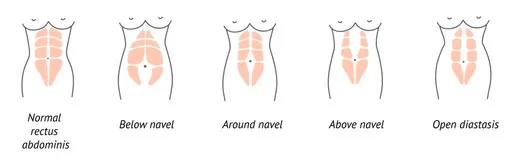
Abdominal separation changes pressure transfer through the core system.
If the abdomen cannot manage pressure properly, more load reaches the pelvic floor.
A 2024 review highlighted the close relationship between postpartum core rehabilitation and pelvic floor recovery. (Springer)
How Physiotherapists Assess Postpartum Leakage
Pelvic floor physiotherapy is much more than prescribing Kegels.
A proper assessment may include:
- Breathing pattern analysis
- Core muscle activation
- Pelvic floor coordination
- Scar mobility assessment
- Hip and posture evaluation
- Bladder habits
- Pressure management testing
- Functional movement assessment
Some clinics also use:
- Biofeedback
- Real-time ultrasound
- EMG muscle testing
These tools help mothers learn whether they are contracting correctly.
Physiotherapy Treatments That Actually Help
Pelvic Floor Muscle Training
This remains the gold-standard conservative treatment.
But successful therapy usually includes:
- Correct muscle identification
- Relaxation training
- Endurance work
- Functional strengthening
- Breathing coordination
Recent evidence continues to support exercise-based rehabilitation for postpartum stress urinary incontinence. (Frontiers)
Breathing Retraining
The diaphragm and pelvic floor work together.
Poor breathing patterns increase downward pressure.
Physiotherapists often teach:
- Rib cage expansion
- 360-degree breathing
- Exhaling during effort
- Pressure control during lifting
Deep Core Rehabilitation
The transverse abdominis muscle supports the pelvis and bladder.
Gentle deep-core retraining improves:
- Stability
- Pressure distribution
- Pelvic floor coordination
Bladder Retraining
Some women start urinating “just in case” constantly after delivery.
This can train the bladder to become overly sensitive.
Bladder retraining helps normalize:
- Urge control
- Timing
- Bladder capacity
Biofeedback Therapy
Biofeedback helps mothers see whether pelvic muscles are:
- Contracting
- Relaxing
- Overworking
Research suggests guided pelvic floor therapy with feedback may improve outcomes compared to unsupervised exercises. (Springer)
Manual Therapy
Physiotherapists may use:
- Scar tissue release
- Pelvic alignment work
- Myofascial release
- Trigger point therapy
especially when tightness and pain are contributing factors.
Things New Mothers Should Avoid
Avoid Endless Random Kegels
Too many unsupervised Kegels can worsen symptoms if muscles are already tight.
Avoid Constipation
Increase:
- Water intake
- Fiber
- Walking
- Toilet posture support
Avoid High-Impact Exercise Too Early
Running and jumping place huge pressure on healing tissues.
Avoid Breath Holding
Always exhale during effort.
Avoid Heavy Lifting Early Postpartum
Even repeatedly carrying laundry baskets can overload pelvic tissues during recovery.
Lesser-Known Tips That Actually Help
Use “The Knack” Technique
Before coughing, sneezing, or lifting:
- Gently contract the pelvic floor
- Exhale
- Then perform the movement
This simple technique can reduce leakage episodes.
Roll Before Sitting Up From Bed
Instead of crunching upward, roll to your side first.
This reduces pressure on healing abdominal and pelvic tissues.
Don’t Pee “Just in Case”
Frequent unnecessary urination trains the bladder poorly.
Learn Proper Toilet Posture
Using a small stool under the feet helps relax pelvic muscles during bowel movements.
Check Your Hydration
Some women reduce water intake to avoid leaking, but concentrated urine irritates the bladder and worsens urgency.
When Leakage May Signal Something More Serious
See a healthcare professional if you experience:
- Severe urgency
- Painful urination
- Blood in urine
- Vaginal bulging
- Persistent heaviness
- Inability to control bladder
- Symptoms lasting beyond several months
- Recurrent UTIs
Some women may have:
- Pelvic organ prolapse
- Nerve injury
- Bladder dysfunction
- Overactive bladder
- Significant pelvic floor trauma
Can Postpartum Leakage Fully Improve?
Yes. Many women improve dramatically with proper rehabilitation.
Recovery depends on:
- Severity of tissue injury
- Timing of treatment
- Consistency with exercises
- Lifestyle habits
- Muscle coordination
- Future pregnancies
The earlier rehabilitation begins, the better the outcomes tend to be.
The Emotional Side Nobody Talks About
Many mothers silently avoid:
- Exercise classes
- Social outings
- Long drives
- Intimacy
- Laughter
- Sneezing in public
Urinary leakage can affect confidence, sleep, intimacy, and mental well-being.
But this condition is treatable, and women should never feel embarrassed seeking help.
New Research Directions in Postpartum Recovery
Modern postpartum rehabilitation is moving beyond basic Kegels.
Current research is exploring:
- Exercise combinations
- Biofeedback systems
- Core-pelvic integration
- Perineal massage
- Early postpartum rehabilitation
- Digital pelvic floor training platforms
A 2024 meta-analysis found perineal massage may positively influence postpartum pelvic floor outcomes in some women. (Springer)
Newer studies are also examining combined rehabilitation approaches involving physiotherapy, exercise therapy, and integrative methods. (Sage Journals)
My Clinical Insight
One of the biggest mistakes I see in postpartum recovery is assuming every leaking mother simply needs stronger muscles.
In reality, many women need better muscle timing, breathing control, pressure management, and relaxation, not just endless tightening exercises.
Another important issue is rushing recovery.
Just because bleeding has stopped or the scar looks healed does not mean the pelvic floor has fully recovered internally.
Pelvic tissues continue healing for months after childbirth.
Physio Prescription
If you are leaking urine after childbirth:
- Get assessed by a pelvic floor physiotherapist
- Learn whether your muscles are weak, tight, or poorly coordinated
- Start guided pelvic floor rehabilitation
- Focus on breathing mechanics
- Avoid high-impact exercise initially
- Treat constipation aggressively
- Retrain the deep core system gradually
Red Flags
Seek medical evaluation immediately if you have:
- Complete bladder loss
- Severe pelvic pain
- Fever or burning urination
- Blood in urine
- Sudden worsening symptoms
- Large vaginal bulge
- Numbness around pelvis
Myth vs Reality
Myth:
“Urine leakage after childbirth is normal forever.”
Reality:
It is common, but not something mothers should simply tolerate permanently.
Physiotherapy and pelvic rehabilitation can significantly improve symptoms in many women.
Final Word
Understanding urine leakage after childbirth causes can help support early recovery and better long-term bladder control.
Postpartum urine leakage is not a sign that your body has failed.
It is usually a signal that the muscles, connective tissues, nerves, and pressure systems involved in childbirth need rehabilitation and support.
Women are often told to “wait it out,” but modern pelvic health physiotherapy offers much more than pads and patience.
Early assessment, proper exercise guidance, breathing retraining, and pressure management can make a major difference in recovery and quality of life.
Frequently Asked Questions
Is it normal to leak urine after giving birth?
It is very common, especially in the first few months postpartum, but persistent leakage should be treated.
How long does postpartum urinary incontinence last?
Some women improve within weeks, while others may need several months of rehabilitation.
Do all women need Kegel exercises?
No. Some women have tight pelvic floor muscles and may worsen symptoms with excessive Kegels.
Can C-section mothers leak urine too?
Yes. Pregnancy itself places major pressure on the pelvic floor and abdominal system.
When should I see a pelvic floor physiotherapist?
If leakage continues beyond a few weeks or interferes with daily life, assessment is recommended.
Can running worsen postpartum leakage?
Yes. High-impact activities can overload healing pelvic tissues if started too early.
What foods irritate the bladder?
Caffeine, carbonated drinks, spicy foods, and artificial sweeteners may worsen urgency in some women.
Can constipation worsen urine leakage?
Yes. Straining increases pressure on the pelvic floor.
Does postpartum leakage always require surgery?
No. Many women improve significantly with physiotherapy and lifestyle changes.
Can pelvic floor therapy really help?
Yes. Research supports guided pelvic floor rehabilitation as an effective treatment for many postpartum women.
Stay tuned with us for more health related topics.
Follow us on LinkedIn and Instagram for more.
More Read


Medical Disclaimer!
This article has been reviewed and written under the guidance of our Head Physiotherapist, Dr. Kruti Raj (PT, MUHS,CPT,CMPT). The information shared is intended for educational purposes only and should not be considered a substitute for personalized medical advice, diagnosis, or treatment.
Please consult us or any other qualified healthcare professional before beginning any exercise program, especially if you are experiencing pain, recovering from injury, or managing a medical condition.


