


Why do pregnancy cravings happen?
One moment you cannot stand the smell of coffee.
The next, you are thinking about mangoes, ice cream, spicy snacks, or a meal you have not eaten in years.
Pregnancy cravings are one of the most famous parts of pregnancy.
They appear in movies, television shows, family stories, and social media posts.
Yet despite how common they are, many women still wonder what is actually happening inside their bodies.
Why do cravings suddenly appear?
Do they mean you are lacking a specific nutrient?
Should every craving be satisfied?
And why do some women crave healthy foods while others find themselves dreaming about chocolate, chips, or sweets?
Quick Answer
Pregnancy cravings are influenced by a combination of hormonal changes, altered taste and smell perception, increased energy demands, emotional factors, and lifestyle habits. While many people believe cravings always signal nutrient deficiencies, research suggests the science is far more complex. Most cravings are a normal part of pregnancy and can usually be enjoyed in moderation as part of a balanced diet.
As a women’s health physiotherapist,
I often hear these questions from pregnant women who are trying to balance nutrition, weight gain, energy levels, and overall health.
The truth is that pregnancy cravings are far more complex than most people realize.
Hormones, smell sensitivity, emotional changes, energy demands, cultural influences, and even sleep quality may all play a role.
Understanding the science behind pregnancy cravings can help you approach them with curiosity rather than guilt.
Key Takeaways
- Pregnancy cravings affect the majority of pregnant women.
- Hormonal changes can alter appetite, taste, and smell perception.
- Many cravings begin during the first trimester and become stronger during the second trimester.
- Most cravings are not directly linked to nutrient deficiencies.
- Sweet foods are among the most commonly reported pregnancy cravings.
- Food aversions often occur alongside cravings and can be just as powerful.
- Fatigue, poor sleep, and stress may influence food preferences.
- Cultural and social factors can shape what foods women crave.
- Moderation is usually more beneficial than complete restriction.
- Cravings for non-food items should be discussed with a healthcare provider.
Why Do Pregnancy Cravings Happen
Pregnancy affects nearly every system in the body.
Hormones shift dramatically.
Blood volume increases.
The brain receives new signals.
The digestive system changes.
Taste and smell may become more sensitive.
At the same time, your body is supporting the growth of an entirely new human being.
With so many changes occurring simultaneously, it is not surprising that food preferences can change too.
Research suggests that between 50% and 90% of pregnant women experience food cravings at some point during pregnancy. (Orloff et al. 2014)
That means cravings are not unusual.
They are actually one of the most common experiences during pregnancy.
When Do Pregnancy Cravings Usually Begin?
Although every pregnancy is different, cravings often begin to happen during the first trimester and become stronger during the second trimester.
Many women notice that cravings become more noticeable as nausea begins to improve.
This timing is interesting.
During early pregnancy, food aversions and morning sickness often dominate.
Later, as appetite improves, cravings may become more prominent.
Why Timing Matters
The body’s needs are changing throughout pregnancy.
Hormonal fluctuations, increased calorie requirements, and evolving sensory preferences may all contribute to when pregnancy cravings happen.
Some women experience cravings throughout pregnancy.
Others notice them only briefly.
Both experiences can be completely normal.
How Hormones Influence Food Preferences
Hormones are often blamed for pregnancy cravings, and there is good reason for that.
Pregnancy causes dramatic hormonal changes that affect many areas of the body.
Including how food tastes and smells.
Estrogen And Smell Sensitivity
Many pregnant women notice they become highly sensitive to odors.
Foods that once smelled appealing may suddenly seem overwhelming.
Even everyday scents can trigger nausea.
Researchers believe estrogen may contribute to these changes in smell perception. (Cameron et al.2014)
Progesterone And Appetite Changes
Progesterone influences digestion, metabolism, and appetite.
As levels increase, food preferences may shift.
These hormonal changes can influence what foods feel appealing and what foods suddenly seem unappetizing.
Hormones Do Not Tell The Whole Story
While hormones play an important role, they are only part of the picture.
Pregnancy cravings are likely influenced by multiple biological and psychological factors working together.
The Powerful Role Of Smell And Taste
One of the lesser-known facts about pregnancy cravings is that smell changes often occur before cravings develop.
Your Nose Becomes More Sensitive
Many women notice:
- Stronger reactions to cooking smells
- Increased awareness of perfumes
- Sensitivity to certain foods
- Aversion to previously enjoyed meals
This heightened smell sensitivity can influence food choices significantly.
Taste May Change Too
Some women report:
- Metallic tastes
- Increased sensitivity to bitterness
- Greater enjoyment of sweet foods
- Changes in flavor preferences
These sensory shifts can make certain foods feel far more appealing than they did before pregnancy.
Why This Matters
Cravings are not always about what the body needs nutritionally.
Sometimes they are about what tastes and smells acceptable during a period of significant sensory change.
Do Cravings Mean You Have A Nutrient Deficiency?
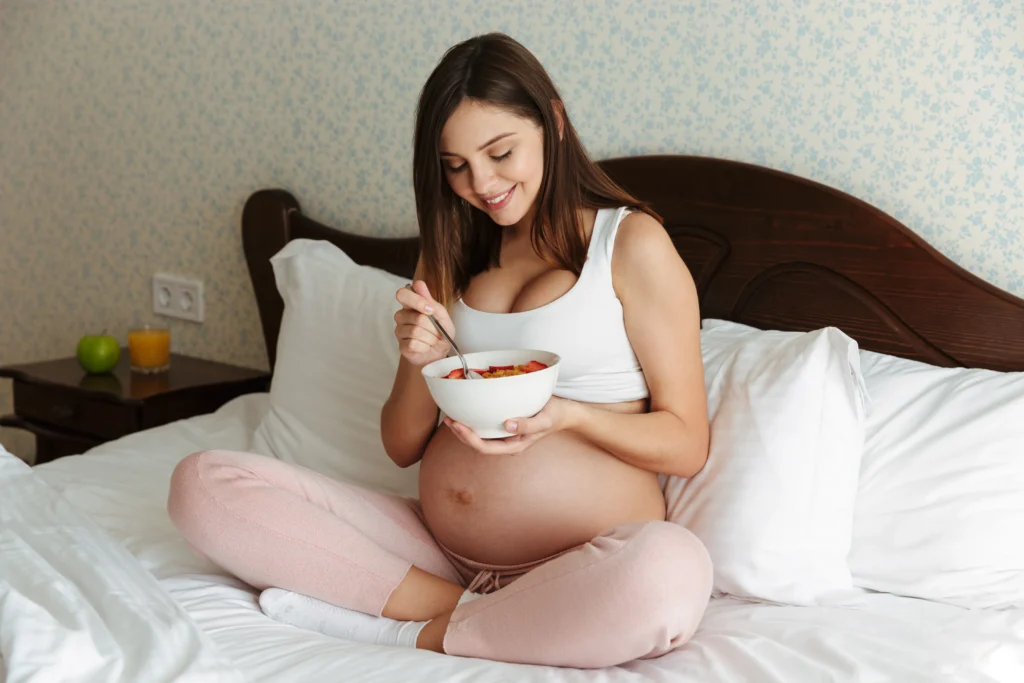
This is one of the most common questions I hear.
The answer is not as straightforward as many people expect.
The Popular Belief
Many people assume:
“If I am craving chocolate, I must need magnesium.”
“If I want salty foods, I must need sodium.”
“If I crave meat, I must need iron.”
While nutrient deficiencies can occasionally influence food preferences, research has not consistently shown that most pregnancy cravings directly happen due to nutrient deficiencies. (Kloub et al. 2014)
Why The Theory Falls Short
Many commonly craved foods are not particularly rich in the nutrients women are supposedly lacking.
For example:
- Chocolate cravings do not always indicate magnesium deficiency.
- Ice cream cravings do not necessarily indicate calcium deficiency.
The relationship between cravings and nutrient needs is likely more complicated than a simple deficiency-response system.
Why Sweet Cravings Are So Common
If there is one category of craving that appears frequently during pregnancy, it is sweets.
Chocolate.
Ice cream.
Cookies.
Cakes.
Candy.
Many women suddenly find themselves drawn toward sugary foods.
The Energy Connection
Pregnancy increases energy demands.
The body is constantly working to support fetal growth and maternal adaptations.
Sweet foods provide a rapid source of energy.
This may partially explain why they become appealing.
The Reward System
Foods high in sugar activate reward pathways within the brain.
During periods of stress, fatigue, or emotional change, these foods may feel especially satisfying.
Why Moderation Matters
Cravings are normal.
However, consistently relying on highly processed sugary foods may contribute to excessive weight gain and blood sugar challenges.
Balance is usually more helpful than strict restriction.
The Link Between Fatigue And Food Cravings
One connection that often goes unnoticed is the relationship between tiredness and cravings.
Fatigue Changes Food Preferences
Research outside pregnancy has shown that inadequate sleep may increase cravings for high-calorie foods.
When people are tired, they often seek quick sources of energy.
Pregnant women already experience increased fatigue due to:
- Hormonal changes
- Sleep disruption
- Increased physical demands
- Emotional stress
This combination can make energy-dense foods especially attractive.
A Physiotherapist’s Observation
Many women notice stronger cravings on days when they feel exhausted.
Sometimes the body is not necessarily asking for chocolate.
Sometimes it is asking for rest.
Food Aversions: The Other Side Of Pregnancy Cravings
Pregnancy cravings receive a lot of attention.
Food aversions often receive much less.
Yet aversions can be just as powerful.
What Are Food Aversions?
Food aversions occur when previously acceptable foods suddenly become unpleasant.
Women may feel:
- Nauseated by certain smells
- Repulsed by particular textures
- Unable to tolerate favorite foods
Common Food Aversions
Frequently reported aversions include:
- Coffee
- Meat
- Eggs
- Strong-smelling foods
- Fried foods
Why Aversions May Exist
Some researchers believe food aversions may have evolved as a protective mechanism during early pregnancy.
The exact reasons remain unclear, but they are considered a normal part of many pregnancies.
Why Cravings Differ Around The World
One fascinating aspect of pregnancy cravings is that they vary significantly across cultures.
Cultural Influence Matters
In North America, women often report cravings for:
- Chocolate
- Ice cream
- Sweets
In other parts of the world, common cravings may be entirely different.
This suggests that social and cultural influences contribute to cravings alongside biological factors.
Cravings Are Not Just Biology
Food memories, availability, traditions, and personal experiences may all influence what pregnant women crave.
One fascinating aspect of pregnancy cravings is that they vary significantly across cultures.
Cultural Influence Matters
In North America, women often report cravings for:
- Chocolate
- Ice cream
- Sweets
In other parts of the world, common cravings may be entirely different.
This suggests that social and cultural influences contribute to cravings alongside biological factors.
Cravings Are Not Just Biology
Food memories, availability, traditions, and personal experiences may all influence what pregnant women crave. (Al-Mehaisen et al. 2018)
Did You Know?
Research shows that pregnancy cravings vary significantly across cultures. While chocolate and sweets are common cravings in some countries, women in other parts of the world may crave rice dishes, fruits, spicy foods, or entirely different local favorites.
Should You Always Give In To Cravings?
This is another common question.
The answer lies somewhere between complete restriction and complete indulgence.
Why Extreme Restriction Can Backfire
Trying to suppress every craving often increases frustration and stress.
In some cases, it may make cravings feel even stronger.
Why Constant Indulgence Is Not Ideal
At the same time, allowing every craving to dictate eating habits may make it harder to maintain balanced nutrition.
A Practical Approach
Many women find success by:
- Enjoying cravings occasionally
- Practicing portion awareness
- Pairing treats with nutritious foods
- Focusing on overall dietary patterns
A single food choice rarely determines pregnancy health.
Long-term habits matter much more.
A Physiotherapist’s Perspective On Pregnancy Cravings
From a physiotherapy perspective, cravings are often connected to the broader demands pregnancy places on the body.
When I speak with pregnant women about cravings, I also ask about:
- Sleep quality
- Stress levels
- Activity levels
- Energy levels
- Hydration
These factors often influence eating behaviors.
Movement Matters
Regular physical activity may help support:
- Energy regulation
- Blood sugar control
- Mood
- Appetite awareness
Rest Matters Too
Women who are consistently exhausted often report stronger cravings for quick-energy foods.
Supporting recovery can sometimes reduce the intensity of those cravings.
Focus On Patterns
Rather than worrying about individual cravings, it is usually more helpful to look at overall lifestyle habits.
Physiotherapist’s Advice
When cravings become intense, look beyond the food itself. Ask yourself whether you are tired, dehydrated, stressed, or skipping meals. Supporting your body with regular movement, quality sleep, balanced meals, and proper hydration can often help regulate energy levels and reduce the intensity of certain cravings.
When Cravings May Need Medical Attention
Most pregnancy cravings are harmless.
However, some unusual cravings deserve medical evaluation.
Understanding Pica
Pica refers to cravings for non-food substances such as:
- Ice
- Clay
- Dirt
- Chalk
- Laundry starch
Pica may sometimes be associated with nutritional deficiencies, particularly iron deficiency.
When To Speak With Your Healthcare Provider
Discuss cravings with your healthcare provider if:
- They involve non-food substances.
- They interfere with nutrition.
- They become overwhelming.
- You have concerns about dietary intake.
Professional guidance can help identify any underlying issues.
Final Thoughts
Pregnancy cravings are often portrayed as humorous or unusual, but they offer a fascinating glimpse into the complex changes occurring inside the body.
Your senses are changing.
Your hormones are shifting.
Your nutritional needs are evolving.
Your brain is adapting to an entirely new physiological state.
Together, these changes create the perfect environment for cravings to emerge.
As a physiotherapist, I encourage women to approach cravings with curiosity rather than guilt.
Most cravings are a normal part of pregnancy and do not mean you are doing anything wrong.
The goal is not to achieve a perfect diet.
The goal is to support your health, nourish your baby, and maintain balance throughout pregnancy.
Sometimes that includes a healthy meal.
And sometimes it includes enjoying that bowl of ice cream you’ve been thinking about all day.
Frequently Asked Questions About Pregnancy Cravings
Frequently Asked Questions
Why do pregnancy cravings happen?
Pregnancy cravings are thought to be influenced by hormonal changes, altered taste and smell perception, increased energy needs, emotional factors, and lifestyle habits.
When do pregnancy cravings usually start?
Cravings often begin during the first trimester and become more noticeable during the second trimester as nausea starts to improve.
Do cravings mean I have a nutrient deficiency?
Not necessarily. While nutrient deficiencies may occasionally influence food preferences, most pregnancy cravings cannot be directly linked to specific deficiencies.
Why do I crave sweets during pregnancy?
Sweet foods provide quick energy and activate reward pathways in the brain, which may help explain why they are commonly craved during pregnancy.
Is it okay to satisfy pregnancy cravings?
For most women, enjoying cravings in moderation can be part of a healthy and balanced pregnancy diet.
What are pregnancy food aversions?
Food aversions occur when previously enjoyable foods suddenly become unpleasant or difficult to tolerate during pregnancy.
Can lack of sleep make cravings worse?
Yes. Fatigue and poor sleep can increase the desire for high-calorie and quick-energy foods.
When should I talk to my doctor about cravings?
If you crave non-food items such as dirt, clay, chalk, or ice, or if cravings significantly affect your nutrition, seek medical advice.
Stay tuned with us for more health related topics.
Follow us on LinkedIn and Instagram for more.
More Read




Medical Disclaimer!
This article has been reviewed and written under the guidance of our Head Physiotherapist, Dr. Kruti Raj (PT, MUHS,CPT,CMPT). The information shared is intended for educational purposes only and should not be considered a substitute for personalized medical advice, diagnosis, or treatment.
Please consult us or any other qualified healthcare professional before beginning any exercise program, especially if you are experiencing pain, recovering from injury, or managing a medical condition.


