


Walking for weight loss is a simple and sustainable way to increase daily activity, support calorie balance, and improve overall health.
If you’ve ever searched for how much walking you need to lose weight, you’ve probably seen a confusing mix of advice.
One article says 30 minutes a day is enough.
Another insists on 10,000 steps.
Someone on social media claims they lost weight by walking for two hours daily, while another says walking barely makes a difference.
So, who is right?
The truth is that there is no single walking target that guarantees weight loss for everyone.
The amount of walking you need depends on several factors, including your:
starting weight, walking pace, diet, age, fitness level, and overall activity throughout the day.
That said, research does provide some useful guidelines.
Most people do not need to obsess over reaching a specific step count.
Instead, focusing on total walking time, consistency, and gradual progression tends to be a more practical approach.
If your goal is weight loss, evidence suggests that walking can be highly effective when performed regularly and combined with sustainable eating habits.
The challenge is knowing how much is enough and when increasing your walking volume might provide additional benefits.
Walking Targets at a Glance
| Goal | Walking Target |
|---|---|
| General Health | 150 minutes/week |
| Modest Weight Loss | 150 – 250 minutes/week |
| Greater Weight Loss | 250+ minutes/week |
| Weight Maintenance | 200 – 300+ minutes/week |
The Short Answer
If you’re looking for a simple answer, here’s a practical starting point:
- For general health, aim for at least 150 minutes of moderate-intensity walking per week.
- For modest weight loss, many experts recommend 150-250 minutes per week.
- For greater weight loss, activity levels above 250 minutes per week are often associated with better results.
- Consistency matters more than occasional long walks.
The World Health Organization recommends that adults accumulate 150-300 minutes of moderate-intensity physical activity each week. (Bull et al. 2020)
The American College of Sports Medicine has also noted that 150-250 minutes of physical activity per week may support modest weight loss,
while larger amounts of activity are often associated with greater weight-loss outcomes and long-term weight maintenance. (Donnelly et al. 2009)
What does that mean in practical terms?
For many people, it translates to roughly 30-60 minutes of brisk walking on most days of the week.
However, those numbers are guidelines, not guarantees.
A person walking briskly for 45 minutes a day may see different results from someone following the exact same routine because weight loss is influenced by many factors beyond exercise alone.
The goal is not to find the perfect number.
The goal is to find a walking target that you can realistically maintain for months rather than days.
Why There Isn’t One Perfect Walking Number
One of the biggest mistakes people make is assuming there is a universal prescription for weight loss.
Imagine two people:
- Person A weighs 95 kilograms.
- Person B weighs 65 kilograms.
Both walk for 30 minutes at the same pace.
Even though they performed the same workout, the energy expenditure may differ because body size influences how much energy is required for movement.
Now consider two more people:
- One walks casually while browsing their phone.
- One walks briskly enough to slightly increase their breathing rate.
Again, the same amount of time does not necessarily produce the same outcome.
This is one reason experts often focus on ranges rather than exact numbers.
Walking is not like filling a prescription where every person receives the same dosage.
Your age, current fitness level, daily movement habits, and nutritional intake all influence the results you may experience.
Instead of asking:
“What is the exact number of minutes I need?”
A better question is:
“What amount of walking can I perform consistently while gradually progressing over time?”
That mindset often produces better long-term results.
Walking Targets at a Glance
The following targets can help you understand how walking recommendations are commonly interpreted in real life.
| Goal | Suggested Walking Target |
|---|---|
| General health | At least 150 minutes per week |
| Modest weight loss | 150–250 minutes per week |
| Greater weight loss | More than 250 minutes per week |
| Weight maintenance | 200–300+ minutes per week |
These are not strict rules.
Think of them as ranges rather than deadlines.
A person walking 240 minutes per week is not dramatically different from someone walking 260 minutes per week.
What matters more is consistency over time.
Many people become discouraged because they miss a few days and assume their plan has failed.
In reality, long-term habits matter far more than a perfect week.
What Happens at 30 Minutes a Day?
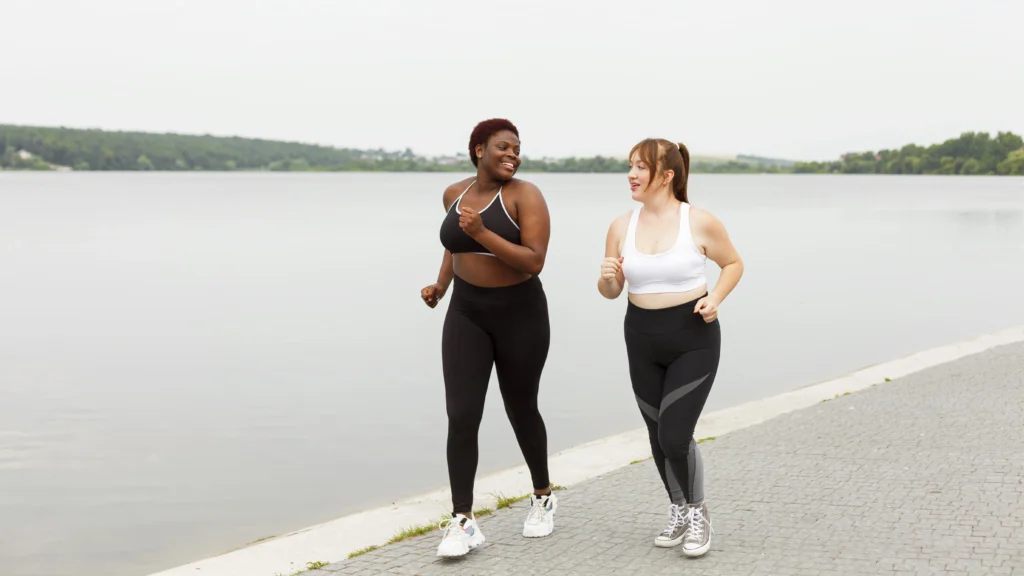
Thirty minutes is often where many people begin, and for good reason.
It is realistic.
It fits into most schedules.
It does not require special equipment.
And for someone who has been largely inactive, it can represent a significant increase in physical activity.
Walking for 30 minutes a day can help:
- Increase daily energy expenditure
- Improve cardiovascular fitness
- Build exercise consistency
- Support weight management efforts
- Improve overall health
For someone who is new to exercise, 30 minutes a day may feel challenging at first.
That is perfectly normal.
The biggest advantage of a 30-minute walking habit is that it is often sustainable.
Many people fail not because their target is too small but because their target is too ambitious.
Starting with a routine you can maintain is often more valuable than chasing a routine you abandon after two weeks.
Research examining walking and weight-management interventions has consistently shown that regular walking programs can contribute to modest weight loss, particularly when maintained over time. (Richardson et al. 2008)
If you currently do little structured exercise, 30 minutes a day is an excellent starting point.
What Happens at 45 Minutes a Day?
For many people actively trying to lose weight, 45 minutes of walking per day can represent a practical middle ground.
It increases overall activity volume without becoming overwhelming.
Compared with 30 minutes, an additional 15 minutes may not seem significant, but over a week that adds up to nearly two extra hours of walking.
That additional activity can make a meaningful difference over months rather than days.
A 45-minute routine may be particularly appealing for people who:
- Already walk regularly
- Want to increase activity gradually
- Prefer walking over higher-impact exercise
- Have reached a plateau in their current routine
The key point is not that 45 minutes is a magical threshold.
It is simply one example of how small increases in weekly activity can accumulate over time.
Many people find that progressing from 30 minutes to 45 minutes feels far more achievable than immediately jumping to an hour a day.
In other words, progression matters.
Walking targets should evolve as your fitness improves.
The best plan is rarely the most aggressive one.
It is the one you can realistically maintain while continuing to challenge yourself gradually.
What Happens at 60 Minutes a Day?
An hour of walking per day is often promoted as the gold standard for weight loss.
But is it necessary?
Not always.
For some people, 60 minutes may be an excellent target.
For others, it may be unnecessary, unrealistic, or difficult to maintain consistently.
The advantage of longer walking sessions is straightforward: they increase overall activity volume.
More activity generally means more energy expenditure.
This is one reason higher weekly activity levels are often associated with greater weight-loss outcomes.
However, more is not always better if it comes at the expense of consistency.
A person who reliably walks 45 minutes every day will usually achieve more than someone who plans to walk 60 minutes but only manages it occasionally.
This is where many weight-loss plans fall apart.
People choose a target that looks impressive on paper rather than a target they can sustain in real life.
If you are already walking regularly and want to increase your activity level, extending some walks to 60 minutes can be a reasonable progression.
But it should be viewed as an option, not a requirement.
The best walking duration is the one you can maintain week after week.
Reality Check
The best walking target is not the most ambitious one. It is the one you can maintain consistently for months. Walking 45 minutes every day is often more effective than aiming for 90 minutes and quitting after two weeks.
Is 10,000 Steps Really Necessary?
Few fitness numbers are as famous as 10,000 steps.
Many people treat it as the universal benchmark for health and weight loss.
What often surprises people is that the 10,000-step target did not originate from a medical guideline.
The number became popular through a Japanese marketing campaign decades ago and later gained widespread acceptance because it was simple, memorable, and easy to track.
That does not mean 10,000 steps is a bad goal.
For many people, it can be a useful target.
The problem arises when people assume that anything below 10,000 steps is a failure.
Research suggests that health benefits occur across a range of activity levels rather than appearing suddenly at a specific step count. (Tudor-Locke et al. 2011)
A person consistently achieving 7,000-8,000 steps may still be significantly more active than someone achieving 3,000-4,000 steps.
Rather than obsessing over a single number, focus on increasing your activity relative to your current baseline.
Frequently Asked Questions
Is 30 minutes of walking enough to lose weight?
For many beginners, yes. Thirty minutes of brisk walking can support weight loss when combined with healthy eating habits and performed consistently.
Is 45 minutes of walking better than 30 minutes?
Generally, yes. Walking for 45 minutes increases your weekly activity volume and may contribute to greater energy expenditure over time.
Do I need 10,000 steps a day to lose weight?
No. The 10,000-step target is a popular goal, but there is no single step count required for weight loss. Consistency matters more than reaching a specific number.
Is walking twice a day better than one long walk?
Not necessarily. The total amount of activity often matters more than how you divide it. Two shorter walks can be just as effective as one longer session.
Should I track steps or minutes?
For structured exercise, minutes are often easier to align with public-health recommendations. Steps can still be a useful motivational tool.
Can I lose weight by walking only?
Many people can lose weight through walking and healthy eating habits. However, nutrition still plays an important role in long-term results.
How fast should I walk for weight loss?
A brisk pace that slightly increases your breathing rate while still allowing conversation is a practical target for many people.
How long does it take to see results from walking?
Results vary between individuals. Many people notice improvements in fitness and energy levels within a few weeks, while weight-loss changes often take longer.
Stay tuned with us for more health related topics.
Follow us on LinkedIn and Instagram for more.
More Read


Medical Disclaimer!
This article has been reviewed and written under the guidance of our Head Physiotherapist, Dr. Kruti Raj (PT, MUHS,CPT,CMPT). The information shared is intended for educational purposes only and should not be considered a substitute for personalized medical advice, diagnosis, or treatment.
Please consult us or any other qualified healthcare professional before beginning any exercise program, especially if you are experiencing pain, recovering from injury, or managing a medical condition.


